How to Tow a Car Safely: Equipment, Methods & Legal Tips
Last Updated on September 1, 2026 by Ryan
Safely towing a car demands correct equipment, thorough preparation, and a clear understanding of various methods. This guide provides crucial insights into selecting the right tools, preparing both vehicles, and navigating legalities to ensure a secure and compliant towing experience.
🎯 Key Takeaways


- Always match towing equipment to vehicle weight.
- Understand FWD/RWD/AWD for proper towing method.
- Check all connections and lights before moving.
- Drive slowly and allow extra braking distance.
- Verify local towing laws and regulations.
Towing a car yourself can seem daunting, but with the right knowledge and equipment, it’s a perfectly achievable task. Mastering safe towing empowers you to move a disabled vehicle, transport a project car, or prepare for adventures, all while avoiding expensive professional services. This guide will walk you through the essential steps, ensuring you understand the methods, select proper equipment, and adhere to critical safety and legal guidelines.
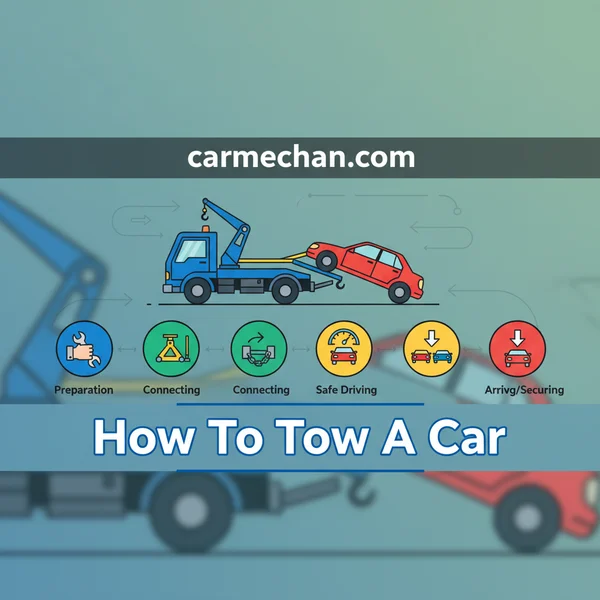
Successfully towing a car isn’t just about brute force; it’s about precision, preparation, and knowing your limits. We’ll cover everything from choosing the correct towing method for your specific vehicle to performing thorough pre-towing assessments, equipping you with the confidence to execute a safe and effective tow from start to finish. Get ready to learn the ropes of responsible vehicle towing.
Understanding Towing Methods & Equipment Selection



Choosing the Right Towing Method
Selecting the appropriate towing method is the first and most critical step. Using the wrong method can cause severe damage to the towed vehicle’s drivetrain or lead to dangerous situations on the road. Here are the primary methods:
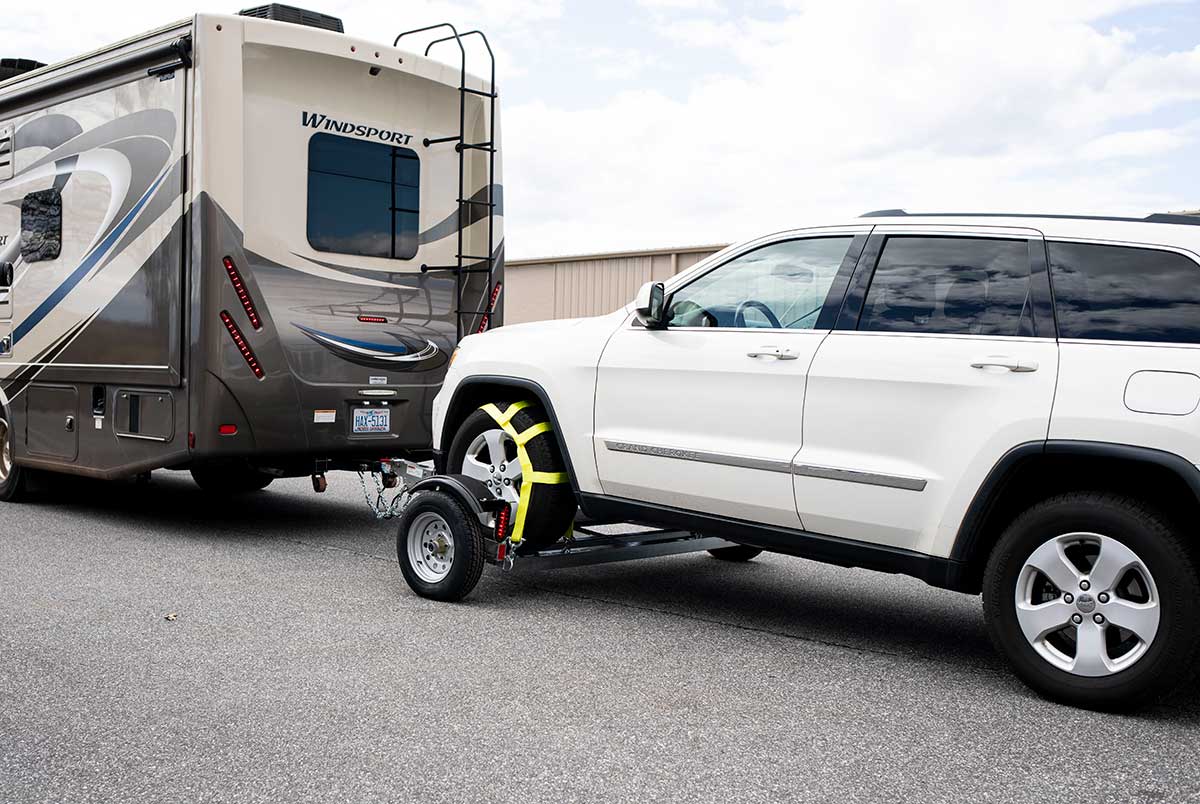
- Flat Towing (Four Wheels Down): This method involves attaching a tow bar directly to the front of the vehicle you’re towing, allowing all four of its wheels to remain on the ground. It’s often suitable for specific manual transmission vehicles or 4x4s that can be placed in neutral or have a transfer case disengage. Always consult the towed vehicle’s owner’s manual for “recreational towing” instructions; many automatic transmissions will suffer catastrophic damage if flat towed.
- Tow Dolly (Two Wheels Up): A tow dolly lifts the drive wheels of the towed vehicle off the ground, typically the front wheels for front-wheel-drive (FWD) cars. This is an excellent option for FWD vehicles. While some rear-wheel-drive (RWD) vehicles can be dolly-towed backward, it’s generally more complex due to steering lock and vehicle balance. Crucially, all-wheel-drive (AWD) vehicles typically cannot be safely towed on a dolly as it leaves two wheels on the ground, risking damage to the differentials or transfer case.
- Flatbed Trailer (All Wheels Up): The safest and most versatile option for virtually any vehicle type, including AWD, RWD, and automatics. With a flatbed trailer, the entire towed vehicle rests on the trailer deck, with all its wheels off the ground. This eliminates any drivetrain wear and is the preferred method for long distances or valuable vehicles. It does, however, require a more robust tow vehicle and trailer.
Safety Warning: Never guess. The wrong method can cost you thousands in repairs and significantly increase accident risk. Match the method to your vehicle’s specifications.
Essential Equipment & Secure Connections
Once you’ve chosen a method, you need the right tools and know how to connect them securely:
- Tow Bars: For flat towing, ensure your tow bar is rated for the Gross Vehicle Weight (GVW) of the car you’re towing. It must attach securely to a specialized base plate on the towed vehicle’s frame. Always use secondary safety chains, crisscrossed beneath the tow bar, as a critical backup in case the primary connection fails.
- Tow Dollies: Look for sturdy construction, functional ramps, and high-quality wheel straps designed to securely cradle the towed vehicle’s tires. Confirm the dolly’s tires are properly inflated and that all moving parts are lubricated and functional.
- Flatbed Trailers: These require robust wheel straps (often “over-the-tire” straps) that secure the vehicle directly to the trailer deck. Alternatively, chain-and-binder systems can be used on frame points, but avoid using suspension components as primary tie-down points.
- Lights & Wiring: Regardless of the method, the towed vehicle (or dolly/trailer) must display functional brake lights, turn signals, and running lights that synchronize with your tow vehicle. Magnetic light kits are a common and effective solution for flat-towed vehicles. Verify all electrical connections before every tow.
- Breakaway Systems: For trailers and dollies exceeding a specific weight threshold (check your local regulations), a breakaway system is legally required. This system automatically applies the trailer’s brakes if it somehow detaches from the tow vehicle, preventing a runaway trailer.
Safety Warning: Always inspect all towing equipment for signs of wear, cracks, rust, or damage before each use. Equipment capacity should always significantly exceed the actual weight you intend to tow.
How to Tow a Car Like a Pro: A Practical Walkthrough


Whether you’re stranded on the roadside, moving a project car, or helping a friend in need, knowing how to properly tow a car is a valuable skill. This comprehensive guide will walk you through each critical step, from preparing your vehicles to safely reaching your destination. Following these detailed instructions is paramount to ensuring the safety of all involved, preventing further damage to either vehicle, and complying with legal towing regulations. Improper towing can lead to serious accidents, costly repairs, or even legal repercussions, so let’s get you towing like a seasoned pro.
Step 1: Assess the Situation and Gather Your Gear
What you need: A suitable tow vehicle (heavier than the towed car), a heavy-duty tow strap, tow bar, or tow dolly (rated for vehicle weight), D-ring shackles or hooks, work gloves, flashlight/headlamp, owner’s manuals for both vehicles, a safety vest, and a basic toolkit (e.g., wrench, pliers).
Instructions: First, determine if the car can be safely towed with your available equipment. Assess the disabled vehicle’s Gross Vehicle Weight Rating (GVWR, often found on the driver’s door jamb) and ensure your tow vehicle’s capacity and your chosen towing gear (strap, bar, or dolly) significantly exceed this. Consider the distance and terrain you’ll be covering. Gather all necessary, well-maintained equipment, including visibility aids like a flashlight or headlamp for poor light conditions. Pro Tip: Always consult both vehicle’s owner’s manuals for specific towing points and limitations. Using towing gear rated for at least 1.5 times the towed vehicle’s actual weight is a crucial safety margin. Never over-estimate capacities.
Step 2: Prepare Both Vehicles for Towing
What you need: Keys for both vehicles, wheel chocks, knowledge of the towed vehicle’s transmission type, and a basic toolkit.
Instructions: Begin by preparing the disabled vehicle: turn the ignition to the “ACC” or “ON” position (without starting the engine) to unlock the steering wheel and enable brake lights if connected to the tow vehicle. Place the transmission in neutral (N). For automatic transmissions, ensure all fluid levels are correct; for long distances or All-Wheel-Drive (AWD) vehicles, seriously consider disconnecting the driveshaft or using a tow dolly/flatbed to prevent transmission damage. Secure any loose items inside. For the tow vehicle, ensure tires are properly inflated, brakes are in excellent condition, and check all fluid levels. Engage its parking brake once positioned. Pro Tip: Front-Wheel-Drive (FWD) cars can often be towed with the drive wheels on the ground. Rear-Wheel-Drive (RWD) cars usually require the drive wheels to be lifted (e.g., using a tow dolly) or the driveshaft disconnected. AWD vehicles almost always require all four wheels off the ground (via flatbed or dolly) to prevent severe drivetrain damage.
Step 3: Position the Tow Vehicle Strategically
What you need: Clear, level ground if possible, good visibility, and wheel chocks.
Instructions: Carefully position your tow vehicle directly in front of the disabled car. Aim to align their designated tow points as closely as possible, allowing for minimal slack when the tow strap or bar is connected. Ensure there’s ample clear space around both vehicles to maneuver and connect the towing equipment safely. If you’re using a tow strap, leave a slight distance to take up slack gently. For a tow bar, you’ll want to get as close as possible without touching. Engage the tow vehicle’s parking brake, and if safe, place wheel chocks behind its rear wheels to prevent any accidental movement during connection. Pro Tip: Always work on as level ground as possible. If an incline is unavoidable, position the tow vehicle downhill from the disabled car; this reduces the initial strain during connection and allows gravity to assist in stability.
Step 4: Securely Connect the Tow Bar or Strap
What you need: Tow strap/bar/dolly, D-ring shackles/hooks, a wrench (if needed for tow bar mounting), owner’s manuals for tow point locations, and work gloves.
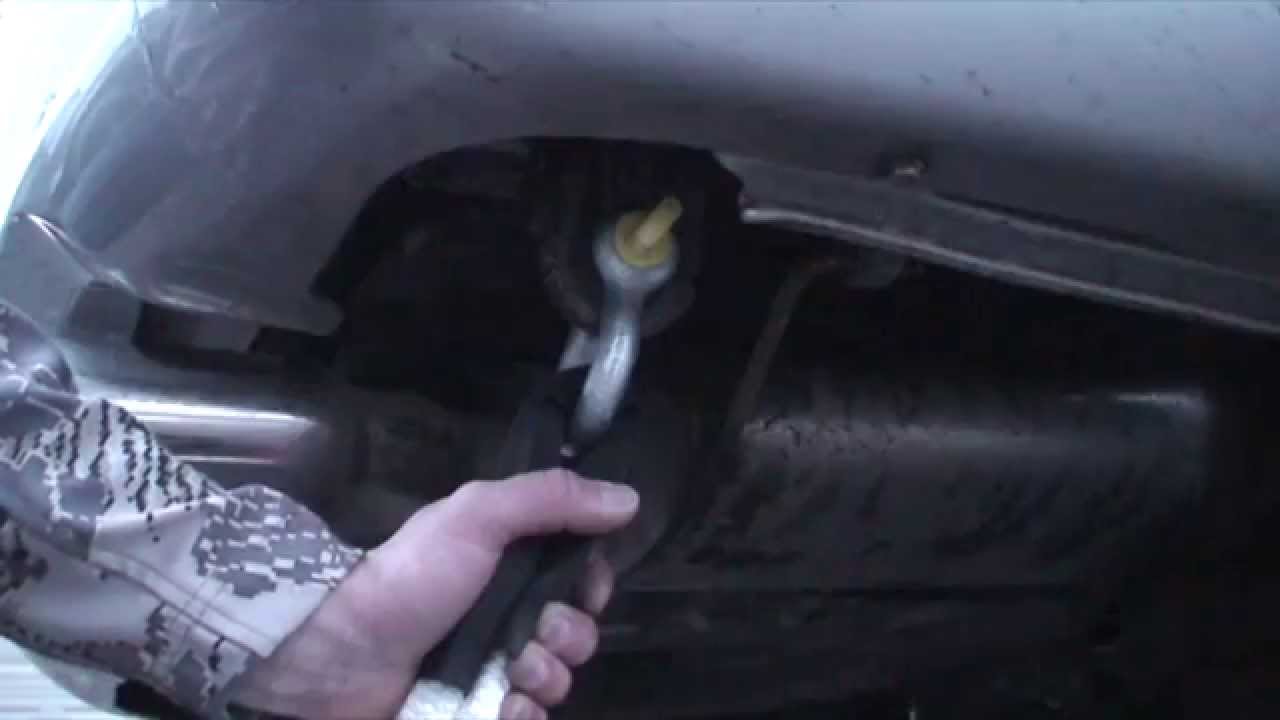
Instructions: This is a critical step. Locate the reinforced, designated towing points on both vehicle chassis. These are typically robust loops or attachment points, often behind plastic covers on bumpers. Never attach to suspension components, axles, or bumpers themselves unless specifically designed for towing. Use heavy-duty D-ring shackles to connect the tow strap to these points, ensuring they are tightened securely. If using a tow bar, follow its manufacturer’s instructions for attachment to the tow vehicle’s hitch receiver and the disabled car’s frame. Double-check all connections for tightness and proper seating. Pro Tip: When using a tow strap, ensure there are no twists, knots, or frayed sections. A twisted strap can weaken significantly under load. For added safety, consider placing a heavy blanket or jacket over the middle of the tow strap once connected; this extra weight helps pull the strap downwards, minimizing dangerous recoil if it snaps.
Step 5: Perform Final Safety Checks and Communication
What you need: Working lights and signals on the tow vehicle, a reflective triangle or “TOWING” sign for the towed vehicle, and a communication plan (e.g., walkie-talkie or pre-arranged hand signals if two drivers).
Instructions: Before moving an inch, conduct a thorough final inspection. Verify that all connections (tow strap, shackles, tow bar, safety chains, if applicable) are rock-solid and show no signs of slippage or excessive strain. Ensure the disabled vehicle’s steering wheel is unlocked. Test the tow vehicle’s brake lights and turn signals; if the towed vehicle has auxiliary lights or a light bar connected, test those too. If the disabled car is being steered by a second driver, establish clear communication signals for stopping, turning, and starting. Place a reflective triangle or “TOWING” sign on the rear of the towed vehicle for increased visibility to other motorists. Pro Tip: Even if you’re the only driver, check that the brake lights on the towed vehicle are clearly visible. If they are obscured by the tow vehicle, you must use a separate magnetic light bar, connected to the tow vehicle’s electrical system and placed on the rear of the towed car. This is often a legal requirement and crucial for preventing rear-end collisions.
Step 6: Begin the Tow Slowly and Smoothly
What you need: Patience, a gentle touch on the controls, and a smooth driving technique.
Instructions: With all checks complete and communication established, it’s time to begin. Release the parking brake on the tow vehicle and, if applicable, remove wheel chocks. Slowly and gently take up any slack in the tow strap, avoiding sudden jerks. Smooth acceleration is crucial; apply power gradually to prevent shocking the tow strap or stressing the connection points. Drive at a significantly reduced speed, well below the posted speed limit, especially during initial movements and turns. Anticipate braking and turning much earlier than usual, as the added weight will dramatically increase your stopping distance and change vehicle dynamics. Drive defensively. Pro Tip: Treat the combined vehicles as one very long, heavy unit. Avoid sharp turns or sudden lane changes. Wide turns are essential to prevent the towed vehicle from cutting corners or putting excessive sideways strain on the towing setup. Always maintain an ample following distance from vehicles ahead, remembering that your total braking distance has effectively doubled or tripled.
Step 7: Monitor Both Vehicles During the Journey
What you need: Mirrors (side and rearview), dashboard gauges (temperature, oil pressure), and a communication device (if applicable).
Instructions: Throughout the towing journey, constant monitoring is paramount. Regularly check your side and rearview mirrors to ensure the towed vehicle is tracking correctly and that the tow strap/bar remains taut and stable. Keep a vigilant eye on your tow vehicle’s dashboard gauges, particularly the engine temperature and oil pressure, as towing puts extra strain on your engine and transmission. Listen for any unusual noises coming from either vehicle. If you notice anything amiss—strange sounds, smoke, or the towed vehicle swaying excessively—pull over immediately in a safe location to investigate and rectify the issue. Pro Tip: Plan periodic stops, especially during longer tows, perhaps every 30-60 minutes. Use these breaks to re-inspect all connections, check tire pressures on both vehicles (especially for the towed car, as underinflation can cause instability), and allow your tow vehicle’s engine to cool down. A quick physical check can prevent a major problem down the road.
Step 8: Safely Disconnect the Vehicles
What you need: Level ground, wheel chocks, work gloves, and a basic toolkit (if needed for tow bar removal).
Instructions: Once you’ve safely arrived at your destination, find a level, clear area to disconnect the vehicles. Apply the parking brake on the tow vehicle and, if safe, place wheel chocks. If there’s a second driver in the towed vehicle, have them apply its parking brake too. Carefully reverse the connection process: remove any auxiliary lights or safety chains, then disconnect the tow bar or strap shackles. Be mindful of any tension that might still be present in the strap as you disconnect it. Once fully separated, move the disabled vehicle to its final resting place, or use the tow vehicle to carefully push it into position if it’s on level ground and safe to do so. Pro Tip: Never stand directly between the tow vehicle and the towed vehicle during disconnection, especially if there’s still tension in the strap. A sudden release of tension could cause the strap or parts to snap back dangerously. Always work from the side and maintain situational awareness. Ensure the disabled vehicle is securely parked with its parking brake engaged before leaving it unattended.
✅ Final Checklist
- Are all towing connections (straps, shackles, bars, safety chains) securely fastened and free from damage?
- Are the tow vehicle’s lights, turn signals, and brake lights fully operational and visible, including any auxiliary lights on the towed vehicle?
- Is the towed vehicle’s transmission correctly set (Neutral for FWD/RWD with lifted drive wheels, or driveshaft disconnected for RWD, or flatbed for AWD)?
- Is there adequate ground clearance for the towed vehicle, especially over bumps or ramps, and are its tires properly inflated?
- Have you confirmed your planned route avoids steep grades, very sharp turns, or low-clearance obstacles?
Important Notes:
- Safety Considerations: Always wear appropriate personal protective equipment, including work gloves and a reflective safety vest, especially when working near roadsides. Never place any body part between a tow vehicle and a towed vehicle during connection or disconnection. Maintain a safe distance from moving parts and tensioned straps. Never exceed the weight limits of your towing equipment or tow vehicle. Be aware of local regulations regarding vehicle towing (e.g., maximum speed, required signage, use of safety chains).
- When to Seek Professional Help: If you are unsure about any step, if the disabled vehicle is excessively heavy (e.g., large trucks, heavy SUVs), if you need to tow long distances (over 50-100 miles), if the disabled vehicle has significant steering or braking damage, or if your tow vehicle is not adequately powerful for the task, it is always safer and highly recommended to call a professional towing service.
- Estimated Time and Cost Range:
- Setup Time: Typically 30-60 minutes, depending on experience and the complexity of the equipment used.
- Towing Time: Varies significantly based on distance, traffic conditions, and your reduced towing speed.
- DIY Equipment Cost: Heavy-duty tow straps range from $30-$100; basic tow bars are $100-$300; tow dolly rentals can be $50-$150 per day, plus a deposit.
- Professional Towing Cost: Can range from $75 for a local short-distance tow to $300-$500+ for longer distances, specialized equipment (like a flatbed), or emergency roadside assistance. These costs can vary widely by location and time of day.
Vehicle Compatibility & Pre-Towing Assessments
Assessing the Towed Vehicle for Readiness
Before connecting anything, thoroughly evaluate the vehicle you plan to tow for compatibility and readiness.
- Owner’s Manual is Gold: This is your definitive source. Check the owner’s manual for the vehicle you wish to tow. Look for sections on “recreational towing,” “dinghy towing,” or “emergency towing procedures.” This information will dictate if flat towing is permissible and under what conditions (e.g., specific transmission settings, speed limits, or distance restrictions). Ignoring this can lead to severe and costly damage to the transmission or drivetrain.
- Drivetrain Configuration:
- Front-Wheel Drive (FWD): Generally the easiest to tow with a dolly, as lifting the front drive wheels resolves potential transmission issues.
- Rear-Wheel Drive (RWD): Typically requires a flatbed trailer. If flat-towing an RWD vehicle is unavoidable and approved by the manufacturer, the driveshaft usually needs to be disconnected to prevent transmission damage.
- All-Wheel Drive (AWD): Almost always demands a flatbed trailer. Keeping any wheels on the ground can create differential or transfer case bind, leading to costly damage due to differing wheel speeds.
- Vehicle Condition:
- Tires: Ensure all tires on the towed vehicle are properly inflated and in good, roadworthy condition.
- Brakes: Confirm the parking brake is disengaged. For flat towing, the steering wheel must be unlocked (to allow turning) but secured straight (often with a bungee cord or specialized device to prevent erratic movement) and the transmission placed in neutral.
- Fluids: If flat towing is approved, check essential fluids, especially transmission fluid, ensuring they are at optimal levels.
Legal Tip: The towed vehicle must meet legal requirements. This often includes functional rear lights (brake, turn, running), a visible license plate, and potentially a supplemental braking system if the combined weight exceeds local thresholds.
Preparing Your Tow Vehicle for the Load
Your tow vehicle carries the ultimate responsibility for the entire setup. Proper preparation is non-negotiable.
- Towing Capacity is Non-Negotiable: Your tow vehicle’s Gross Towing Weight (GTW) capacity must significantly exceed the combined weight of the vehicle being towed plus the weight of the dolly or trailer. Consult your tow vehicle’s owner’s manual for specific limits, including maximum trailer weight and tongue weight. Overloading is incredibly dangerous, causes excessive wear, and is illegal.
- Hitch & Ball: Ensure your hitch receiver is securely mounted to the tow vehicle’s frame and is rated for the total load. The hitch ball must precisely match the trailer’s coupler size and also be rated for the load. A mismatched or underrated hitch ball is a serious failure point.
- Braking System: For heavier loads, a trailer brake controller is often essential and legally required in many regions. This device allows you to activate the trailer’s brakes independently or in conjunction with your tow vehicle’s brakes, providing crucial stopping power and stability.
- Tires & Mirrors: Inflate your tow vehicle’s tires to the higher pressure recommended for towing (often found in the owner’s manual or on a sticker inside the driver’s door jamb). Install extended towing mirrors to maintain clear rearward visibility around the wider and longer combined vehicle setup.
Safety Tip: Perform a comprehensive pre-tow inspection of both vehicles and all connections. This meticulous preparation is the bedrock of a safe and successful towing operation.
Essential Safety Protocols and Legal Compliance
Once you’ve got your setup squared away, your next critical step is ensuring everything is secure and compliant before you even think about hitting the road. Safety isn’t just a suggestion when towing; it’s an absolute necessity. Overlooking even a small detail can lead to serious hazards.
Prioritizing Pre-Tow Safety Checks
Before putting the vehicle in drive, a thorough walk-around and check of your entire setup is non-negotiable. Think of it as a pilot’s pre-flight checklist. This ensures all components are working correctly and securely fastened.
- Double-check connections: Confirm your hitch is properly seated and locked, and safety chains are crossed and securely attached to the tow vehicle’s frame.
- Inspect lights and signals: Make sure your towed vehicle’s taillights, brake lights, and turn signals are fully operational and synchronized with your tow vehicle. This is crucial for visibility to other drivers.
- Tire pressure and condition: Verify that all tires on both vehicles are inflated to the manufacturer’s recommended pressure. Look for any signs of wear, damage, or low tread on all tires, including your spare.
- Brake function: If your towed vehicle or trailer has its own braking system, test it to ensure it’s properly calibrated and responsive.
Understanding Towing Laws and Regulations
Towing isn’t a “one-size-fits-all” scenario when it comes to the law. Regulations can vary significantly by state, province, or even municipality. Ignorance of the law is no excuse, and compliance is vital for your safety and to avoid costly fines.
- Weight limits: Every tow vehicle has a Gross Combined Weight Rating (GCWR) and a Tongue Weight Rating. Never exceed these. Your tow vehicle’s manual is your best friend here.
- Speed limits: Many regions impose lower maximum speed limits for vehicles that are towing. Always be aware of and adhere to these reduced limits.
- Required equipment: Depending on the weight and type of your towed vehicle, you might be legally required to have certain items, such as independent braking systems, break-away cables, or specific flags and warning signs.
- Permits: For unusually heavy or wide loads, special permits might be necessary. It’s always wise to check with your local Department of Motor Vehicles or equivalent authority.
Expert Driving Tips for Towing Operations
Towing fundamentally changes how your vehicle handles. It adds significant weight, alters balance, and increases stopping distances. Driving with a towed car demands a heightened level of awareness, patience, and a modified approach to standard driving techniques.
Adjusting Your Driving Style
You can’t drive a tow rig like you would an empty car. Expect slower reactions, longer distances, and a need for much smoother inputs. Think deliberate and controlled.
- Slower acceleration and braking: Give yourself more time and space. Accelerate gently to avoid jerking the towed vehicle. More importantly, anticipate stops far in advance and begin braking much earlier and more gradually than usual.
- Wider turns: The towed vehicle will cut corners tighter than your tow vehicle. To avoid hitting curbs, signs, or other vehicles, make wider turns, especially at intersections. Practice in an empty parking lot if you’re new to this.
- Increased following distance: Doubling or even tripling your usual following distance gives you crucial extra time to react to unexpected traffic or road conditions.
- Smooth maneuvers: Avoid sudden lane changes, sharp turns, or abrupt stops. These can cause the towed vehicle to sway dangerously or even lose control. Gentle and gradual inputs are key to maintaining stability.
Navigating Common Towing Challenges
Roads throw curveballs, and towing amplifies every challenge. Being prepared for specific situations can make a big difference in maintaining control and safety.
- Hills and inclines: When climbing, downshift to a lower gear to maintain power and prevent your engine from overheating. When descending, also use a lower gear to let engine braking help control your speed, reducing wear on your service brakes.
- Wind and weather: Strong crosswinds can cause significant trailer sway, making driving extremely challenging. Reduce your speed and maintain a firm grip on the steering wheel. Wet or icy roads demand even greater caution, reducing speed drastically and increasing following distance.
- Backing up: This is often the trickiest maneuver. The towed vehicle will steer in the opposite direction of your tow vehicle’s turn when backing. Practice, use your mirrors, and don’t hesitate to get out and look. Many drivers find placing a hand at the bottom of the steering wheel helps: move your hand left, and the trailer goes left.
Conclusion
Towing a car, while seemingly daunting, is a manageable task when approached with the right knowledge and precautions. From selecting the appropriate equipment to understanding legal requirements and refining your driving techniques, every step contributes to a safe and successful journey. Prioritizing safety through diligent checks and adjusting your driving style for the added weight and length are paramount.
Before your next tow, take a moment to review your setup and refresh your knowledge of local towing laws. Practice makes perfect, so if possible, get some experience in a controlled environment. Approach each tow with confidence, caution, and a commitment to safety, ensuring a smooth ride for everyone on the road.
❓ Frequently Asked Questions
What are the primary methods for towing a car, and how do I choose the best one?
The main methods are tow straps/chains, tow dollies, and flatbed trailers. Tow straps are for very short distances and specific situations, dollies lift one axle (ideal for FWD cars), and flatbeds are safest for all vehicle types and longer distances as they fully elevate the car.
What essential safety equipment, besides the main towing apparatus, do I need?
Beyond the strap, dolly, or trailer, you’ll need safety chains (crossed for redundancy), a properly rated hitch and hitch pin, functional auxiliary towing lights for the towed vehicle, and potentially extended mirrors. Ensure all equipment meets or exceeds the combined weight rating.
How do the drivetrain configurations (FWD, RWD, AWD) affect my choice of towing method?
FWD cars can often be towed with their front wheels on a dolly, or fully on a flatbed. RWD and especially AWD vehicles should ideally be towed on a flatbed trailer, or with their driveshafts disconnected if using a tow dolly with driving wheels on the ground, to prevent transmission damage.
What are the key legal requirements and considerations I must observe when towing a car?
Legal requirements vary by state and municipality but generally include ensuring the towed vehicle is properly registered (even if broken down), using safety chains, having functional brake lights and turn signals, adhering to length/width restrictions, and having adequate insurance. Some states may require specific permits for heavy loads.
What crucial pre-towing checks should I perform on both the tow vehicle and the vehicle being towed?
For the tow vehicle, check tire pressure, fluid levels, and brake function. For the towed vehicle, ensure the parking brake is off, steering wheel is unlocked, transmission is in neutral (if applicable), and remove any loose items. Verify all lights work and mirrors provide clear visibility.
What driving practices should I adopt when actively towing a car to ensure safety?
When towing, reduce your speed significantly, especially around turns and downhills. Allow much greater braking distance, accelerate gently, and make wider turns to account for the increased length and weight. Avoid sudden movements and frequently check your mirrors and the towed vehicle.