2010 Hyundai Sonata TPMS Reset Button Location Explained
Last Updated on September 1, 2026 by Ryan
📋 Table of Contents
- 🎯 Key Takeaways
- Understanding the 2010 Hyundai Sonata TPMS Architecture
- 2010 Hyundai Sonata TPMS Made Easy: Your Essential Action Plan
- Common Triggers for the Low Tire Pressure Warning Light
- Diagnostic Differences Between Flashing and Solid TPMS Lights
- Maintenance and Battery Life Expectations for TPMS Sensors
- Conclusion
- 💬 Quick Questions & Answers
- ❓ Frequently Asked Questions
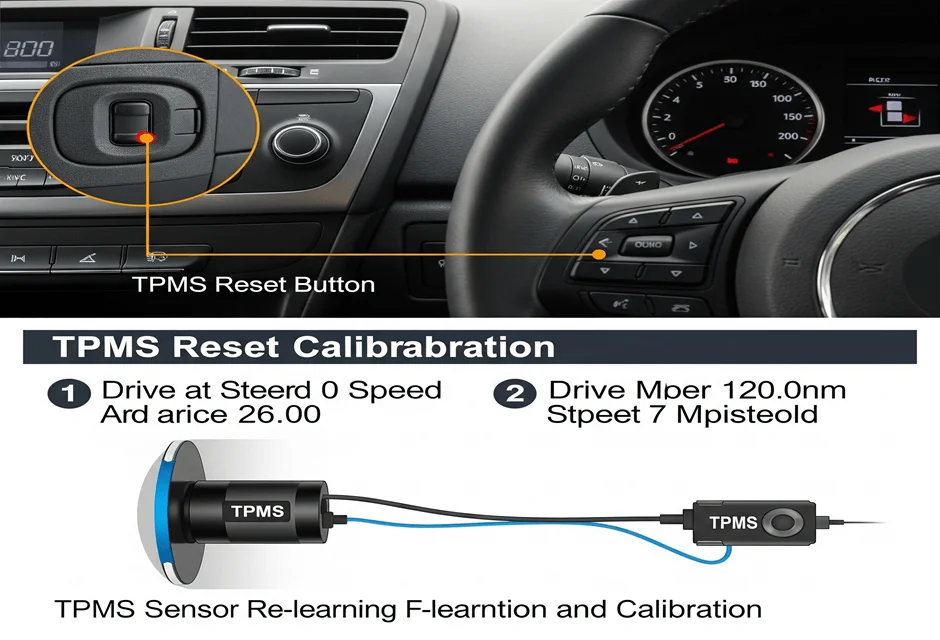
The 2010 Hyundai Sonata does not feature a physical TPMS reset button located on the dashboard or interior. The system is designed to automatically relearn and reset once the tires are inflated to the correct PSI and the vehicle is driven at consistent speeds.
🎯 Key Takeaways


- No physical TPMS reset button exists on the 2010 Sonata model.
- Correct tire pressure is typically 32 PSI for standard tires.
- The system clears automatically after driving above 15 mph.
- A flashing TPMS light indicates a system or sensor malfunction.
- Extreme temperature changes are the most common cause of alerts.
Have you ever been cruising down the highway only to have a bright yellow horseshoe-shaped light pop up on your dashboard? If you drive a 2010 Hyundai Sonata, that little symbol is your Tire Pressure Monitoring System (TPMS) alert. It can be a bit startling when it first appears, especially if you aren’t sure why it’s glowing or how to make it go away.
Understanding this system is more than just about turning off an annoying light. It is about your safety and your wallet. Properly inflated tires help your car handle better in tight corners and stop faster in emergencies. Plus, they ensure you get the best possible gas mileage on every trip. In this guide, we will dive deep into how your Sonata watches your tires and why that light might be bothering you today.
Understanding the 2010 Hyundai Sonata TPMS Architecture



The 2010 Hyundai Sonata uses what is known as a Direct TPMS. Unlike some older cars that just guess your tire pressure based on how fast the wheels spin, your Sonata has actual hardware inside the wheels. These little robots live inside your tires and talk to your car’s computer every few seconds. It is a high-tech solution to an age-old problem: the flat tire.

The Role of Internal Wheel Sensors
Inside each wheel of your 2010 Sonata, there is a small sensor attached to the bottom of the air valve. These sensors are powered by tiny batteries that are designed to last for several years. They measure the exact air pressure and temperature inside the tire. When everything is normal, they send a “thumbs up” signal to the car. If the pressure drops too low, they send a “help” signal instead. Here are a few things to keep in mind about these sensors:
- Wireless Transmission: The sensors use radio waves to send data to the main computer.
- Precision: Because they are inside the tire, they provide very accurate readings compared to indirect systems.
- Battery Life: Since your Sonata is from 2010, these sensor batteries may be reaching the end of their life cycle.
- Installation: These sensors are part of the valve stem, meaning they are fixed in place unless a mechanic removes the tire.
How the Dashboard Communicates with You
Your Sonata’s computer is always listening for these radio signals. If the computer stops hearing from a sensor, or if it receives a “low pressure” warning, it triggers the light on your dash. This system is very sensitive. It is designed to alert you when a tire is roughly 25% below the recommended pressure. This early warning gives you plenty of time to find a gas station before you end up stranded on the side of the road with a flat.
2010 Hyundai Sonata TPMS Made Easy: Your Essential Action Plan


The Tire Pressure Monitoring System (TPMS) in your 2010 Hyundai Sonata is a critical safety feature designed to alert you when your tires drop below a safe inflation level. However, a common frustration for owners is finding a physical “reset button” to turn off the warning light. Unlike some other manufacturers, the 2010 Sonata utilizes an automated direct monitoring system, meaning there is often no physical button to push. This guide provides a comprehensive walkthrough on how to locate the necessary components, understand the system’s logic, and successfully reset the TPMS light through proper maintenance and drive cycles, ensuring your vehicle remains safe and fuel-efficient on the road.
Step 1: Deciphering the TPMS Warning Light Signals
What you need: A clear view of your instrument cluster and your vehicle’s owner manual for symbol cross-referencing.
Instructions: Before attempting a reset, you must understand what the car is telling you. Turn your ignition to the “ON” position without starting the engine. If the TPMS light (an exclamation point inside a horseshoe shape) stays solid, it indicates that one or more tires have low air pressure. However, if the light flashes for approximately 60 seconds and then stays illuminated, this indicates a system malfunction, such as a dead sensor battery or a faulty receiver. Identifying this signal early prevents you from wasting time trying to “reset” a system that actually requires hardware repair. Most 2010 Sonatas are now at an age where sensor batteries are reaching the end of their 10-year lifespan.
Pro Tip: If the light only comes on during cold mornings and disappears after driving, your tires are likely right at the threshold of the “low” limit. As the air warms up through friction, it expands, turning the light off.
Step 2: Locating the Correct Tire Pressure Specifications
What you need: Access to the driver’s side door jamb (the B-pillar).
Instructions: Never use the “Max Pressure” printed on the tire’s sidewall as your guide for the reset. Instead, open the driver’s door and look for the “Tire and Loading Information” placard. This sticker lists the exact PSI (pounds per square inch) recommended by Hyundai engineers for your specific 2010 Sonata trim level. Typically, for the 2010 model, this is 32 PSI for both front and rear tires. Document these numbers carefully, as the TPMS sensors are calibrated to trigger a warning if the pressure drops 25% below these specific manufacturer recommendations. Using the wrong PSI will prevent the system from registering a successful reset.
Pro Tip: Take a photo of this placard with your phone. It saves you from having to step out of the car or lean awkwardly while at a gas station air pump.
Step 3: Performing a Cold Pressure Adjustment
What you need: A high-quality digital tire pressure gauge and an air compressor or gas station air pump.
Instructions: To properly reset the system, you must adjust the pressure while the tires are “cold,” meaning the car has been parked for at least three hours or driven less than a mile. Use your gauge to check all four tires. If they are below the recommended 32 PSI, add air carefully. It is often helpful to over-inflate the tires by 2-3 PSI (taking them to 34 or 35 PSI) and then bleeding the air out back down to the exact 32 PSI mark. This “massages” the sensor and ensures the internal diaphragm is fully engaged. Do not forget to check the spare tire if your model includes a full-sized spare with a sensor, though most 2010 Sonatas use a temporary spare without monitoring.
Pro Tip: Avoid using cheap “pencil-style” gauges. They can be off by 3-5 PSI, which is enough to keep the TPMS light illuminated even after you think you have corrected the problem.
Step 4: Confirming the “No-Button” Reality
What you need: A flashlight and a quick inspection of the lower dash area.
Instructions: Many online forums mistakenly suggest there is a reset button under the steering wheel or in the glove box. On a 2010 Hyundai Sonata, there is no physical “SET” or “RESET” button for the TPMS. The system is designed to be “self-learning.” This means the vehicle’s ECU (Electronic Control Unit) is constantly polling the four sensors located inside the wheels. Once the sensors report that the pressure has returned to the threshold programmed in the computer, the light will turn off automatically. If you have spent time hunting for a button, stop now—the “reset” happens through the vehicle’s computer logic once the physical conditions (proper pressure) are met.
Pro Tip: If you see a button labeled “TRIP” or “RESET” on your dash, these are for your odometer and fuel economy readings, not the tire pressure system.
Step 5: Initiating the Driving Reset Cycle
What you need: A clear stretch of road where you can maintain a steady speed for several minutes.
Instructions: Once you have confirmed that all tires are at the precise recommended PSI, you must perform a “Drive Cycle” to wake up the sensors. The sensors in a 2010 Sonata enter a “sleep mode” when the car is stationary to save battery life. Drive the vehicle at a speed of at least 15-20 mph (24-32 km/h) for approximately 15 to 20 continuous minutes. This movement generates centrifugal force that triggers the sensors to transmit new data packets to the TPMS receiver. In most cases, the light will extinguish within the first 5 miles of driving if the pressures are correct and the sensors are functioning properly.
Pro Tip: Try to avoid stop-and-go traffic during this reset drive. A steady cruise on a suburban road or highway is much more effective for consistent sensor transmission.
Step 6: Troubleshooting Persistent Lights with an OBD-II Tool
What you need: A TPMS-capable OBD-II scan tool (available at most auto parts stores for free testing).
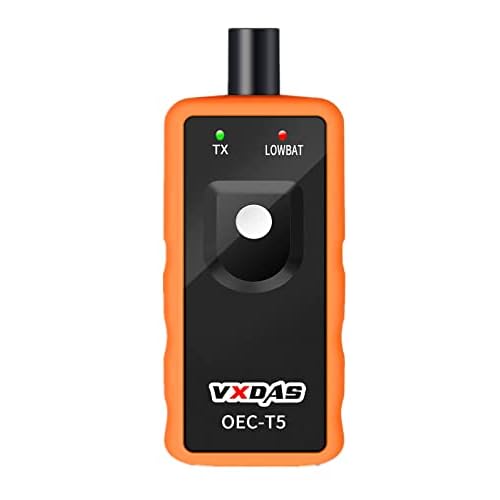
Instructions: If the light remains on after you have adjusted the pressure and completed a drive cycle, the system likely has a stored “hard code” or a dead sensor. Visit a local tire shop or auto parts store and ask them to use a TPMS scan tool. They will walk around the car and “ping” each sensor. This tool can read the battery life and the internal pressure of each sensor without removing the tire. If one sensor fails to respond, it must be replaced. Because the 2010 Sonata is over a decade old, it is common for the lithium-ion batteries inside the wheel sensors to fail, necessitating a physical replacement of the sensor unit rather than a simple reset.
Pro Tip: If you have to replace one sensor, consider replacing all four. Since they were all installed at the same time, the others are likely to fail shortly after the first one.
✅ Final Checklist
- Verified that the TPMS light is solid (low pressure) and not flashing (system error).
- Confirmed tire pressure against the driver-side door jamb placard (typically 32 PSI).
- Adjusted all four tires using a digital gauge while they were “cold.”
- Completed a 20-minute drive at speeds over 20 mph to trigger sensor transmission.
- Ensured no aftermarket electronics (like cheap USB chargers) are plugged in, as they can sometimes cause RFI interference with TPMS signals.
Important Notes:
- Safety Warning: Never ignore a TPMS light. Low tire pressure can lead to tire failure, reduced braking effectiveness, and hydroplaning risks.
- When to Seek Help: If the light continues to flash after several drive cycles, a sensor has likely failed. This requires a professional tire machine to break the bead of the tire and replace the sensor.
- Estimated Time: 30 minutes (10 for filling, 20 for driving).
- Estimated Cost: $0 for a manual reset; $50–$100 per sensor if replacement is required.
Common Triggers for the Low Tire Pressure Warning Light
It is easy to assume that a TPMS light means you have a nail in your tire. While that is often the case, there are several other reasons why your 2010 Hyundai Sonata might be complaining. Knowing these triggers can save you a lot of stress and prevent you from rushing to a mechanic for a simple fix.
Seasonal Temperature Changes
One of the most frequent reasons the TPMS light turns on is simply the weather. Air is a gas, and gases expand when they are hot and shrink when they are cold. If a cold front moves through your neighborhood overnight, the air inside your tires will become denser and take up less space. This causes the pressure to drop, even if there is no leak. You might notice the light comes on during a chilly morning but disappears once you have been driving for 20 minutes and the tires warm up.
- Winter Drops: Expect to add a few pounds of air when the first frost hits.
- Morning Blues: Cold tires always show lower pressure than tires that have been spinning on hot asphalt.
- Consistent Checks: It is a good habit to check your pressure at the start of every new season.
Sensor Aging and Physical Damage
Because the 2010 Hyundai Sonata has been on the road for over a decade, the TPMS hardware itself might be the culprit. The sensors live in a very harsh environment. They deal with high heat, freezing puddles, and constant vibration. Over time, the internal batteries eventually die, or the sensor itself can become corroded. If you hit a deep pothole or a curb, you might even physically damage the sensor or the valve stem.
Pro Tip: If your TPMS light is flashing for a minute before staying solid, it usually means there is a problem with the system hardware rather than a low tire. This could mean a dead battery in one of your four sensors or a signal interference issue. Always keep an eye out for these subtle patterns, as they tell you exactly what your car needs.
Slow Leaks and Hidden Punctures
Finally, we cannot ignore the most obvious reason: a real loss of air. A small screw or a piece of glass can cause a “slow leak” that takes days or weeks to trigger the light. You might not see the tire looking flat, but the sensors are sensitive enough to catch the change. If you find yourself refilling the same tire every week, you likely have a puncture that needs a professional patch. Don’t ignore the warning, as driving on a low tire can cause permanent damage to the tire’s sidewall.
Diagnostic Differences Between Flashing and Solid TPMS Lights
Understanding what your dashboard is trying to tell you is half the battle when dealing with tire pressure alerts. On a 2010 Hyundai Sonata, the TPMS warning light behaves in two distinct ways, each indicating a very different type of issue. Knowing the difference prevents you from wasting time looking for a reset button when the problem is actually mechanical.
Deciphering the Solid Amber Light
A solid TPMS light typically indicates a simple pressure issue. If the horseshoe-shaped light stays on consistently from the moment you start your engine, at least one tire has likely dropped below the 25% threshold of its recommended PSI. This is a common occurrence during seasonal temperature changes where the air density shifts significantly overnight.
- The Cold Weather Effect: You might notice the light turns on during a chilly morning and disappears once the tires warm up through driving. This indicates your pressure is right on the edge of the trigger point.
- The Spare Tire Factor: While many drivers forget it, some versions of the Sonata system are sensitive to the pressure in the full-sized spare. If your four main tires are perfect but the light remains solid, check the trunk.
- Slow Leaks: A solid light that returns every few days is a classic sign of a small puncture or a leaking valve stem that needs professional attention.
When the TPMS Light Flashes
If the light flashes for approximately 60 to 90 seconds before staying solid, you aren’t looking at a pressure problem—you’re looking at a system malfunction. This usually means the car’s computer can no longer “talk” to one or more sensors located inside the wheels.
- Sensor Dead Zone: A flashing light often points to a dead battery inside a wheel sensor or a physically damaged sensor body.
- Electronic Interference: Occasionally, high-powered electronic devices, aftermarket GPS units, or even certain cell phone chargers plugged into your 12V outlet can scramble the TPMS radio frequency signal temporarily.
Maintenance and Battery Life Expectations for TPMS Sensors
Since the 2010 Hyundai Sonata is now an older model, maintenance of the TPMS components is no longer just a luxury—it is a necessity. These sensors are not immortal; they rely on internal lithium-ion batteries that were never designed to last the entire life of the vehicle.
How Long Do TPMS Batteries Actually Last?
On average, the original equipment sensors in your Sonata are designed to last between 5 and 10 years. Given the age of a 2010 model, most original sensors are either currently failing or have already been replaced. Because these batteries are encased in a hard epoxy resin inside the sensor housing, they cannot be replaced individually. When the battery dies, the entire sensor unit must be swapped out.
- Mileage vs. Age: Sensors only transmit data when the wheels are spinning to conserve energy. However, the batteries also degrade over time regardless of mileage.
- Consistent Failure: If one sensor battery fails due to age, the other three are usually not far behind. It is often more cost-effective to replace all four during your next tire change.
Preventing Sensor Corrosion and Damage
Physical damage is just as common as battery failure in older Sonatas. The valve stems on 2010-era sensors are often made of aluminum, which is highly susceptible to galvanic corrosion, especially in regions where road salt is used during winter.
- Always Use Plastic Caps: Never use stylish metal valve caps. Metal caps can seize onto the aluminum stem, often requiring the entire sensor to be broken off just to add air.
- Service Kits: Every time you get new tires, ask the shop for a “TPMS Service Kit.” This replaces the rubber seals, nut, and valve core to prevent leaks without needing a whole new sensor.
- Technician Awareness: Always remind your tire technician that your vehicle is equipped with TPMS to ensure they don’t catch the sensor with the tire iron during a mounting or balancing service.
Conclusion
Searching for a 2010 Hyundai Sonata TPMS reset button can be a frustrating experience, but as we have explored, the lack of a physical switch is simply by design. This vehicle relies on an automated system that monitors real-time data and clears alerts once the physical conditions—specifically tire pressure—are met. By understanding the difference between a solid and flashing warning light, you can determine whether you need a simple air pump or a professional diagnostic tool.
Your next step is simple: check the tire pressure placard on your driver’s side door jamb and ensure every tire matches that number exactly. If the light persists after a short drive, it’s time to consult a technician to check for aging sensor batteries. Stay proactive with your tire maintenance to ensure your Sonata remains safe and efficient on the road!
💬 Quick Questions & Answers
Where is the TPMS reset button on a 2010 Hyundai Sonata?
There is no physical reset button; the system resets automatically through driving.
What is the correct tire pressure for this vehicle?
The recommended pressure is usually 32 PSI, but check the driver-side door jamb sticker.
How long do I need to drive for the light to turn off?
The light typically clears after 10 to 20 minutes of driving at speeds over 15 mph.
Does the 2010 Sonata spare tire have a TPMS sensor?
No, the spare tire is not monitored by the Tire Pressure Monitoring System.
Can I reset the TPMS light by disconnecting the battery?
No, this will only temporarily turn it off; the light will return once the ECU performs a system check.
❓ Frequently Asked Questions
Why can’t I find a TPMS reset button in my 2010 Sonata?
Unlike some manufacturers that use a manual button, Hyundai equipped the 2010 Sonata with an ‘Auto-Learn’ system. This means the vehicle’s computer automatically detects corrected tire pressures while the car is in motion, eliminating the need for a manual reset switch.
What does it mean if my TPMS light is flashing for one minute before staying solid?
A flashing TPMS light is a diagnostic signal indicating a system error rather than low pressure. This usually means a sensor battery has died or a sensor has failed entirely, requiring professional diagnosis with an OBDII tool.
Will the TPMS light turn off on its own after I add air?
Yes, once all tires (including the spare if applicable, though usually not on this model) are at the correct PSI, the light will turn off after several minutes of driving. The sensors require the centrifugal force of a spinning wheel to transmit new data to the computer.
Do I need to visit a dealership to reset the light after a tire rotation?
No, a standard tire rotation does not require a TPMS reset on a 2010 Sonata. The system is capable of recognizing the new positions of the sensors automatically as you drive the vehicle.
How does cold weather affect the 2010 Hyundai Sonata TPMS system?
Cold air is denser, which causes tire pressure to drop approximately 1 PSI for every 10-degree drop in temperature. This often triggers the TPMS light on cold mornings even if there is no puncture in the tire.
Can aftermarket sensors be used for the 2010 Sonata?
Yes, aftermarket sensors are compatible, but they must be programmed to the 315MHz frequency used by Hyundai. Some may require a ‘relearn’ tool to sync the new sensor ID with the vehicle’s Engine Control Unit (ECU).