Hyundai Veloster TPMS Reset Button Location: Located & Clarified
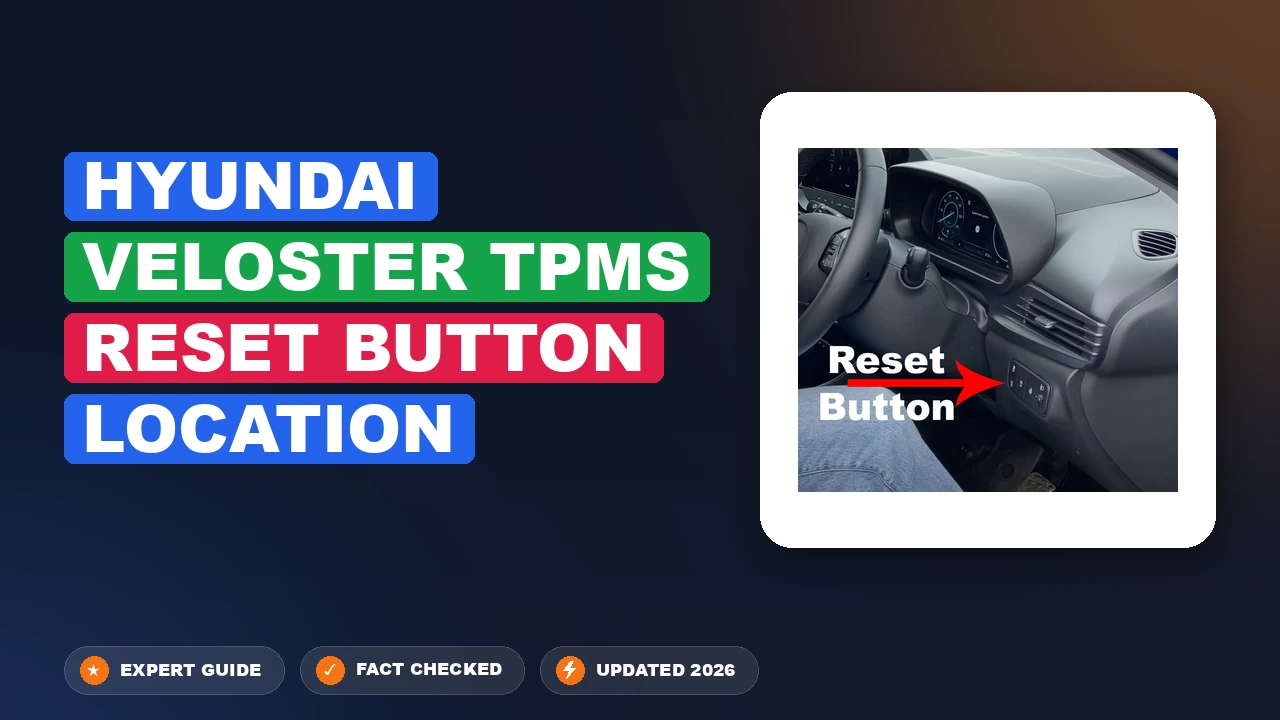
Seeing a tire pressure monitoring system (TPMS) light on your dashboard is a frustrating experience, especially when you have already addressed your tire pressures. Many Hyundai Veloster owners spend hours scouring their dashboard, glove box, and driver-side kick panel in search of a hidden “reset button” that simply does not exist. In this guide, we will clear up the confusion regarding your Hyundai Veloster TPMS reset button location and provide the exact, automated sequence required to restore your system to a fresh start.
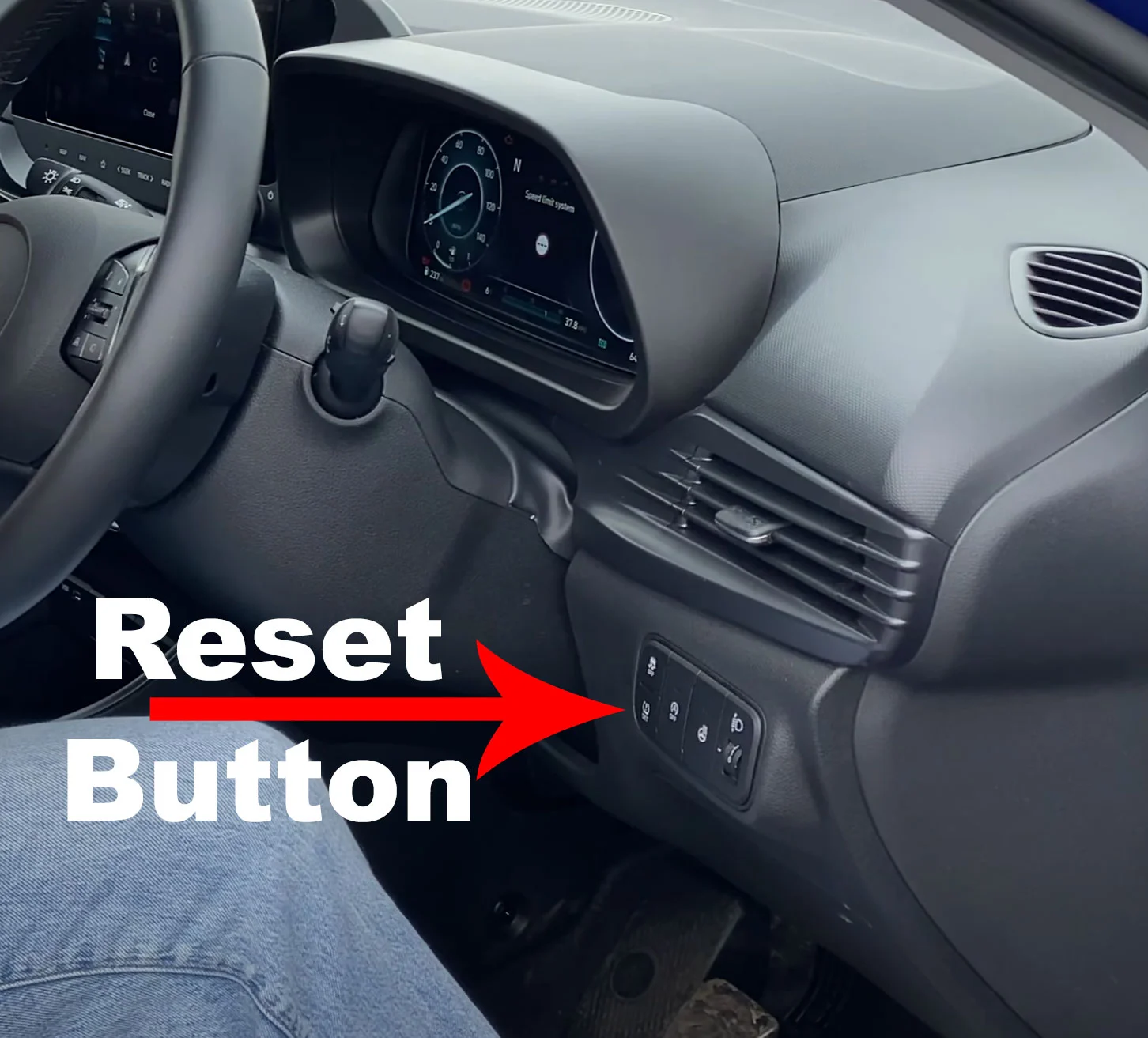
Debunking the Hyundai Veloster TPMS Reset Button Location Myth



📤 Share Image
Why No Physical Reset Button Exists on Your Veloster
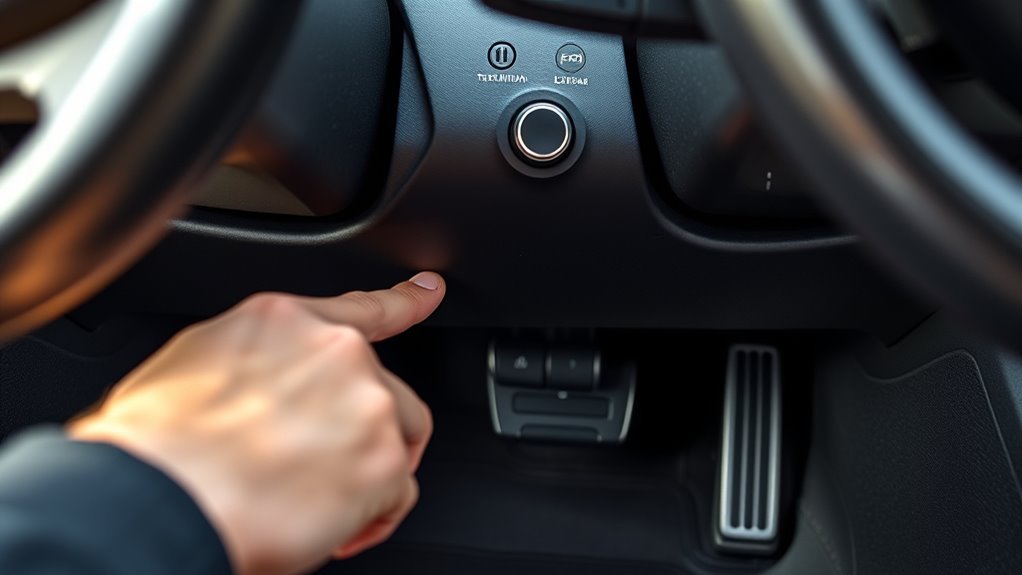
The search for a manual reset button is a common pitfall for owners of many vehicle makes, yet the Hyundai Veloster is engineered with a sophisticated, self-learning system. Industry data confirms that no Hyundai Veloster model, from the first generation to the current iteration, features a manual reset button to trigger a system reboot. Instead, the TPMS control module continuously monitors data from each wheel-mounted sensor. Relying on a manual override is unnecessary because the system is designed to reach a default status autonomously once the operational parameters—namely, proper air pressure—are met.
Decoding the Dashboard Warning Light Behavior
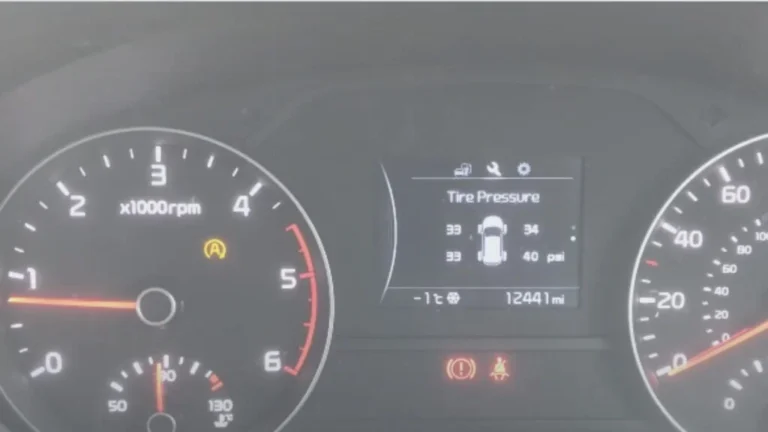
Understanding what your dashboard is communicating is critical. A solid, illuminated tire pressure warning light almost always indicates that one or more tires have fallen below the recommended pressure threshold. However, a flashing light typically signals a system malfunction or a dead sensor battery. If the light blinks for roughly one minute upon ignition before remaining solid, the TPMS control module has identified an internal error, such as a lost connection with one of the four valve-mounted sensors. In this instance, a manual drive cycle will not restore the system.

Direct vs. Indirect TPMS: How Hyundai Sensors Communicate
The Hyundai Veloster utilizes a Direct TPMS, meaning each wheel assembly contains an internal pressure sensor integrated into the valve stem. These sensors transmit real-time data directly to the vehicle’s computer. Unlike “indirect” systems—which rely on ABS speed sensors to calculate tire rotation differences—the Veloster’s direct system provides accurate pressure readings for each individual tire. Because these sensors are active electronic components, they require no “reboot” in the traditional sense; they simply require the correct input (air) to update their output (the warning light status).
Industry Data Summary
Velosters without manual buttons
Minimum speed for auto-learn
How to Initiate a System Refresh for the Hyundai Veloster TPMS


📋
Manual Initialization Sequence


Check the tire pressure placard located on the driver-side door jamb. Do not use the maximum pressure listed on your tire’s sidewall; use the manufacturer’s specified PSI to ensure a correct baseline.
Use a high-quality digital tire pressure gauge. Always inflate tires when they are “cold”—meaning the car has been parked for at least three hours or driven less than one mile—to ensure accuracy.
Drive the vehicle for 10 to 20 minutes at speeds consistently above 20 mph. This movement allows the valve stem sensors to wake up and transmit their new pressure data to the control module.
Troubleshooting Persistent TPMS Warning Light Issues
If you have successfully inflated your tires to the recommended placard PSI and completed the necessary drive cycle, but the warning light remains active, you are likely dealing with a hardware failure rather than a pressure calibration issue. Consider the following diagnostics:
- Internal Sensor Battery Life: The most common cause of persistent lights in older vehicles is a depleted internal battery within the sensor. These typically last 7–10 years. If a battery is dead, the unit must be professionally replaced.
- OBD-II Scanner Diagnostics: A professional-grade OBD-II scanner capable of TPMS communication can retrieve specific error codes. This tool identifies exactly which wheel sensor is failing to transmit, saving you from trial-and-error repairs.
- Gauge Accuracy Pitfalls: Not all gauges are calibrated equally. If your gauge reads 35 PSI, but your tires are actually at 30 PSI due to a faulty tool, the TPMS system will keep the warning light active. Use a secondary gauge to verify your baseline.
- Over-Inflation Dangers: Never inflate tires to the “Max PSI” printed on the tire sidewall. This is a common, dangerous mistake. Always defer to the Hyundai door jamb placard, which accounts for vehicle weight and handling dynamics.
Do not ignore a flashing TPMS light. Unlike a solid light indicating a pressure check, a flashing light confirms that the electronic communication between the wheel and the dashboard is severed. This requires a professional technician to replace the sensor.
Expert Recommendations for Veloster Tire System Health
To minimize future headaches and keep your Veloster’s TPMS functioning reliably, follow these professional maintenance practices:
Seasonal Awareness
For every 10°F drop in ambient temperature, tire pressure typically drops by 1 PSI. Check your pressures during the first autumn cold snap to avoid a sudden light activation.
Valve Cap Integrity
Always use high-quality, airtight valve caps. They prevent moisture and road debris from entering the valve stem, which protects the sensitive electronics inside your sensors.
If you frequently swap between winter and summer tires, ensure your second set of wheels is also equipped with compatible TPMS sensors. If they are not, the dashboard light will remain illuminated regardless of how often you manually check your pressures.
Ensuring Your Hyundai Veloster Tire System Stays Balanced
Maintaining an optimal tire system is about more than just clearing a dashboard light; it is a fundamental aspect of vehicle safety and efficiency. To recap: the Hyundai Veloster does not utilize a physical reset button because the onboard computer is constantly polling the status of your tire sensors. By keeping your tire pressures strictly in line with the manufacturer’s door-jamb specifications and performing consistent, simple drive cycles, you enable the system to function as designed without unnecessary manual intervention.
If your warning light persists even after accurate inflation and extended driving, it is time to stop troubleshooting at home and seek professional service. A quick check with an OBD-II diagnostic tool at your local tire shop will identify any failing sensor batteries, ensuring you can get back to a safe and properly monitored driving experience. Prioritizing these routine inspections ensures that your Veloster remains responsive, efficient, and safe on the road.
Hyundai Veloster Tpms Reset Button Location: Frequently Asked Questions
Can I reset the Veloster TPMS with a scanner?
While you cannot ‘reset’ the system like a computer, an OBDII or TPMS-specific scanner is essential for diagnosing the system. A technician can use a scanner to read sensor IDs, test battery life, and identify which specific tire sensor is failing. If a sensor is broken, the scanner is the only way to program the new sensor ID into the vehicle’s ECU.
Why won’t my TPMS light turn off after adding air?
The system requires a ‘handshake’ between the wheel sensors and the receiver module. If you have added air but the light persists, the sensors may be in ‘sleep mode.’ Driving the vehicle at speeds above 20 mph for at least 10–20 minutes is required to wake the sensors and allow them to transmit updated pressure data to the car’s computer.
How long does it take for the TPMS light to go off?
Once you have corrected the tire pressure, the TPMS light should turn off automatically within 10 to 20 minutes of continuous driving. The system needs to detect the new pressure readings while the vehicle is in motion to update the dashboard display. If the light remains illuminated after 30 minutes of driving, there is likely a faulty sensor or a system fault.
Does replacing tires require a TPMS reset?
Generally, no. As long as your existing sensors are kept with the original wheels and not damaged during the tire mounting process, the car will recognize them automatically. The system is ‘plug and play.’ However, if you purchase new wheels with new sensors, you will need a tire shop to program the new sensor IDs into the car’s onboard computer.
Can cold weather trigger the TPMS light in my Veloster?
Yes, temperature fluctuations are the most common cause of TPMS activation. For every 10-degree drop in ambient temperature, tire pressure typically drops by about 1 PSI. If your tires were near the minimum recommended threshold, the cold weather drop is sufficient to trigger the warning light. Always check your tire pressure during cold spells to ensure it stays within the recommended manufacturer range.