Kia Seltos Chassis Number Location: Find Your VIN Easily
Last Updated on September 1, 2026 by Ryan
The primary locations for your Kia Seltos chassis number (VIN) are typically on the driver’s side dashboard visible through the windshield, and on a sticker on the driver’s side B-pillar when the door is open. You can also find it stamped into the vehicle’s frame, often under the front passenger seat or within the engine bay, and sometimes on official vehicle documents.

Prime for Young Adults — 6 Months Free
Students and 18–24s get six months of Prime free, then half price.
Start 6 Months Free🎯 Key Takeaways
Recommended Best Deal Products

- Check dashboard (windshield) first for VIN.
- Look for a sticker on the driver’s side B-pillar.
- Locate stamped VIN in the engine bay area.
- Verify VIN on vehicle registration documents.
- Use good lighting to easily read the number.
Finding the chassis number, also known as the Vehicle Identification Number (VIN), on your Kia Seltos is straightforward once you know where to look. The primary locations for this crucial 17-character code are prominently displayed on the driver’s side of the dashboard, visible through the windshield, and on a sticker located on the driver’s side door jamb. These are the quickest and most common places to verify your Seltos’ unique identity.
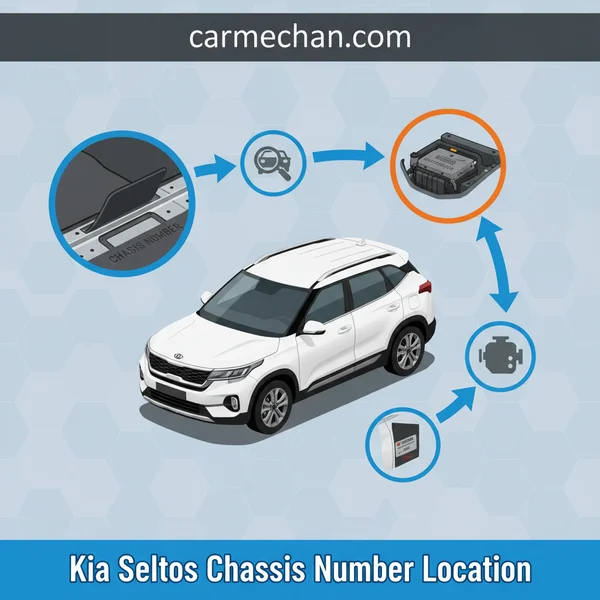
Knowing your Seltos’ VIN is essential for various reasons, from vehicle registration and insurance paperwork to ordering genuine parts or checking service history. It’s your car’s individual fingerprint, distinguishing it from every other vehicle manufactured. This guide will walk you through precisely where to find these numbers, ensuring you can locate them easily whenever needed.
Understanding the Kia Seltos Chassis Number (VIN)
Your Kia Seltos’ chassis number is a distinct, globally recognized identifier assigned at the time of manufacturing. For the Seltos, like all modern vehicles, this is a 17-character alphanumeric code without the letters I, O, or Q to prevent confusion with numbers 1 and 0. This unique sequence encodes specific information about your vehicle, but our focus here is solely on its physical location.

Why Your Seltos’ VIN is Critical to Locate
While you don’t need to decode it, simply finding the VIN on your Seltos is crucial for many practical scenarios. It’s a legal requirement for vehicle registration and title transfers. Insurance companies heavily rely on the VIN to accurately identify your specific model and features. Furthermore, when you take your Seltos for service or need to order replacement parts, mechanics and dealerships use the VIN to ensure they’re accessing the correct specifications and history for your exact car.
- Legal Compliance: Required for registration, title, and ownership verification.
- Insurance Accuracy: Ensures correct policy details for your specific Seltos model.
- Service & Parts: Essential for accurate service records and ordering compatible parts.
Everything You Need to Know About Your Kia Seltos Chassis Number Location
The chassis number, also known as the Vehicle Identification Number (VIN), is a unique 17-character code that acts as your Kia Seltos’s fingerprint. It’s crucial for everything from registration and insurance to tracking recalls and verifying vehicle history. Locating this number can sometimes feel like a treasure hunt, but this comprehensive guide will walk you through the most common spots on your Kia Seltos, ensuring you can find it quickly and confidently. Follow these steps carefully to easily pinpoint your vehicle’s essential identifier.
Step 1: Preparation and Understanding Your VIN
What you need: A good light source (flashlight or phone torch), a micro-fiber cloth (optional, for wiping dust), and perhaps a pen and paper to jot down the number.
Instructions: Before you start, understand that the VIN is typically a 17-character alphanumeric code. It encodes information about the manufacturer, model, year, and unique serial number. Familiarize yourself with the general appearance – it’s often stamped into metal or printed on a durable sticker. Ensure you have adequate lighting, as some locations can be dimly lit, making the small characters hard to read. A clean cloth can be useful to gently wipe away any dust or grime that might obscure the numbers, ensuring accurate reading.
Pro Tip: Always double-check each character as you read it. Misinterpreting a ‘B’ for an ‘8’ or an ‘I’ for a ‘1’ is a common mistake that can lead to significant issues with documentation or vehicle history checks. Take your time and verify each digit meticulously.

Audible — Listen Free for 30 Days
One free credit a month and thousands of titles included.
Listen Free for 30 DaysStep 2: Dashboard Discovery: Peering Through the Windshield
What you need: No specific tools, just your eyes and a clear line of sight.
Instructions: The most common and easily accessible location for your Kia Seltos’s chassis number is typically on the dashboard, visible from the outside. Stand outside your Seltos on the driver’s side and look through the lower corner of the windshield, close to where the dashboard meets the glass. You should see a small plate or sticker with the VIN clearly displayed. This placement is a federal requirement in many countries, designed for quick identification by law enforcement or during inspections without needing to open the car. It’s usually a raised tag or a white sticker with black lettering, strategically positioned for clear visibility.
Pro Tip: If the sun causes glare, try moving your position slightly or using your hand to shade the area. For vehicles parked in tight spots or adverse weather, this external check is often the quickest method. Ensure no dashboard items are inadvertently obstructing your view of the plate.
Step 3: Driver’s Door Jamb Deep Dive
What you need: No specific tools, just the ability to open your driver’s side door.
Instructions: Open the driver’s side door of your Kia Seltos fully. Direct your attention to the door jamb area, specifically the pillar between the front and rear doors (the B-pillar). You will likely find a sticker, often white or silver, containing various vehicle specifications, including tire pressure recommendations and manufacturing details. The chassis number (VIN) is almost always printed on this sticker. It’s usually labeled clearly as “VIN” or “Vehicle ID No.” and is a prominent feature among the other information. This location is a very reliable backup if you can’t read the dashboard VIN due to light conditions or obstructions.
Pro Tip: This sticker often contains other vital information, such as the Gross Vehicle Weight Rating (GVWR) and Gross Axle Weight Rating (GAWR), which are important for towing and cargo capacity calculations. Take a moment to familiarize yourself with all the data presented here, as it can be useful for maintenance and safety checks.
Step 4: Under the Hood: The Engine Bay Search
What you need: A flashlight (essential for dimly lit areas), and potentially gloves if you’re concerned about dirt or heat from a recently run engine.
Instructions: Pop open the hood of your Kia Seltos. The VIN can often be found stamped directly onto the vehicle’s frame or a sturdy metal component within the engine bay. Common areas to check include the top of the firewall (the metal panel separating the engine compartment from the passenger cabin), near the strut towers (the mounting points for the suspension), or along the radiator support. Look for a series of stamped characters on a flat metallic surface. This stamping is often less prominent than the dashboard or door jamb tags and might be covered by dust or light corrosion, which is why a good flashlight is critical. Ensure the engine has cooled down before poking around.
Pro Tip: While inspecting the engine bay for the VIN, it’s a great opportunity to perform a quick visual check for any obvious leaks, loose hoses, or wiring. This proactive approach can help catch potential issues early. Remember that this stamped VIN is considered the most secure and tamper-proof identifier of your vehicle.
Audible Premium Plus — Annual Membership
12 audiobook credits up front, plus the full Audible catalogue.
See Annual PlansStep 5: Official Documentation Double-Check
What you need: Your vehicle’s registration certificate, insurance policy, and owner’s manual.
Instructions: If you’re still having trouble locating the physical VIN on your Seltos, or if you simply need to confirm it without going to the car, your official vehicle documents are the next best place to look. Your vehicle’s registration certificate (also known as the title or logbook) will prominently display the VIN. Similarly, your insurance policy documents, especially the declarations page, will list the VIN as a primary identifier for your vehicle. Finally, the owner’s manual often has a dedicated section at the front or back where the VIN is printed, sometimes on a sticker affixed by the dealership or manufacturer. Always cross-reference these documents with each other for consistency.
Pro Tip: Keep copies of your registration and insurance documents, or at least a record of your VIN, in a secure but easily accessible location (e.g., a digital photo on your phone, a secure cloud storage). This is invaluable for roadside assistance, insurance claims, or quick reference when dealing with service centers, saving you from needing to physically check the car every time.
✅ Final Checklist
-
Successfully located the VIN on the dashboard through the windshield.
-
Verified the VIN on the driver’s side door jamb sticker.
-
Inspected the engine bay for a stamped VIN on the frame or firewall.
-
Cross-referenced the VIN with your vehicle registration and insurance documents.
-
Confirmed all 17 characters of the VIN are accurately read and recorded.
Important Notes:
- Safety considerations or warnings: When checking under the hood, ensure the engine is off and cool to avoid burns. Be mindful of moving parts if the engine has been recently run. Always keep your hands clear of belts and fans.
- When to seek professional help: If you cannot find the VIN in any of the primary locations, or if the VIN appears to be tampered with (e.g., scratched, altered, or covered), contact your local Kia dealership or a qualified mechanic immediately. Tampered VINs can indicate a stolen vehicle or serious legal issues.
- Estimated time and cost range: This process typically takes 5-15 minutes, depending on how quickly you locate the number. There is no cost involved in finding your VIN.
Primary Locations: Dashboard and Door Jamb Details
When you need to find your Kia Seltos’ VIN quickly, two locations should always be your first stop. These are designed for easy access and visibility, making them the go-to spots for quick checks by authorities, service personnel, or yourself. Both locations present the full 17-character VIN.

Dashboard Visibility: Through the Windshield
The most common and easily accessible location for your Seltos’ chassis number is on the driver’s side of the dashboard. This number plate is strategically placed so it can be read from outside the vehicle, through the windshield, without needing to open any doors or the hood. This design makes it convenient for quick inspections.
- Where to Look: Stand outside your Kia Seltos on the driver’s side. Look directly through the bottom-left corner of the front windshield.
- What You’ll See: You will spot a small, rectangular plate, typically metallic or a sturdy plastic, securely affixed to the dashboard. The 17-character VIN is clearly stamped or printed on this plate.
- Visibility Tip: Ensure good lighting when checking. Sometimes reflections or dirt on the windshield can obscure the number. It’s designed to be legible even at a slight angle.
(Imagine an image here showing the VIN plate on the Kia Seltos dashboard viewed through the windshield from outside the car, with the VIN clearly highlighted.)
Driver’s Door Jamb Sticker: Inside the Door
Another primary and equally important location for your Seltos’ VIN is on a manufacturer’s label or sticker found on the driver’s side door jamb. This is a comprehensive label that includes more than just the VIN, but the chassis number is always a prominent feature.
- How to Access: Simply open the driver’s side front door of your Kia Seltos.
- Where to Look: Direct your attention to the pillar between the front and rear doors (the B-pillar) or the frame where the door latches when closed. The sticker is usually found on the frame itself, near the latch mechanism, or on the lower part of the B-pillar facing the door.
- What You’ll See: This is typically a white or silver sticker containing various information, including tire pressure recommendations, gross vehicle weight ratings (GVWR), and the date of manufacture. The 17-character VIN will be clearly printed on this label, often labeled as “VIN” or “Vehicle ID No.”
(A diagram here could point to the specific area on the driver’s door jamb of a Kia Seltos where the VIN sticker is located, showing the sticker itself.)
Secondary and Stamped VIN Locations Explained
While the dashboard and driver’s side door jamb are the most common places to find your Kia Seltos’s VIN, there are other crucial spots where this unique identifier is stamped or located. These secondary locations are often less accessible but serve important purposes, particularly for security and official verification.
Hidden Spots for Security and Records
Manufacturers place VINs in multiple areas to deter theft and ensure that the vehicle can always be identified, even if primary tags are removed or damaged. For your Seltos, you might find additional VIN markings in less obvious places. These often include:
- Under the Driver’s Seat: Sometimes, lifting the carpet or a specific panel under the driver’s seat can reveal a sticker or etching with the VIN.
- On the Chassis Frame: Parts of the vehicle’s actual frame might have the VIN stamped directly onto the metal. This usually requires getting underneath the car or looking in specific wheel well areas.
- Near the Engine Bay Firewall: Pop the hood and look closely at the firewall, the metal partition separating the engine compartment from the passenger cabin. The VIN is often stamped here on a metal plate or etched directly.
These hidden locations are particularly useful for authorities during vehicle inspections or in cases where theft or tampering is suspected. It’s a good idea to be aware of their general existence for your own peace of mind.
Stamped Chassis Number Details
Beyond the easy-to-read labels, a Kia Seltos will also have its chassis number—which is essentially the VIN—stamped directly onto the metal body or frame. This is a permanent marking designed to withstand wear and tear. Finding these stamped numbers can sometimes be challenging, requiring a bit more effort and a good flashlight.
For example, in the engine bay, the VIN might be stamped onto a strut tower or a dedicated plate riveted to the frame. These stamped numbers are usually found in a consistent font and pattern, making them identifiable once you know what to look for. They serve as the definitive, unalterable identifier of your vehicle, crucial for registration, legal ownership, and confirming the vehicle’s true identity should any discrepancies arise with VIN stickers or plates.
Importance and Verification of Your Seltos VIN
The VIN of your Kia Seltos is far more than just a random series of characters; it’s a comprehensive identity card for your vehicle. Understanding its importance and knowing how to verify it can save you from potential headaches and protect your investment.
Why Your VIN Matters
Every character in your Seltos’s 17-digit VIN holds specific information about its manufacturing origin, engine type, model year, and unique serial number. This makes it an indispensable tool for various aspects of vehicle ownership:
- Ownership & Registration: Your VIN is essential for legal ownership, vehicle registration, and title transfers.
- Insurance Claims: Insurance companies use the VIN to identify your exact vehicle model, specifications, and history when processing claims.
- Service & Maintenance: Dealerships and mechanics use the VIN to access correct parts, recall information, and service bulletins specific to your Seltos.
- Accident History: The VIN can be used to check for past accidents, flood damage, or salvage titles, providing critical insights into a vehicle’s history.
- Recall Information: Manufacturers issue recalls based on VIN ranges. Knowing your VIN allows you to check for any outstanding safety recalls affecting your Seltos.
Always keep a record of your VIN, perhaps a photo on your phone, to have it readily available when needed.
Verifying Authenticity and History
When buying a used Kia Seltos or simply ensuring everything is in order with your current one, verifying the VIN is a critical step. The primary goal is to ensure consistency across all VIN locations and to check the vehicle’s reported history against its physical attributes.
A simple check involves comparing the VIN on the dashboard with the one on the driver’s door jamb and any other visible locations, like under the hood. They should all match perfectly. Any discrepancy could indicate tampering, theft, or previous repairs involving parts from different vehicles, which are red flags. Additionally, you can utilize online VIN decoders or vehicle history report services (like Carfax or AutoCheck) by simply inputting your VIN. These services provide detailed reports on a vehicle’s past, including accident history, previous owners, odometer discrepancies, and title issues, giving you a complete picture of your Seltos’s journey.
Conclusion
Understanding where to find your Kia Seltos’s chassis number, or VIN, is a fundamental aspect of responsible car ownership. From the easily accessible dashboard and door jamb locations to the more hidden stamped areas under the hood or on the chassis, each placement serves a vital role in identifying and securing your vehicle. This unique identifier is crucial for everything from legal registration and insurance to maintenance and verifying its history. Familiarize yourself with these spots and always ensure the VINs match across different locations. Being VIN-smart empowers you with critical knowledge, helping you protect your Seltos and maintain its integrity. Stay informed, stay secure!
❓ Frequently Asked Questions
What is the primary location for the chassis number on a Kia Seltos, and how do I access it?
The primary locations for your Kia Seltos chassis number (VIN) are typically on the driver’s side dashboard, viewable through the windshield, and on a sticker on the driver’s side B-pillar (door jamb) which becomes visible when you open the driver’s door. These are usually the quickest and easiest to find without tools.
Are there other places the Seltos VIN is located besides the obvious ones, and why are they there?
Yes, beyond the dashboard and B-pillar, the Kia Seltos VIN is also stamped into the vehicle’s frame, often under the front passenger seat by lifting the carpet flap, or on a plate within the engine bay. These secondary locations are crucial for security, anti-theft, and for official inspections to ensure the vehicle’s identity hasn’t been tampered with.
Why is it important to know where the chassis number is on my Kia Seltos?
Knowing your Kia Seltos chassis number location is essential for various reasons, including vehicle registration, insurance purposes, verifying the car’s identity during service or resale, checking its history for accidents or recalls, and as a critical anti-theft identifier. It’s the unique fingerprint of your vehicle.
What should I do if I can’t find the VIN on my Kia Seltos after checking all common locations?
If you’ve thoroughly checked the dashboard, B-pillar, engine bay, and under the passenger seat and still can’t find the VIN, first cross-reference with your vehicle’s registration or insurance documents. If it’s not there or you suspect an issue, contact a local authorized Kia dealership or your vehicle registration authority for assistance.
How can I ensure I’m reading the correct Kia Seltos chassis number and not a different number?
To ensure you’re reading the correct Kia Seltos chassis number, verify that the number matches across multiple locations on the vehicle (dashboard, B-pillar, engine bay) and with your official registration documents. The VIN is a unique 17-character alpha-numeric code, and checking for consistency helps confirm its authenticity.
Does the Kia Seltos chassis number location vary by model year or trim level?
Generally, the primary and secondary chassis number locations for the Kia Seltos remain consistent across different model years and trim levels due to standard manufacturing practices and regulatory requirements. Minor variations in the exact spot within the engine bay might exist, but the dashboard and B-pillar locations are typically universal.