Fix Car Shakes When Stopped At Light Expert Guide 2026
Last Updated on September 1, 2026 by Albert Duke
When your car shakes when stopped at light, it often signals an underlying mechanical issue that requires attention. Common culprits range from worn engine mounts and fouled spark plugs to transmission problems or issues with the idle air control valve. Addressing these promptly can prevent more significant, costly repairs down the road.
Understanding the specific symptoms and consulting a professional for an accurate diagnosis is key to resolving the vibration and restoring your vehicle’s smooth operation.
When your car shakes when stopped at light, it often signals an underlying mechanical issue that requires attention. Common culprits range from worn engine mounts and fouled spark plugs to transmission problems or issues with the idle air control valve. Addressing these promptly can prevent more significant, costly repairs down the road.
Understanding the specific symptoms and consulting a professional for an accurate diagnosis is key to resolving the vibration and restoring your vehicle’s smooth operation.
When your car shakes when stopped at light, it is a clear indicator that something within your vehicle’s intricate system needs attention. This unsettling tremor signals an underlying mechanical issue that should not be ignored. Ignoring these vibrations can lead to more severe problems and costly repairs down the line.
We will guide you through understanding the causes and finding effective solutions. Understanding the precise reasons behind this unsettling tremor is the first step toward a resolution. Let’s explore the five most common culprits.
Key Takeaways


- Shaking at idle indicates a problem.
- Engine mounts are a frequent cause.
- Ignition system issues can trigger shakes.
- Early diagnosis prevents larger repairs.
- Professional inspection is often necessary.
5 Most Common Causes for Car Shakes When Stopped


Several critical components can cause a car to shake when stopped at light, each with distinct symptoms and implications. Identifying the source of the vibration is crucial for effective repair and maintaining your vehicle’s performance into 2026.

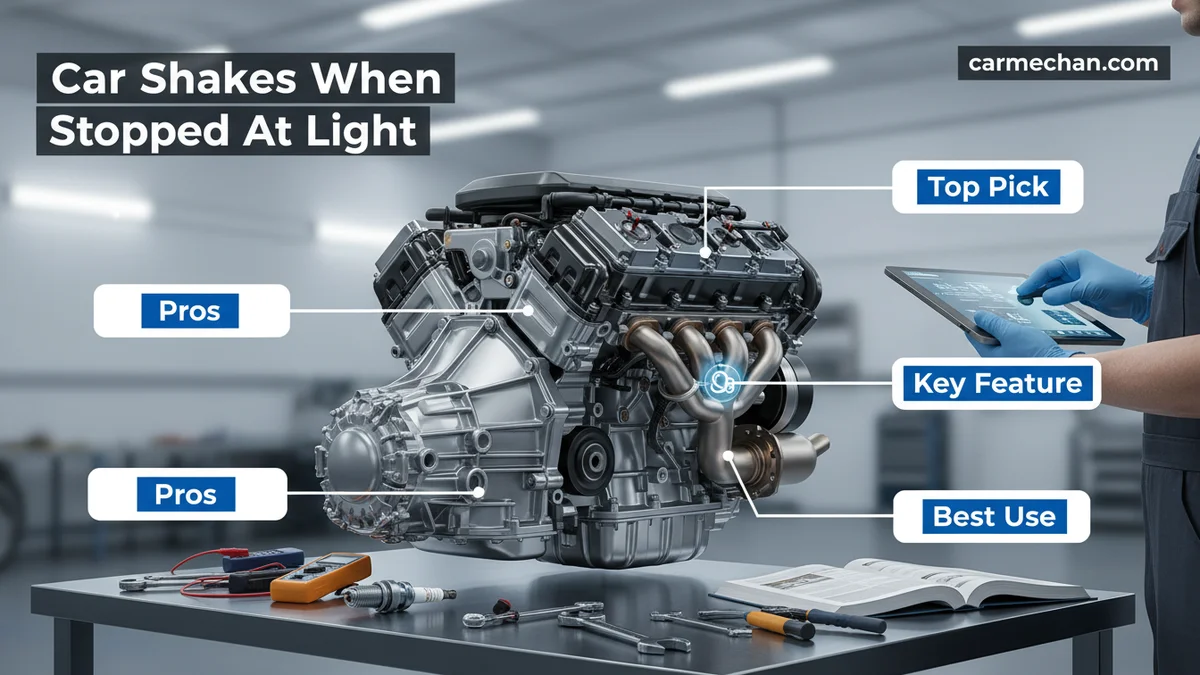
Worn Engine Mounts
Engine mounts are designed to secure the engine and absorb vibrations, isolating them from the car’s cabin. If these rubber or hydraulic mounts degrade, they lose their dampening ability. This can cause the engine’s normal vibrations to be felt prominently inside the car, especially when stopped and the engine is idling.
Roughly of unexplained vibrations are linked to these critical components.
Fouled Spark Plugs
Spark plugs ignite the air-fuel mixture in your engine’s cylinders, a process essential for smooth operation. Fouled or worn spark plugs can lead to misfires, causing the engine to run unevenly and shake. This vibration often becomes more noticeable when the car is stopped at a light.
Regular replacement of spark plugs, typically every miles, prevents this common issue.
Vacuum Leak Concerns
A vacuum leak allows unmetered air into the engine, disrupting the air-fuel ratio and causing the engine to idle roughly. This imbalance results in a noticeable shake or shudder when the vehicle is stationary. Hoses and gaskets can degrade over time, creating small leaks that are difficult to spot without careful inspection.
Idle Control Valve Faults
The Idle Air Control (IAC) valve regulates the amount of air entering the engine when the throttle is closed. A dirty or faulty IAC valve can prevent the engine from maintaining a consistent idle speed. This fluctuating idle often manifests as a shake or rumble when your car is stopped at a light, as the engine struggles to stabilize.
Transmission Fluid Needs
Low or contaminated transmission fluid can lead to rough idling, especially if your car is an automatic. Issues with the torque converter, often exacerbated by poor fluid conditions, can also cause noticeable shaking. This occurs as the transmission struggles to smoothly transfer power while the car is in gear but stationary.
While knowing the potential causes is helpful, effectively identifying the exact problem requires a systematic approach. Let’s how you can begin diagnosing your vehicle’s vibration.
How to Diagnose Your Shaking Car in Three Steps



Diagnosing why your car shakes when stopped at light can often start with a few simple observations and checks you can perform yourself. Your detailed observations are invaluable for both self-diagnosis and informing a professional mechanic.
Observe Shaking Patterns
Pay close attention to when and how your car shakes. Does it happen only when the engine is cold or always? Does it shake more when in drive or reverse, compared to neutral or park? Is the vibration consistent or intermittent? Noticing these specific conditions provides critical clues.
Consider the intensity of the shake, whether it feels like a subtle tremor or a significant shudder.
Check Under the Hood
With the engine off and cooled, visually inspect under the hood. Look for any loose or cracked vacuum hoses, which are a common source of leaks. Check the engine oil and transmission fluid levels to ensure they are at the correct marks. Listen for any unusual hissing sounds once the engine is running, which could indicate a vacuum leak.
Ensure battery terminals are tight and free of corrosion.
Professional Inspection Needs
If initial checks do not reveal an obvious cause, or if you are uncomfortable performing them, professional assistance is essential. Mechanics have diagnostic tools that can read engine fault codes and pinpoint precise issues. For instance, specific diagnostic codes can indicate engine misfires, often related to spark plug or coil problems .
These tools can detect problems beyond visual inspection. Understanding the characteristics of the shake is crucial for proper diagnosis, especially when differentiating between various types of vehicle movements. Next, we will compare vibrations versus shudders to help you pinpoint your issue.
Vibration Versus Shudder for Your Vehicle
When your car shakes when stopped at light, the specific feel of that motion can provide valuable clues, distinguishing between a vibration and a shudder. Describing these sensations accurately to a mechanic is incredibly helpful for a quick and correct diagnosis.

Identifying Vibrations
A vibration typically feels like a consistent, high-frequency hum or buzzing sensation. It might be felt through the steering wheel, seat, or floorboards. Engine vibrations often stem from minor imbalances, such as worn engine mounts or slight engine misfires. These usually do not involve significant jerking movements but rather a steady, unsettling tremor.
Typical RPM fluctuations for mild vibrations might be subtle, unlike more severe issues .
Understanding Shudders
A shudder is generally more pronounced and intermittent, characterized by a lower frequency and a more noticeable shaking or jerking. This can feel like the entire car is momentarily struggling or struggling to maintain its position. Shudders are often associated with transmission problems, particularly torque converter issues, or more severe engine misfires.
They represent a more significant disruption to the vehicle’s smooth operation and demand prompt attention.
Feeling Engine Rumbles
Engine rumbles describe a deeper, often lower-frequency vibration that feels like a heavy pulsation. This sensation is distinct from a high-frequency buzz. Rumbles can indicate issues like vacuum leaks, exhaust system problems, or even internal engine issues that cause the motor to run roughly. They suggest a deep-seated operational problem, often related to fuel delivery or air intake.
Accurately identifying the type of shake is a critical step, but knowing when your vehicle truly requires professional attention is equally important.
When to Seek Expert Help for Car Shakes
While many minor issues can cause your car to shake when stopped at light, certain symptoms clearly indicate it’s time to consult a qualified mechanic. Delaying professional intervention can lead to more serious and expensive repairs in 2026.
Persistent Shaking Signs
If the shaking is persistent, occurs every time you stop, or noticeably worsens over time, it’s a clear signal to seek professional help. A shake that intensifies or is accompanied by a significant drop in performance suggests an underlying problem that won’t resolve itself. Ignoring these persistent signs risks further damage to critical components, potentially impacting your vehicle’s safety and reliability.
Dashboard Warning Lights
Any illuminated dashboard warning light, especially the “Check Engine” light, alongside a car shake, demands immediate professional attention. These lights are your car’s way of communicating a problem detected by its onboard diagnostic system. Even if the shaking seems minor, a warning light indicates a system fault that requires expert diagnosis .
Ignoring these warnings could lead to expensive component failures.
Unusual Noise Triggers
If the shaking is accompanied by unusual noises like clunking, grinding, hissing, or knocking, it’s a strong indicator of a mechanical problem that requires prompt diagnosis. For example, a clunking sound with shaking might point to a failing engine mount, while a hissing sound could suggest a vacuum leak.
These noises provide vital clues about the nature and severity of the underlying issue, making expert evaluation crucial. Understanding when to get professional help is crucial, but proactive maintenance also plays a significant role in preventing these issues altogether. Let’s look at how regular care can keep your car running smoothly.
How Preventative Maintenance Reduces Car Shakes
Preventative maintenance is your best defense against your car shaking when stopped at light, addressing potential problems before they escalate. Adhering to a regular maintenance schedule can significantly extend your vehicle’s life and ensure smooth operation throughout 2026.
Regular Engine Checks
Performing regular engine tune-ups, including inspecting and replacing spark plugs and air filters, is fundamental. Fresh spark plugs ensure efficient combustion, preventing misfires that cause shaking. Clean air filters ensure proper air-fuel mixture, crucial for a stable idle. These routine checks keep your engine running optimally, minimizing vibrations and improving fuel efficiency.
A well-maintained engine is less likely to develop unexpected shaking at idle.
Fluid Level Monitoring
Consistently checking and maintaining correct fluid levels, including engine oil and transmission fluid, prevents many common shaking issues. Low or contaminated fluids can lead to poor lubrication or improper hydraulic pressure, directly causing rough idling or transmission shudders. Regularly topping off fluids or performing timely fluid changes, as per your vehicle’s manual, is a simple yet effective preventative measure.
This proactive step helps avoid performance issues and system wear.
Mount Integrity Assessments
Periodically inspecting engine mounts and vacuum lines can catch potential issues before they cause noticeable shaking. Technicians can check for cracks or excessive wear on engine mounts, replacing them before they completely fail. Similarly, inspecting vacuum hoses for brittleness or leaks helps prevent air-fuel mixture imbalances.
Proactive assessments of these components are crucial for maintaining your vehicle’s stability and comfort. By incorporating these preventative steps, you significantly reduce the likelihood of encountering unexpected car shakes. However, you might still have some common questions.
Conclusion
Ultimately, a car that shakes when stopped at light is a signal from your vehicle, urging you to pay attention. By understanding the common causes, performing initial diagnostic steps, and recognizing when to seek expert assistance, you empower yourself as a car owner. Proactive maintenance in 2026 remains the most effective strategy for preventing these unsettling vibrations.
Regular checks and timely repairs ensure your vehicle operates smoothly and safely. Prioritizing your car’s health today saves you from costly headaches tomorrow.
Frequently Asked Questions
Why Does My Car Shake Only When Stopped?
Your car shakes only when stopped because many issues are more noticeable at low RPMs or idle. Common causes include worn engine mounts, fouled spark plugs causing misfires, or problems with the idle air control valve, all of which affect engine smoothness when stationary. Addressing these specific components often resolves the issue.
Can Low Transmission Fluid Cause Shaking at a Stop?
Yes, low or contaminated transmission fluid can definitely cause shaking, especially at a stop. Insufficient fluid impacts the transmission’s ability to engage smoothly, leading to vibrations or shudders. It’s crucial to check your transmission fluid level and condition regularly to prevent this problem.
Is It Safe to Drive My Car If It Shakes at a Red Light?
Driving with a car that shakes at a red light can be unsafe, depending on the cause. Mild vibrations might be tolerable for a short period, but severe shaking, warning lights, or accompanying noises suggest a serious issue. Always seek a professional diagnosis quickly to avoid potential further damage or safety risks.
How Often Should I Check My Engine Mounts?
You should have your engine mounts inspected as part of your routine maintenance, typically every 30,000 to 50,000 miles, or if you notice any unusual vibrations. Your mechanic can visually inspect them for cracks or deterioration during other services, ensuring their integrity and preventing future shaking.
What Do Different Types of Shaking Feel Like?
Different types of shaking offer clues to the problem. A consistent, high-frequency “vibration” often points to engine mounts or minor misfires. A more pronounced, intermittent “shudder” can indicate transmission or more significant engine issues. A deep “rumble” might suggest vacuum leaks or exhaust problems, helping to narrow down the diagnosis.