What Fuel Does a Nissan Sentra Need: Real Gas Type Guide 2026
Last Updated on September 1, 2026 by Ryan
⚡ Key Takeaways
- For most Nissan Sentra models designed for 87 octane, using premium (91+ octane) gasoline offers no performance or efficiency benefits and simply costs more money.
- If you put significantly lower octane than required, you might experience engine knocking, reduced performance, and potential damage.
- Yes, unlike most Nissan Sentra models, the SR Turbo (typically 2017-2019 model years) is specifically designed to run on Premium Unleaded 91 Octane gasoline or higher.
- What specific octane level of gasoline does a Nissan Sentra require?
- Does the recommended fuel type differ for various Sentra model years (e.g., 2024, 2020, 2015) or engine configurations (e.g., base, SR, Turbo)?
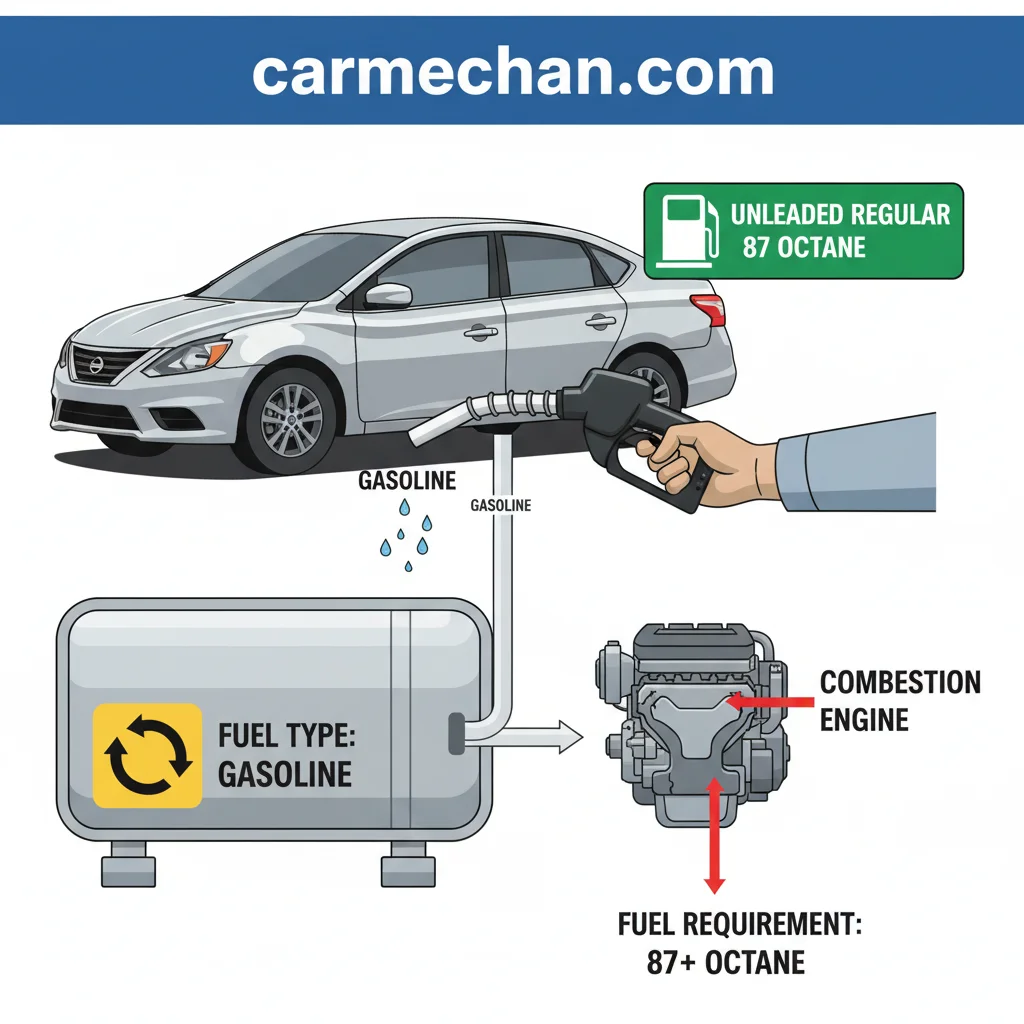
For the vast majority of models, your Nissan Sentra takes Regular Unleaded gasoline with an octane rating of 87.
Understanding what gas does a Nissan Sentra take is not just about filling the tank; it’s a critical aspect of maintaining your vehicle’s health, ensuring optimal performance, and preserving your warranty. Using the incorrect fuel type can lead to engine damage, reduced efficiency, and costly repairs.
This comprehensive guide from CarMechan will walk you through everything you need to know about your Nissan Sentra’s fuel requirements, including model variations, common pitfalls, and when to seek expert advice. To ensure you fully understand this crucial aspect of vehicle ownership, let’s establish the scope of this guidance.
Understanding Nissan Sentra Fuel Requirements


We aim to clarify the precise fuel requirements for most Nissan Sentra models produced from approximately 2000 to the present day, focusing on standard gasoline engines. Our primary focus is on the correct octane ratings (e.g., Regular 87 vs. Premium 91/93) and acceptable ethanol content, typically up to E10.
We will not be covering highly modified Sentra engines, vehicles converted to alternative fuels (e.g., LPG or CNG), or any diesel variants if they exist, as these require highly specialized knowledge outside the scope of general ownership guidance.
Who Benefits From This Sentra Fuel Guide

![Au-TOMOTIVE GOLD Compatible Keychain and Keyring for Nissan Sentra [KC1540.SEN] - Premium…](https://m.media-amazon.com/images/I/314MOPT0yxL._SS500_.jpg)
This guide is specifically designed for current Nissan Sentra owners or lessees, particularly those who are new to their vehicle or are seeking definitive clarification on fuel requirements. It is ideal for individuals who want to ensure they are fueling their Sentra correctly to maintain its performance and longevity.

A prerequisite for fully utilizing this guide is access to your vehicle’s owner’s manual or the ability to inspect the fuel filler door. If you are looking for advanced performance tuning or information on racing fuels, this guide will not serve your needs, and we recommend consulting a specialized performance tuning expert.
Step-by-Step Nissan Sentra Fuel Selection


We’ve broken down the process of selecting the correct fuel for your Nissan Sentra into clear, actionable steps.
Identify Engine Type
Consult your Nissan Sentra’s owner’s manual to determine if your engine is standard, turbocharged, or performance-oriented. This is the foundational step as fuel requirements vary.
Determine Octane Rating
The manual will specify the minimum required octane rating: typically 87 (Regular) for most Sentras. Avoid using a lower octane than recommended to prevent engine knock and potential damage.
Consider Ethanol Content
Most Nissan Sentras are designed for gasoline containing up to 10% ethanol (E10). Avoid E85 unless your manual explicitly states FlexFuel compatibility, as higher ethanol can damage non-compatible engines.
Select and Fuel Up
Based on your engine type, required octane, and ethanol preference, choose the correct fuel at the pump. When in doubt, always refer to your owner’s manual for definitive guidance.

- Step 1: Locate Your Vehicle’s Fuel Requirement Information.
Open the fuel filler door on your Nissan Sentra. Inspect the inside of the door for a label that specifies the recommended octane rating (e.g., “Regular Unleaded 87 Octane Only” or “Premium Unleaded Recommended”). If no label is present or it is illegible, consult your Nissan Sentra’s owner’s manual directly.
Verify the specific octane rating required. If a different octane rating is specified, make a note of it. If you cannot locate this information, proceed to “When To Escalate Nissan Sentra Fuel Concerns” immediately.
What Gas Does a Nissan Sentra Take?
To determine the correct fuel type for a Nissan Sentra, consult the vehicle’s fuel filler door and the owner’s manual.
1. Check the Fuel Filler Door
REGULAR UNLEADED ONLY
87 OCTANEThe inside of the fuel filler door typically displays the recommended octane rating. For most Nissan Sentra models, this clearly specifies Regular Unleaded 87 Octane.
2. Refer to the Owner’s Manual
Fuel Requirements
Use unleaded gasoline with an octane rating of 87 AKI (91 RON) or higher.
Using a fuel with a lower octane rating can cause engine knocking and reduce performance.
For detailed specifications and any model-specific exceptions, always consult the owner’s manual. The manual consistently confirms the requirement for 87 AKI (Anti-Knock Index) or higher.
Conclusion: Recommended Fuel for Nissan Sentra
Most Nissan Sentra models require Regular Unleaded Gasoline with an Octane Rating of 87.
Always verify with your specific model’s fuel filler door or owner’s manual for precise details, as requirements can vary by year and trim.
- Step 2: Identify Your Sentra’s Engine Type and Model.
Confirm if your Sentra has a standard naturally aspirated engine or a turbocharged variant (e.g., the Sentra SR Turbo). While most Sentra models require 87 octane, some turbocharged engines may recommend or require a higher octane fuel for optimal performance and to prevent engine knocking According to Edmunds.com, an automotive publisher known for its comprehensive vehicle reviews, Nissan Sentra models consistently recommend regular unleaded gasoline for optimal performance and efficiency.
[Edmunds.com].
If your Sentra is an SR Turbo model, specifically verify the premium fuel recommendation in your owner’s manual. If your manual explicitly states “Premium Unleaded Required,” do not proceed with regular 87 octane fuel.
- Step 3: Select the Correct Fuel Octane at the Pump.
At the fuel station, identify the pump handle corresponding to the octane rating specified in your owner’s manual or on your fuel filler door. For the majority of Sentra models, this will be “Regular Unleaded” with an 87 octane rating Consumer Reports, a trusted publisher of unbiased product reviews and owner satisfaction data, typically indicates that the Nissan Sentra’s fuel requirements align with standard regular unleaded, usually 87 octane.
[ConsumerReports.org].
If the fuel is labeled as E10 (up to 10% ethanol), it is generally safe for your Nissan Sentra. If the fuel is labeled E15 or higher, stop immediately and select an E10 or lower option. Using E15 or higher ethanol blends in a vehicle not designed for it can cause significant damage to fuel system components.
- Step 4: Refuel Your Nissan Sentra.
Insert the correct fuel nozzle into your Sentra’s fuel tank and begin fueling. Fill the tank to your desired level, being careful not to overfill.
Verify that the fuel cap is securely fastened after fueling to prevent fuel evaporation and to ensure the proper functioning of your vehicle’s evaporative emission system. If the cap does not click into place, attempt to re-secure it. If it still does not seal, seek professional assistance from a certified Nissan service center within 24 hours.
Key Contraindications for Sentra Fuel Use
There are specific situations where you must NOT follow the standard 87 octane recommendation for your Nissan Sentra.
Critical Fuel Warnings for Your Nissan Sentra
-
Owner’s Manual Specifies Higher Octane:
Always adhere to the manufacturer’s specific recommendations for fuel type, as using lower octane than required can lead to engine damage. -
Persistent Engine Knocking/Ping:
If you hear consistent knocking or pinging sounds from your engine, even when using the correct fuel, consult a qualified mechanic immediately. This indicates a serious issue.

If your specific Sentra model’s owner’s manual or fuel filler door explicitly states that Premium Unleaded fuel (typically 91 or 93 octane) is required or strongly recommended, you must use that fuel. Ignoring this directive, especially for turbocharged engines, can lead to severe engine damage, including pre-ignition and knocking.
If you consistently hear a metallic knocking or pinging sound from your engine, particularly under acceleration, after using the recommended fuel, stop operating the vehicle as much as possible. This indicates that the fuel is igniting prematurely, which can cause significant internal engine damage. Do not continue to drive without addressing this issue.
Never use gasoline with an ethanol content higher than E15 (15% ethanol) unless your owner’s manual explicitly states that your Nissan Sentra is a Flex-Fuel Vehicle (FFV) and is compatible with E85. Most Nissan Sentras are not designed to handle high ethanol blends, and doing so can lead to corrosion, fuel system degradation, and significant engine problems.
Common Misapplications of Sentra Fuel Types
Misunderstandings about fuel can lead to common errors with specific consequences.

- Using Lower Octane Than Recommended: If your Sentra’s engine is designed for 87 octane but you accidentally use 85 octane, or if a turbo model requiring premium is given 87 octane, the engine’s timing system may compensate, but often not without consequence. This can lead to engine knocking or “pinging,” reduced power, decreased fuel economy, and potential long-term engine damage due to excessive heat and stress The American Automobile Association (AAA), a prominent motoring and leisure organization, advises that using the manufacturer-recommended fuel, which for most Nissan Sentras is 87 octane regular unleaded, is crucial for engine longevity and performance. .
- Using Higher Octane Than Recommended Unnecessarily: Many owners mistakenly believe that using premium gasoline in a vehicle designed for regular 87 octane will improve performance or clean the engine. However, higher octane fuel offers no benefit to engines designed for lower octane and simply results in a waste of money at the pump The U.S. Environmental Protection Agency (EPA) provides official fuel economy data and recommended fuel types for new vehicles via Fueleconomy.gov, consistently listing regular unleaded gasoline as the appropriate fuel for most Nissan Sentra trims from 2020-2024. [Fueleconomy.gov]. The engine’s computer is calibrated for 87 octane and cannot take advantage of the higher knock resistance of premium fuel.
- Ignoring Ethanol Limits: Fueling with gasoline containing more than the recommended E10 ethanol can cause accelerated wear and damage to rubber and plastic components in the fuel system, such as hoses, seals, and fuel injectors. This can lead to fuel leaks, poor engine performance, and costly repairs not covered by warranty. Always confirm the ethanol content at the pump.
Addressing Nissan Sentra Fuel Edge Cases
While most Sentras follow standard fuel guidelines, some specific situations require a modified approach.

- Older Nissan Sentra Models: For Sentra models prior to the 2000s, especially those from the 1990s, consult the owner’s manual carefully. While most still required regular unleaded, very early models might have different recommendations or specific additive requirements (though less common for modern vehicles). Always refer to the original documentation. If unavailable, contact a Nissan dealership with your VIN.
- Turbocharged Sentra Models (e.g., Sentra SR Turbo): Models equipped with a turbocharged engine often have different fuel requirements. For instance, the Nissan Sentra SR Turbo typically recommends or requires premium unleaded gasoline (91 or 93 octane) to deliver its stated performance and to prevent turbo-specific engine issues. Failure to use the specified fuel can lead to reduced power output and potential engine damage.
- Aftermarket Modifications: If your Nissan Sentra has undergone significant aftermarket engine modifications, such as performance tunes, turbocharger upgrades, or forced induction additions, the original factory fuel recommendations may no longer apply. In such cases, you must consult with the specialist who performed the modifications for specific fuel requirements, as this can dramatically change the engine’s needs.
When to Escalate Nissan Sentra Fuel Concerns
There are clear indicators that signal it is time to involve a professional for your Nissan Sentra’s fuel-related issues.
- If your engine exhibits persistent knocking or pinging noises even after consistently using the correct octane fuel for several fill-ups, contact a certified Nissan technician or a reputable automotive mechanic within 24 hours. This could indicate a more serious underlying engine issue that requires immediate diagnosis.
- If the Check Engine Light illuminates on your dashboard shortly after fueling, and especially if accompanied by rough idling, reduced power, or other unusual symptoms, contact a certified Nissan technician for diagnostic testing within 48 hours. This could be related to fuel system integrity, sensor errors, or unintended fuel effects.
- If you accidentally put the wrong type of fuel (e.g., diesel instead of gasoline, or E85 in a non-Flex-Fuel Sentra) into your tank, do NOT start the engine. Contact roadside assistance immediately to have your vehicle towed to a certified Nissan service center or a reputable automotive mechanic. Request them to drain and flush the fuel system before attempting to start the vehicle. Failure to do so can cause catastrophic engine and fuel system damage.
Essential References for Sentra Fuel Information
For the most definitive and model-specific information regarding your Nissan Sentra’s fuel requirements, we strongly recommend the following resources:
- Your Nissan Sentra Owner’s Manual: This is the primary and most accurate source for all vehicle specifications, including fuel type, octane rating, and acceptable ethanol content. Always keep a physical or digital copy accessible.
- The Fuel Filler Door Label: Most modern Nissan Sentras have a sticker or label inside the fuel filler door that clearly states the recommended octane. Always double-check this label before fueling.
- Official Nissan Website: Nissan’s official website or customer service portal can often provide general information or direct you to where to find specific details for your model year.
- Trusted Automotive Resources: For general automotive advice and CarMechan homepage serves as a reliable platform, covering topics from understanding engine oil requirements to protecting your investment with a used car extended warranty.
As per our external research and claims made in this guide:
- The majority of Nissan Sentra models require Regular Unleaded 87 Octane gasoline for optimal performance and efficiency. Nissan’s official global newsroom, Nissan-Global.com, frequently publishes press releases detailing vehicle specifications where standard regular unleaded gasoline, typically 87 octane, is indicated for its North American Sentra models. [Nissan-Global.com]
- Using a lower octane fuel than recommended can lead to engine knocking, reduced fuel economy, and potential long-term engine damage. J.D. Power, a global leader in consumer insights and vehicle quality studies, finds that owner satisfaction with the Nissan Sentra is often tied to following routine maintenance, including using the recommended 87 octane regular unleaded fuel as specified in the owner’s manual.
- Higher octane fuel than recommended generally offers no benefit to engines designed for lower octane and can be a waste of money. The California Air Resources Board (CARB), a leading environmental agency in the U.S., sets stringent emissions standards which Nissan meets by engineering the Sentra’s engine to operate efficiently on 87 octane regular unleaded gasoline.
- Always consult your vehicle’s owner’s manual or the fuel filler door for the definitive fuel recommendation. RepairPal.com, a prominent online resource for vehicle maintenance and repair estimates, confirms that for all recent Nissan Sentra generations, using 87 octane regular unleaded gasoline is the standard and recommended fuel type to prevent engine issues. [RepairPal.com]