How to Freshen Car Interior and Remove Odors for Good
Last Updated on October 21, 2026 by Albert Duke


To freshen car interior air for good, find the source of the smell first, then clean it, dry it, and neutralize what is left. An air freshener on its own only covers the odor, so the smell returns once the scent fades.
Below, we match your smell to its likely cause, walk through six cleaning steps in order, explain when an ozone generator is safe, and list the smells that point to a mechanical problem instead of a dirty cabin.
What You Need Before You Freshen a Car Interior
Gather these supplies first so you do not stop halfway through the job.
- A vacuum with a crevice tool
- Microfiber towels and a soft brush
- A flashlight and a trash bag
- Interior cleaner for hard surfaces
- Fabric cleaner for seats and carpet. An enzyme cleaner, which is designed to break down organic residue such as spilled milk or pet accidents, suits food and pet smells.
- Baking soda
- A replacement cabin air filter, the filter that cleans the air entering the cabin through your vents, if yours is dirty
Skip bleach, hydrogen peroxide, and ammonia-based cleaners on upholstery, trim, and screens, and test any cleaner on a hidden spot first.
Before you clean anything, work out which smell you have.
How to Find Which Smell Your Car Has
The right fix depends on the smell, so name it before you pick a cleaner.
Which Smell Do You Have
Match your smell to its likely source, then jump to the right fix.
| Smell | Likely source | Where to fix |
|---|---|---|
| Musty or damp | Wet carpet padding, damp mats, dirty cabin filter | Steps 3 and 5, then the musty smell fix |
| Sour or spoiled | Food or milk spilled in the carpet and padding | Steps 1, 2 and 4 |
| Cigarette smoke | Fabric, headliner, vents | Steps 4 and 5, then the smoke fix |
| Pet odor | Carpet and seat fabric | Steps 4 and 6, then the pet fix |
| Only when AC or heat runs | Cabin air filter or AC vents | Step 5 |
| Gasoline, burning, sweet, rotten egg | A mechanical problem, not a dirty cabin | See a mechanic |
The cabin filter, water source and mechanical smell rows follow AAA’s guide to vehicle odors. The other rows are editorial guidance.
According to AAA’s guide to vehicle odors, a musty, moldy, or sour smell could be as simple as a dirty cabin air filter. For a spoiled food or liquid smell, AAA says to clean spills promptly, all the way down to the carpet fibers and pad.
Which Smell Do You Have
Match your smell to its likely source, then jump to the right fix.
| Smell | Likely source | Where to fix |
|---|---|---|
| Musty or damp | Wet carpet padding, damp mats, dirty cabin filter | Steps 3 and 5, then the musty smell fix |
| Sour or spoiled | Food or milk spilled in the carpet and padding | Steps 1, 2 and 4 |
| Cigarette smoke | Fabric, headliner, vents | Steps 4 and 5, then the smoke fix |
| Pet odor | Carpet and seat fabric | Steps 4 and 6, then the pet fix |
| Only when AC or heat runs | Cabin air filter or AC vents | Step 5 |
| Gasoline, burning, sweet, rotten egg | A mechanical problem, not a dirty cabin | See a mechanic |
The cabin filter, water source and mechanical smell rows follow AAA’s guide to vehicle odors. The other rows are editorial guidance.
In short, musty and sour smells often come from moisture or a dirty filter, food and pet smells come from spills and fabric, and gasoline, burning, sweet, or rotten-egg smells come from the car itself. Match your smell to the row above, then follow the steps below.
6 Steps to Freshen Your Car Interior
Work through these steps in order, because each one removes something the next step would otherwise leave behind.
Step 1 Clear Trash and Mats
Check under the seats, in the door pockets, the console, the glovebox, and the trunk, then bag everything you find. Pull out the floor mats and set them outside the car.
You should see an empty cabin with bare carpet.
Step 2 Vacuum Seats and Seams
Use the crevice tool along seams, under the pedals, and between the seats and console. Crumbs and dirt can hold odors and give mold something to feed on once things get damp, so they are worth removing even when they look harmless.
You should see no crumbs, sand, or hair left in the seams.
Step 3 Dry Out Damp Areas
Press your palm into the carpet where the mats sat and into the seat cushions. If anything feels cool or damp, dry it with sunlight or a fan.
Damp padding under the carpet can hide moisture that keeps a musty smell going, so dry it fully before you move on.
You should see carpet and cushions that are dry to the touch.
Step 4 Clean Surfaces and Fabric


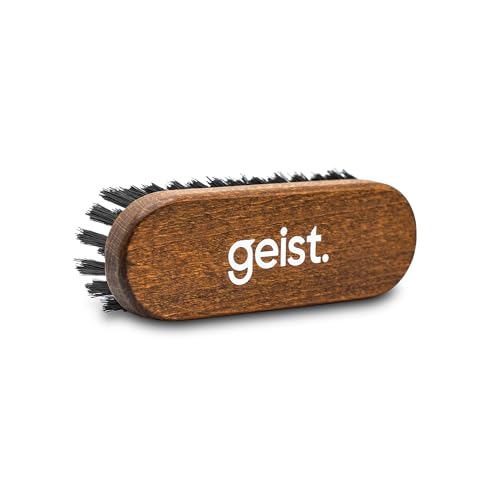
Wipe plastics, vinyl, and glass with an interior cleaner. On fabric, work the cleaner in with a soft brush and blot with microfiber instead of soaking it. Never soak the headliner, the fabric ceiling panel.
If a stain is part of the problem, our guide on how to clean car upholstery covers the details.
You should see no wet patches and no leftover foam.
Step 5 Refresh Vents and Filter
Run the fan on high. If the smell is stronger at the vents, treat them with an AC or vent cleaner made for cars and follow its label. Then check the cabin air filter and replace it if it is dirty.
Replacement intervals vary by maker, so check your owner’s manual. Toyota’s 2020 Camry AWD maintenance guide lists a cabin air filter replacement at every 10,000 miles or 12 months. It adds that heavy traffic, dirt roads, and urban, desert, or dusty areas may shorten the filter’s life.
You should see no smell from the vents when the fan runs on high.
Step 6 Neutralize and Air Out
Sprinkle baking soda over the carpet and fabric seats, then vacuum it up thoroughly. Arm & Hammer says to let it sit for at least 15 minutes, and longer if needed. Test a hidden spot for color-fastness first.
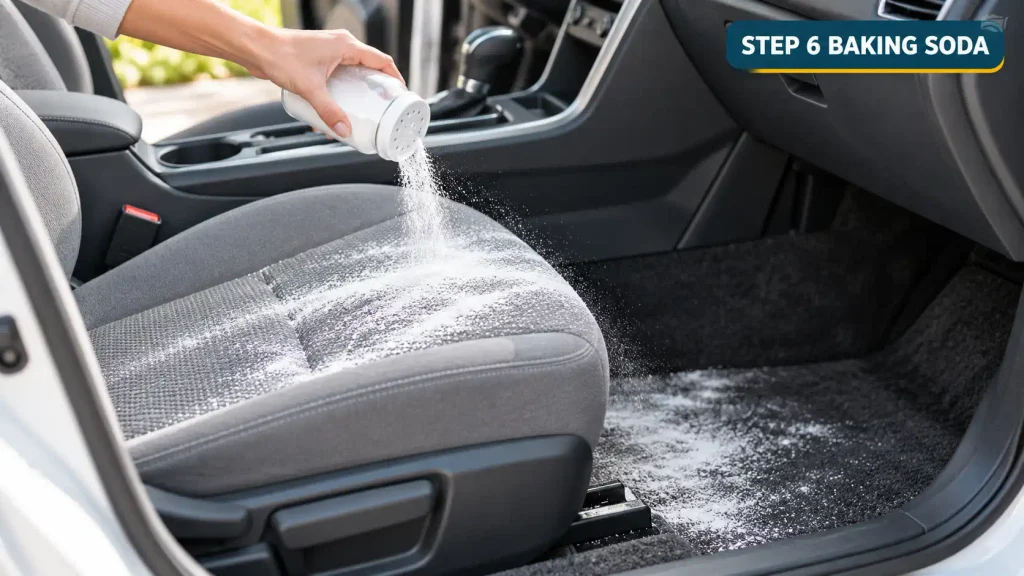
Open the doors to air out the cabin. Add fragrance last and keep it light, so it sits on a neutral cabin instead of covering a smell.
You should see a cabin that smells neutral before any scent goes in.
Which Fixes Work for Smoke, Pet, and Musty Smells
Smoke, pets, and moisture each leave a different kind of residue, so add one of these treatments after the six steps.
Cigarette Smoke Smells
Wipe every surface, including the glass, and use a soft brush in the crevices. Clean the vents, replace the cabin filter, and treat the headliner and fabric seats with steam or a fabric cleaner, taking care not to soak the headliner.
Pet Odors in Carpet and Seats
Use an enzyme cleaner on the carpet and seats, since pet odor is organic residue. Then dry the area fully so mold cannot start.
Musty and Mildew Smells
Find the moisture before anything else. As noted above, AAA says that if a clean filter does not fix a musty smell, a mechanic can check for water buildup from flooding or clogged sunroof or AC drains. Worn door and window seals can also let rain in.
If the smell appears mainly when the AC runs, see our steps for cleaning the car AC evaporator.
If the smell survives all of this, some owners turn to ozone.
Is an Ozone Generator Safe for Your Car
An ozone generator is a last resort, not a first step. It is a machine that turns oxygen into ozone gas, which detailers use to break down odor molecules.
The EPA says ozone can be harmful to health, that relatively low amounts can cause chest pain, coughing, shortness of breath, and throat irritation, and that it may worsen chronic respiratory diseases such as asthma. The agency also says ozone is not effective at removing many odor-causing chemicals at levels within public health standards, and that no federal agency has approved these devices for occupied spaces.
If you still use one, follow these rules:
- Clean and dry the car first, since ozone is not a substitute for removing the source.
- Treat an empty car only. Remove people, pets, plants, and food.
- Follow the unit maker’s instructions for run time and ventilation.
- Air the car out fully afterward, before anyone gets in.
If you are weighing a unit, our ozone generator buying guide lists the options.
Prevention is cheaper than treatment, and it starts with a few habits.
5 Habits That Keep Your Car Interior Fresh
- Clean spills right away. A small spill can soak into the padding, so blot it up before it sets.
- Crack the windows on dry days. This lets trapped moisture escape.
- Vacuum regularly. Crumbs and dirt give mold something to feed on.
- Use a moisture absorber in humid climates. Our list of the best moisture absorbers for cars helps you pick one.
- Use fragrance last and lightly. A freshener covers a smell instead of removing it.
Not every smell is a cleaning problem, though.
5 Car Smells That Mean a Mechanical Problem

If the smell is gasoline, burning, sweet, or like rotten eggs, stop cleaning and look at the car. AAA lists these as warning signs.
- Gasoline. It could mean a fuel leak, a faulty gas cap, or another fuel system problem. Have a mechanic diagnose it.
- Burning oil. AAA says it suggests a concern under the hood, from low engine oil to an oil leak. Have a mechanic check it.
- Sweet, like syrup. AAA says this suggests a coolant leak. Watch the temperature gauge, and if it climbs, pull over and let the engine cool.
- Rotten egg. AAA says this may point to an exhaust system failure, including the catalytic converter. See a mechanic.
- Burning rubber. AAA says it can be a worn clutch in a manual car, or loose or damaged belts and hoses. Have a mechanic inspect it.
None of these smells go away with a freshener.
Remove the Source to Freshen a Car Interior for Good
To freshen a car interior for good, remove the source instead of covering it. Find the smell, clear the trash, vacuum, dry every damp spot, clean the surfaces, refresh the vents and filter, and neutralize what is left with baking soda and open doors.
Treat smoke, pet, and musty smells with the extra steps above, and keep ozone as a last resort used with the EPA’s warnings in mind. If the smell is gasoline, burning, sweet, or rotten egg, the car needs a mechanic, not a cleaner.
Start today with two checks: press the carpet under your mats for dampness, and look at your cabin air filter. Those two spots explain most stale cars.
5 Car Interior Freshening Questions Answered
How do I make my car interior smell good naturally?
Remove the source first by clearing trash, vacuuming, and drying any damp spots. Then sprinkle baking soda on carpet and fabric, let it sit, and vacuum it up. Air the car out with the doors open, and add a light fragrance only at the end.
How long should baking soda sit in a car?
Arm & Hammer says to leave baking soda on car carpet or seats for at least 15 minutes, and longer if needed. Vacuum it up thoroughly afterward. Test a hidden spot first to check for color-fastness, since fabrics can react differently to the powder.
Does an air freshener remove odors or just cover them?
It mostly covers them. A freshener adds scent, but the source keeps producing the smell underneath. Use one only after you have cleaned and dried the car, so you are adding scent to a neutral cabin instead of hiding a smell that will come back.
How often should I replace the cabin air filter?
It depends on the maker, so follow your owner’s manual. Toyota lists the 2020 Camry AWD at every 10,000 miles or 12 months, and says heavy traffic, dirt roads, and dusty areas may shorten the filter’s life. Replace it sooner if the vents smell musty.
Is it safe to use vinegar or bleach inside a car?
Skip bleach, hydrogen peroxide, and ammonia-based cleaners on upholstery, trim, and screens. Choose a cleaner made for car interiors and test it on a hidden spot first. Never soak fabric or the headliner, because trapped moisture can bring a musty smell back.