How to Get Rid of Scratches on Your Car by Depth
Last Updated on October 21, 2026 by Albert Duke


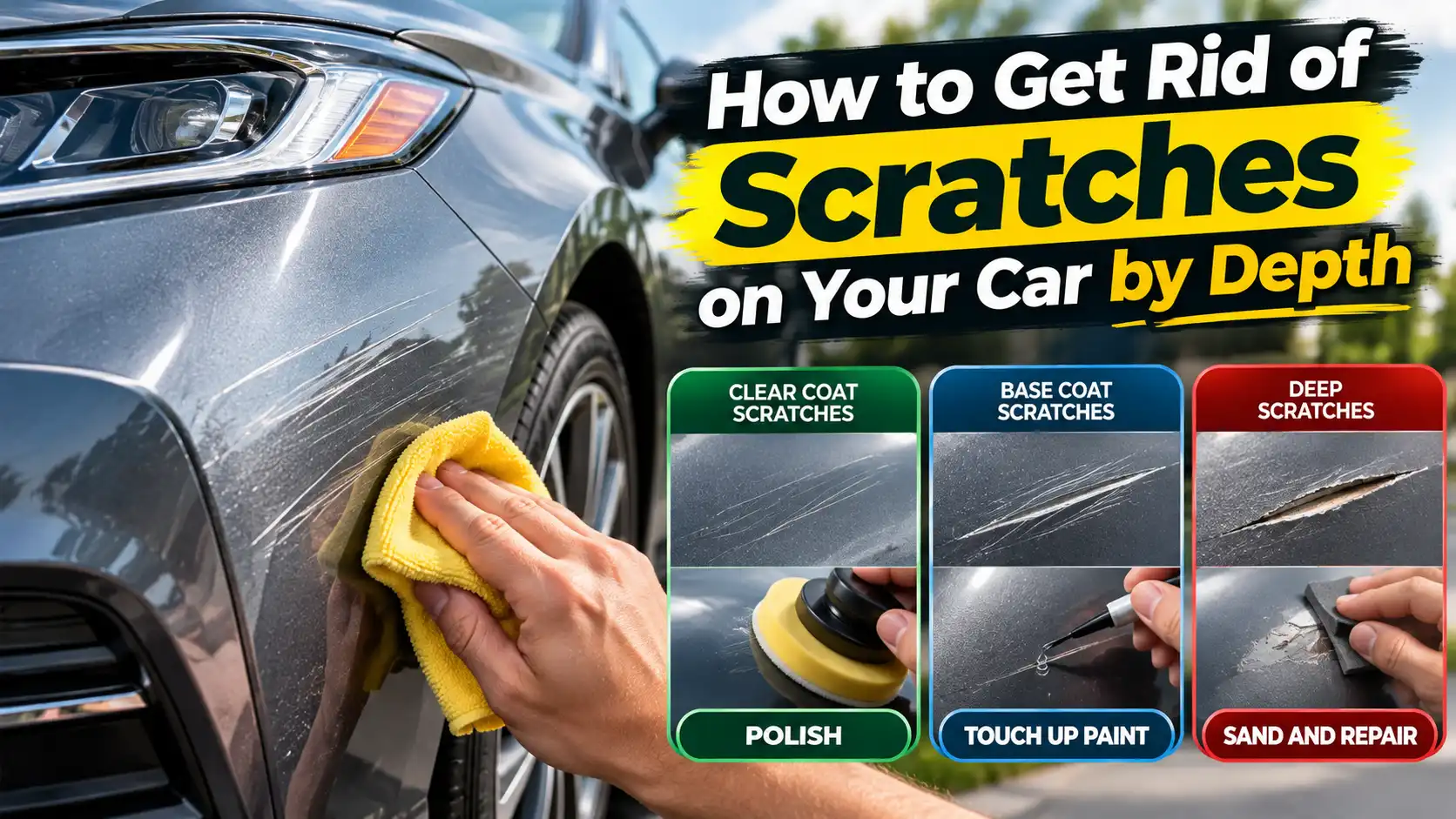
To get rid of scratches on your car, wash the panel and run a fingernail across the scratch. If the nail glides over it, the damage is in the clear coat, the clear top layer of paint, and compound can usually polish it out. If the nail catches, the scratch is deeper and needs touch-up paint or a body shop.
Below, we explain how to read the depth, list what you need, walk through six steps for light scratches, and cover touch-up paint, popular hacks like WD-40, and the signs that mean it is time to stop.
How to Tell How Deep Your Car Scratch Is
Wash the panel first, then run a fingernail across the scratch. Which? says that if you can catch a fingernail in the scratch, it is at least medium depth. Colorworks, an auto paint repair service, adds that a nail gliding smoothly over the mark points to a minor clear coat scratch, while a nail that drops into a groove points to deeper damage.
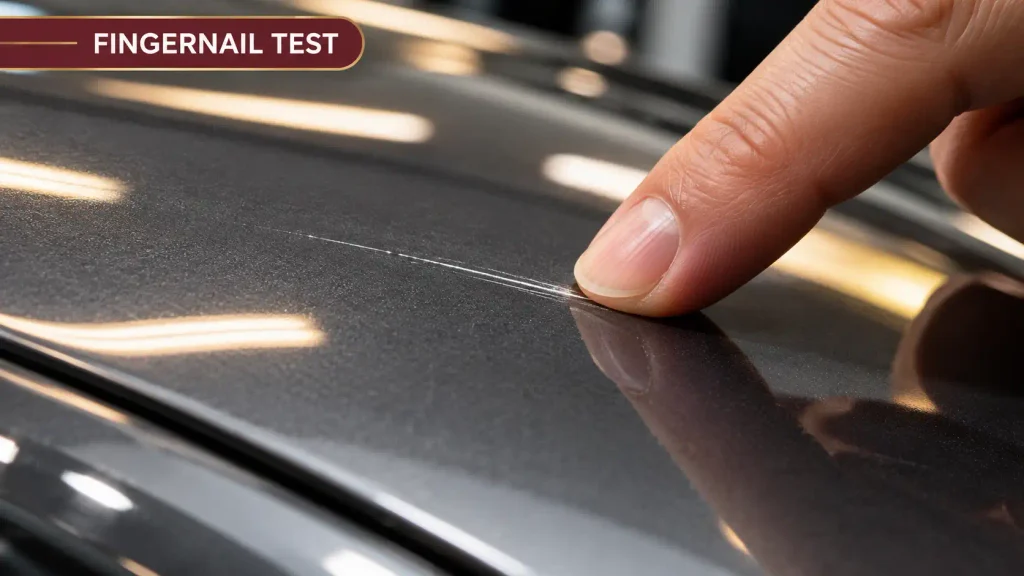
Your paint has layers: clear coat on top, then the color coat, then primer, then bare metal. The deeper the scratch goes, the less a home fix can do.
What Your Fingernail Test Means
Wash the panel first, then run a fingernail across the scratch.
What Your Fingernail Test Means
Wash the panel first, then run a fingernail across the scratch.
| Test result | Likely depth | What to do |
|---|---|---|
| Nail glides over it | Clear coat only | Compound, polish and wax (the 6 steps) |
| Nail catches | At least medium depth | Compound may fade it. Touch-up paint can cover the rest. |
| White, grey or black shows | Primer layer | Body shop |
| Shiny or rusted metal shows | Bare metal | Body shop soon. Exposed metal is open to moisture and road salt. |
Depth guidance follows Which? and Colorworks. A scratch that catches a fingernail is at least medium depth.
Depth guidance follows Which? and Colorworks. A scratch that catches a fingernail is at least medium depth.
In short, a smooth nail means compound and polish, a catching nail means touch-up paint at best, and visible primer or metal means a body shop. Colorworks lists primer showing through (white, grey, or black) and shiny or rusted metal as signs of a deeper scrape.
Once you know the depth, gather what you need.
What You Need to Remove Car Scratches at Home
Most light scratches need only a few items.
- Car wash soap and clean microfiber towels
- A rubbing compound and a polish, explained below
- Applicator pads, or a dual-action polisher if you prefer a machine
- Touch-up paint that matches your paint code, for deeper scratches
- Wax or sealant to finish
The two products differ in strength. Chemical Guys describes rubbing compound as the stronger option that removes a thin layer of clear coat, and polishing compound as the gentler one that refines the finish. Rubbing compound usually comes first, followed by polish.
For picks, see our best rubbing compounds for car scratches.
These steps cover scratches the fingernail test clears.
6 Steps to Remove Light Clear Coat Scratches
Work through these steps in order, and stop if the nail catches. In Which?’s test, repairs from most scratch remover products reappeared within five hand washes, so treat this as a cosmetic fix for shallow scratches.
Step 1 Wash and Dry the Panel
Wash with car wash soap and dry with a clean microfiber towel. Which? notes that grit can make a scratch worse when you rub the area.
You should see a clean panel with no dirt on the scratch.
Step 2 Move Into the Shade
Park in the shade. Which? found some products do not perform well in direct sunlight.
You should see a cool panel with no glare.
Step 3 Test a Hidden Spot
Try the product on a small hidden area first, as Which? advises. Some products leave a duller finish.
You should see no dulling or damage on the test spot.
Step 4 Work In the Compound

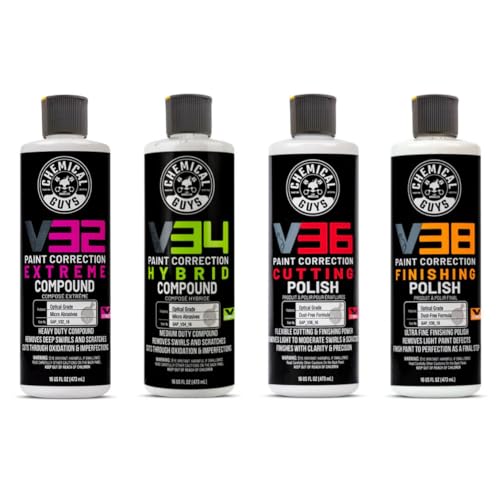
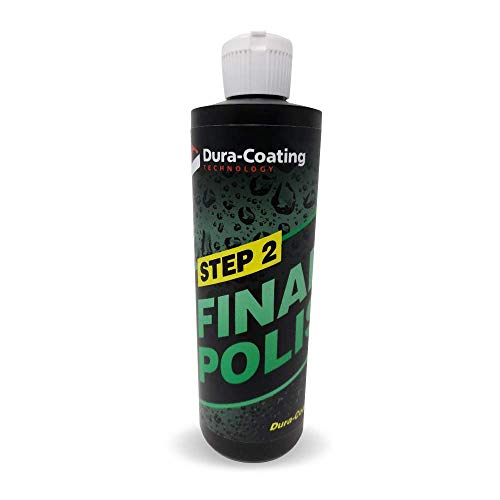
Apply the compound with a pad or microfiber and follow the product label for amount and time. Which? says many products need more than one application, and found an electric polisher did not do significantly better than applying by hand. If you still want a machine, see our best car polishers for beginners.
You should see the scratch fade or disappear. If it stays sharp after a few passes, stop.
Step 5 Polish Out the Haze
Compound can leave a hazy finish. Which? says a polish can fix a duller finish. Chemical Guys makes the same point about rubbing compound.
You should see a glossy surface that matches the paint around it.
Step 6 Protect With Wax
Compounding removes a thin layer of clear coat, so finish with wax or sealant and follow the product label.
You should see an even shine with no dull patch.
If the nail still catches, you need touch-up paint.
How to Fix Deeper Scratches With Touch-Up Paint
If the nail catches but you see no bare metal, touch-up paint is the next step. It covers a scratch, it does not make it vanish.
Find Your Paint Code
NAPA says the paint code may be under the hood, in the trunk, or inside the driver’s side door jamb. It warns that a repair in the wrong color may stick out worse than the original scratch.
Apply Light Coats
NAPA’s guide, which uses a Dupli-Color pen, starts with a wash and a thorough dry. Clean only the damaged area with the pen’s prep tip, then wipe it with rubbing alcohol.
Apply a light coat with the fine-tip pen for fine lines, or the small brush for wider areas, and let it dry for 30 minutes. Then apply the clear top coat.
Know the Limits
NAPA says to give the paint a full week to dry before gently blending the area with rubbing compound and finishing with wax. It also warns that touch-up paint will not save you when serious damage occurs.
Follow the instructions on your own paint pen, since products differ.
Before you buy anything else, check which hacks actually work.
Do WD-40 and Toothpaste Really Remove Scratches
WD-40 hides a light scratch for a short time, it does not remove it. Which? found it “does work… sort of,” but it took four applications to make a noticeable difference, and it washed off after the first wash.
We did not find an independent test of toothpaste on car paint, so we cannot recommend it.
For a lasting result on a shallow scratch, use compound and polish. For anything the fingernail catches, use touch-up paint or a shop.
Some scratches should go to a shop.
When to Stop and See a Body Shop
Stop if you see any of these signs. Colorworks lists them as signs of a deeper scrape:
- The fingernail catches in a deep groove
- White, grey, or black primer shows through the paint
- Shiny or rusted metal shows at the base of the scratch
- The edges feel rough, raised, or uneven
Which? found that none of the products it tested worked on deep scratches, and it recommends a bodywork repair shop for them. Colorworks adds that a scrape through the clear coat is more vulnerable to moisture, road salt, and rust.
Get a written quote from more than one shop before you decide.
Scratches on other surfaces need a different fix.
Which Fix Works for Plastic and Glass Scratches
Painted metal is not the only surface that scratches. Glass needs its own method, and our guide on how to remove scratches from car windows covers it.


On painted plastic bumpers and trim, choose products that say they are safe for plastic and follow the label.
Prevention is cheaper than repair.
5 Ways to Prevent New Car Scratches
- Wash with clean microfiber. Grit trapped in a dirty towel can scratch paint.
- Use the two-bucket method. One bucket for soap, one for rinsing your mitt.
- Dry with a clean towel. Do not reuse the towel you used on the wheels.
- Park away from carts and hedges. Both can scratch paint.
- Keep the paint protected. Wax or sealant adds a layer, and our ceramic coating guide covers longer-lasting options.
Match the Fix to the Scratch Depth
To get rid of scratches on your car, start with the depth. Wash the panel, run a fingernail across the scratch, and let the result choose the fix.
A smooth nail means compound, polish, and wax. A catching nail with no primer or metal showing means touch-up paint in the right color. White, grey, or black primer, or shiny or rusted metal, means a body shop. Skip WD-40 and other quick hacks if you want a lasting result.
Wash the panel and run your fingernail across the scratch today. That one test saves you from doing too much or too little.
5 Car Scratch Removal Questions Answered
How do I tell how deep a car scratch is?
Wash the panel and run a fingernail across the scratch. If the nail glides over it, the damage is in the clear coat. If it catches, Which? says it is at least medium depth. If primer or metal shows, the scratch is deeper and needs a body shop.
What is the difference between rubbing compound and polish?
Chemical Guys describes rubbing compound as the stronger product that removes a thin layer of clear coat, and polishing compound as the gentler one that refines the finish. Rubbing compound usually comes first and often leaves a hazy finish, which polish then clears up.
Does WD-40 remove car scratches?
Only for a short time. Which? found WD-40 “does work… sort of,” but it took four applications to make a noticeable difference, and it washed off after the first wash. It hides light scratches temporarily and does not remove them.
Do scratch removal kits really work?
Only on shallow scratches. Which? says most scratch removers target shallow scratches and swirl marks, repairs from most products reappeared within five hand washes, and none worked on deep scratches. Price did not guarantee results, so test a hidden spot first.
Can I fix a deep scratch myself?
If primer or bare metal shows, see a body shop. For a scratch the nail catches on without primer or metal showing, touch-up paint can cover it, but NAPA warns it will not save you when serious damage occurs. Match your paint code first.