Honda Accord Cruise Control Not Working: Diagnosed & Fixed
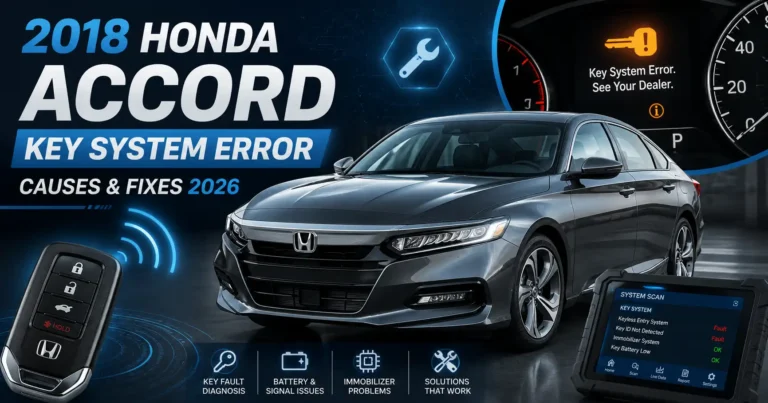
Is your Honda Accord suddenly refusing to hold its speed on the highway? Few things are as frustrating as a cruise control system that refuses to engage, especially during a long, monotonous commute. Whether you are dealing with an older mechanical linkage system or a modern suite of advanced driver-assistance features, the failure of this system can often point to broader vehicle health concerns. This guide will walk you through the systematic diagnostic process to help you identify whether your Honda Accord cruise control failure is a minor switch issue or a larger sensor-based system lockdown.
Identifying Causes When Honda Accord Cruise Control Is Not Working
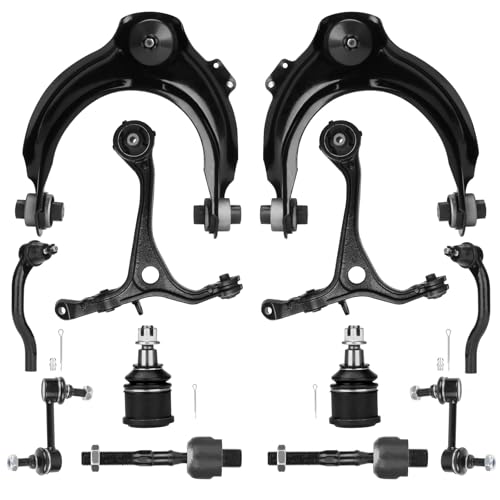


The cruise control system in your Honda Accord does not operate in a vacuum. It relies on a delicate handshake between the Engine Control Module (ECM), the Vehicle Stability Assist (VSA) system, and various wheel sensors. When a fault occurs elsewhere in the vehicle, the computer often initiates a “fail-safe” mode, cutting power to the cruise control system to prevent potentially erratic throttle behavior.
📤 Share Image
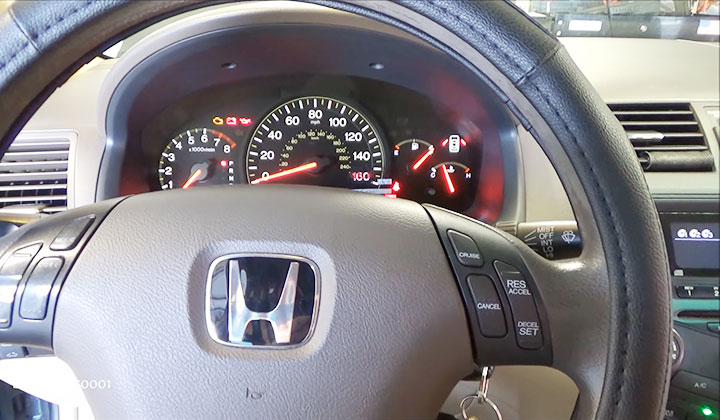
The Role of VSA and ABS in Cruise Logic
Because cruise control must be able to modulate the throttle and, in some cases, apply light braking to maintain speed, it is inextricably linked to the ABS and VSA modules. Research indicates that if the VSA light is illuminated on your instrument cluster, the cruise control system is almost always programmed to stay offline. This is a safety precaution: if the computer cannot verify that your wheels have traction or that the brake system is functioning correctly, it will not allow the cruise control to take command of the vehicle’s acceleration.
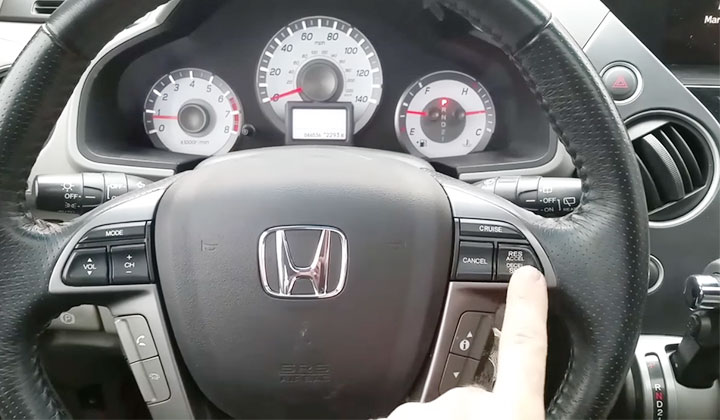
How a Check Engine Light Disables Cruise Control
The Engine Control Module (ECM) manages the throttle position. If your Accord has a pending or active check engine light—even for something seemingly unrelated, like an emissions issue—the system may disable cruise control. This protects the engine from further damage while it is in a compromised state. Generic OBD-II scanners often only read engine-related codes; if your cruise issue is tied to the chassis or body, you may need a scanner capable of reading ABS/SRS and body-level diagnostic codes.

Sensor Alignment and the Millimeter Wave Radar
For Accords equipped with Adaptive Cruise Control (ACC), the system relies on a millimeter wave radar sensor, usually hidden behind the front Honda emblem or grille. If this sensor is obstructed by debris, mud, or snow, or if it is misaligned due to a minor front-end bump, the system will trigger a “Cruise Control Not Available” message. This is not a hardware failure in the traditional sense, but a calibration or cleanliness issue.
By The Numbers
Cases related to external sensor faults (ABS/VSA/TPS)
MPH typical operating range (varies by generation)
Step-by-Step Guide: How to Fix Honda Accord Cruise Control
Before spending money on expensive parts, follow this logical diagnostic workflow. You should always start with the simplest, most common failure points before moving to complex electrical diagnosis.
📋
Diagnostic Troubleshooting Workflow
Check the interior and engine bay fuse boxes. Look for labels like “CRUISE” or “STOP/HORN.” If a fuse is blown, it is often a symptom of a short elsewhere, not just a dead fuse.
The brake switch informs the cruise system when you are stopping. If the switch is stuck or misaligned, the system thinks you are braking and refuses to engage. Test with a multimeter for continuity when the pedal is pressed/released.
Use an advanced OBD-II scanner. If you see a wheel speed sensor error, inspect the sensor at the hub for metallic debris or a severed wire. A faulty wheel speed sensor will effectively kill the cruise control system.
Steering Wheel Control Switches


If the cruise light turns on but you cannot “Set” the speed, the issue may be the steering wheel control switch itself. Over years of use, the contact points inside the button assembly can wear out or become contaminated with dust or oils. These assemblies are generally modular and can be replaced, but ensure the battery is disconnected for at least 15 minutes before working near the steering column to avoid accidental airbag deployment.
Honda Accord Cruise Control Not Working: Component Comparison
The technology inside your Honda Accord varies significantly by model year. Understanding your specific system is the first step in successful troubleshooting.
Diagnostic Pitfalls and Advanced Troubleshooting Techniques
Even skilled enthusiasts often fall into traps when repairing these systems. A methodical approach is required to avoid unnecessary costs.
- Clearing Diagnostic Trouble Codes (DTCs): Replacing a faulty brake switch or ABS sensor is only half the battle. If the system memory contains a “Hard Fault” code, it may not re-engage until that code is cleared using a professional OBD-II diagnostic tool.
- Ignoring Auxiliary Warning Lights: Never ignore the ABS, VSA, or TPMS lights. These systems feed data to the cruise control; if one is lit, your cruise control will be locked out as a precaution.
- Assuming Switch Failure: Do not jump to replace the steering wheel buttons. Always verify the signal at the clock spring or the connector under the steering column first.
- Safety First: Never perform electrical diagnosis near the steering wheel airbag while the battery is connected. Always wait for the capacitors to discharge to prevent accidental deployment.
If your cruise control intermittently drops out, check your brake light bulbs. On some older Accord models, a burnt-out brake light bulb can change the resistance in the brake circuit, tricking the computer into thinking the brake pedal is being depressed.
Avoid the use of aftermarket, low-quality wheel speed sensors. These sensors are precision devices. Cheap alternatives often fail to communicate perfectly with the VSA module, causing more dashboard lights than they resolve.
Summary of Findings
Resolving a Honda Accord cruise control failure requires you to think beyond the cruise button itself. Always check your instrument cluster for warning lights first, as they are often the true indicators of a hidden fault. The brake pedal switch remains the most common point of mechanical failure across all generations of the Accord. Once a repair is performed, always clear your system codes with an OBD-II tool to ensure the computer resets its logic. If your issue involves the Yaw rate sensor, advanced radar alignment, or complex drive-by-wire calibration, consult a professional Honda technician to ensure these safety-critical systems are perfectly synced and road-safe.
Honda Accord Cruise Control Not Working: Frequently Asked Questions
Why does my cruise control light flash?
A flashing cruise control light usually indicates a system error logged by the car’s computer. It often points to a problem with the electronic throttle control system, an ABS fault, or a communication breakdown between the steering wheel switches and the PCM. If it flashes, the system has disabled itself for safety reasons and will remain inactive until the underlying diagnostic code is cleared.
Can a blown fuse cause the cruise control to stop working?
Yes, absolutely. Because the cruise control system relies on various circuits—including the brake light switch and the horn—a single blown fuse can interrupt power to the control module. Always check the interior and under-hood fuse boxes first. Refer to your owner’s manual for the specific fuse location, as it is often shared with other secondary electrical components.
Does a check engine light disable cruise control?


In almost all modern Honda Accords, a check engine light (MIL) will automatically disable the cruise control system. The cruise control relies on the engine’s performance parameters to function correctly; if the computer detects an emissions or engine management fault, it defaults to a ‘fail-safe’ mode, turning off convenience features to protect the engine and transmission from further stress.
Why does cruise control cut out when I hit a bump?
Cruise control cutting out over bumps is a classic symptom of a loose electrical connection or a failing brake pedal position switch. If the switch is slightly out of adjustment, the physical jolt can trigger the sensor to think the brake pedal has been tapped, which immediately disengages the cruise control. Check for loose wires near the pedals or the clock spring connector.
Are steering wheel buttons a common failure point?
While the buttons themselves are robust, the underlying ‘clock spring’—the electrical cable assembly that allows the steering wheel to turn while maintaining a connection—is a known failure point. Over time, the internal ribbon cable can wear out, causing intermittent loss of signal to the cruise control buttons. If your steering wheel audio controls also act up, the clock spring is likely the culprit.