2024 Hyundai Santa Fe TPMS Reset Button Location Guide
Last Updated on September 1, 2026 by Ryan
📋 Table of Contents
- 🎯 Key Takeaways
- Understanding 2024 Hyundai Santa Fe TPMS Integration
- How to Manage Your 2024 Hyundai Santa Fe TPMS Like a Pro: A Practical Walkthrough
- Factors Influencing Modern Hyundai Tire Pressure Sensors
- Comparing Physical Buttons vs. Digital TPMS Resets
- Expert Tips for Maintaining TPMS Sensor Longevity
- Conclusion
- 💬 Quick Questions & Answers
- ❓ Frequently Asked Questions


The 2024 Hyundai Santa Fe does not utilize a physical TPMS reset button; instead, the system is integrated directly into the infotainment touchscreen menus. For most users, the system will automatically recalibrate and clear warnings once the tires are properly inflated and the vehicle is driven for several minutes.
🎯 Key Takeaways
- Check the infotainment menu for digital TPMS monitoring.
- Drive the vehicle to trigger automatic sensor recalibration.
- Inflate tires to the PSI listed on the door jamb.
- Address flashing lights immediately as they indicate malfunctions.
- Use Hyundai-compatible sensors for all aftermarket wheel upgrades.
Have you ever started your morning, hopped into your 2024 Hyundai Santa Fe, and noticed that glowing orange horseshoe on your dash? It is a common sight for many drivers, especially when the weather takes a sudden turn. That little light is your Tire Pressure Monitoring System (TPMS) trying to tell you something important about your vehicle’s safety and efficiency.
Understanding your TPMS is more than just knowing how to turn off a light. It is about keeping your family safe on the road and saving money at the gas pump. In this guide, we will explore how Hyundai has modernized this system for the 2024 model year. You will learn why the traditional reset button has evolved and what your car is actually doing behind the scenes to keep you rolling smoothly.
Understanding 2024 Hyundai Santa Fe TPMS Integration
The 2024 Hyundai Santa Fe is a marvel of modern automotive engineering. Unlike older vehicles that relied on simple mechanical switches, this SUV uses a highly integrated digital ecosystem. Your tire pressure information is no longer just a warning light; it is a live data feed. This data flows directly into the vehicle’s central computer system to provide you with constant updates.

The Move Toward Digital Management
In the past, you might have looked for a physical button hidden under the steering wheel or inside the glove box. In the 2024 Santa Fe, Hyundai has largely replaced these physical buttons with software-based controls. This shift allows the car to be smarter about how it handles pressure changes. Instead of a simple “on/off” logic, the system monitors each tire individually. This digital integration means your car can distinguish between a minor pressure drop caused by cold air and a rapid deflation caused by a nail in your tread.
- Smart Dash Displays: Your digital instrument cluster provides a visual map of all four tires simultaneously.
- Automatic Calibration: The system is designed to learn new pressure settings as you drive, reducing the need for manual resets.
- Predictive Alerts: Modern software can often warn you before the pressure hits a dangerously low level.
- Infotainment Sync: Pressure data is often accessible through the main touchscreen menu for a deeper look at vehicle health.
Real-Time Monitoring vs. Passive Alerts
Your Santa Fe uses a “Direct TPMS” approach. This means there are actual sensors inside each wheel that measure the air pressure directly. This is much more accurate than the “Indirect” systems found in some other brands. Because the system is integrated into your driving profile, it can adjust its sensitivity based on your speed and load. If you are carrying a full load of passengers, the system knows that your tires are working harder and monitors them even more closely.
How to Manage Your 2024 Hyundai Santa Fe TPMS Like a Pro: A Practical Walkthrough
The 2024 Hyundai Santa Fe represents a significant technological leap for the mid-size SUV segment, featuring a sophisticated Direct Tire Pressure Monitoring System (TPMS). Unlike older vehicles that relied on a physical reset button located under the dashboard or inside the glove box, the 2024 Santa Fe utilizes an “Auto-Learn” software-driven process. Understanding how to interact with this system is crucial for maintaining vehicle safety, optimizing fuel efficiency, and extending the lifespan of your tires. This guide will walk you through the precise steps to clear a TPMS warning light and ensure your sensors are calibrated correctly using the vehicle’s integrated digital interface and specific driving cycles.
Step 1: Initial Visual Inspection and Safety Check
What you need: A flashlight, a pair of gloves, and a clear area around the vehicle.
Instructions: Before attempting any electronic reset or menu navigation, you must perform a thorough visual inspection of all four tires. A TPMS light in the 2024 Santa Fe is often triggered by a genuine drop in pressure or a puncture. Look for nails, screws, or any visible “bulges” in the sidewall. Check the “contact patch”—the area where the rubber meets the road—to see if any tire looks significantly flatter than the others. If you discover a puncture, the TPMS system will not reset until the physical damage is repaired. Additionally, ensure your vehicle is parked on a level surface to ensure accurate pressure readings during the next phase of the process.
Pro Tip: Don’t forget to check the spare tire if your trim level includes a full-size spare; while many modern Santa Fes use a tire mobility kit, some variants have sensors that can trigger alerts if the spare is underinflated.
Step 2: Locate the Tire and Loading Information Placard
What you need: Access to the driver’s side door frame.
Instructions: To properly “reset” the system, you must inflate the tires to the exact specifications defined by Hyundai engineers, not the maximum PSI listed on the tire sidewall itself. Open the driver’s door and look at the “B-pillar” (the frame the door latches onto). You will see a white and red sticker labeled “Tire and Loading Information.” This placard lists the specific Cold Tire Inflation Pressure for your front and rear tires. For the 2024 Santa Fe, this is typically between 33 and 35 PSI depending on your wheel size (18-inch vs. 20-inch or 21-inch wheels), but always follow the sticker on your specific VIN-matched vehicle.
Pro Tip: “Cold” tire pressure means the vehicle has been stationary for at least three hours or has been driven less than one mile. If you just finished a long highway drive, add 3-4 PSI to the placard recommendation to account for heat expansion.
Step 3: Precise Inflation and Pressure Adjustment
What you need: A high-quality digital tire pressure gauge and a portable air compressor or gas station air pump.
Instructions: Remove the valve stem caps from all four tires. Using your digital gauge, measure the current pressure. Even if only one tire is showing as “low” on your dashboard, the 2024 Santa Fe’s TPMS works best when all four sensors detect uniform pressure. Inflate each tire to the exact PSI found on your door placard in Step 2. If you accidentally over-inflate, use the small nipple on the back of the pressure gauge to release air in short bursts. Once all four tires are equalized, firmly replace the valve stem caps to prevent moisture and road salt from entering the sensor mechanism, which can lead to premature sensor failure.
Pro Tip: Digital gauges are significantly more accurate than the “pencil-style” pop-out gauges or the gauges built into gas station air hoses, which are often poorly calibrated due to heavy use.
Step 4: Navigating the 12.3-inch Digital Instrument Cluster
What you need: The vehicle ignition in the “ON” position (press Start button twice without holding the brake) or the engine running.
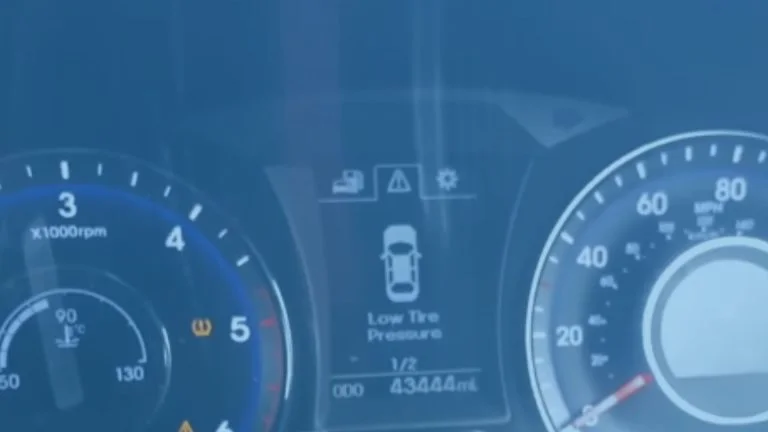
Instructions: Sit in the driver’s seat and look at your dual-pane curved display. Since the 2024 Santa Fe does not have a physical “Reset” button, you must verify the system recognizes the new pressures through the software. Use the “Menu” button (represented by a stack of papers icon) on the right side of your steering wheel. Toggle through the menus until you reach the “Information” or “Utility” tab. Scroll down using the selector wheel until you see the “Tire Pressure” screen. Initially, this screen may display “Drive to Display,” which is normal for the 2024 model. It indicates that the system is ready to begin the Auto-Learn recalibration process once the vehicle is in motion.
Pro Tip: If the screen shows specific low-pressure numbers in amber or red even after you have inflated the tires, do not panic. This is a cached reading that will update during the driving phase.
Step 5: Executing the Auto-Learn Driving Cycle
What you need: A stretch of road where you can maintain a steady speed for several minutes.
Instructions: This is the most critical step for the 2024 Santa Fe “reset.” To trigger the sensors to transmit new data to the ECU (Electronic Control Unit), you must drive the vehicle. Start the engine and drive at a speed of at least 15–20 mph (25–32 km/h). The system requires a consistent signal for approximately 10 to 20 minutes of continuous driving. During this time, the centrifugal force inside the tires activates the TPMS sensors, causing them to send updated pressure data to the receiver. Avoid stop-and-go traffic if possible, as the system resets more efficiently at sustained speeds. Once the sensors communicate the new, correct PSI, the warning light on the dashboard will extinguish automatically.


Pro Tip: If the light begins to flash for 60 seconds before staying solid, this indicates a system malfunction (like a dead sensor battery) rather than a low-pressure warning.
Step 6: Confirming the Calibration via Infotainment
What you need: Access to the 12.3-inch Infotainment touch screen.
Instructions: Once the light has turned off during your drive, pull over safely and check the central infotainment screen for any lingering “Vehicle Diagnostics” alerts. Tap on the “Setup” icon, navigate to “Vehicle,” and then “Cluster/Digital Key.” Some software versions of the 2024 Santa Fe allow you to view a detailed health report. Ensure there are no “Active Alerts” listed under the tire section. If the dashboard light is off but the “Tire Pressure” screen in the cluster still shows the previous low numbers, continue driving for another 5 minutes; the digital readout sometimes lags slightly behind the actual warning light deactivation.
Pro Tip: Extreme temperature drops (like a cold front moving in overnight) can cause air to densify, dropping pressure by 1-2 PSI and triggering the light. Always recalibrate in the morning for the best results.
✅ Final Checklist
- Verified that all tires (and the spare, if applicable) are free of punctures or sidewall damage.
- Matched tire pressure exactly to the PSI listed on the B-pillar placard (usually 33-35 PSI).
- Confirmed valve stem caps are tightened to protect the internal TPMS sensors.
- Completed a 15-20 minute driving cycle at speeds above 15 mph to trigger the Auto-Learn system.
- Verified that the amber TPMS icon on the instrument cluster has disappeared.
Important Notes:
- Safety Warning: Never ignore a TPMS light. Driving on underinflated tires can cause excessive heat buildup, leading to a catastrophic tire blowout and loss of vehicle control.
- Professional Help: If the TPMS light remains on after following these steps, or if the light flashes for one minute upon startup, a sensor may have a dead battery or a faulty transmitter. You should visit a Hyundai dealership to have the sensors scanned with a TPMS diagnostic tool.
- Estimated Time: 25–30 minutes (10 minutes for inflation, 15–20 minutes for the driving cycle).
- Estimated Cost: $0 (Free if using your own pump; $1.50–$2.00 at a gas station air machine).
Factors Influencing Modern Hyundai Tire Pressure Sensors
It is easy to get frustrated when a warning light appears on a brand-new car. However, these sensors are incredibly sensitive for a good reason. They are designed to react to the slightest changes in the environment around your vehicle. Knowing what triggers these sensors can help you avoid unnecessary trips to the dealership and keep your 2024 Santa Fe in peak condition.
Environmental Impact on Tire PSI
The most common reason for a TPMS alert has nothing to do with a leak. Physics is usually the culprit. As the temperature drops, the air molecules inside your tires huddle together, causing the pressure to fall. This is why many drivers see the warning light on the first cold morning of autumn. Conversely, driving on a hot highway at high speeds increases the temperature and the pressure. Your 2024 Santa Fe is calibrated to handle these fluctuations, but extreme shifts will still trigger an alert to ensure your safety.
- Seasonal Changes: A 10-degree drop in temperature can result in a 1 PSI loss in tire pressure.
- Altitude Shifts: Driving from sea level into the mountains changes the external atmospheric pressure, which affects sensor readings.
- Tire Friction: Long highway drives create heat, which can temporarily mask a slow leak by artificially raising the PSI.
- Sun Exposure: If one side of your car sits in the sun while the other is in the shade, you may see different readings for each side.
Battery Life and Sensor Longevity
Even though your Santa Fe is a 2024 model, it is helpful to understand the hardware. Each TPMS sensor in your wheels has its own internal battery. These batteries are designed to last for many years, but they are always working. They send signals to your car’s computer every few seconds while you drive. While battery failure is rare in a new vehicle, electronic interference from other devices can sometimes cause a temporary communication “hiccup.” If your light flashes before staying solid, it often points to a sensor communication issue rather than a pressure problem.
Remember, your TPMS is your first line of defense against a flat tire. Keeping an eye on these factors ensures that you stay ahead of potential issues before they become expensive repairs.
Comparing Physical Buttons vs. Digital TPMS Resets
If you have owned older vehicles, you might remember the days when resetting your tire pressure light required hunting for a tiny, recessed button hidden under the steering column or inside the glove box. However, the 2024 Hyundai Santa Fe represents a significant shift in automotive design. Like many modern SUVs, it has moved away from physical reset switches in favor of a fully integrated digital ecosystem.
The Move Toward Software-Based Monitoring
The transition to digital resets isn’t just about making the interior look sleeker; it is about providing the driver with better data. Physical buttons were often “dumb” switches that simply cleared a dashboard light without telling you which tire was actually the problem. In your Santa Fe, the TPMS is managed through the infotainment system and the digital instrument cluster. This shift allows the vehicle to show you real-time PSI for each individual wheel, making it much easier to identify a slow leak versus a temperature-related pressure drop.
Why Digital Systems are More Reliable
Physical buttons are prone to mechanical failure or accidental engagement. By moving the reset and monitoring functions into the vehicle’s software, Hyundai ensures that the system is harder to “trick.” The computer constantly cross-references data from the wheel sensors, meaning the light only stays off when the pressures are truly within the safe operating range. It effectively eliminates the guesswork that used to come with manual reset buttons.
- Precision: Digital systems provide exact PSI readings rather than just a warning light.
- Automation: Most modern Hyundai systems “auto-learn” new pressures after a short drive, removing the need for a button entirely.
- Safety: Software-based systems can alert you to rapid deflation while driving, a feature old-school button systems often lacked.
Expert Tips for Maintaining TPMS Sensor Longevity
While the 2024 Hyundai Santa Fe is built with high-quality components, TPMS sensors are sophisticated electronic devices living in a harsh environment. They deal with extreme heat, freezing roads, and constant vibration. Taking a few proactive steps can prevent expensive sensor replacements down the road.
Protect Your Valve Stems
One of the most common causes of TPMS failure isn’t the battery, but galvanic corrosion. Many drivers replace their standard plastic valve caps with “fancy” metal ones. However, if those metal caps react with the aluminum valve stem of the sensor, they can seize in place. Always use high-quality plastic caps with a rubber seal to keep moisture and road salt out of the sensor mechanism.
Mind the “Fix-a-Flat” Products
In an emergency, canned tire sealants can be a lifesaver, but they are often the enemy of TPMS sensors. The thick, sticky residue can clog the sensor’s pressure port, effectively “blinding” it. If you ever have to use an emergency sealant, make sure to inform your tire technician immediately. They may be able to clean the sensor before the chemicals harden, potentially saving you the $100+ cost of a new unit.
- Check Batteries: Most TPMS sensors have a lifespan of 5 to 10 years. Keep an eye on them as your Santa Fe ages.
- Seasonal Adjustments: Remember that for every 10-degree drop in temperature, your tires lose about 1 PSI. Checking your pressure at the start of winter can prevent “nuisance” lights.
- Professional Rebuilds: When you buy new tires, ask for a “TPMS rebuild kit.” This replaces the rubber seals and nut on the sensor without replacing the expensive electronic unit itself.
Conclusion
Understanding the 2024 Hyundai Santa Fe TPMS system is more about navigating the digital menu than finding a hidden physical button. By embracing this tech-forward approach, Hyundai provides a safer and more informative driving experience. Keeping your tires properly inflated not only keeps that pesky dashboard light off but also ensures your SUV remains fuel-efficient and handles exactly as the engineers intended.
Next steps: Take a moment this week to scroll through your Santa Fe’s digital cluster and familiarize yourself with the tire pressure screen. If your light is currently on, head to a gas station to verify your PSI levels against the sticker on your driver-side door jamb. Safe driving!
💬 Quick Questions & Answers
Does the 2024 Santa Fe have a physical TPMS button?
No, the 2024 model uses a digital interface within the infotainment and instrument cluster menus instead of a physical button.
Where can I see my tire pressure readings?
Real-time tire pressure can be viewed in the ‘Information’ or ‘Utility’ section of the digital instrument cluster while driving.
How long does it take for the TPMS light to turn off?
After inflating tires, the light typically turns off after 5 to 10 minutes of driving at speeds above 15 mph.
What is the recommended PSI for the 2024 Santa Fe?


The recommended tire pressure is listed on the sticker located on the driver-side door jamb.
Why is my TPMS light still on after filling the tires?
The system may require a short drive to sync the sensors, or there may be a slow leak or faulty sensor present.
❓ Frequently Asked Questions
Why did Hyundai remove the physical TPMS reset button?
Modern Hyundai vehicles like the 2024 Santa Fe use a ‘High-Line’ TPMS that monitors each tire individually in real-time. This advanced system is designed to update automatically as you drive, making a manual reset button unnecessary and obsolete.
How do I verify the TPMS system is active?
While the vehicle is in motion, toggle through the steering wheel menu buttons to find the tire pressure screen. If the display shows numeric PSI values for all four wheels, the system is communicating correctly with the sensors.
Does the 2024 Santa Fe spare tire have a sensor?
Generally, Hyundai does not install TPMS sensors in the temporary spare tire. If you are using the spare, the TPMS warning light will remain on until the full-sized tire is repaired and reinstalled.
What does a flashing TPMS light indicate?
A flashing light that eventually stays solid usually indicates a malfunction within the TPMS system itself, such as a dead sensor battery or a communication error. This requires a professional diagnostic scan rather than a simple air refill.
Will seasonal temperature changes trigger the TPMS light?
Yes, for every 10-degree drop in temperature, tire pressure can drop by about 1 PSI. This often triggers low-pressure warnings during the first cold snap of autumn or winter.
Can I use aftermarket TPMS sensors on my 2024 Santa Fe?
Yes, but they must be programmed to the specific 433MHz frequency used by Hyundai. Using generic, unprogrammed sensors will prevent the system from recognizing the tires and will leave the warning light active.