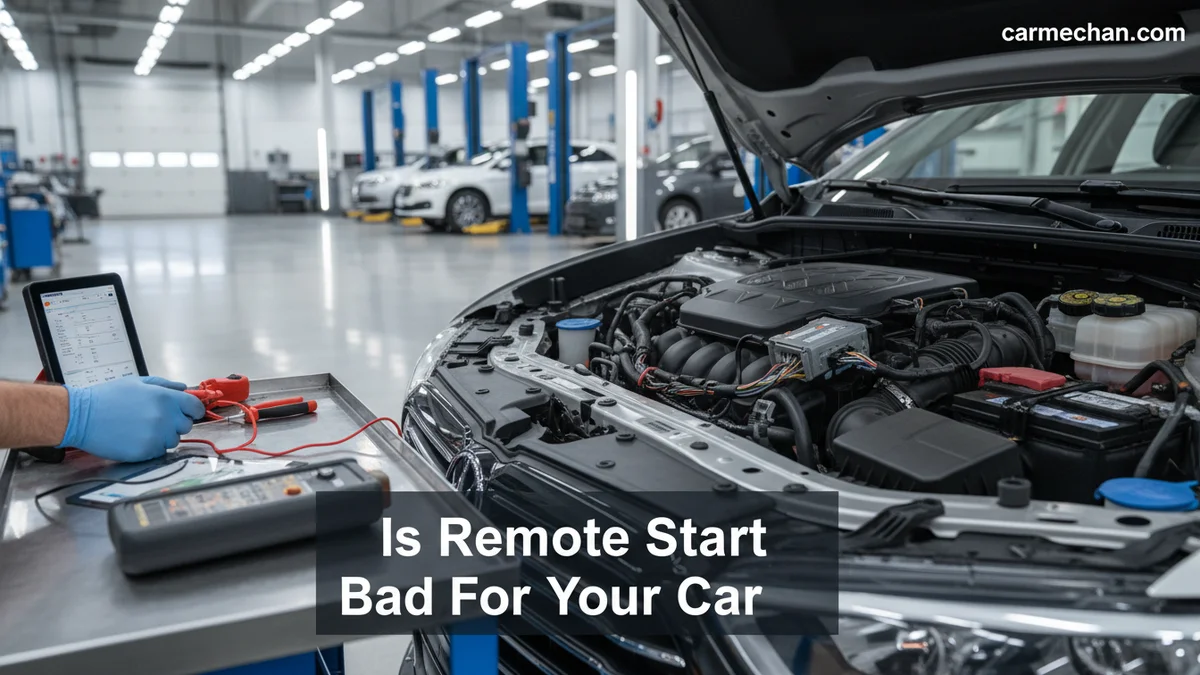
Is Remote Start Bad For Your Car? Expert 2026 Guide
Last Updated on September 1, 2026 by Ryan
Remote start systems are generally not bad for your car when used correctly, but prolonged idling can have minor impacts on engine longevity, fuel efficiency, and battery life. Modern systems are designed to mitigate risks, and responsible use ensures convenience without significant damage.
The question “is remote start bad for your car” frequently arises for owners and potential buyers, and the short answer is usually “no,” but with important nuances. Many consumers worry about premature engine wear, battery drain, increased fuel consumption, or security vulnerabilities. However, modern remote start systems are designed with these concerns in mind. We will explore these aspects in depth to give you a clear understanding of what remote start means for your vehicle’s health in 2026.
Key Takeaways


- Short remote start idles cause minimal engine wear.
- Excessive idling significantly impacts fuel efficiency.
- Battery drain from remote start is typically minor.
- Modern systems largely address security vulnerabilities.
- Optimal usage minimizes drawbacks and maximizes benefits.
How Exactly Does Remote Start Affect Engine Life?


Many worry about how exactly remote start affects engine life, often focusing on the wear and tear associated with cold starts and prolonged idling. We find that remote start does not inherently damage the engine more than a manual start. The real concern lies in excessive idling, not the initial remote activation.
Cold Start Factors
A cold start inherently places more stress on an engine than a warm start. Oil is thicker, and components are not yet lubricated optimally. Modern engine designs and advanced synthetic oils are formulated to mitigate this cold start wear effectively.
Lubrication Cycle
When you remotely start your car, the engine begins its lubrication cycle. Oil pressure builds quickly, distributing lubricant to critical components. This process is crucial for reducing friction and wear, regardless of how the engine was started. A brief warm-up period allows the oil to reach optimal operating temperature and viscosity.
Short Idle Effects
Short periods of idling, typically 5-10 minutes as often allowed by remote start systems, have minimal impact on engine longevity. Driving gently shortly after starting is often more efficient for engine warm-up than prolonged idling. This brief idle helps circulate fluids and stabilize engine temperature, preparing it for the road.
While engine health is a primary concern, the vehicle’s electrical system and battery also warrant a closer look when considering remote start usage.
Does Remote Start Significantly Drain Your Car Battery?
Another frequent question is whether remote start significantly drains your car battery, impacting its overall health and lifespan. We understand this concern, yet find that for a healthy battery, remote start poses a minimal risk. The actual power draw is a key factor.
Initial Current Draw
The initial current draw to start an engine is substantial, whether initiated manually or remotely. This burst of power is transient, lasting only a few seconds. A car battery is designed to handle this load repeatedly.
Accessory Power Needs
During remote start idling, components like the HVAC system, radio, and heated seats can draw power. These accessories do place an additional load on the electrical system. However, once the engine is running, the alternator recharges the battery. This continuous charging offsets the accessory drain.
Battery Health Link
A healthy, well-maintained battery will easily cope with the demands of remote start. Issues typically arise only if the battery is already old, weak, or has a pre-existing condition. Regular battery checks help ensure it can handle the load.
Beyond the battery, concerns often shift to the wallet, specifically how remote start might affect your fuel consumption.
Remote Start Idling Vs. Driving Fuel Efficiency
When comparing remote start idling vs. driving fuel efficiency, it is important to understand how much fuel is consumed while your vehicle is stationary. Idling does indeed burn fuel, but the amount can vary greatly. Our analysis shows a clear distinction between necessary and excessive idling.
Short Idle Consumption
A short, 5-10 minute remote start to warm up or cool down the cabin consumes a relatively small amount of fuel. Modern engines are more fuel-efficient at idle than older models. For example, a typical sedan might consume around 0.2 to 0.4 gallons per hour while idling.
Long Idle Waste
Prolonged idling beyond what is needed for comfort or defrosting leads to significant fuel waste. This is especially true if climate control systems like AC or heat are running at full blast. This waste adds up over time, impacting your overall gas mileage and environmental footprint. The Environmental Protection Agency (EPA) highlights that idling can burn a surprising amount of fuel over a year.
Economic Impact
The economic impact of idling for extended periods can be substantial. For an average driver, even 10-15 minutes of daily unnecessary idling can translate to hundreds of dollars in wasted fuel annually. We recommend limiting remote start duration to maximize fuel efficiency.
While fuel efficiency impacts your budget, more critical considerations include the potential security and safety aspects of remote start systems.
4 Critical Remote Start Security and Safety Risks
Understanding the 4 critical remote start security and safety risks is crucial for any owner or prospective buyer to ensure responsible usage. We prioritize your well-being and the security of your vehicle. While rare, these risks require awareness.
Theft Vulnerabilities
Modern factory-installed remote start systems have anti-theft measures. They typically prevent the car from being driven without the key fob inside, even if the engine is running. Aftermarket systems from reputable brands also incorporate similar security features. Instances of car theft directly attributable to remote start are rare due to these safeguards.
Carbon Monoxide Hazards
A significant safety concern is carbon monoxide poisoning, particularly when remote starting in enclosed spaces like garages. Carbon monoxide is an odorless, colorless gas that can be fatal. We strongly advise against using remote start in any unventilated area. Always ensure your garage door is open if you plan to remote start your vehicle inside.
Hacking Threats
Theoretically, any connected system can be vulnerable to hacking. However, the risk of a typical remote start system being hacked to steal your vehicle is extremely low for the average user. Manufacturers continually update software and encrypt communications to protect against such threats in 2026. These systems are generally well-protected.
Unattended Vehicle Risks
Leaving a vehicle running unattended, even for a short time, carries a risk. This is particularly true if children or pets are inside. Accidental gear engagement or unauthorized entry are potential hazards. Always ensure the vehicle is secure and you have line of sight if you leave it running.
With a thorough understanding of potential risks, we can now turn our attention to how to use remote start for maximum benefit and minimal impact.
How to Use Remote Start for Optimal Car Health
To ensure you are using remote start for optimal car health, adopting specific best practices can significantly enhance its convenience without undue stress on your vehicle. We advocate for smart usage to preserve your car’s longevity.
Recommended Idle Duration
We recommend limiting your remote start idle time to 5-10 minutes. This duration is usually sufficient to warm up the engine slightly, circulate fluids, and make the cabin comfortable. Longer idling periods offer diminishing returns for engine health and waste fuel. For very cold weather, a few extra minutes might be appropriate.
Maintenance Practices
Regular vehicle maintenance is paramount for remote start users. Ensure your oil changes are on schedule and use the manufacturer-recommended oil type. A well-maintained battery and charging system are also critical for reliable remote starts. These practices generally benefit your vehicle, whether or not you use remote start.
System Choice Matters
The quality of your remote start system can influence its impact. Factory-installed systems are seamlessly integrated with your vehicle’s electronics and thoroughly tested. If considering an aftermarket system, choose a reputable brand and have it installed by a certified professional. Proper installation prevents potential electrical issues or security vulnerabilities.
Maximizing Remote Start Benefits for Your Vehicle
Remote start, when used judiciously, offers significant convenience and comfort, especially in extreme weather conditions. You can enter a pre-warmed or pre-cooled car, enhancing your daily driving experience. The minor impacts on engine wear, battery life, and fuel consumption are largely mitigated through responsible usage. By following our guidelines, you ensure your vehicle’s longevity. This thoughtful approach allows you to fully enjoy the advantages of this modern automotive feature without compromise.
5 Common Questions About Remote Start Impact
Does Remote Start Cause More Engine Wear?
No, remote start does not inherently cause more engine wear than a manual start. Modern engines and oils are designed to handle cold starts. Excessive, prolonged idling, rather than the act of remote starting itself, is the primary factor that can contribute to minor additional wear over time.
Will Remote Start Drain My Car Battery Faster?
For a healthy car battery, remote start will not significantly drain it faster. The alternator recharges the battery once the engine is running, offsetting the initial start-up power draw and any accessory load. Only an already weak or old battery might struggle.
Does Remote Start Waste a Lot of Gas?
Remote start consumes gas, but the amount depends on the idle duration. Short, controlled idles (5-10 minutes) use minimal fuel. Prolonged idling, especially with climate control, can lead to noticeable fuel waste over time. Limit idle duration for better fuel efficiency.
Is Remote Start a Security Risk for Car Theft?
Modern remote start systems, particularly factory-installed ones, include anti-theft features. They typically prevent the vehicle from being driven without the key fob present, even if the engine is running. The risk of theft directly due to remote start is generally very low.
How Long Should I Remote Start My Car?
We recommend limiting remote start to 5-10 minutes. This duration is sufficient to warm up or cool down the cabin and circulate engine fluids without unnecessary fuel consumption or prolonged idling stress on the engine. Adjust slightly for extreme weather.