2021 Honda Civic TPMS Reset: Expert Tips and Troubleshooting
Last Updated on September 1, 2026 by Ryan
📋 Table of Contents
- 🎯 Key Takeaways
- Understanding the 2021 Honda Civic TPMS System Technology
- 2021 Honda Civic TPMS Reset Made Easy: Your Essential Action Plan
- Factors That Trigger Tire Pressure Monitoring Alerts
- Benefits of Regular Calibration for Vehicle Longevity
- Troubleshooting Common TPMS Calibration Issues and Errors
- Conclusion
- 💬 Quick Questions & Answers
- ❓ Frequently Asked Questions
The 2021 Honda Civic TPMS reset is a crucial maintenance task required after adjusting tire pressure or rotating tires to ensure driver safety. Maintaining correct calibration prevents false warnings and optimizes both vehicle fuel efficiency and long-term tire health.
🎯 Key Takeaways


- Takeaway 1:Calibrate the system after every pressure adjustment for accurate monitoring.
- Takeaway 2:Ensure all tires match the PSI listed on the driver-side door jamb.
- Takeaway 3:Use the infotainment system for efficient access to TPMS settings.
- Takeaway 4:Persistent warnings often indicate a puncture or a failing sensor.
- Takeaway 5:Calibration requires specific driving speeds and time to finish properly.
Have you ever been cruising down the highway only to see that glowing orange horseshoe light pop up on your dashboard? It is a moment of instant stress for almost every driver. You wonder if you have a flat or if your car is just acting up. For owners of the 2021 Honda Civic, this alert is part of a sophisticated safety system designed to keep you and your vehicle in top shape.
Your Tire Pressure Monitoring System (TPMS) is much more than just a nuisance light. It is a critical safety feature that helps prevent dangerous blowouts and improves your overall fuel economy. Understanding how this system works in your specific model year can save you time, money, and frustration. It also gives you total peace of mind during your daily commute or a long weekend road trip.
Understanding the 2021 Honda Civic TPMS System Technology


The 2021 Honda Civic uses what experts call an indirect TPMS. This is a very smart way to monitor your tires without using extra parts. Unlike older cars that have physical sensors inside the wheels, your Civic is much more streamlined. It uses the existing components of your car to estimate the tire pressure. This design makes your wheels lighter and prevents expensive sensor replacements when you buy new tires.

The Role of VSA and ABS Sensors
Your car relies on the Vehicle Stability Assist (VSA) and Anti-lock Braking System (ABS) wheel speed sensors. These sensors track how fast each tire is spinning as you drive. If a tire loses air, its diameter gets slightly smaller. A smaller tire has to spin faster to keep up with the other three tires. Your car’s computer notices this tiny speed difference. Once it detects a pattern, it triggers the alert on your dash to let you know something is wrong.
Why Calibration is Key
Because the system is software-based, it needs to learn the “normal” state of your tires. This is why calibration is so important. When you fill your tires or change them, the computer needs a fresh starting point. It takes about 30 minutes of driving at steady speeds for the system to fully map out the new tire behavior. During this time, the car is essentially teaching itself what a healthy tire looks like.
- Lower Maintenance Costs: You do not have to pay for expensive sensor batteries or hardware.
- Durability: There are no delicate electronic parts inside the tire that can break during a tire change.
- Simplicity: The system works through software rather than physical parts that can corrode over time.
- Weight Reduction: Removing internal sensors reduces the unsprung weight of your wheels for better handling.
2021 Honda Civic TPMS Reset Made Easy: Your Essential Action Plan


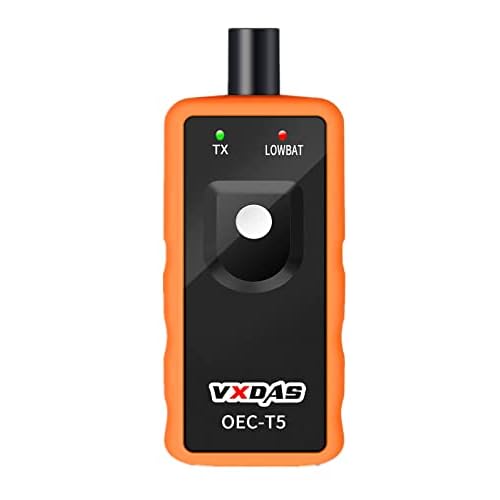
The 2021 Honda Civic utilizes an “Indirect TPMS” system, which is a sophisticated way of saying the car doesn’t actually have pressure sensors inside the tires. Instead, it uses the Anti-lock Braking System (ABS) wheel speed sensors to monitor the rotational speed of each wheel. If one tire is low on air, its diameter changes, causing it to spin at a different rate than the others, which triggers the warning light. Because this system relies on software calculations rather than direct measurement, you must manually recalibrate the system every time you adjust tire pressure, rotate your tires, or replace a tire. Following this guide ensures your safety, maximizes fuel efficiency, and prevents that annoying orange horseshoe light from glowing on your dashboard when it shouldn’t.
Step 1: Check and Adjust All Tire Pressures to Specification
What you need: A high-quality digital tire pressure gauge and access to an air compressor (at home or a gas station).
Instructions: Before touching any buttons in your car, you must ensure the tires are at the correct pressure. Open the driver’s side door and locate the “Tire and Loading Information” placard on the door jamb. For a standard 2021 Honda Civic, the recommended “cold” tire pressure is typically 32 PSI for the front and 32 PSI for the rear, though this can vary slightly depending on your specific trim (LX, Sport, EX, Touring). Use your gauge to check all four tires. If they are low, add air until they meet the exact PSI listed on the sticker. “Cold” means the car has been parked for at least three hours or has been driven less than a mile. If you have just finished a long highway drive, add 2-3 PSI above the placard value to account for heat expansion, though it is always best to check them when cold.
Pro Tip: Never rely on the visual appearance of a tire to judge its pressure. Radial tires can lose up to 50% of their air without looking “flat” to the naked eye. Also, don’t forget that the TPMS system on the Civic only monitors the four tires on the ground; the spare tire is not monitored, but it’s a good habit to check its pressure (usually 60 PSI) while you have the air hose out.
Step 2: Prepare the Vehicle for Calibration
What you need: Your key fob and a safe, level parking spot.
Instructions: For the calibration process to be successful, the vehicle must be in a specific state. Park the car on a flat, level surface. If your 2021 Civic has a traditional key, turn it to the “ON” (II) position without starting the engine. If you have a Push-Button Start model, press the “ENGINE START/STOP” button twice without pressing the brake pedal. This powers up the electronics and the infotainment system without burning fuel. Ensure the transmission is in “Park” (P) for automatic models or in “Neutral” with the parking brake engaged for manual models. This stable environment is necessary because the system needs to establish a “zero point” before it begins the learning phase during your next drive.
Pro Tip: Ensure all doors are closed and any heavy cargo is either removed or distributed normally. Significant weight imbalances can technically affect the initial wheel speed calculations during the early stages of the calibration process.
Step 3: Navigate the Touchscreen Infotainment System (Display Audio Models)
What you need: Access to the 7-inch or 9-inch touchscreen display found on Sport trims and above.
Instructions: Most 2021 Civics feature a touchscreen. From the “Home” screen, tap the “Settings” icon. Once inside the settings menu, look for the “Vehicle” option and select it. This menu contains all the deep-level configurations for your Civic’s safety and convenience features. Within the “Vehicle Settings” menu, the very first option is usually “TPMS Calibration.” Tap this to proceed. If you find that the “TPMS Calibration” button is greyed out and unselectable, it is likely because the car is either moving or the ignition is not in the proper “ON” mode. Ensure you are fully stopped and the electronics are fully powered to gain access to this sub-menu.
Pro Tip: If your screen is laggy, wait about 30 seconds after turning the car on before trying to navigate the menus. The infotainment system is essentially a computer that needs a moment to boot up all background processes before it can handle system-level commands like TPMS resets.
Step 4: Initiate the Calibration Sequence
What you need: The touchscreen interface or the steering wheel controls.
Instructions: Once you have selected “TPMS Calibration,” the screen will present you with two options: “Cancel” and “Calibrate.” Select “Calibrate.” The system will then display a message stating “Calibration Started” or “Calibration Initialized.” It is important to understand that the light on your dashboard may not disappear immediately at this exact second, or it might blink briefly. You have now told the car’s computer to ignore the old wheel speed data and begin “watching” the sensors for new patterns based on the current tire pressures you just set in Step 1. If you receive an “Unable to Initialize” message, double-check that your parking brake is set and try the process again.
Pro Tip: If you are driving a base LX model without a touchscreen, you will use the buttons on the left side of the steering wheel. Press the “Info” (i) button until you see the “Vehicle Settings” (wrench icon) on the Driver Information Interface (the screen behind the steering wheel). Hold the “Enter” button, navigate to “TPMS Calibration,” and select “Calibrate” from there.
Step 5: Perform the Calibration Drive
What you need: A clear road and approximately 20 to 30 minutes of driving time.
Instructions: Selecting “Calibrate” is only the first half of the process. The car now needs to learn the rotational characteristics of the tires. To complete the calibration, you must drive the vehicle for approximately 20 minutes at speeds between 30 mph and 65 mph (48–105 km/h). The system requires a consistent speed to accurately measure the frequency of the wheel speed sensors. If you are stuck in heavy stop-and-go traffic, the system will pause its learning process and resume once you reach steady speeds again. You do not need to drive 20 minutes all at once, but the calibration will not be finalized until the cumulative driving time at those speeds is reached.
Pro Tip: Avoid aggressive cornering, heavy braking, or rapid acceleration during this 20-minute window. Sudden changes in wheel speed for reasons other than tire diameter (like tire slip or sharp turns) can confuse the system and may result in the TPMS light coming back on, requiring you to start the process over from Step 3.
Step 6: Confirm Successful Reset
What you need: Visual observation of the instrument cluster.
Instructions: After your 20-minute drive, the TPMS warning indicator (the yellow icon that looks like a cross-section of a tire with an exclamation point) should remain off. If the light stayed off during the drive and does not reappear the next time you start the car, the calibration was successful. The 2021 Civic does not provide a “Calibration Complete” pop-up message; the absence of the warning light is your confirmation. If the light begins to flash or turns back on solidly shortly after the drive, it indicates that the system detected a significant pressure drop during the learning phase (meaning you might have a nail in your tire) or that the calibration was interrupted by inconsistent driving speeds.
Pro Tip: If the light returns, use your gauge to check the PSI again. If the PSI is still perfect but the light is on, try the reset process one more time. Sometimes it takes two cycles if the tires were extremely low before the initial adjustment, or if you recently rotated the tires and the computer is struggling with a significantly different wear pattern.
✅ Final Checklist
- Verified all 4 tires are set to exactly 32 PSI (or the PSI listed on your door jamb placard) using a manual gauge.
- The vehicle was stationary and in “Park” when the calibration was initiated via the “Settings” menu.
- The “Calibration Started” message appeared on the display screen or Driver Information Interface.
- The vehicle was driven for at least 20 minutes at speeds between 30 and 65 mph to finalize the data collection.
- The yellow TPMS warning light is no longer illuminated on the dashboard instrument cluster.
Important Notes:
- Safety Warning: If the TPMS light flashes for 60 to 90 seconds before staying solid, this indicates a malfunction in the system rather than low pressure. This usually requires a diagnostic scan by a technician.
- Cold Weather: Tire pressure drops roughly 1 PSI for every 10-degree drop in temperature. If the light comes on during the first cold morning of autumn, it is likely just physics, but you still must add air and perform the reset.
- Professional Help: If the light persists after three reset attempts despite perfect tire pressures, you may have a faulty ABS sensor or a software glitch that needs a Honda dealer’s specialized tools to clear.
- Estimated Time: 5 minutes for pressure adjustment, 2 minutes for menu navigation, and 20 minutes for the calibration drive.
- Estimated Cost: $0 (Free if you have your own gauge and air compressor).
Factors That Trigger Tire Pressure Monitoring Alerts
It is frustrating when your TPMS light turns on even when your tires look perfectly fine to the naked eye. Often, the system is simply reacting to environmental changes rather than a puncture. Knowing these common triggers helps you decide if you have a real emergency or just a minor adjustment to make. The system is very sensitive to ensure your safety at all times.
Temperature Fluctuations and Seasonal Changes
Physics plays a big role in your tire pressure. When the temperature drops, the air inside your tires becomes more dense. This causes the air to take up less space, which leads to a drop in pressure. For every 10-degree dip in temperature, you might lose about one pound per square inch (PSI) of pressure. This is why many Civic owners see the warning light on the first cold morning of autumn. Usually, the pressure is just low enough to trip the sensor, even if there is no leak.
Tire Maintenance and External Conditions
Common maintenance tasks can also confuse the indirect system. If you rotate your tires or swap them out for winter tires, the computer will notice a change in wheel speed. Even driving on very bumpy roads or through heavy snow can cause a temporary false alarm. The computer might think a tire is slipping or spinning at an odd rate because of the road surface rather than the air pressure itself.
Common Non-Emergency Triggers
- Altitude Changes: Driving into high mountains changes the external air pressure, which can trigger the system.
- Uneven Loads: Carrying very heavy weight in the trunk can change how the tires sit on the road.
- New Tires: Fresh rubber has a different diameter than worn-down tires, which requires a system reset.
- Slow Leaks: A small nail might cause a very gradual drop that the system picks up before you can see it.
- Tire Wear: If two tires are more worn than the others, they will spin at different speeds.
By understanding these factors, you can approach the TPMS light with confidence. It is a helpful tool that monitors things you cannot always see. In the next sections, we will explore why keeping this system happy is so important for your wallet and your safety on the road.
Benefits of Regular Calibration for Vehicle Longevity
While most drivers view the Tire Pressure Monitoring System (TPMS) as a mere warning light, regular calibration is actually a cornerstone of proactive vehicle maintenance. For the 2021 Honda Civic, keeping this system in check does more than just clear a dashboard icon; it ensures your car’s safety systems are receiving accurate, real-time data to protect your investment.
Maximizing Tire Health and Even Wear
The 2021 Civic utilizes an indirect TPMS, which monitors the rotational speed of the wheels rather than using sensors inside the tires. If the system isn’t calibrated correctly, it cannot accurately detect when a tire is slightly under-inflated. Over time, even a minor discrepancy in pressure leads to uneven tread wear, which can prematurely end the life of your tires. By calibrating after every pressure adjustment or tire rotation, you ensure that your tires wear down at the same rate.
- Preventing Sidewall Damage: Properly calibrated alerts catch low pressure before it reaches a level that causes permanent structural damage to the tire’s internal layers.
- Optimizing Contact Patch: Correct pressure means the tire meets the road exactly as engineers intended, reducing excessive heat buildup during highway driving.
- Long-Term Cost Savings: Regular calibration reduces the frequency of premature tire replacements, potentially saving you hundreds of dollars over the life of the vehicle.
Improving Fuel Efficiency and Performance
An uncalibrated or neglected TPMS often leads to “hidden” under-inflation. When your tires are soft, your engine has to work harder to overcome increased rolling resistance. For 2021 Civic owners, this can lead to a noticeable dip in MPG. Furthermore, your car’s traction control and ABS rely on the same wheel speed data used by the TPMS. A system that is calibrated and accurate ensures these safety features respond correctly during emergency braking or sharp cornering.
Troubleshooting Common TPMS Calibration Issues and Errors
It can be frustrating when you follow the reset procedure only to have the low-pressure warning return a few miles later. Understanding why the 2021 Civic’s system might “reject” a calibration attempt can save you an unnecessary and expensive trip to the dealership.
Why the TPMS Light Might Persist After Resetting
The most common reason for a recurring light is the 2021 Civic’s specific calibration “learning phase.” Unlike older systems that reset instantly, this model requires a specific driving window to gather enough data to confirm the tires are stable. If your light pops back on shortly after a reset, it is often because the initial driving conditions weren’t met or the system detected a genuine pressure drop it couldn’t ignore.
- Incomplete Drive Cycles: The system typically needs about 20–30 minutes of cumulative driving at speeds between 30 and 65 mph to finish the “learning” process. Stop-and-go traffic can often delay this.
- Pressure Discrepancy: If one tire is significantly different in pressure than the others (even if it’s within the “normal” range), the calibration will fail to stabilize.
- Cold Weather Influence: Extreme cold can cause air to compress, dropping pressure just enough to trigger a sensor mid-calibration. Always calibrate tires when they are “cold” (driven less than a mile).
Dealing with External Factors and Sensor Malfunctions
Since the 2021 Civic uses wheel speed sensors (ABS sensors) to calculate pressure, any issue with your braking system or wheel assembly can cause TPMS errors. If you have recently hit a large pothole or a curb, you may have slightly damaged a wheel bearing or an ABS sensor. Always check for physical damage to the wheel assembly if the light refuses to stay off after multiple calibration attempts. Additionally, using a spare tire of a different size will almost always trigger a TPMS error that cannot be cleared until the full-sized tire is reinstalled.
Conclusion
Maintaining the TPMS on your 2021 Honda Civic is about much more than just peace of mind; it is a vital part of your car’s overall efficiency, performance, and safety. By understanding the benefits of regular calibration and knowing how to troubleshoot common errors, you can ensure your Civic remains reliable for years to come. Remember that your tires are the only part of your vehicle touching the road, making their health a top priority for any driver.
As a next step, make it a habit to check your tire pressures manually with a high-quality gauge at least once a month, regardless of whether the light is on. If your TPMS light continues to behave erratically despite proper inflation and successful calibration, consult a certified technician to inspect your wheel speed sensors. Stay proactive, stay safe, and enjoy the drive!
💬 Quick Questions & Answers
Why is my TPMS light still on after adding air?
The system usually requires a short driving period at steady speeds to finalize the internal calibration.
Does cold weather affect the 2021 Honda Civic TPMS?
Yes, cold air causes tire pressure to drop, which frequently triggers the monitoring light during winter.
Is there a physical reset button in the 2021 Civic?
No, most 2021 Civic models utilize the digital infotainment screen or steering wheel controls for calibration.
How often should I calibrate my TPMS?
You should initiate calibration every time you adjust tire pressure, rotate tires, or replace a wheel.
What is the recommended PSI for a 2021 Honda Civic?
The recommended PSI is found on the sticker located on the driver’s side door pillar.
❓ Frequently Asked Questions
Why does the TPMS light blink before staying solid?
A blinking light typically indicates a system malfunction or a dead sensor battery rather than low pressure. It is best to have a technician scan the system to identify the specific faulty component.
Do I need to reset the TPMS after a tire rotation?
Yes, rotating tires changes their relative positions and load distribution, which can confuse the monitoring software. Running a calibration after a rotation ensures the system tracks the new positions correctly.
Can I ignore the TPMS light if my tires look inflated?
Ignoring the light is dangerous because modern radial tires can be significantly underinflated before they look ‘flat’ to the naked eye. Proper inflation is vital for safe handling and preventing high-speed blowouts.
How long do I need to drive for the calibration to finish?
The vehicle generally needs to be driven between 30 and 65 mph for about 20 cumulative minutes. The system uses this time to learn the rotational characteristics of the tires at their current pressures.
Will aftermarket tires affect the 2021 Honda Civic TPMS?
Aftermarket tires are fine, but significantly different tire sizes or weights can affect how the indirect TPMS calculates pressure. Always recalibrate the system immediately after installing any new set of tires.
Does the 2021 Honda Civic spare tire have a sensor?
The temporary spare tire provided with the 2021 Civic does not contain a TPMS sensor. Driving on the spare will cause the TPMS light to stay on until the full-size tire is repaired and reinstalled.