2017 f350 tpms reset button location: Explained Simply
Seeing that pesky TPMS light on your 2017 F-350 dash after a tire rotation is frustrating, especially when you cannot find a reset button. Many owners waste hours tearing apart the dashboard looking for a nonexistent “reset” button that simply does not exist on this vehicle. In this guide, we will walk you through the actual software-driven relearn procedure that Ford engineers built into your truck to manage tire pressure monitoring.


Debunking the 2017 F350 TPMS Reset Button Location Myth
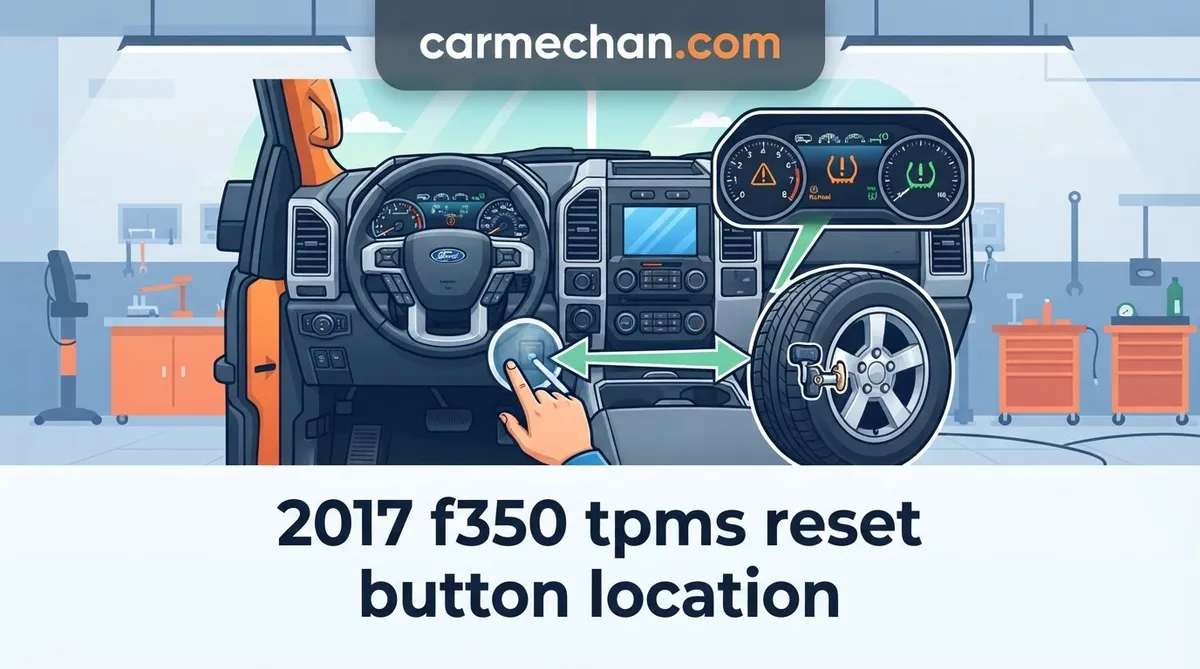
The search for a 2017 F350 TPMS reset button location is a common rite of passage for new Ford Super Duty owners. Unlike older aftermarket tire pressure systems or even some older passenger vehicles that featured a “Set” or “Reset” button buried in the glovebox or under the steering column, the 2017 F350 utilizes a sophisticated, integrated electronic architecture.
📤 Share Image
Where the BCM Processes Sensor Data
The Tire Pressure Monitoring System (TPMS) in the 2017 Super Duty is managed directly by the Body Control Module (BCM). The BCM acts as the central brain for the vehicle’s body-related electronics. It constantly polls the individual TPMS sensors located inside each wheel via radio frequency. Because this data is processed entirely within the vehicle’s internal software, there is no physical switch required to “restore” the system to its factory state; rather, you must manually “initialize” the learning mode through the vehicle’s interface logic.
Why Ford Moved Away from Physical Switches
Automotive engineering has shifted toward electronic reliability and reduction of “point-of-failure” components. Physical buttons in the cabin are susceptible to moisture, debris, and mechanical fatigue. By removing the physical button, Ford ensures that the system cannot be accidentally triggered or broken by spills or dash-cleaning chemicals. This design choice forces the system to rely on a specific, intentional sequence of inputs, ensuring that only the vehicle owner or a technician can perform a fresh start on the tire monitoring protocol.
How to Perform the 2017 F350 TPMS Relearn Procedure
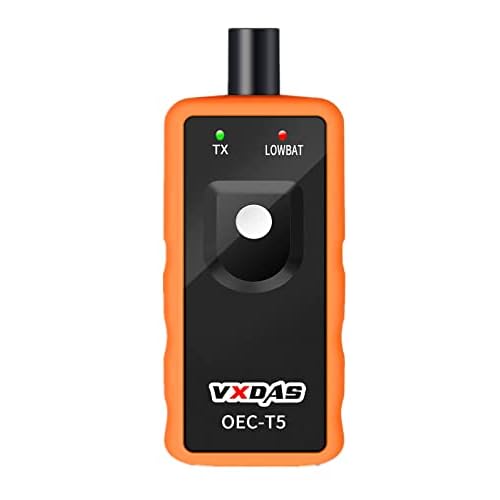
Since no physical button exists, you must trigger the relearn mode using a specific sequence of ignition cycles. You will need a TPMS activation tool (often available as a relatively inexpensive handheld device) and an accurate tire pressure gauge to ensure your tires are set to the correct factory default pressures before beginning.
📋
Step-by-Step Relearn Sequence
Ensure all tires are inflated to the recommended placard pressure located on the driver-side door jamb. Park the vehicle in a neutral area away from heavy electrical interference.
Turn the ignition to the “Off” position. Depress and release the brake pedal once. Turn the ignition from “Off” to “Run” (but do not start the engine) three times, ending in the “Run” position. Depress and release the brake pedal once more. Turn the ignition to “Off.” Finally, turn the ignition back to “Run.” The horn will honk once to confirm the system has entered Training Mode.
Starting at the driver-side front tire, hold your TPMS tool against the tire sidewall near the valve stem and trigger it. The horn will honk again to confirm successful recognition. Proceed to the passenger front, passenger rear, and finally the driver-side rear in a clockwise motion.
Verification Through Instrument Cluster Feedback
Once you have successfully triggered all four sensors, the instrument cluster will typically display a message confirming the reboot or completion of the training sequence. If the horn does not honk after activating a sensor, the tool may not be communicating, or the sensor battery may be depleted. After the final sensor is learned, the horn will honk twice, signaling that the truck has successfully updated its backup memory with the new sensor positions.
Troubleshooting Common 2017 F350 TPMS Initialization Failures


If your truck fails to exit the training mode or refuses to recognize a sensor, check these common points of failure to isolate the issue.
- RF Interference: High-powered electronics or nearby Wi-Fi equipment can occasionally drown out the low-power RF signal of a TPMS sensor. Move the vehicle to an open space to clean the signal environment.
- Frequency Compatibility: Ford Super Duty trucks typically utilize a 315 MHz frequency for TPMS sensors. If you installed aftermarket wheels and sensors, ensure they are 315 MHz. Installing 433 MHz sensors—common on European vehicles—will result in a permanent system fault, as the BCM cannot interpret the signal.
- Failed Sensor Batteries: These sensors are sealed units with a battery life of roughly 7–10 years. If your 2017 model is reaching this age, a dead battery in one sensor will prevent the system from completing the learning sequence.
- Tire Rotation Confusion: If you rotate your tires, the BCM maintains the previous sensor IDs in their original positions. You must perform the relearn procedure so the computer maps the sensors to their new physical locations.
2017 F350 TPMS Maintenance Tips for Long-Term Reliability
To prevent the frustration of recurring light issues, treat the TPMS as a critical diagnostic component of your vehicle maintenance schedule.
Periodic Audits
Verify tire pressure thresholds with a high-quality manual gauge every 5,000 miles. Digital dashboards can sometimes lag or require calibration, but a physical gauge provides the source of truth.
Valve Stem Health
Ensure valve stems are free of debris and road grime. Corrosion near the base of the stem can interfere with signal transmission and lead to false readings.
Do not rely on “auto-learn” features for heavy-duty tires. While some modern vehicle systems can detect sensor movement automatically, the 2017 F-350 system is designed to be static. Manual triggering is the only way to ensure the system is accurately mapped.
If you have recently replaced sensors and the light persists after a successful relearn, you may have a BCM communication error. In this case, consult a professional who can scan the vehicle for specific Diagnostic Trouble Codes (DTCs) that standard readers cannot access.
Summary and Professional Assistance
To recap, there is no physical button to reset your TPMS. The system is managed by the BCM, and a manual relearn procedure—involving ignition cycles and a TPMS activation tool—is the standard method for updating your tire data. Always perform this procedure after any tire rotation to maintain an accurate system. If you have exhausted these steps and the warning light remains active on your dashboard, it is time to visit your local Ford service department. A technician can scan the BCM for hidden DTC codes that may indicate a deeper electronic fault rather than a simple sensor communication issue.
2017 f350 Tpms Reset Button Location: Frequently Asked Questions
Can the dealership reset the sensors for me?
Yes, a dealership can perform a system reset using their diagnostic tools. They have access to the Ford Integrated Diagnostic System (IDS), which can force communication with sensors even if the vehicle’s manual relearn mode fails. This is often recommended if you suspect a faulty BCM or require a deeper diagnostic to identify which specific sensor is failing to transmit data to the truck’s computer.
How do I reset the TPMS light after rotating tires?
On the 2017 F-350, you do not need to do anything special. Because the system uses individual sensors in each wheel, it automatically detects their new positions via the RKE module after the tires are rotated. Simply drive the vehicle at speeds above 20 mph for a few minutes; the truck will recognize the new locations and update the display automatically without requiring a manual reset.
Why won’t my TPMS sensor learn?


If a sensor won’t learn, it is typically due to a depleted internal battery (most sensors last 7-10 years) or physical signal interference. Ensure you are using OEM Ford/Motorcraft sensors, as aftermarket sensors often lack the exact frequency response required by the F-350. Additionally, ensure the tire pressure is set correctly, as some sensors will not activate or transmit their signal if the tire is significantly under-inflated or over-inflated.
Does a tire pressure reset require a special tool?
For most 2017 F-350 models, no special tool is required for standard relearning; the truck’s onboard computer handles the process through the instrument cluster. However, if you are replacing a dead sensor, the new sensor must be programmed to the truck’s BCM. In those cases, a TPMS activation tool is required to ‘wake up’ the new sensor so the truck can capture its unique identification code and add it to the system memory.
What happens if I ignore the TPMS light?
Ignoring the TPMS light is not recommended, as it prevents you from knowing when a tire is dangerously under-inflated. Running on low tires increases friction, leads to uneven tread wear, significantly reduces fuel economy, and creates a major safety risk for blowouts. Always address the light promptly by checking your tire pressures manually with a high-quality gauge, as relying solely on the truck’s system can sometimes mask slow leaks.