2014 Honda Accord Starter Location: Identification And Access
Experiencing the frustration of a vehicle that won’t start can be a significant inconvenience, often leading to immediate concern about the underlying issue. For owners of a 2014 Honda Accord, understanding the precise location and function of the starter motor is crucial for accurate diagnosis and effective resolution, yet this information can be challenging to pinpoint without expert guidance. This detailed guide will meticulously outline the 2014 Honda Accord starter location for both engine variants, walk you through essential access steps, help you identify common symptoms of failure, and provide actionable advice for maintenance or professional intervention.

Understanding the Critical Role of the 2014 Honda Accord Starter System
Recommended Best Deal Products


📤 Share Image
The starter system in your 2014 Honda Accord is an often-overlooked yet indispensable component that facilitates the engine’s initial combustion cycle. Without a functional starter, your vehicle, regardless of its overall health, simply cannot begin operation. Its primary function is to convert electrical energy from the battery into mechanical energy, which then cranks the engine to initiate the internal combustion process.
Dissecting the Starter’s Anatomy and Function
A typical starter motor assembly comprises several key components working in concert:
- Electric Motor: This is the core component, a powerful direct current (DC) motor designed to generate significant torque for a brief period.
- Solenoid: This cylindrical component serves a dual purpose. First, it acts as an electromagnet that pushes the pinion gear forward to engage with the engine’s flywheel. Second, once engaged, it completes the high-current circuit to supply power directly to the electric motor.
- Pinion Gear (Bendix gear): A small gear mounted on the starter motor shaft. When activated, it extends to mesh with the teeth of the flywheel, transferring the starter motor’s rotational force to the engine crankshaft.
The ignition sequence in your Accord is a marvel of electromechanical engineering. When you turn the key to the “START” position (or press the push-button start), a low-current signal is sent to the starter solenoid. This activates the solenoid, causing it to push the pinion gear outward, ensuring it properly meshes with the flywheel. Simultaneously, the solenoid acts as a heavy-duty relay, closing contacts to allow a massive surge of current – typically between 100-300 amps – from the battery to flow into the starter motor. This powerful jolt causes the starter motor to spin the engine’s crankshaft, initiating the engine’s operational cycle. This process, while seemingly instantaneous, mechanizes what in older vehicles would have required a cumbersome hand crank, illustrating the starter’s critical role in modern vehicle convenience and functionality.
Despite operating for only a few seconds per start cycle, a starter motor accumulates thousands of such cycles over its lifespan, underscoring the importance of its robust design and the need for prompt attention when issues arise.

Pinpointing the Exact 2014 Honda Accord Starter Location
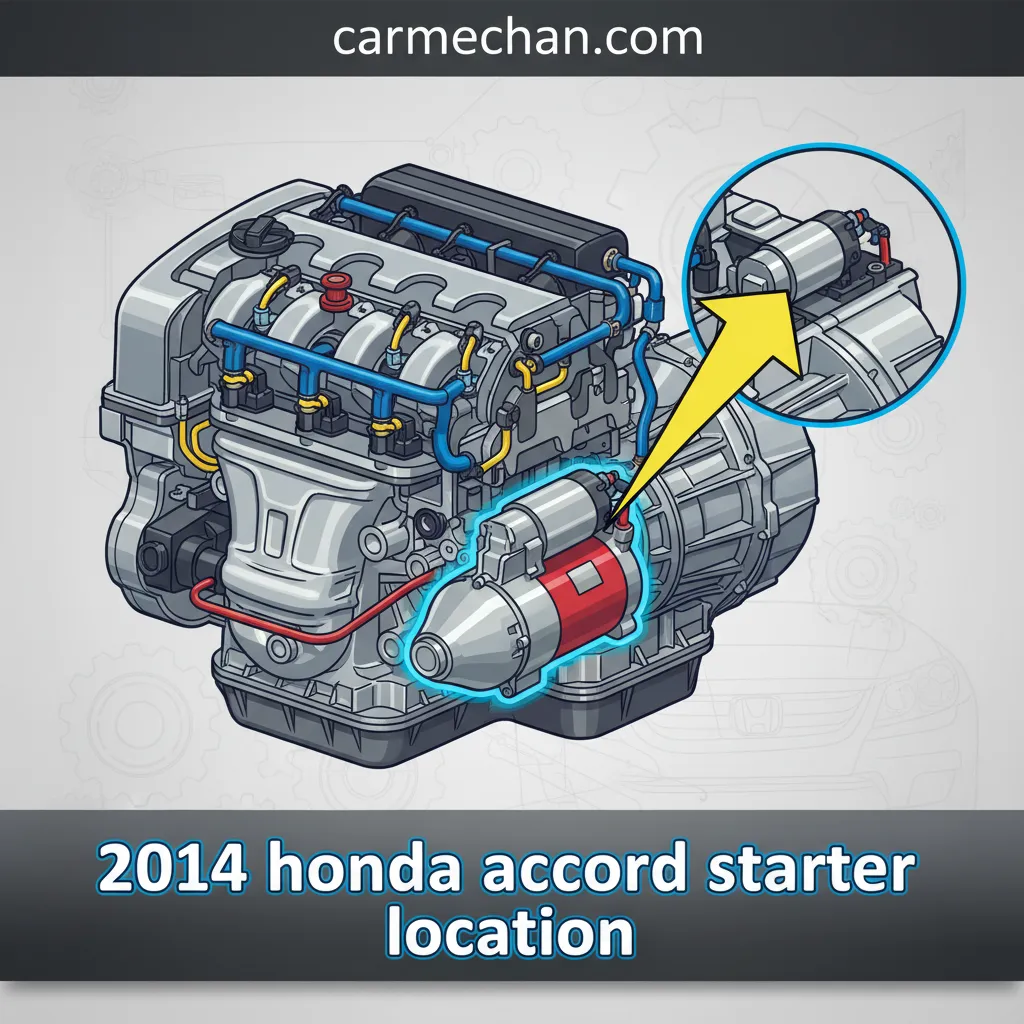
Accurately identifying the starter’s location is the first step in any diagnostic or repair process. For the 2014 Honda Accord, its placement is consistent with most front-wheel-drive vehicles, yet nuances exist between the different engine configurations.
2.4L i-VTEC (K24W1) Engine Configuration
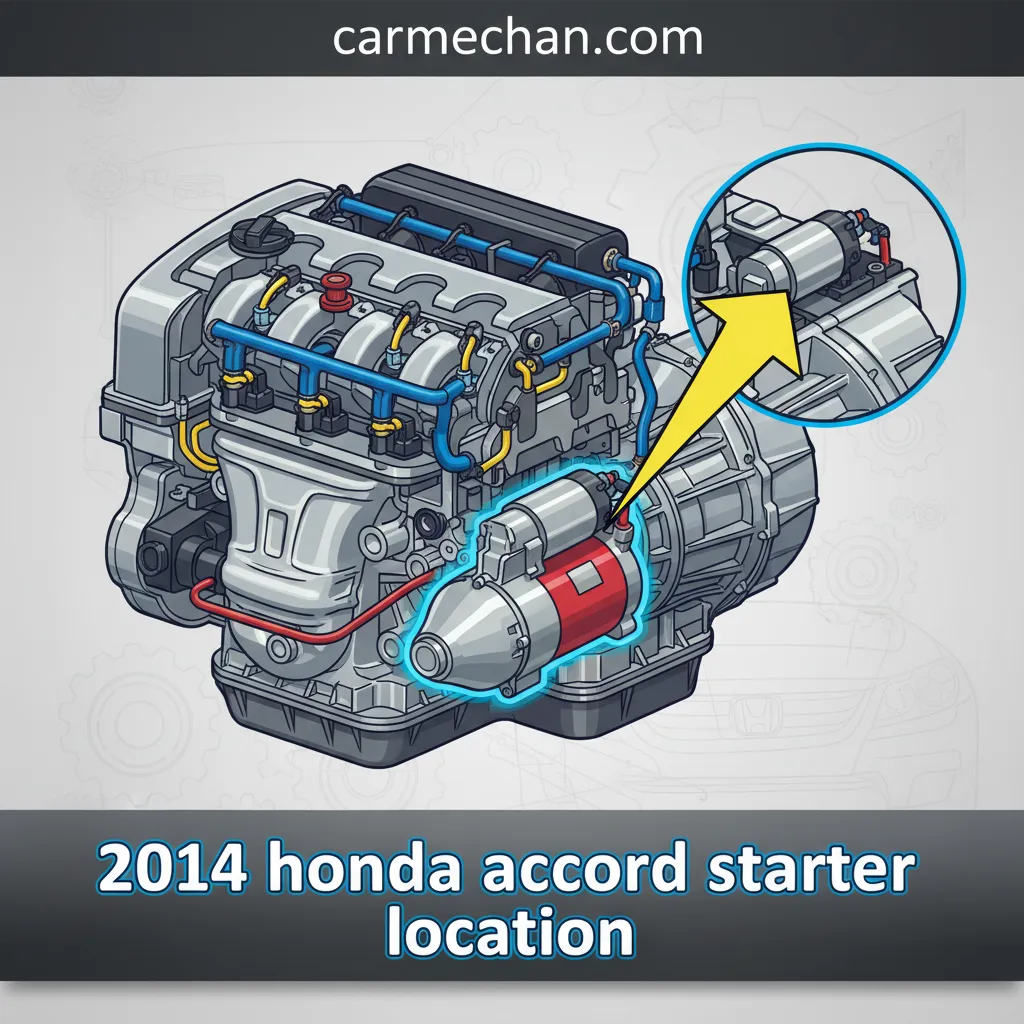
For Accord models equipped with the 2.4L i-VTEC (K24W1) four-cylinder engine, the starter is typically found on the front side of the engine block, positioned towards the passenger side. It is mounted directly to the transmission bell housing, which is the section where the engine meets the transmission. To visually locate it, one would generally look down from the top-front of the engine, past the intake manifold, towards the area where the engine connects to the transmission. It’s often tucked in, but accessible from below the vehicle once the splash shield is removed.
3.5L i-VTEC (J35Y1) V6 Engine Configuration
In the 3.5L i-VTEC (J35Y1) V6 engine variant, the starter is also generally situated on the front side of the engine block, affixed to the transmission bell housing. However, due to the larger engine size and different component layout, it is often positioned a bit lower and more centrally, or potentially slightly towards the driver’s side compared to the 2.4L model. While the general concept of mounting to the transmission remains, the precise angle, available clearance, and surrounding components can differ significantly, necessitating careful observation.
Visual Identification Cues
Regardless of the engine, the starter will appear as a cylindrical electric motor with a smaller, often parallel, cylindrical solenoid attached to its side or top. You will notice it bolted into the bell housing, typically secured by two large bolts. There will be at least two electrical connections: a thick 12V primary power cable coming directly from the battery (often red or black with a red stripe) and a smaller-gauge solenoid activation wire (often a single wire, green or black, coming from the ignition switch). These visual cues, coupled with its proximity to the flywheel housing, are definitive indicators.

Audible — Listen Free for 30 Days
One free credit a month and thousands of titles included.
Listen Free for 30 DaysBefore starting any work, consult an official Honda service manual or trusted automotive diagrams specific to your 2014 Accord’s engine type. These resources often provide exploded views and exact torque specifications, which are invaluable for proper repair and reassembly. For many Accord models, removing a wheel or fender liner can provide significantly better access, especially for the 3.5L V6.

Accessing the Starter: Essential Tools, Safety Protocols, and Initial Disassembly
Accessing the starter motor on a 2014 Honda Accord requires careful preparation, the right tools, and strict adherence to safety protocols. This section guides you through the necessary steps to safely reach the component for inspection, testing, or replacement.
Required Tools and Equipment
Before you begin, gather the following:
- Socket Wrench Set: Typically 3/8″ drive with various metric sockets (e.g., 10mm, 12mm, 14mm for battery terminals, mounting bolts, and accessory removal).
- Extension Bars & Universal Joint: Crucial for reaching recessed bolts.
- Open-End Wrenches: For certain electrical connections.
- Battery Terminal Cleaner: To ensure good electrical contact upon reassembly.
- Torque Wrench: Essential for proper reassembly of critical components, preventing both overtightening and loose connections.
- Jack and Jack Stands: For safely elevating and supporting the vehicle.
- Wheel Chocks: To prevent unintended vehicle movement.
- Personal Protective Equipment (PPE): Gloves and eye protection are mandatory.
- Drain Pan (Optional): If any fluid lines need to be disconnected, though usually not required for starter access.
Always disconnect the battery before beginning any work on the starter motor. Failing to disconnect the battery, especially before attempting to remove the main power cable from the starter, could result in a severe arc flash, electrical shock, or accidental engine cranking, potentially causing serious injury or vehicle damage. Disconnect the negative terminal first, then the positive.
📋
Step-by-Step Guide: Initial Disassembly
Engage the parking brake and place wheel chocks behind the rear wheels. Using the appropriate wrench (usually 10mm or 12mm), disconnect the negative battery terminal first, followed by the positive terminal. Isolate the cables to prevent accidental contact.
Safely lift the front end of the Accord using a hydraulic jack. Crucially, position jack stands under reinforced frame points (refer to your owner’s manual for specific locations) and slowly lower the vehicle onto them. Never rely solely on the jack for support.
Audible Premium Plus — Annual Membership
12 audiobook credits up front, plus the full Audible catalogue.
See Annual PlansLocate and remove the engine under-tray or splash shield. These are typically held in place by several plastic clips and small bolts. Set them aside for reassembly.
Visually locate the starter motor. You may need to temporarily remove components like air intake ducting, a specific wiring harness, or even a wheel and fender liner for better, more convenient access, particularly for the V6 engine. Take photos or make notes to aid reassembly.
Carefully detach the battery’s primary power cable (the thick one, usually held by a 12mm or 14mm nut) from the starter, followed by the smaller solenoid activation wire (often a push-on connector or small nut). Label or photograph these connections to ensure correct reassembly. When reconnecting the battery, always reattach the positive terminal first, then the negative, tightening to 8-10 ft-lbs to prevent overtightening or loose connections.
Diagnosing a Failing 2014 Honda Accord Starter: Common Symptoms and Tests
Identifying a failing starter motor requires keen observation of symptoms and, in some cases, basic diagnostic tests. Many owners immediately assume a dead battery when the car won’t start; however, understanding the nuances can save you time and prevent misdiagnosis.
Common Symptoms of Starter Failure
- 1. Clicking Noise, No Engine Crank: This is one of the most common and often confusing symptoms. When you turn the key, you hear a single click or a rapid series of clicks, but the engine doesn’t turn over. This usually indicates a weak starter solenoid that can’t push the pinion gear fully into the flywheel or complete the high-current circuit, or insufficient current reaching the starter motor itself. This can be due to a dying battery, but if the headlights are bright and the radio works, a clicking noise often points directly to the starter.
- 2. Slow or Sluggish Cranking: The engine turns over, but noticeably slower than usual, struggling to achieve the RPMs needed for ignition. This symptom suggests the starter motor isn’t drawing enough power or has developed internal resistance due to worn brushes, carbon buildup, or other internal damage. It’s distinct from a weak battery, where the cranking speed would typically be more consistent but still slow.
- 3. Grinding Noise When Attempting to Start: A harsh grinding or screeching sound during the start attempt points to issues with the starter’s pinion gear failing to properly engage or disengage with the flywheel. This can be caused by worn gear teeth on either the pinion or the flywheel, a faulty solenoid that isn’t extending the gear correctly, or a misaligned starter. Continuous grinding can cause significant damage to the flywheel.
- 4. No Response Whatsoever (No Click, No Crank, No Lights Dimming): In this scenario, turning the key elicits absolutely no sound or engine movement from the starter. While it could indicate a completely dead battery or severely corroded terminals, it can also signal a completely failed starter motor (e.g., open circuit, severe internal short) or a critical fault in the ignition circuit leading to the starter. If other electrical components (lights, radio) function normally, the starter or its circuit is the prime suspect.
Simple Diagnostic Tests
To help narrow down the problem:
- Jump Start Attempt: If your vehicle experiences symptoms 1 or 2, attempt a jump start. If the vehicle starts normally with a jump, the issue is almost certainly a weak or dead battery, not the starter. If it still exhibits the same symptoms, the starter is likely at fault.
- Battery Terminal Inspection: Visually check battery terminals for corrosion (white or green powdery buildup) and ensure they are securely fastened. Clean any corrosion thoroughly with a battery terminal cleaner and wire brush.
- Starter Wiring Visual Check: After safely gaining access, inspect the starter’s main power cable and solenoid activation wire for any signs of fraying, corrosion, or looseness.
- Multimeter Voltage Check: For the more technically inclined, a multimeter can check the battery’s static voltage (should be ~12.6V) and voltage drop during a start attempt. A significant voltage drop (below 9.5V) indicates a weak battery or high resistance.
By The Numbers
‘No-Start’ Conditions Due to Starter (vs. Battery)
Vehicle Age Where Starter Issues Become More Prevalent
Seeking Professional Assistance for Starter Issues in Your Community
While understanding the 2014 Honda Accord starter location and its basic diagnostics can be empowering, there are situations where professional intervention is not only advisable but essential. Deciding when to call in a certified technician is a critical part of vehicle maintenance.
When to Consult a Professional
You should consider professional assistance if:
- Your diagnostic tests are inconclusive, and you can’t definitively identify the root cause of the starting problem.
- The repair process involves specialized tools or expertise you don’t possess. For instance, accessing the starter on some 2014 Honda Accord V6 models can be quite involved, requiring the removal of multiple components.
- You are uncomfortable or lack the necessary skill level to perform the required disassembly and reassembly safely and correctly.
- You suspect a more complex electrical issue that might be masquerading as a starter problem, such as a faulty ignition switch or wiring harness issue.
Specialized Diagnostics
Technicians have advanced equipment to quickly and accurately pinpoint electrical faults.
Manufacturer-Specific Expertise
Access to Honda’s specific repair procedures ensures optimal results and avoids collateral damage.
Warrantied Workmanship
Reputable shops offer warranties on both parts and labor, providing peace of mind.
Finding Reputable Local Automotive Services
When searching for a trusted local service provider, utilize online search engines with specific terms like ‘Honda service near me‘, ‘auto repair community starter replacement‘, or ‘ASE certified technicians‘ in your vicinity. Always check customer reviews on platforms like Google, Yelp, or industry-specific sites. A reliable shop will have a strong positive reputation within the community, transparent pricing, and courteous staff. Don’t hesitate to call multiple places for quotes, asking specific questions like: ‘What is your estimated labor time for a 2014 Honda Accord starter replacement with the [2.4L/3.5L] engine?’ and ‘Do you offer new or remanufactured starter options, and what are the part warranties?’
The average labor time for a 2014 Honda Accord starter replacement can range from 1.5 to 3 hours, depending on the engine type and accessibility challenges. Regarding parts, a new OEM starter typically costs $200-$400, while quality aftermarket or remanufactured units are often available for $100-$250 (parts only). Understanding these cost ranges will help you evaluate the quotes received from various service centers available in your area. Choosing a convenient and accessible shop with a history of serving its customers well is key to ensuring a high-quality, lasting repair.
Conclusion
Understanding the intricacies of your 2014 Honda Accord’s starter system is fundamental to effective vehicle maintenance. The starter location is consistently on the transmission bell housing, with minor variations between the 2.4L and 3.5L engines. Safe and effective access requires specific tools, strict adherence to safety protocols (especially battery disconnection), and often involves minor component removal. Recognizing common symptoms like clicking, slow cranking, or grinding is key to differentiating a failing starter from other ignition system issues. While DIY inspection is feasible for some, professional assistance from certified technicians in your community is highly recommended for complex diagnoses or replacement, ensuring a reliable repair. Should you experience starter-related issues, consult this guide for preliminary understanding, then consider professional inspection by a trusted automotive service provider nearby to ensure accurate diagnosis and reliable repair.
Frequently Asked Questions
What are the common signs of a failing starter in a 2014 Honda Accord?
Typical signs include a rapid clicking sound with no engine crank, slow or sluggish engine cranking, a grinding noise when attempting to start, or a complete lack of response (no click, no crank) when turning the key. These symptoms often point to issues with the starter motor, solenoid, or its electrical connections, necessitating further investigation.
Can I replace the starter on my 2014 Honda Accord myself?
Replacing the starter is a moderately complex DIY task for the 2014 Honda Accord. It requires specific tools, proper vehicle lifting equipment, and adherence to strict safety protocols, especially battery disconnection. While feasible for experienced mechanics, those with limited automotive repair experience may find it challenging due to limited access and the need for accurate torque application.
How long does a starter typically last in a Honda Accord?
A starter in a Honda Accord typically lasts between 8 to 10 years or 100,000 to 150,000 miles, though this can vary based on driving habits, environmental conditions, and manufacturing quality. Frequent short trips, which involve more start cycles, can sometimes shorten its lifespan, while less frequent use might extend it beyond these averages.
What is the average cost to replace a 2014 Honda Accord starter?
The average cost to replace a 2014 Honda Accord starter typically ranges from $400 to $700. This includes both parts and labor. The cost of the starter unit itself can be $100-$400 depending on whether it’s new, remanufactured, or OEM. Labor costs vary by region and shop, usually accounting for 1.5 to 3 hours of work.
Is the starter location different for the 2.4L and 3.5L engines in the 2014 Accord?
While the starter is always mounted to the transmission bell housing in both the 2.4L I4 and 3.5L V6 engines of the 2014 Honda Accord, its precise orientation and surrounding components can differ. The 2.4L generally has it more accessible on the front passenger side, whereas the 3.5L V6 might position it slightly differently, sometimes lower or more centrally located, impacting access.