2008 Kia Sportage TPMS Reset Button Location: Solved
Is your TPMS light glowing on your 2008 Kia Sportage and you’re frantically searching for a reset button that simply isn’t there? Many owners waste hours tearing apart their interior dashboard panels or scouring the owner’s manual for a physical switch that does not exist on this specific model year. In this guide, we will clear up the mystery of the missing button, show you exactly how to restore your system using standard maintenance procedures, and help you identify if you are dealing with a simple pressure imbalance or a failing sensor.
Debunking the 2008 Kia Sportage TPMS Reset Button Location Myth
Recommended Best Deal Products



📤 Share Image

Why No Manual Reset Button Exists
The search for a 2008 Kia Sportage TPMS reset button is a common but futile task. Unlike many European or later-model domestic vehicles that require a manual initialization sequence, the 2008 Kia Sportage utilizes an integrated TPMS control module that communicates directly with the wireless sensors inside each wheel. There is no hidden switch under the steering column, in the glove box, or behind the instrument cluster. Attempting to dismantle dashboard trim to find a switch is unnecessary and risks damaging delicate interior clips.

How the Automatic Self-Calibration System Works
The system operates on a “wake and report” cycle. Once the vehicle’s computer detects that the tire pressure has returned to the manufacturer-specified range, the sensor transmits a new signal to the control module. After the system verifies these inputs across the required drive cycle, it will remove the warning light from your dashboard on its own. It is a fresh start for the system every time you properly inflate the tires.
Deciphering Dashboard TPMS Warning Symbols
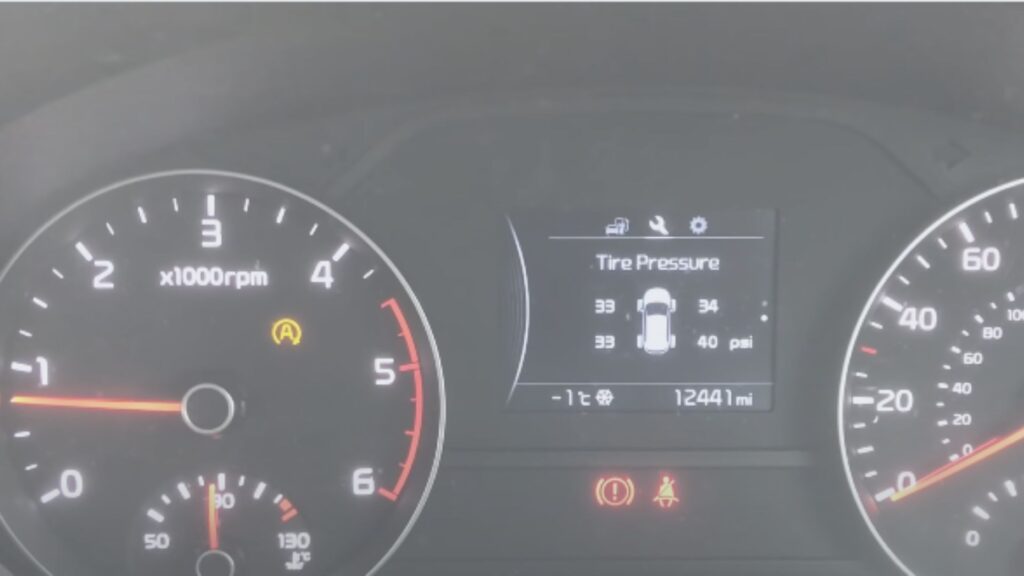
Understanding the difference between warning types is critical. A steady, illuminated TPMS light indicates that at least one tire is low on air pressure. However, a flashing TPMS light (which typically blinks for one minute before staying illuminated) signifies a system malfunction. This usually points to a dead sensor battery, a lost signal, or a faulty receiver module rather than a simple tire pressure issue.
How to Properly Calibrate Your 2008 Kia Sportage Tire Sensors
📋
Step-by-Step Guide
Recommended Best Deal Products


Always use a high-quality manual tire pressure gauge. Check the placard located on the driver’s side B-pillar for the exact PSI requirements. Ensure the tires are “cold”—meaning they have sat for at least three hours or been driven less than a mile.
Once tires are at the correct pressure, you must initiate the system recognition. Drive the vehicle at speeds above 20 mph for 10 to 15 minutes. This allows the sensors to “reboot” and successfully broadcast the new pressure data to the control module.
Manual Gauge vs. Dashboard Accuracy
Never rely on the TPMS light to tell you when your tires are perfectly inflated; it is a safety warning, not a precision inflation tool. A manual gauge provides a factory-standard reading. The sensors in a 2008 vehicle can sometimes be off by 1–2 PSI due to age, so rely on the physical gauge when adjusting to the placard recommendation (typically 30–35 PSI).
Common Causes of Persistent TPMS Alerts
If you have confirmed that all tires—including the spare if it is equipped with a sensor—are at the correct pressure and the light remains on, the system is likely suffering from a hardware component failure rather than an inflation issue.
- Aging Sensor Battery Lifespan: Most TPMS sensors have a battery life of 7 to 10 years. In a 2008 model, it is highly probable that the original batteries have reached their end-of-life, leading to a permanent failure.
- Weather Impacts on Pressure: Scientific data suggests that tire pressure typically drops by approximately 1 PSI for every 10-degree drop in ambient temperature. This is a common cause of “false” alerts during seasonal changes.
- Valve Stem Corrosion: Because the valve stem is part of the sensor assembly, corrosion over 15+ years can cause slow leaks or block the signal transmitter.
- Electronic Interference: Aftermarket chargers or poorly shielded electronic devices plugged into the console can occasionally interfere with the low-frequency radio waves transmitted by the tire sensors.
If you have a flat tire and use a can of “fix-a-flat” sealant, be aware that this material can clog the sensor’s opening and permanently damage it, requiring a sensor replacement upon your next tire service.
Advanced Diagnostics for 2008 Kia Sportage TPMS Failures
Recommended Best Deal Products


When self-correction fails, it is time for professional diagnostic intervention. A standard OBD-II scanner is often not enough, as you need a dedicated TPMS tool that can trigger and read the unique ID codes of the sensors.
Do not ignore a flashing TPMS light. While a steady light is an annoyance, a flashing light indicates that the system is unable to monitor your tires at all. This leaves you without a critical safety warning system during a potential blowout or rapid pressure loss.
When to Visit a Professional Tire Shop
If the light persists after your drive cycle, take the vehicle to a professional tire shop. They can use a TPMS synchronization tool to “wake up” the sensors. If a sensor fails to respond to this high-frequency broadcast, it is confirmed dead. Replacing these sensors is the only way to restore the system to full working order. Given the age of the 2008 Sportage, if one sensor has failed, it is standard industry practice to replace all four, as the others are likely near the end of their service life as well.
By The Numbers: Industry Insights
No Manual Button Exists
Avg. Sensor Battery Life
The 2008 Kia Sportage relies on an automated system, meaning there is no manual reset procedure to follow beyond proper maintenance and driving. By understanding the difference between low pressure and hardware faults, you can avoid unnecessary diagnostic costs. Always keep a backup manual gauge in your glove box to ensure your tires are correctly inflated, and if the light remains a constant companion, consult a professional to scan your sensors for battery exhaustion.
2008 Kia Sportage Tpms Reset Button Location: Frequently Asked Questions
Does my Sportage have a physical reset button?
No, the 2008 Kia Sportage is not equipped with a physical TPMS reset button. The vehicle’s TPMS control module is designed to communicate directly with the sensors inside each wheel. When the system detects that all tire pressures are within the correct operational range, it will automatically process this data and turn off the warning light on its own without requiring manual input.
Why won’t my TPMS light go off after I fill my tires?
If you have inflated the tires to the correct pressure but the light remains on, the system has not yet received a updated ‘handshake’ signal from the sensors. This often requires a drive cycle, where the vehicle is driven at speeds typically above 20 mph for at least 20 minutes, allowing the TPMS receiver to calibrate with the wheel sensors and confirm the new pressure status.
Do I need a scan tool to reset the TPMS on this vehicle?
For basic low-pressure alerts, a scan tool is not required; you only need to correct the tire pressure and drive the vehicle. However, if a sensor has failed or if the TPMS module has stored a permanent fault code, you will need a professional TPMS diagnostic scan tool to identify the specific faulty component or to relearn sensor IDs into the vehicle’s computer memory.
Is it safe to drive with the TPMS light on?
It depends on the state of the light. If the light is solid, you should check your tire pressures immediately as a low tire can affect vehicle handling and safety. If the light is flashing, it indicates an electronic fault in the monitoring system itself. While the car is safe to drive, the system will not warn you of a future low-pressure event until the fault is repaired.
Can I replace the TPMS sensor batteries individually?
No, you cannot replace just the batteries. TPMS sensors are sealed units, designed to be moisture-proof and durable. Once the internal battery reaches the end of its life, the entire sensor unit must be replaced. After installing a new sensor, it may need to be registered or ‘paired’ with your Kia’s onboard computer using a specialized programming tool to ensure it communicates correctly with the vehicle.