Nissan Idle Relearn: Fix Rough Idling and RPM Issues in 2026
Last Updated on May 21, 2026 by Ryan
📋 Table of Contents
- 🎯 Key Takeaways
- Understanding the Nissan Electronic Throttle System
- Nissan Idle Relearn Made Easy: Your Essential Action Plan
- Key Indicators That Your Nissan Needs an Idle Reset
- The Role of the ECU in Maintaining Airflow Balance
- Long-term Benefits of Throttle Position Calibration
- Conclusion
- 💬 Quick Questions & Answers
- ❓ Frequently Asked Questions


The Nissan idle relearn is a critical electronic calibration that syncs the throttle body with the ECU to ensure a smooth engine idle. Performing this process prevents stalling and restores fuel economy after battery or intake maintenance.
Doing a Nissan idle relearn yourself? Here are the two tools most DIYers use first:


As an Amazon Associate we earn from qualifying purchases.
🎯 Key Takeaways
- Perform relearns after cleaning the throttle body or disconnecting the car battery.
- A stable idle prevents engine stalling and reduces vibration during stops.
- Ensure the engine is at operating temperature before starting any calibration.
- Turn off all accessories like AC and lights for accurate results.
- Use a professional scan tool if manual pedal sequences fail repeatedly.
Have you ever pulled up to a red light only to feel your Nissan shaking or surging? It is a frustrating feeling that makes many drivers worry about expensive engine repairs. Most of the time, the problem is not a broken mechanical part. Instead, it is a simple communication breakdown between your car’s computer and the engine. This “brain” controls how much air enters the engine when you are not pressing the gas pedal.
Your Nissan relies on a complex electronic system to stay smooth while sitting still. When this system loses its calibration, your RPMs might jump or drop unexpectedly. This is where the idle relearn procedure comes in. It is essentially a “factory reset” for your engine’s resting state. Understanding why your car behaves this way can save you hundreds of dollars in mechanic fees. It also ensures your vehicle stays safe and efficient on the road.
Understanding the Nissan Electronic Throttle System
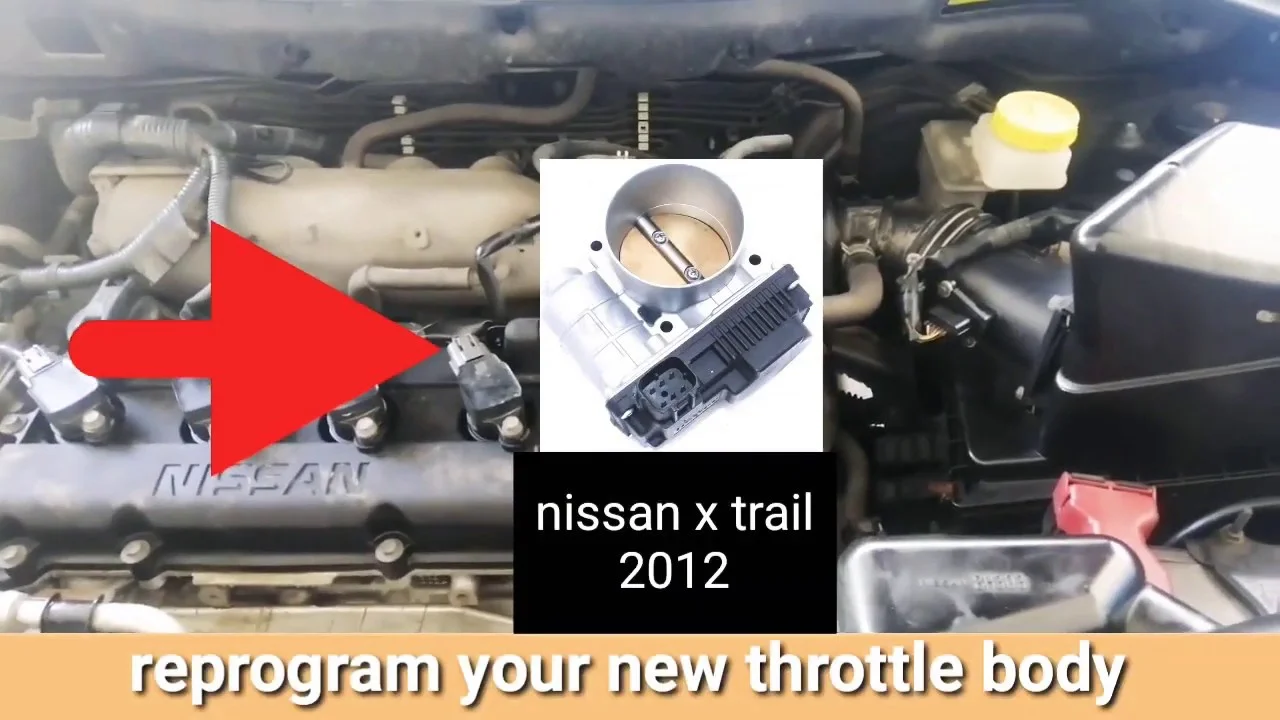
Modern Nissan vehicles use a sophisticated “drive-by-wire” system. In older cars, a physical cable connected your gas pedal to the engine. Today, your Nissan uses sensors and an Electronic Control Module (ECM). When you push the pedal, you are actually sending an electrical signal to a computer. The computer then tells a motor to open the throttle plate. This allows for much better fuel efficiency and smoother acceleration, but it requires perfect precision to work correctly.
The Role of the Throttle Actuator
The throttle actuator is the heart of this system. It is a small motor that moves the throttle plate based on commands from the ECM. Even when your foot is off the gas, the plate must stay open just a tiny bit. This tiny gap allows the engine to breathe so it does not stall. Over time, the ECM learns the exact position needed for a perfect idle. It accounts for things like engine wear, temperature, and even the humidity in the air. It is a living, breathing map that the car builds as you drive.
The ECM’s Learning Curve
The ECM is constantly taking notes. It monitors the Mass Airflow (MAF) sensor and the Throttle Position Sensor (TPS) to maintain a steady RPM. However, this “memory” can become a problem if conditions change suddenly. For example, if you clean a dirty throttle body, the ECM might still try to compensate for the dirt that is no longer there. This leads to a mismatched air-to-fuel ratio. The system becomes confused because its stored data does not match the real-world environment.
- Precision Control: The computer adjusts the throttle in fractions of a millimeter.
- Adaptive Learning: Your car remembers your driving habits and engine state.
- Sensor Harmony: Multiple sensors must agree for the idle to remain stable.
- Digital Connection: No physical cables mean the system relies entirely on electrical accuracy.
Nissan Idle Relearn Made Easy: Your Essential Action Plan
If you have recently cleaned the throttle body, disconnected the battery, or replaced an intake component on your Nissan, you might notice your engine idling erratically or stalling at stoplights. This happens because the Engine Control Unit (ECU) has lost its calibration for the “home” position of the throttle plate and the volume of air required for a smooth idle. This guide provides a comprehensive walkthrough of the manual “pedal dance” method to recalibrate your Nissan’s idle air volume. Following these steps precisely is critical, as the ECU’s timing requirements are measured in seconds; even a slight deviation can cause the process to fail, requiring you to start over from the beginning.
Step 1: Establishing Preliminary Conditions
What you need: A voltmeter (optional but recommended), a quiet environment, and all electrical accessories turned off.
Instructions: Before attempting the relearn, the vehicle must meet specific physical parameters, or the ECU will reject the command. First, ensure the battery voltage is at least 12.9V at idle. Next, ensure the engine coolant temperature is between 70°C and 100°C (158°F – 212°F). This usually requires driving the car for 10–15 minutes. Park the vehicle on level ground and shift into Park (Automatic) or Neutral (Manual). Most importantly, turn off every single power draw: headlights, air conditioning, radio, and even the interior dome light. Ensure the steering wheel is pointed straight ahead, as power steering load can interfere with the idle calculation.
Pro Tip: If your battery is old, the fluctuating voltage may cause the relearn to fail. Consider hooking up a battery tender or ensuring the battery is fully charged before starting the sequence.
Step 2: Accelerator Pedal Released Position Learning
What you need: Your ignition key and a clear view of the dashboard.
Instructions: This step teaches the ECU the “zero” point of your gas pedal. With your feet completely off the pedals, turn the ignition switch to the “ON” position (dash lights on, but engine NOT running). Wait exactly two seconds. After the two seconds have passed, turn the ignition switch to the “OFF” position and wait for at least ten seconds. You may hear a small click or humming from the engine bay; this is the throttle motor resetting. Repeat this process one more time to ensure the ECU has registered the signal voltage of the pedal in its resting state.
Pro Tip: Avoid resting your foot on the floor mat near the pedal during this stage. Even a slight accidental pressure on the sensor can result in an incorrect “resting” voltage reading.
Step 3: Throttle Valve Closed Position Learning
What you need: Silence in the cabin to listen for mechanical sounds from the engine bay.
Instructions: This procedure informs the ECU of the fully closed position of the throttle butterfly valve. Ensure the accelerator pedal is fully released. Turn the ignition switch to the “ON” position for one second, then immediately turn it back to the “OFF” position. Wait for at least ten seconds. During this ten-second window, listen closely for the sound of the throttle valve moving—it typically makes a faint high-pitched buzz followed by a soft “click.” This sound confirms that the ECU is physically indexing the throttle plate against its stop. If you do not hear any movement, ensure your throttle body connector is securely plugged in.
Pro Tip: If you have a helper, have them stand near the open hood. The mechanical “thud” of the throttle plate closing is much easier to hear from the outside of the vehicle.
Step 4: The Timing Preparation Phase
What you need: A stopwatch or a phone with a timer app.
Instructions: The actual “Idle Air Volume Learning” is incredibly sensitive to timing. You cannot “guess” the seconds in your head, as human counting tends to accelerate under stress. Set your stopwatch and familiarize yourself with the rhythm: 3 seconds, 5 seconds, 7 seconds, and 20 seconds. This is often called the “3-5-7-20” rule. Ensure the engine is still at operating temperature. If it has cooled down while you were reading, start the engine and let it run until the temperature needle is in the middle of the gauge, then shut it off again before proceeding to the next step.
Pro Tip: Practice the pedal movements (pumping the gas pedal five times quickly) while the car is off just to get the muscle memory down before the clock starts.
Step 5: Executing the Idle Air Volume Learning (The Pedal Dance)
What you need: Precise timing and a stopwatch.
Instructions: 1. Turn ignition ON (do not start) and wait 3 seconds. 2. Immediately stomp the accelerator pedal to the floor and release it fully 5 times within a 5-second window. 3. Wait exactly 7 seconds with your foot off the pedal. 4. After 7 seconds, press the accelerator pedal all the way down and hold it. Within about 10 seconds, the “Service Engine Soon” or “Check Engine” light will start blinking. Continue holding the pedal down. After about 20 total seconds of holding, the light will stop blinking and stay solid. As soon as it stays solid, release the pedal immediately.
Pro Tip: If the light never starts blinking, your timing in the 3-second or 7-second intervals was likely off by half a second. Turn the car off, wait 30 seconds, and try again.
Step 6: Finalizing the Relearn and Verification


What you need: Observation of the tachometer (RPM gauge).
Instructions: Once you have released the pedal (after the light turned solid), you must start the engine within three seconds. The engine should fire up, and you may notice the RPMs hunting or surging briefly between 1,000 and 1,500 RPM. Let the engine idle for at least 20 to 30 seconds without touching the gas pedal or turning on any accessories. Gradually, you should see the needle drop and stabilize at the factory specification (usually between 625 and 725 RPM for most Nissan V6 engines, or 700-800 RPM for four-cylinder models). Rev the engine lightly a few times and ensure the needle returns smoothly to the base idle without dipping too low or stalling.
Pro Tip: If the idle remains high (above 900 RPM) after a minute of idling, the relearn did not “take.” This often happens if there is a vacuum leak or if the throttle body is excessively dirty.
✅ Final Checklist
- Confirm the “Service Engine Soon” light is no longer illuminated or blinking.
- Verify that the idle RPM is within +/- 50 RPM of the specification listed on your under-hood emissions label.
- Ensure the engine does not “stumble” when the A/C compressor kicks on or when the steering wheel is turned.
- Check that the throttle response is crisp and the car does not hesitate when accelerating from a stop.
- Verify that the car holds a steady idle even after a short test drive around the block.
Important Notes:
- Safety Warning: Perform this procedure in a well-ventilated area to avoid carbon monoxide buildup, and ensure the parking brake is firmly engaged.
- When to Seek Help: If you have attempted this procedure more than five times without success, you may have a vacuum leak, a faulty Mass Air Flow (MAF) sensor, or a damaged electronic throttle body that requires professional diagnostic tools (like a Consult-III) to reset.
- Estimated Time: 15–30 minutes (including engine warm-up).
- Estimated Cost: $0 (DIY) vs. $100–$150 (Dealership labor fee).
Key Indicators That Your Nissan Needs an Idle Reset
How do you know if your Nissan is just having a “bad day” or if it actually needs a relearn? The signs are usually very obvious if you know what to look for. Because the idle is the foundation of your engine’s operation, any glitch here will affect the entire driving experience. You might notice the car acting strangely while you are parked, or even while you are slowing down for a stop sign. Ignoring these signs can lead to poor gas mileage and unnecessary stress on your engine mounts.
Common Symptoms You Should Not Ignore
The most frequent sign is “idle hunting.” This is when your RPM needle bounces up and down while you are stopped. It looks like the car is trying to find its balance but keeps failing. You might also experience a very high idle, where the engine sounds like it is racing even though you aren’t moving. Conversely, a low idle can cause the whole car to vibrate. In some cases, the car might even stall completely when you come to a stop, which can be dangerous in heavy traffic.
When a Reset Is Necessary After Repairs
You should always consider an idle relearn after performing certain maintenance tasks. If you have recently disconnected the battery for a long time, the ECM might have lost its stored memory. Similarly, if you have replaced a sensor or cleaned the intake system, the old “maps” in the computer are no longer valid. Mechanics often call this a “resetting the baseline.” It gives the car a fresh start so it can learn the new, clean state of your engine parts.
- RPM Fluctuations: The needle on your dash moves erratically at stoplights.
- Stalling: The engine dies unexpectedly when you take your foot off the gas.
- Erratic Shifting: On automatic Nissans, a bad idle can cause “jerky” gear changes.
- Service Lights: A “Service Engine Soon” light may appear with codes like P0507.
- Post-Maintenance Issues: Problems that start immediately after a battery change or throttle cleaning.
By staying alert to these signals, you can catch idle issues before they lead to bigger problems. A smooth idle is not just about comfort; it is a sign that your Nissan’s engine is breathing correctly and burning fuel efficiently. When the computer and the mechanical parts are in sync, your driving experience becomes much more predictable and enjoyable.
The Role of the ECU in Maintaining Airflow Balance
Your Nissan’s Engine Control Unit (ECU) acts as the central nervous system of the vehicle, constantly calculating the perfect ratio of air and fuel. This is not a static process. As your car accumulates miles, tiny carbon deposits naturally build up around the throttle plate, slightly restricting airflow. To keep the engine from stalling, the ECU “learns” to compensate by adjusting the throttle butterfly valve opening and fuel injection timing. It essentially builds a custom map of how your specific engine breathes.
Understanding Adaptive Learning Parameters
The ECU uses what is known as adaptive learning to manage environmental changes and mechanical wear. When you clean the throttle body or disconnect the battery, these stored learned values often become obsolete or are wiped entirely. If the ECU is still trying to compensate for “ghost” carbon deposits that are no longer there, you will experience a surging idle or abnormally high RPMs because the airflow no longer matches the ECU’s outdated map.
- MAF Sensor Integration: The ECU relies heavily on the Mass Air Flow sensor to detect exactly how much air is entering the intake manifold at any given second.
- Fuel Trim Adjustments: If the idle is not calibrated, the ECU may struggle with “Long Term Fuel Trims,” leading to a rich or lean condition that triggers a Check Engine Light.
- Closed-Loop Efficiency: A successful relearn allows the ECU to enter “closed-loop” operation faster, which is the most fuel-efficient state for a modern Nissan engine.
Pro Tip: Before attempting to sync the ECU, always ensure the engine is at full operating temperature. The ECU will refuse to store new idle data if it detects the engine is still in its “cold start” enrichment phase, as the data would be inaccurate for normal driving conditions.
Long-term Benefits of Throttle Position Calibration
Performing an idle relearn is about much more than just fixing a vibrating steering wheel at a red light; it is a fundamental part of preventative maintenance. When the throttle position is accurately calibrated, every system—from the ignition timing to the transmission pressure—works in harmony. This calibration ensures that the physical position of the throttle plate perfectly aligns with the digital signal the ECU expects to see.
Enhanced Drivability and Component Longevity
A stable, calibrated idle directly impacts how your Nissan handles the transition between acceleration and braking. Many Nissan owners report that a proper relearn eliminates that annoying “lurching” sensation often felt when slowing down to a crawl in traffic. By smoothing out these transitions, you are reducing the physical shock sent through the drivetrain.
- Optimized Fuel Economy: An accurate idle prevents the engine from “searching” for the right RPM, which wastes fuel during every stop-and-go cycle.
- Crisper Transmission Shifting: Modern CVTs and automatic transmissions use throttle position data to determine shift points; accurate calibration leads to much smoother gear transitions.
- Reduced Engine Mount Wear: Persistent rough idling creates excessive vibration that prematurely wears out rubber engine and transmission mounts.
For example, if you have recently replaced an alternator, a battery, or even a blown fuse related to the engine harness, your idle may feel “floaty.” Taking the time to recalibrate the throttle position ensures that you aren’t putting unnecessary strain on your torque converter or causing the engine to run hotter than necessary while sitting in traffic.
Conclusion
The idle relearn procedure is the vital bridge between your Nissan’s mechanical components and its digital brain. Whether you have just finished a routine throttle body cleaning or you are chasing down a mysterious RPM surge, ensuring the ECU has an accurate baseline for airflow is the only way to restore that factory-smooth feel. Ignoring idle issues doesn’t just hurt your gas mileage; it puts unnecessary stress on your entire powertrain.
Next Steps: Your first move should be to check for any visible vacuum leaks or a dirty air filter, as these can interfere with the calibration. Once the intake path is clear, proceed with the relearn process to reset your ECU’s logic. If the idle remains erratic after a successful calibration, it may be time to inspect the electronic throttle motor itself for internal wear. Keep your Nissan running sharp by keeping its digital and mechanical worlds in perfect sync!
💬 Quick Questions & Answers
Why is my Nissan idling too high?
This often happens after cleaning the throttle body without resetting the ECU’s stored airflow data.
Do I need special tools for a Nissan relearn?
Most models allow for a manual pedal-dance method, though professional scan tools are more reliable.
Can a dirty throttle body cause idling issues?
Yes, carbon buildup restricts airflow, forcing the ECU to compensate incorrectly over time.
How long does the calibration process take?
The actual software adjustment takes less than a minute, though engine warm-up takes longer.
Is a relearn necessary after a battery change?
Yes, losing power often clears the ECU’s stored memory for idle air volume control.
❓ Frequently Asked Questions
What exactly does the idle air volume learn do for a Nissan?
It calibrates the specific amount of air passing through the throttle plate at idle to match the engine’s current load. This ensures the RPM stays within factory specifications during various operating temperatures and conditions.
Why do Nissan engines sometimes stall after the battery is disconnected?
The ECU loses its learned compensation for throttle body wear or carbon deposits when power is cut. Without this stored data, the engine cannot maintain enough airflow to stay running at low speeds until it is relearned.
Can I drive my car if the idle is slightly high after maintenance?
You can drive it, but it may lead to increased brake wear and poor fuel economy because the car is fighting to move forward. It is best to perform the relearn immediately to prevent unnecessary stress on the transmission.
What are the prerequisites for a successful Nissan idle relearn?
The engine must be at full operating temperature, the steering wheel must be straight, and all electrical loads like the heater and headlights must be off. Failing to meet even one of these conditions usually results in a failed calibration attempt.
Does cleaning the throttle body always require an idle relearn?
Yes, because removing grime changes the physical airflow gap at the throttle plate. The ECU needs to be updated on these new physical conditions so it can adjust the fuel trim and air intake accordingly.
What happens if the manual relearn process keeps failing?
Persistent failure may indicate a vacuum leak in the intake system or a faulty throttle position sensor. If the manual timing is too difficult to master, a technician can use a Consult-III tool to force the relearn electronically.
Model-Specific Idle Relearn Variations: Altima, Rogue & Frontier
While the core idle relearn logic is the same across Nissan’s lineup, three popular models have key procedural differences that trip up even experienced DIYers. Use the correct steps for your exact model — doing the Altima procedure on a Frontier, for example, often fails to complete the calibration.
When the Manual Procedure Fails on Any Model
If you have completed the correct procedure twice and idle quality has not improved, do not keep repeating the pedal sequence. At that point, one of three things is happening:
- The throttle body needs physical cleaning (carbon buildup prevents accurate position sensing)
- The MAF sensor is contaminated and sending bad data to the ECU
- A scan tool reset is needed because stored adaptive fuel trims are overriding the relearn
A basic OBD2 scanner that reads live data will help you confirm whether your idle air flow values are within normal range after the procedure.