Nissan Rogue Fuse Box Location: Identifying Key Electrical Control Units
Nissan Rogue Fuse Box Location: Identifying Key Electrical Control Units
Recommended Best Deal Products


![Au-TOMOTIVE GOLD Compatible Keychain and Keyring for Nissan Rogue [KC1540.ROG] - Premium…](https://m.media-amazon.com/images/I/31vIAKQQiDL._SS500_.jpg)

📤 Share Image
Experiencing an unexpected electrical malfunction in your Nissan Rogue can be perplexing, often leaving owners wondering where to begin troubleshooting. When a key component like your radio, headlights, or power windows suddenly ceases to function, the culprit is frequently a blown fuse, but locating these vital protective devices can be a challenge without precise guidance. This detailed guide will meticulously outline the exact Nissan Rogue fuse box location within both the engine compartment and passenger cabin, providing you with the essential knowledge to efficiently diagnose and resolve common electrical issues yourself, or understand when to seek professional assistance.


Section 1: Understanding the Critical Role of Fuse Boxes in Your Nissan Rogue’s Electrical System
The electrical system of a modern vehicle like the Nissan Rogue is an intricate network, akin to the nervous system of the human body. At the heart of its protection lie the fuse boxes, which are not merely housing units but critical control centers safeguarding every electrical component from potential damage. Without properly functioning fuse boxes and their integral fuses, an electrical anomaly could quickly escalate from an inconvenience to a costly repair.
Fuses serve as sacrificial links in an electrical circuit. Their primary function is to create an intentional weak point in the circuit’s pathway. When an overcurrent condition occurs—such as a sudden electrical surge or a short circuit—the thin filament inside the fuse heats up and breaks, effectively opening the circuit and stopping the flow of electricity. This immediate interruption prevents excessive current from reaching and damaging more expensive and sensitive components, including intricate wiring harnesses, the infotainment system, engine control modules, or critical safety systems like the anti-lock brakes. Consider a scenario where a sudden electrical surge could utterly devastate your sophisticated infotainment system; a properly rated fuse breaks first, isolating the surge and limiting the damage, often to just the fuse itself. Similarly, a simple short circuit in a light bulb, if unchecked, could lead to wiring overheating, but a dedicated fuse protects against this localized issue.
Modern vehicles, including the Nissan Rogue, feature a modular design for their electrical systems. This means different circuits—from the power windows to the fuel pump—are managed by distinct fuses within multiple fuse boxes. This compartmentalization allows for targeted protection and easier diagnosis. Rather than a single failure cascading through the entire system, a problem in one circuit is isolated. Furthermore, understanding the layout and function of your Rogue’s fuse boxes is a fundamental aspect of preventative maintenance. Familiarity with their locations and the circuits they control can aid in the early diagnosis of electrical anomalies, preventing minor issues, such as a flickering headlamp, from escalating into more significant and potentially unsafe malfunctions.
By The Numbers
Fuses in a Modern Rogue
Common Electrical Issues
Section 2: Locating the Primary Fuse Box in Your Nissan Rogue’s Engine Compartment (Under Hood)
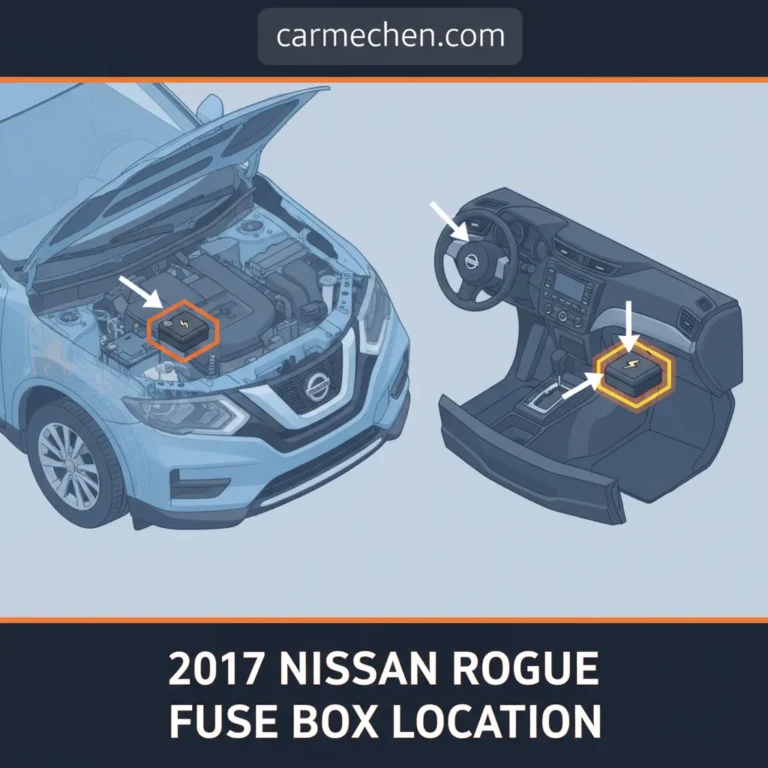
The engine compartment fuse box in your Nissan Rogue is the nerve center for numerous critical systems, primarily those associated with the powertrain and other high-amperage functions. When encountering issues related to engine performance, starting, or major electrical systems like braking, this is typically the first point of inspection.
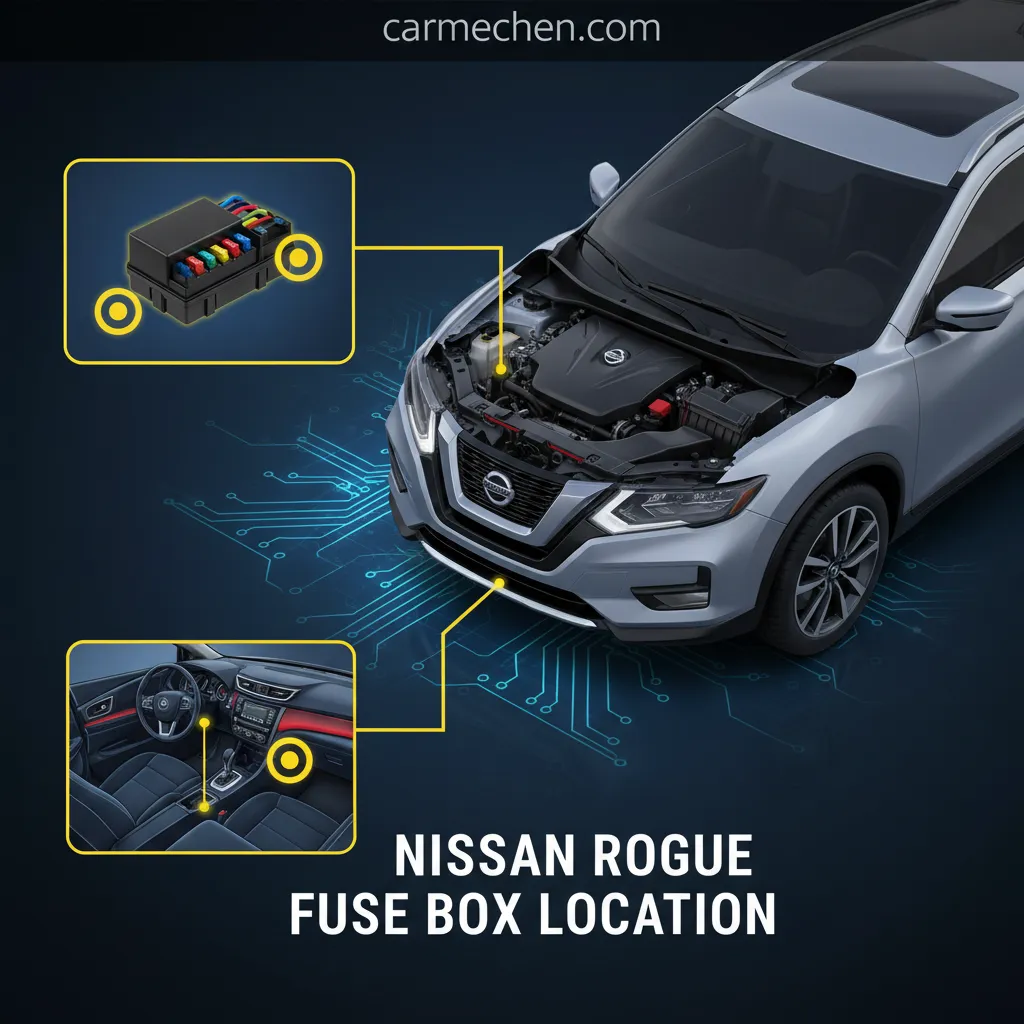
To locate this primary control unit, open your Nissan Rogue’s hood. The fuse box is almost universally situated on the driver’s side of the engine bay. In many models, particularly those manufactured between 2014 and 2023 (T32 and T33 chassis), you’ll find it positioned adjacent to or slightly behind the vehicle’s battery, often closer to the firewall. For instance, in a 2018 Nissan Rogue, the under-hood fuse box is prominently situated near the firewall on the driver’s side, a fairly consistent location across these generations for ease of service. Its visual identifiers are distinct: it’s a relatively large, black plastic box, often rectangular or square, designed to be weather-resistant. It will typically have a snap-on cover, although some designs may feature bolted fasteners for added security. Look for labels that explicitly say ‘Fuses’ or display a universal electrical symbol—a stylized lightning bolt or a circuit diagram.
Safely opening the fuse box cover requires a gentle approach. Most covers are secured by a series of plastic clips that engage around the perimeter. To release them, you typically press inward on the tabs or lift them up, then carefully pivot or pull the cover away. Never force the cover open, as this can damage the clips or the housing, compromising its ability to protect the fuses from environmental elements. Once open, you’ll see a collection of various colored fuses and possibly several relays. These relays are crucial components that switch higher currents for systems like the starter motor or cooling fans, often triggered by lower-current signals.
This primary fuse box controls circuits vital to your Rogue’s operation, including:
- Engine Control Unit (ECU): The vehicle’s brain, managing engine performance.
- Fuel Pump: Essential for delivering fuel to the engine.
- Anti-lock Braking System (ABS): Critical for safe braking.
- Cooling Fan Relays: Regulating engine temperature.
- Headlights and other exterior lighting systems: For visibility and safety.
- Starter Motor: Initiating engine ignition.
Diagrams within or on the underside of the cover often indicate main power distribution for systems drawing 20A or more, highlighting their importance.

Audible — Listen Free for 30 Days
One free credit a month and thousands of titles included.
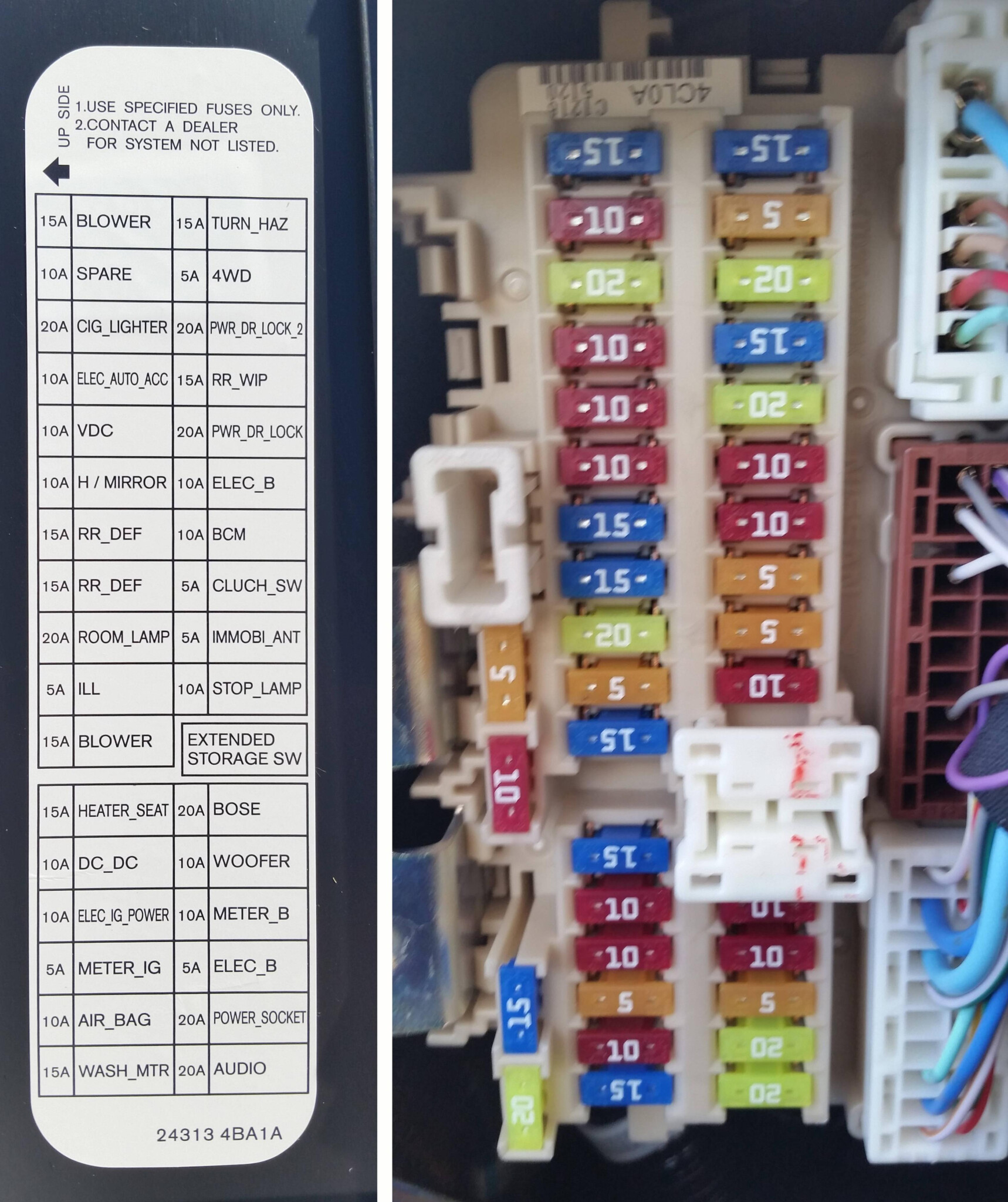
Listen Free for 30 DaysAlways look for a fuse diagram printed on the underside of the fuse box cover. This diagram is your indispensable guide, clearly mapping out which fuse corresponds to which electrical component. It will save you significant time in troubleshooting.
Section 3: Identifying the Secondary Fuse Box in Your Nissan Rogue’s Cabin (Interior Access)
While the engine bay fuse box handles the heavy lifting for critical operational systems, a secondary fuse box located within the vehicle’s passenger compartment is dedicated to the comfort, convenience, and informational features that enhance your driving experience. If your infotainment screen goes blank, your power windows refuse to budge, or the interior lights remain stubbornly off, the interior fuse box is typically your target.
The most common interior location for this fuse box in Nissan Rogue models is behind a removable panel on the driver’s side dashboard, often referred to as the kick panel or knee bolster area. This makes the interior fuse box quite convenient and accessible for troubleshooting common accessory issues. In some specific model years or trims, it might be found on the passenger side, behind or beneath the glove compartment, though this is less frequent for recent Rogue generations. For instance, in a 2020 Nissan Rogue, the interior fuse box is typically located behind a small, hinged or clipped panel on the lower-left side of the driver’s dashboard, close to the door jamb.
Accessing this interior panel requires a keen eye and a delicate touch. You’ll need to identify any tabs, clips, or sometimes even small Phillips head screws that secure the panel. Gently pry with a non-marring plastic trim tool (preferred) or your fingertips to un-clip the panel. For the 2020 Rogue example, this usually involves un-clipping two or three plastic tabs that hold the hinged panel flush with the dashboard. Once the panel is removed or pivoted open, the interior fuse block will be visible, along with its corresponding diagram.
The interior fuse box governs a wide array of electrical systems that impact your daily driving:
- Radio and Infotainment System: From navigation to audio.
- Power Windows: Controlling window operation.
- Interior Lights: Dome lights, map lights, and ambient lighting.
- Heated Seats: Providing comfort in colder climates.
- Climate Control System: Fans, AC compressor clutch, and temperature regulation.
- Various Charging Ports: USB outlets and 12V power sockets.
- Power Door Locks and Mirrors: Convenience features.
It’s important to note that while engine compartment fuse box locations are largely standardized across generations, interior fuse box placements can see minor shifts across different Rogue generations (e.g., T32 vs. T33 chassis). Many modern Nissan Rogues consolidate passenger compartment fuses within the driver’s footwell area for maximum accessibility.
For precise, model-year-specific diagrams and access instructions, always consult your Nissan Rogue owner’s manual. This invaluable resource provides exact fuse layouts and detailed steps tailored to your specific vehicle, ensuring you are confident in identifying the correct fuses.
Section 4: Step-by-Step: Diagnosing and Replacing a Blown Fuse in Your Nissan Rogue
Once you’ve located the appropriate fuse box, the next step is to accurately diagnose a blown fuse and perform a safe replacement. This process is straightforward, but precision is key to preventing further electrical issues.
📋
Step-by-Step Guide
Audible Premium Plus — Annual Membership
12 audiobook credits up front, plus the full Audible catalogue.
See Annual PlansFirst, identify which component has failed (e.g., dashboard light, power window). Consult your owner’s manual or the fuse box diagram to pinpoint the specific fuse responsible for that circuit. For example, if a dashboard light goes out, the diagram might point to a 10A (red) fuse. Once identified, locate the physical fuse in the appropriate fuse box.
Carefully remove the suspected fuse using the fuse puller, which is often conveniently found clipped inside the fuse box cover. Hold the fuse up to a light and look for a broken or charred metal filament inside. Automotive blade fuses are color-coded according to their amperage (e.g., 10A is red, 15A is blue, 20A is yellow). While a clear break usually signifies a blown fuse, some modern fuses, especially mini-fuses, may not show an obvious break. For instance, a suspected 10A fuse for the dome lights will appear red; if the thin wire inside is broken, it’s blown.
For a more accurate diagnosis, use a fuse tester or a multi-meter set to continuity mode. Touch the tester’s probes to the two metal prongs on top of the fuse. If the tester lights up or the multi-meter shows continuity (a beep or a zero reading), the fuse is good. If there’s no light or no continuity, the fuse is blown. This is especially useful for checking fuses where the filament break is not clearly visible. An example would be checking continuity on a suspected fuse for the car’s clock, ensuring its integrity.
Select a new fuse with the exact same amperage rating and physical size as the blown fuse. This is critical to prevent circuit overload or under-protection. Never use a fuse with a higher amperage. Align the new fuse with the empty slot and push it firmly into place until it seats securely. You should feel a slight click. Always keep spare fuses readily available for immediate replacement. A common cause for a blown fuse is an overvoltage spike or a short in the circuit it protects.
Once the new fuse is installed, turn the ignition back on and test the component that was previously not working. If it now functions, you have successfully replaced the fuse. Replace the fuse box cover, ensuring all clips are securely fastened to protect the fuses from dirt and moisture. If the component still does not work, or the new fuse blows immediately, there’s a deeper underlying electrical issue that requires professional attention.
Section 5: Essential Safety Precautions and Knowing When to Seek Local Expert Assistance
While replacing a fuse can be a straightforward DIY task, neglecting crucial safety measures can turn a simple repair into a hazardous situation, potentially damaging your vehicle or even causing personal injury. Adhering to best practices is paramount when dealing with any automotive electrical system.
Before you begin any work on your Nissan Rogue’s electrical system, including fuse inspection or replacement, always follow these critical safety measures: turn off the ignition completely, and as an added layer of safety, disconnect the negative battery terminal. This eliminates the risk of accidental short circuits or electrical shocks. Furthermore, always wear appropriate protective gear, such as safety glasses, to shield your eyes from any unexpected sparks or debris. These seemingly minor steps are foundational to safe vehicle maintenance.
NEVER use fuses with higher amperage ratings than specified, nor attempt makeshift repairs like wrapping a fuse with aluminum foil. This bypasses the fuse’s protective function, creating a direct short and risking severe damage to the vehicle’s intricate wiring system, module failures, or even an electrical fire. Always replace a fuse with one of the exact specified amperage and type.
There are distinct scenarios where professional intervention becomes not just advisable but essential. If a fuse for the same circuit blows repeatedly shortly after replacement, it’s a clear indicator of an underlying fault—a persistent short circuit or an overloaded component that needs professional diagnosis. Similarly, if you experience multiple simultaneous electrical failures (e.g., both the radio and power windows stop working concurrently), this suggests a more significant electrical issue beyond a single blown fuse, potentially involving a main power relay, wiring harness damage, or a critical control module. In such complex cases, or if the underlying cause of the blown fuse cannot be readily identified, it’s time to seek expert assistance.
We strongly encourage consultation with a certified technician at a reputable, nearby auto service center that is serving the community. These professionals possess specialized diagnostic tools, such as advanced scan tools and oscilloscopes, which are not readily available to the average owner. They also have in-depth knowledge of the Nissan Rogue’s intricate wiring schematics and electrical troubleshooting methodologies. While an average diagnostic fee for automotive electrical issues ranges from $100-$200, this is a small investment compared to the potential damage and safety risks associated with improper DIY repairs. Engaging a highly skilled technician, easily accessible and available to diagnose complex problems, ensures the safety, reliability, and long-term functionality of your vehicle. Choosing a trusted local expert ensures accountability and often a more personalized service experience.
Accurate Diagnostics
Experts use specialized tools to pinpoint the root cause, not just symptoms.
Preventative Solutions
They identify potential future issues, saving you from recurring problems.
Enhanced Safety
Professional repairs ensure all safety standards are met, protecting your investment and well-being.
This proactive approach ensures not only the immediate resolution of electrical issues but also the long-term health and safety of your Nissan Rogue, avoiding the hidden costs and risks associated with improper or incomplete repairs.
In summary, your Nissan Rogue has primary (under-hood) and secondary (cabin) fuse boxes, each controlling specific electrical systems. Accurate diagnosis involves visual inspection, using a fuse tester, and always replacing with the correct amperage fuse. Prioritize safety by disconnecting the battery and never substituting fuses with higher ratings to prevent serious electrical damage. Empower yourself with this knowledge to tackle minor electrical issues confidently. For persistent or complex problems, contact a trusted local Nissan service center for expert diagnostics and repairs, ensuring the longevity and safety of your vehicle.
Frequently Asked Questions
What are the common signs of a blown fuse in a Nissan Rogue?
A blown fuse typically manifests as a sudden loss of function for a specific electrical component, such as headlights, radio, power windows, or interior lights. Unlike a dead battery that affects multiple systems, a blown fuse usually isolates the problem to one circuit, making diagnosis straightforward by checking the relevant fuse.
Can I replace a Nissan Rogue fuse with a higher amperage fuse?
No, it is critically important to never replace a fuse with one of a higher amperage rating. Fuses are designed to blow and protect circuits from overcurrent. Using a higher amperage fuse bypasses this safety mechanism, potentially leading to overheating, wiring damage, or even an electrical fire within your Nissan Rogue.
Where can I find the fuse box diagram for my specific Nissan Rogue model?
The most accurate fuse box diagram for your Nissan Rogue will be found in your vehicle’s owner’s manual. Additionally, a simplified diagram is often printed on the inside of the fuse box cover itself. For digital access, Nissan’s official service manuals or reputable online automotive resources can provide model-specific schematics.
What tools do I need to check and replace a fuse in my Nissan Rogue?
To safely check and replace a fuse in your Nissan Rogue, you’ll primarily need a fuse puller (often located within the fuse box cover), a small flashlight for visibility, and a set of replacement fuses of various common amperages. A fuse tester can also be helpful for quick diagnostics without removing each fuse.
When should I consult a professional for Nissan Rogue electrical issues?
You should consult a professional technician if a fuse repeatedly blows after replacement, if multiple electrical systems fail simultaneously, or if you’re uncomfortable performing the diagnosis yourself. Persistent electrical problems can indicate deeper wiring faults or component failures that require specialized diagnostic equipment and expertise to resolve safely and effectively, especially when considering local repair shops.