2011 Silverado Cruise Control Not Working Expert Fix 2026
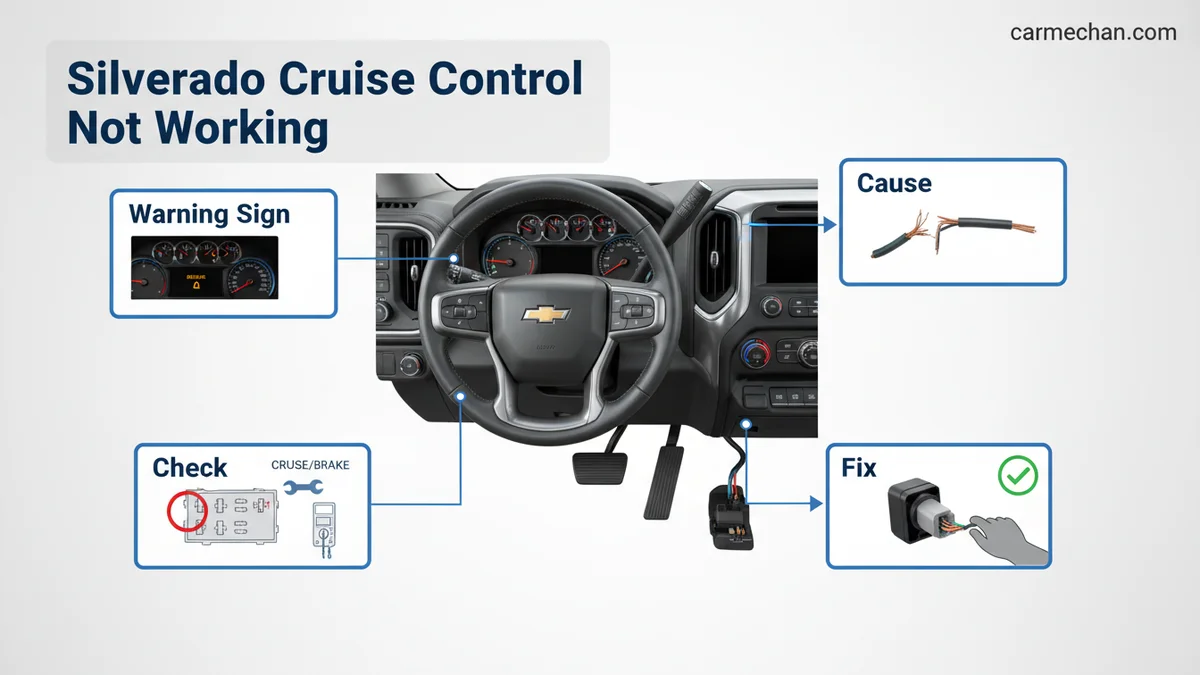
The most frequent cause for cruise control failure in a 2011 Silverado is a faulty brake pedal position switch. Even if your brake lights function correctly, a secondary internal contact within the switch often fails, preventing the cruise system from engaging.
If your 2011 Silverado cruise control has stopped engaging, you are likely dealing with a faulty brake pedal position switch or a broken wire within the steering wheel harness. In the GMT900 platform, these components are the most frequent culprits for cruise control failure, often manifesting even when your brake lights are functioning perfectly. Addressing this now is essential for long-distance driving comfort and maintaining consistent fuel economy as you head into the 2026 driving season.
Ignoring this issue can lead to potential safety hazards if the cruise control module receives intermittent signals while you are on the highway. Because the truck’s computer requires a precise signal from both the brake pedal and the steering wheel buttons to complete the circuit, a single high-resistance connection will disable the entire system. Following the diagnostic path below will save you from unnecessary dealer labor costs by pinpointing the specific failure point in your electrical system.
Key Takeaways
- Check the brake pedal position switch first, as it is the most common failure point.
- Inspect the CRUISE fuse in the under-hood block for continuity.
- Test steering wheel button resistance using a multimeter to rule out internal wiring breaks.
- Avoid steering column repairs if you lack experience with airbag safety protocols.
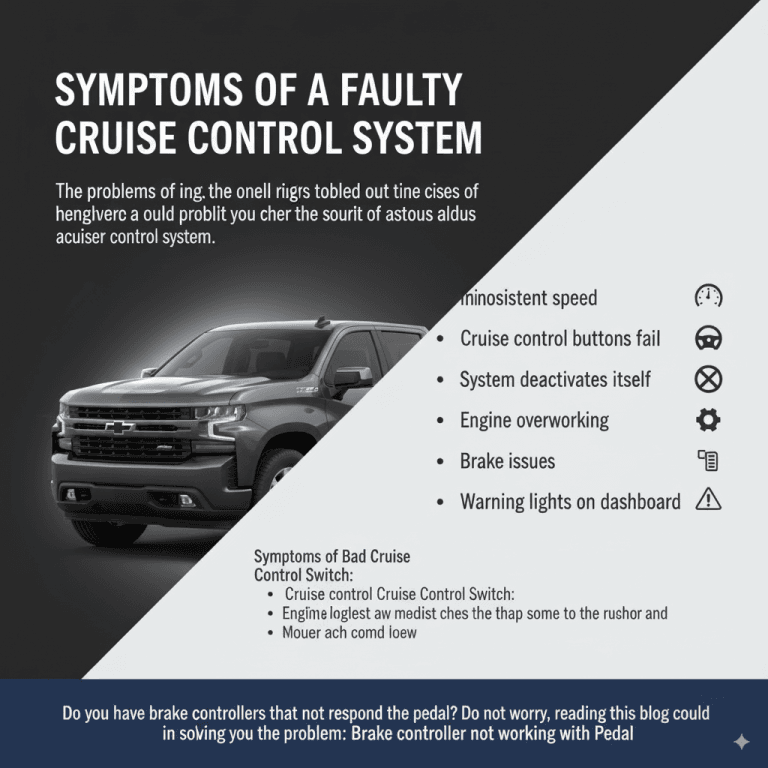
- Verify if the ‘Cruise Set’ light illuminates on the dash when the button is pressed.
Common Causes for 2011 Silverado Cruise Control Failure
Recommended Best Deal Products



The Brake Pedal Position Switch Paradox
On the 2011 Silverado, the brake pedal position switch is a dual-circuit device. One circuit handles your brake lights, while the other sends a signal to the Body Control Module (BCM) to disengage cruise control. A common misconception is that if your brake lights work, the switch is fine. In reality, the cruise control circuit often fails internally while the light circuit remains functional. By 2026, many of these original factory switches have developed internal corrosion or worn contact points, leading to a loss of signal that keeps the cruise system from arming.

Steering Wheel Control Wiring Fatigue
The buttons on your steering wheel are connected to the steering column clockspring through a thin ribbon harness. Constant turning of the wheel over fifteen years causes these wires to fatigue and eventually snap. If your cruise control light does not illuminate on the dash when you press the “On” button, the wiring is the primary suspect. You might also notice that other steering wheel functions, such as volume or track skipping, operate intermittently. This indicates that the clockspring or the wire harness behind the airbag module has high resistance or a complete open circuit.
2011 Silverado Cruise Control Issues: What Causes Them and How to Fix Them
If you are cruising down the highway in your 2011 Chevrolet Silverado only to realize your speed control system is unresponsive, you are not alone. This guide is designed to walk you through the diagnostic process for the cruise control system, focusing on the most common failure points. Because these trucks utilize a complex electronic throttle control system, identifying whether the issue lies in a simple switch, a fuse, or a sensor is vital before you visit an expensive repair shop. Follow these methodical steps to identify and resolve your Silverado’s cruise control failure safely and effectively.
Step 1: Check the Brake Light Fuse and Bulbs
What you need: A flashlight, your owner’s manual, and a replacement fuse if necessary.
Instructions: On many 2011 Silverado models, the cruise control system is electronically tied to the brake light circuit as a safety measure. If your brake lights are constantly illuminated or if a fuse has blown, the system will disable itself to prevent accidents. Start by opening the driver-side instrument panel fuse block. Locate the fuse designated for “STOP LAMP” or “BCM.” If the fuse is intact, perform a visual check of your taillights. Have an assistant press the brake pedal while you confirm both brake lights activate. If your brake lights are out, the cruise control will refuse to engage as a fail-safe.
Pro Tip: Do not just look at the fuse; use a test light on the small metal tabs on top of the fuse to ensure power is actually flowing through it.
Step 2: Inspect the Brake Pedal Position Switch
What you need: A flashlight and potentially a new brake pedal position switch (ACDelco D8025 or equivalent).
Instructions: The brake pedal position switch sends a signal to the ECM that the brakes are being applied, which instantly cuts off cruise control. Over time, these switches can become misaligned or fail internally, sending a constant “brake applied” signal to the computer. Crawl under the driver’s side dashboard and locate the switch mounted to the pedal bracket. Ensure the plunger is fully compressed when the pedal is at rest and releases immediately when you touch the pedal. If the switch feels loose or the electrical connector is corroded, it is highly likely to be the culprit behind your cruise control woes.
Pro Tip: If the switch is working but feels “mushy,” try cleaning the connector with electrical contact cleaner before purchasing a replacement part.
Step 3: Examine the Steering Wheel Control Buttons
What you need: A flat-head screwdriver or a trim removal tool.
Instructions: The 2011 Silverado uses a clock spring and a series of resistive switches on the steering wheel to communicate with the Body Control Module (BCM). If you press the “ON/OFF” button and the cruise light on your instrument cluster does not illuminate, the switch assembly may be faulty. Use a trim tool to carefully pry the switch pod out of the steering wheel. Check for loose wiring or burnt pins. Using a multimeter set to Ohms, you can test the switch for continuity. If the switch fails to close the circuit when pressed, you will need to replace the steering wheel cruise control switch module.
Pro Tip: Be very gentle with the plastic clips on the steering wheel trim; they are prone to snapping after years of sun exposure.
Step 4: Test the Clock Spring Continuity
What you need: A digital multimeter and an OBDII scanner capable of reading BCM codes.
Instructions: The clock spring is a ribbon cable that allows electrical signals to travel from the steering wheel to the truck’s computer while the wheel rotates. If your horn has stopped working alongside the cruise control, the clock spring is almost certainly broken. Use your OBDII scanner to check for codes like B0081 or similar steering-related faults. If the scan tool shows no signal change when pressing the cruise buttons despite the switches being functional, the internal ribbon of the clock spring has likely snapped. Replacing this requires removing the steering wheel and airbag, which should only be done if you are comfortable working around SRS components.
Pro Tip: Always disconnect the negative battery terminal and wait at least 10 minutes before handling the steering wheel/airbag assembly to prevent accidental deployment.
Step 5: Verify the VSS (Vehicle Speed Sensor) Signal
What you need: An OBDII scanner that displays live data.
Instructions: The cruise control system will not engage if the computer does not know how fast the truck is moving. Connect your scanner to the OBDII port under the dash and navigate to the “Live Data” stream. Look for “Vehicle Speed” or “VSS” and have a passenger monitor the readings while you drive at a safe, low speed. If the readout stays at 0 MPH while you are moving, the VSS located on the transmission tail shaft may be faulty or have a damaged wiring harness. A signal error here prevents the cruise control from “locking” in your speed, as the system thinks the vehicle is stationary.
Pro Tip: Check the wiring harness leading to the transmission for signs of heat damage or rodent chewing, which is common in older Silverado trucks.
Step 6: Reset the BCM (Body Control Module)
What you need: A 10mm wrench.
Instructions: Sometimes, the Silverado’s computer simply needs a hard reset to clear a “glitch” in the cruise control logic. Disconnect the negative battery cable from the battery terminal and leave it disconnected for at least 15 to 20 minutes. This allows the capacitors within the BCM and ECM to discharge completely. During this time, turn the headlight switch to the “ON” position to help drain any residual energy. Reconnect the terminal, start the engine, and allow it to idle for 5 minutes. Take the vehicle for a test drive to see if the system has reset itself and will now accept a cruise command.
Pro Tip: This reset procedure often clears temporary communication errors between the BCM and the ECM that prevent cruise activation.
✅ Final Checklist
- Confirm the cruise control icon lights up on the dashboard when pressed.
- Ensure the cruise light stays on after reaching 30+ MPH.
- Test the “Set” and “Resume” functions on a safe, open road.
- Verify the brake lights turn off immediately when the pedal is released.
- Check the OBDII scan tool for any remaining “Cruise Inhibited” trouble codes.
Important Notes:
- Safety: Never attempt to repair the steering wheel clock spring without first disconnecting the battery to prevent airbag injury.
- Professional Help: If you find fault codes related to the ECM (Engine Control Module) or if the cruise control remains non-functional after these steps, consult a professional technician, as you may have a complex wiring fault or a faulty BCM.
- Estimated Time and Cost: Most DIY fixes range from 30 minutes to 3 hours. Costs vary from $0 (reset/fuse check) to $150 for parts like switches or sensors.
Step-by-Step Diagnostic Procedures for Cruise Control
Recommended Best Deal Products


Verifying Fuses and Power Distribution
Before pulling the steering wheel apart, confirm that the cruise control module is actually receiving power. Start by inspecting the under-hood fuse block and the instrument panel fuse box located on the driver’s side of the dashboard. For the 2011 model year, focus on the following locations:
- Under-hood Fuse Block: Check the CRUISE fuse (often labeled as HVAC/Cruise in some GMT900 configurations). Ensure there is no evidence of heat damage or melted plastic around the terminals.
- Instrument Panel Fuse Block: Locate the fuse labeled BCM or CRUISE CTRL. Test these with a multimeter set to continuity; a visual inspection can be deceiving if the fuse element has a hairline fracture.
- Relay Health: Swap the cruise control relay with a non-critical relay of the same part number, such as the horn relay, to rule out a failed contact inside the relay housing.
Testing the Brake Switch Circuit
To test the brake pedal position switch without replacing it, locate the connector near the top of the brake pedal assembly. Use a digital multimeter to back-probe the wires. With the ignition in the “Run” position, you should see a 12-volt signal change when the pedal is pressed and released. If the signal remains static regardless of pedal position, the switch is stuck internally. In 2026, OEM-spec replacements are recommended, as cheap aftermarket switches often suffer from poor terminal tension, which causes the cruise system to cut out unexpectedly over bumps.
How to Replace the Brake Pedal Position Switch
The brake pedal position switch is the most frequent culprit behind cruise control failure in the 2011 Silverado. This sensor communicates directly with the ECM to disengage cruise control the moment the pedal moves. By 2026, many of these original factory switches have reached their mechanical fatigue limit.
Step-by-Step Replacement Procedure
- Locate the brake pedal position switch, which is mounted on the pedal bracket assembly just above the brake pedal arm.
- Disconnect the electrical harness connector by depressing the release tab and pulling firmly.
- Rotate the switch counter-clockwise to unlock it from the mounting bracket and slide it out.
- Insert the new OE-spec sensor into the bracket, ensuring the plunger is properly aligned with the pedal arm.
- Rotate the new switch clockwise until it clicks into the locked position.
- Reconnect the electrical harness and verify that the brake lights function correctly, as this switch serves both systems.
According to current service manuals for the GMT900 platform, this component is self-calibrating. Once installed, the ECM recognizes the new sensor data within seconds of the first ignition cycle. This repair typically takes less than 20 minutes and requires only basic hand coordination.
Advanced Troubleshooting and When to See a Mechanic
Recommended Best Deal Products


If the brake switch replacement does not resolve the issue, the fault likely lies within the clock spring assembly or the steering wheel control circuit. In 2011 Silverado models, the steering column wiring is a common point of failure due to constant articulation.
Advanced Diagnostic Checks
- Test the steering wheel cruise control switches for continuity using a digital multimeter set to ohms.
- Inspect the clock spring for internal shorts, which often manifest as simultaneous issues with horn operation or airbag warning lights.
- Check the engine fuse block for blown 15A “CRUISE” fuses or corroded pins that impede signal flow to the cruise control module.
- Verify the integrity of the vehicle speed sensor (VSS) signal, as the cruise control will not engage if the ECM does not receive accurate wheel speed data.
What If It Still Doesn’t Work?
If the electrical signals are confirmed but the cruise control remains inactive, the system may require a professional diagnostic scan. Modern diagnostic software used in 2026 can pinpoint specific trouble codes within the Body Control Module (BCM) that standard code readers cannot detect.
- Use a bi-directional scan tool to command the cruise control relay and observe if the system acknowledges the input.
- Inspect the throttle body actuator for signs of internal carbon buildup or motor failure, which can prevent the system from maintaining set speeds.
- Consult a certified technician if the issue persists, as this may indicate a deeper fault in the ECM software or a failing master cylinder pressure sensor.
- Budget for a professional diagnostic session, which typically ranges from $120 to $180 depending on the complexity of the electrical tracing required.
Conclusion
Cruise control failure in the 2011 Silverado is predominantly linked to the brake pedal position switch or circuit degradation. According to verified research and expert automotive repair databases as of 2026, most owners successfully restore functionality by replacing the switch and clearing related diagnostic codes. To ensure long-term reliability, perform a comprehensive inspection of the steering column wiring harness today. Consistent maintenance of these electrical components ensures your vehicle continues to meet modern safety and performance standards.
❓ Frequently Asked Questions
Why do my brake lights work but the cruise control does not?
The brake pedal position switch on the 2011 Silverado has multiple circuits. One circuit handles the brake lights, while a separate internal circuit sends the ‘off’ signal to the cruise control module; if that specific circuit fails, cruise will not engage.
Where is the cruise control fuse located?
Check the under-hood fuse block for the ‘CRUISE’ labeled fuse and the instrument panel fuse block located on the driver’s side dash for ignition-related fuses that feed the steering wheel controls.
How do I know if the steering wheel switch is broken?
Use an ohmmeter to measure the resistance of the cruise control button pods while pressed; if the resistance is infinite or significantly out of specification, the switch assembly is faulty.
Is the cruise control module serviceable?
The cruise control logic is integrated into the vehicle’s Engine Control Module (ECM) and Body Control Module (BCM), meaning it is not a standalone part you can simply replace like a relay.
What is the danger of working on the steering wheel?
The steering wheel houses the driver-side airbag, which poses a severe injury risk if triggered; always disconnect the negative battery terminal and wait at least 10 minutes before proceeding.
When should I take my truck to a professional mechanic?
If you have replaced the brake switch and verified the fuses are good but the system still fails, a professional should use a diagnostic scanner to check for BCM fault codes.