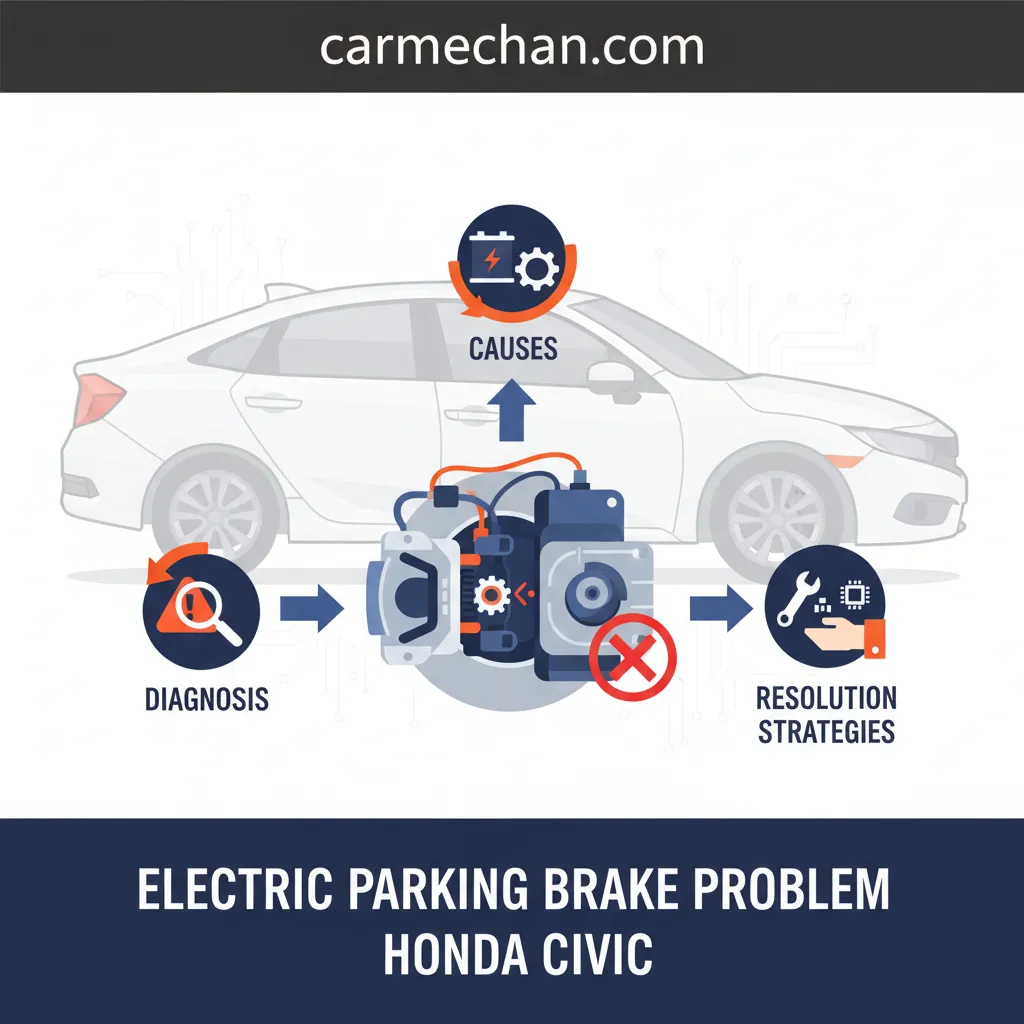
Electric Parking Brake Problem Honda Civic: Diagnosis, Causes, And Resolution Strategies
Experiencing issues with your Honda Civic’s electric parking brake can be a source of significant concern, potentially compromising vehicle safety and convenience. The sophisticated Electric Parking Brake (EPB) system, a standard feature in many modern Honda Civics, can develop complex malfunctions ranging from intermittent warnings to complete operational failure. This expert guide will systematically diagnose common EPB problems in your Honda Civic, elucidate their root causes, and provide detailed, authoritative solutions to troubleshoot and resolve these issues, ensuring your vehicle’s reliable operation.


Understanding the Honda Civic Electric Parking Brake System Architecture
The Electric Parking Brake (EPB) system in modern Honda Civics represents a significant advancement over traditional mechanical designs, offering enhanced functionality and integration with other vehicle systems. Introduced as a standard feature in the 10th generation (2016 onwards) and continuing into the 11th generation, this sophisticated system relies on electronic control rather than cables and levers.

📤 Share Image
Core Components and Operational Mechanism
At the heart of the Honda Civic’s EPB system is a network of interconnected components that work in concert to engage or release the rear brakes:
- Actuators (Motor-on-Caliper Design): The most critical components are the individual electric motors integrated directly into the rear brake calipers. When commanded, these motors precisely screw a piston into the caliper, applying force to the brake pads and engaging the parking brake.
- EPB Control Unit (ECU): This dedicated electronic control unit acts as the brain of the system. It receives inputs from various sensors and the EPB switch, processes this information, and sends commands to the actuators.
- EPB Switch: Located conveniently in the center console, this simple toggle switch is the primary driver interface for activating or deactivating the parking brake.
- Wheel Speed Sensors: These sensors, also utilized by the ABS and VSA systems, provide crucial data to the EPB ECU, particularly for features like automatic release or dynamic engagement.
- Communication Network (CAN Bus): All these components communicate through the vehicle’s Controller Area Network (CAN bus), ensuring rapid and reliable data exchange.
When the driver pulls up on the EPB switch, a signal is sent to the EPB control unit (ECU). The ECU then analyzes vehicle conditions (e.g., foot brake pressed, vehicle stopped) and, if safe, sends a 12V electrical command via the CAN bus to the electric motors within the rear brake actuators. These motors rotate, engaging the brake pads against the discs. To disengage, the process reverses: the driver presses the switch (often with the foot brake depressed), and the ECU commands the motors to release the caliper pressure. This precise mechanism allows for hundreds of newtons of clamping force, ensuring secure parking. Modern Honda EPB systems are engineered for durability, designed to undergo over 100,000 cycles of operation.
Advantages Over Traditional Systems
The shift to EPB offers several distinct benefits. Eliminating the bulky parking brake lever and cables frees up valuable cabin space and reduces vehicle weight. More significantly, the EPB system’s electronic nature allows for seamless integration with advanced safety and convenience features. For instance, the system enables Hill Start Assist, which prevents the vehicle from rolling backward on inclines, and Brake Hold, a feature that automatically keeps the brakes engaged at a stoplight without the driver needing to press the pedal, enhancing overall driver comfort and safety.
Identifying Common Symptoms of an Electric Parking Brake Problem in Honda Civic
Accurately identifying the symptoms of an EPB malfunction is the crucial first step toward a proper diagnosis and solution. While a complete failure is often unmistakable, many issues begin with subtle indicators. Knowing what to look for can help distinguish an EPB problem from other brake-related concerns.
Dashboard Warning Lights
The most common and often first sign of an EPB problem is the illumination of specific warning lights on your Honda Civic’s dashboard. These are not merely suggestions; they are direct alerts from the vehicle’s onboard systems:
- EPB Indicator Light: Typically a red circle with a “P” inside, often accompanied by an exclamation mark. This light may be solid or flashing. A flashing light usually indicates a more active fault.
- Vehicle Stability Assist (VSA) Light: Often illuminates in conjunction with the EPB light, as these systems are interconnected. VSA relies on brake control, which can be affected by EPB issues.
- Anti-lock Braking System (ABS) Light: Similar to VSA, the ABS system’s functionality can be compromised if there’s an underlying issue with the EPB, particularly if it involves wheel speed sensors or brake caliper operation.
- i-MID Display Messages: Many Honda Civic models, especially the 10th and 11th generations, will display clear text messages on the instrument cluster or multi-information display (i-MID), such as “Check Parking Brake System” or “EPB System Problem.” These messages are direct commands to investigate.
According to owner forums and service bulletins, dashboard warning lights frequently precede complete EPB failure. Approximately 30% of reported EPB issues in Honda Civics begin with an intermittent warning light, indicating that early attention can be key.
Audible Cues
Beyond visual indicators, abnormal sounds from the rear of your vehicle can be a strong signal of an EPB issue, particularly related to the actuators:
- Grinding or Whirring Noises: During engagement or disengagement, a persistent grinding or loud whirring sound from the rear wheels suggests the actuator motor is struggling. This could be due to internal gear wear, lack of lubrication, or foreign debris impeding its operation.
- Clicking or Buzzing: A rapid clicking or buzzing sound might indicate that the actuator motor is attempting to operate but failing to fully engage or release, often pointing to electrical issues or a seized internal mechanism.
Functional Issues
The most direct and concerning symptoms involve the EPB’s inability to perform its fundamental function:
- Inability to Engage or Disengage: The EPB simply won’t activate when the switch is pulled, or it won’t release when the switch is pressed. This could be intermittent, requiring multiple attempts, or a complete failure.
- Vehicle Rolling After Engagement: If the EPB engages but the vehicle still rolls slightly (or significantly) on an incline, it indicates insufficient clamping force from one or both actuators. This poses a significant safety risk.
- ‘Parking Brake Drag’ While Driving: A sensation that the vehicle is being held back even after the EPB light indicates it has released. This is often caused by an actuator failing to fully retract, leading to premature pad wear, excessive heat, and potential damage to rotors.
- Uneven Engagement/Release: Only one side of the parking brake engages or releases, which can lead to uneven stopping or a feeling of the vehicle pulling to one side if the brake drags.
Always note the exact dashboard warning lights and any accompanying messages. Photographing the dashboard can be helpful for your technician. Pay attention to whether the problem is intermittent or consistent, as this provides valuable clues for troubleshooting the underlying cause.
Systematic Diagnosis of Honda Civic Electric Parking Brake Issues
Effective diagnosis of an EPB problem requires a methodical approach, moving from basic visual inspections to advanced electronic testing. Rushing to a conclusion can lead to unnecessary component replacement and continued frustration. This structured approach will help debug the issue.
📋
Step-by-Step Guide
Safely elevate the rear of the vehicle or inspect accessible areas. Look for obvious signs of damage: frayed or cut wiring leading to the rear brake calipers, corroded electrical connectors, or visible physical damage to the actuator motors themselves. Listen carefully for any unusual grinding, clicking, or whirring noises from the rear wheels when attempting to engage or disengage the EPB.
Connect an OBD-II diagnostic scanner to your Civic’s diagnostic port (typically under the dash near the steering column). Perform a full system scan, focusing on powertrain and chassis modules for Diagnostic Trouble Codes (DTCs). EPB-related codes often fall within the C0000 series, indicating issues like actuator circuit faults, sensor errors, or control unit communication problems. For example, a common code might be ‘C10C7 – Right Rear Parking Brake Actuator Stuck On’ or a similar code for the left side, directly pointing to a faulty actuator or its circuit.
Electrical integrity is paramount for EPB operation. First, check your vehicle’s 12V battery voltage. Low battery voltage (below 12V) is a significant contributor to EPB malfunctions, as the actuators require substantial current to operate. Next, locate and inspect the relevant fuses for the EPB system. In a 10th-gen Civic, these are typically found in both the under-hood fuse box and the interior fuse box (often near the driver’s left footwell). Use a multimeter to check for continuity across the fuses. Finally, test the wiring harness continuity leading to the rear actuators and the EPB switch itself. Access the EPB switch’s connector (usually by carefully prying up the console panel) and use a multimeter to verify voltage and ground signals as per the Honda service manual. This helps isolate whether the issue lies with the component, the wiring, or the EPB ECU.
Root Causes of Honda Civic Electric Parking Brake Malfunctions
Understanding the underlying cause of an EPB problem is essential for implementing a permanent solution. Based on years of experience and common failure patterns, specific components and environmental factors frequently lead to malfunctions in Honda Civic EPB systems.
Actuator Motor Failure


The electric motor integrated into the rear brake caliper is arguably the most common failure point. These motors are exposed to road elements and operate under significant stress. Common reasons for their failure include:
- Water Ingress and Corrosion: The protective rubber boot designed to shield the actuator motor can deteriorate over time, allowing moisture, road salt, and debris to enter the motor housing. This leads to internal corrosion, short circuits, or seized mechanical components.
- Internal Gear Wear: The small gears within the actuator that drive the caliper piston can wear out, especially after prolonged use or if the system is frequently forced to operate against resistance. This wear can cause grinding noises, intermittent operation, or complete failure to engage/disengage.
- Motor Burnout: If the motor is constantly straining due to resistance (e.g., sticky brake pads, a partially seized caliper), it can overheat and burn out its windings.
A common failure point identified by technicians involves the rubber boot protecting the actuator motor deteriorating, allowing moisture in. EPB actuator motors typically have a lifespan of 7-10 years or 100,000-150,000 miles, but environmental factors can significantly shorten this.
Wiring Harness Damage
The intricate wiring harnesses that supply power and data to the rear actuators are vulnerable components. Damage to these wires can interrupt vital signals, leading to EPB malfunction:
- Fraying or Breakage: Wires can become frayed, pinched, or completely broken due to road debris impact, rubbing against suspension components, or improper routing during previous maintenance.
- Corrosion at Connectors: Electrical connectors, especially those exposed to the elements near the wheel wells, can suffer from corrosion. This increases resistance, disrupts signal integrity, or completely cuts off power to the actuators. Specific cases of wiring being pinched or corroded near the wheel wells due to road debris or salt exposure are well-documented.
EPB Switch Malfunction
While less frequent than actuator issues, the EPB switch itself can be a source of problems:
- Wear and Tear: Constant use can lead to mechanical wear of the switch’s internal contacts, preventing proper signal transmission to the ECU.
- Internal Circuit Board Failure: The switch often contains a small circuit board that can fail due to moisture, component defect, or electrical overload.
Other Contributing Factors
Beyond specific component failures, several factors can contribute to or exacerbate EPB problems:
- Low Battery Voltage: As noted earlier, the EPB system is highly sensitive to voltage fluctuations. An aging or weak 12V battery can cause intermittent faults, prevent actuators from receiving sufficient power, or even trigger false error codes.
- EPB Control Unit (ECU) Malfunction: While rare, the ECU itself can fail due to internal component defects, software glitches, or water damage. This often presents as widespread communication errors or inexplicable system behavior.
- Software Glitches: Occasionally, the EPB ECU’s software can develop bugs or become corrupted, leading to intermittent or persistent issues that may require a reflash or update.
By The Numbers
Actuator or Wiring Issues
Intermittent Warning Lights
Switch or ECU Malfunctions
Approximately 60% of Honda Civic EPB issues are attributed to actuator or wiring problems, with the remainder spread across switch and ECU failures. This highlights where most of your diagnostic efforts should be focused.
Effective Solutions and Repair Strategies for EPB Problems in Honda Civic
Once you’ve systematically diagnosed the cause of your Honda Civic’s EPB problem, the next step is to implement an effective solution. Repair strategies range from simple DIY fixes to professional component replacement and system reprogramming.
DIY Troubleshooting and Reset Procedures
For intermittent or minor electrical glitches, some basic procedures can help reset the system or resolve temporary faults:
- Battery Disconnect/Reconnect: A hard reset can sometimes clear stored fault codes and recalibrate the system. Safely disconnect the negative battery terminal for 10-15 minutes, then reconnect it. This can often resolve phantom warnings caused by voltage fluctuations.
- Check and Replace Fuses: As part of your diagnostic steps, if a blown fuse was identified, replacing it with a fuse of the correct amperage can immediately resolve the issue. Ensure the replacement fuse is identical to the original specification.
- Basic EPB Recalibration: Some Honda Civic models allow for a simple EPB recalibration procedure, often involving turning the ignition on, pressing the brake pedal, and operating the EPB switch in a specific sequence. Consult your owner’s manual for model-specific instructions, and only attempt if you are confident and the procedure is safe.
Component Replacement
If diagnostic efforts point to a specific faulty component, replacement is the direct path to repair:
- EPB Actuators: If an actuator motor is confirmed to be faulty, it will need to be replaced. This involves removing the rear brake caliper, disconnecting the electrical connector, and unbolting the actuator. It is crucial to use a diagnostic tool to retract the EPB piston fully before removal and to calibrate the new actuator after installation. In some cases, if one actuator has failed due to age or environmental exposure, it is often prudent to replace both rear actuators simultaneously to prevent a staggered failure, though only one might technically “need” replacement. The average cost for a single EPB actuator replacement on a Honda Civic can range from $400-$800, including parts and labor.
- EPB Switch: A malfunctioning EPB switch is typically a straightforward replacement. The console trim surrounding the switch is carefully removed, the electrical connector disconnected, and the new switch installed.
- Wiring Harness Repair: If diagnostic checks reveal damaged wiring, repairing the harness (splicing in new sections, replacing corroded connectors) can resolve the problem. Ensure repairs are properly insulated and protected from future damage.
Never attempt to force the EPB actuators or manually retract them without the proper scan tool. This can permanently damage the internal motor or gearing. Always ensure the vehicle is safely supported on jack stands if working underneath it. Brake system components are critical for safety.
Professional Intervention
For complex or persistent EPB issues, professional assistance is indispensable:
- Advanced Diagnostics: Certified Honda technicians possess proprietary diagnostic tools (e.g., Honda HDS) that can communicate directly with the EPB control unit, access live data streams, and perform specific actuation tests not available with generic OBD-II scanners. This precision is invaluable for difficult-to-diagnose intermittent faults.
- Control Unit Reprogramming: If the EPB ECU is faulty or requires a software update, a professional technician can reprogram or reflash the unit using factory software. Some Honda control units may require specific software updates to resolve intermittent EPB faults, a task that demands specialized equipment.
- Complete EPB System Overhaul: In rare cases of extensive damage or multiple component failures, a full system overhaul might be necessary, including the replacement of the EPB ECU.
✅ DIY Pros
- Cost-effective for simple fixes (fuses, resets).
- Immediate response to minor issues.
- Empowers owner with basic troubleshooting skills.
❌ DIY Cons
- Requires specific tools (multimeter, OBD-II scanner).
- Risk of further damage if procedures are incorrect.
- May not resolve underlying complex issues.
- Safety concerns if not done properly.
Preventative Maintenance and Best Practices for Honda Civic EPB Longevity
Preventative maintenance is the most effective strategy to ensure the long-term reliability of your Honda Civic’s EPB system and to minimize the likelihood of future problems. Proactive care can significantly extend the lifespan of components and avoid costly repairs.
Regular Brake System Inspection
The EPB is an integral part of your overall brake system. Its longevity is directly tied to the health of your conventional brakes:
- Comprehensive Brake Checks: During routine service, ensure your technician inspects brake fluid levels, assesses brake pad wear and rotor condition, and verifies that caliper slides are clean and lubricated. Sticky caliper slides can cause the pads to drag, increasing resistance for the EPB actuators.
- Actuator Boot Inspection: Specifically ask for the rubber boots protecting the EPB actuators to be inspected for cracks or tears. Early detection of deterioration allows for proactive replacement of the boot before water ingress leads to actuator failure.
- Annual Brake Fluid Changes: Honda recommends annual brake fluid changes. This prevents internal corrosion in the hydraulic system, which can indirectly affect EPB operation by creating undue resistance or affecting overall brake performance.
Maintaining Optimal Battery Health
The 12V battery is the lifeblood of your vehicle’s electronic systems, including the EPB. A weak battery is a frequent, often overlooked, cause of EPB malfunctions:
- Regular Battery Load Testing: During routine service appointments, have your battery load-tested to ensure it can deliver sufficient current under demand. A robust, fully charged 12V battery is crucial, as low voltage can trigger false EPB faults, prevent proper engagement/disengagement, and even damage the actuators over time.
- Clean Battery Terminals: Ensure battery terminals are clean and free of corrosion to maintain optimal electrical conductivity.
A well-maintained 12V battery can last 3-5 years, but environmental factors (extreme heat or cold) can shorten this significantly, directly impacting EPB reliability. Proactive battery replacement before complete failure is a wise investment.
Proper EPB Usage and Environment
How you use and protect your EPB system also plays a significant role in its longevity:
- Smooth Engagement/Disengagement: While the system is robust, avoiding aggressive or rapid engagement/disengagement cycles can reduce wear and tear on the actuator motors.
- Depress Foot Brake: Always make it a habit to press the foot brake firmly before activating or deactivating the EPB. This ensures the system operates under ideal conditions and minimizes strain on the actuators.
- Avoid Deep Puddles/Water Crossings: Submerging the rear brake assemblies in deep water can accelerate corrosion within the actuator motors and electrical connectors. If unavoidable, allow the system to air dry thoroughly.
- Rustproofing in Harsh Climates: In regions with heavy road salt usage, consider undercarriage rustproofing to protect exposed wiring harnesses and actuator housings from corrosive elements. Applying dielectric grease to electrical connectors can also serve as a protective measure against moisture and corrosion.
Extended Component Life
Proactive inspection and maintenance significantly delay actuator, switch, and wiring degradation.
Enhanced Reliability
Minimizes unexpected failures and ensures consistent EPB operation for safe parking.
Cost Savings


Preventing major failures through simple checks is far more economical than reactive repairs.
Honda Civic EPB issues typically manifest as warning lights, unusual noises, or functional failures. Diagnosis involves systematic checks from visual inspection to OBD-II scanning for specific DTCs. Common causes include actuator failure due to water ingress or wear, wiring damage, and battery voltage fluctuations. Solutions range from DIY resets to professional component replacement and system reprogramming. Should you encounter an electric parking brake problem with your Honda Civic, begin by meticulously reviewing the symptoms and performing basic diagnostic checks. For persistent or complex issues, consulting a certified Honda technician is crucial to ensure proper repair and system integrity, keeping your vehicle safe and reliable.
Frequently Asked Questions
Why is my Honda Civic’s EPB light on?
A lit EPB warning light typically indicates a fault within the electric parking brake system. This could range from a low battery voltage causing a sensor error to a more serious issue like a faulty actuator motor, a malfunctioning EPB switch, or wiring damage. An OBD-II scan is crucial for retrieving specific diagnostic trouble codes to pinpoint the exact problem.
Can I drive my Honda Civic with the EPB warning light on?
It is generally not recommended to drive extensively with the EPB warning light on, especially if accompanied by other brake system warnings (ABS, VSA) or if you feel any unusual brake drag. While it might still allow limited driving, the system could fail completely, potentially impacting braking performance or preventing the vehicle from moving. Prompt diagnosis is advised.
How do I reset the electric parking brake on my Honda Civic?
A common basic troubleshooting step involves disconnecting the negative terminal of your car battery for 15-20 minutes, then reconnecting it. This can sometimes reset the EPB control unit and clear minor glitches. Some models may also have a specific EPB calibration procedure accessible via diagnostic tools, but simple resets are limited in effectiveness for mechanical failures.
What is the lifespan of a Honda Civic EPB actuator?
Electric parking brake actuators on Honda Civics are designed for durability, typically lasting between 7 to 10 years or 100,000 to 150,000 miles under normal driving conditions. However, factors like exposure to harsh weather, frequent use, or minor impacts can accelerate wear and tear, leading to premature failure due to internal corrosion or motor fatigue.
Is it expensive to repair a Honda Civic EPB problem?
The cost of repairing an EPB problem in a Honda Civic can vary significantly based on the root cause. Minor issues like a blown fuse or a simple wiring repair might be inexpensive. However, replacing a faulty EPB actuator can range from $400-$800 per side (including parts and labor), while a new EPB control module or complex wiring harness repair can be considerably more, potentially exceeding $1000.