2011 Honda CRV TPMS Reset Button Location & Solutions
Last Updated on September 1, 2026 by Ryan
📋 Table of Contents
- 🎯 Key Takeaways
- Understanding the 2011 Honda CR-V TPMS Architecture
- The Ultimate 2011 Honda CR-V TPMS Reset Walkthrough
- Factors That Trigger the Low Tire Pressure Warning
- Comparing Sensor-Based vs. Indirect TPMS Systems
- Expert Maintenance Tips for Long-Term Sensor Health
- Conclusion
- 💬 Quick Questions & Answers
- ❓ Frequently Asked Questions


The 2011 Honda CR-V does not have a physical TPMS reset button as it uses a direct sensor-based system designed to calibrate automatically. To clear the warning light, you must inflate all tires to the exact PSI listed on the door jamb and drive the vehicle for several miles. Persistent lights often indicate a malfunctioning sensor or a depleted internal battery rather than a pressure issue.
🎯 Key Takeaways
- Takeaway 1:There is no physical reset button on the 2011 model.
- Takeaway 2:Automatic calibration occurs after driving at speeds over 28 mph.
- Takeaway 3:Correct PSI is vital for the system to recognize adjustments.
- Takeaway 4:A flashing light indicates a system malfunction or sensor failure.
- Takeaway 5:Internal sensor batteries typically last seven to ten years.
Have you ever started your car only to see that glowing yellow TPMS light staring back at you? It is a common sight for many 2011 Honda CR-V owners, and it can be quite frustrating. This little light is not just an annoyance. It is a critical safety feature designed to keep you and your family safe on the road. Your car is trying to tell you something important about your tires or the sensors themselves.
Understanding why that light is on helps you save time and money at the mechanic. Your CR-V is a reliable machine, but its tire pressure monitoring system has its own unique quirks. In this guide, we will dive into the specifics of the 2011 model year. You will learn what makes this system tick and why it reacts the way it does. Knowing how your car communicates will give you peace of mind during your daily commute.
Understanding the 2011 Honda CR-V TPMS Architecture
Before you go hunting for a magic button under the dashboard, you need to understand the tech inside your wheels. The 2011 Honda CR-V uses a Direct TPMS system. This is very different from newer models that use software-based calculations. In your CR-V, there are actual physical hardware components doing the heavy lifting. These parts work together to monitor the air density inside your tires at all times.

The Direct Sensor Approach
In a direct system, each wheel contains a battery-powered sensor. These sensors are mounted directly to the inside of the tire valve stems. They measure the actual air pressure inside the tire in real-time. This data is then beamed wirelessly to your car’s computer. If the pressure drops too low, the computer triggers the warning light on your dash. This setup is highly accurate but requires more maintenance than indirect systems found in newer vehicles.
- Battery Life: These sensors rely on internal batteries that typically last 7 to 10 years.
- Signal Transmission: The sensors use radio frequencies to communicate with the vehicle’s main ECU.
- Internal Mounting: Since they are inside the tire, they are protected from road debris but can be damaged during tire changes.
- Real-time Data: The system works even when the car is stationary, provided the sensors are awake.
The Lack of a Physical Reset Button
One of the biggest sources of confusion for owners is looking for a “Set” or “Reset” button. Unlike the 2015-2023 models, the 2011 Honda CR-V does not have a physical TPMS reset button on the dash. Because the sensors are direct, the system is designed to recognize the correct pressure automatically. Once you fill the tires to the correct PSI, the sensors should update the car. If the light stays on after you add air, it usually means there is a hardware issue rather than a need to press a button. This distinction is vital for troubleshooting.
The Ultimate 2011 Honda CR-V TPMS Reset Walkthrough
If you are staring at a glowing horseshoe-shaped light on your 2011 Honda CR-V dashboard, you are likely hunting for a physical reset button. Unlike many newer vehicles, the 2011 CR-V utilizes a direct Tire Pressure Monitoring System (TPMS) that relies on sensors inside the wheel. This guide covers the essential steps to clear that warning light, explains the “no-button” reality of this specific model year, and provides a professional-grade strategy for troubleshooting persistent sensor issues. Following these steps ensures your vehicle stays safe, maximizes fuel efficiency, and prevents unnecessary trips to the mechanic.
Step 1: Conduct a Preliminary Cold Pressure Check
What you need: A high-quality digital tire pressure gauge and a notepad.
Instructions: Before attempting to reset the system, you must ensure the tire pressures are the root cause. A “cold” check means the car has been parked for at least three hours or driven less than a mile. Check all four tires by removing the valve stem caps and pressing the gauge firmly onto the valve. Record the PSI (pounds per square inch) for each tire. It is a common mistake to assume the tires look “fine” by eye; a tire can be 10 PSI low and still appear visually identical to a fully inflated one. If the light is on, at least one tire is likely 25% below the recommended threshold.
Pro Tip: Never check tire pressure immediately after a long highway drive. Friction creates heat, which expands the air inside the tire and gives a falsely high reading that could lead to under-inflation once the tires cool down.
Step 2: Locate the Manufacturer Specification Label
What you need: Your eyes and a clean cloth.
Instructions: Open the driver’s side door and look at the “B-pillar” (the frame of the car that the door latches onto). You will find a white and yellow sticker labeled “Tire and Loading Information.” This placard lists the exact PSI required for your specific 2011 CR-V trim. For most 2011 models, the recommended pressure is 30 PSI for the front and 30 PSI for the rear, though some variations may suggest 32 PSI. Do not use the “Max Pressure” number printed on the sidewall of the tire itself, as that is the maximum the tire can hold, not what the Honda suspension is tuned for.
Pro Tip: If the sticker is faded or missing, you can find these specifications in your owner’s manual under the “Specifications” section near the back of the book.
Step 3: Inflate Tires to Precise Specifications
What you need: An air compressor or a gas station air pump.
Instructions: Using your recorded measurements, add air to any tire that is below the specification found in Step 2. If you are at a gas station, the tires may have warmed up slightly; in this case, it is generally acceptable to add 1-2 PSI above the door placard to account for the heat. Ensure you are pressing the air chuck straight onto the valve to avoid damaging the TPMS sensor inside. Many 2011 CR-V sensors become brittle with age, so avoid manhandling the valve stems. Once inflated, re-check each tire with your digital gauge to ensure they are balanced and identical across the axles.
Pro Tip: If you accidentally over-inflate, use the small nipple on the back of your pressure gauge to bleed air out in short bursts until you hit the target number exactly.
Step 4: Understand the 2011 “Automatic Reset” Logic
What you need: Knowledge of your vehicle’s specific system architecture.
Instructions: It is critical to understand that the 2011 Honda CR-V does not have a physical TPMS reset button or a menu option in the infotainment system to “calibrate.” Unlike 2015 and newer Hondas that use an indirect system (calculating pressure via wheel speed), your 2011 model uses direct sensors. Once the sensors detect the correct pressure (usually within 1-2 PSI of the target), they automatically transmit a “clear” signal to the car’s computer. There is no manual intervention required other than correcting the air pressure. If you are looking for a button under the steering wheel or in the glove box, you are searching for a feature that was not introduced until later generations.
Pro Tip: If you see a button with the TPMS icon on your 2011 CR-V, it is likely an aftermarket add-on or a regional variant; standard North American models rely purely on the drive-cycle reset described in the next step.
Step 5: Perform the Calibration Drive Cycle
What you need: A clear road and 10-20 minutes of time.
Instructions: To get the TPMS light to turn off, the sensors must “wake up” and communicate with the receiver. After inflating your tires to the correct specs, drive the vehicle at a steady speed of at least 28 mph (45 km/h) for approximately 10 to 15 minutes. The system requires a consistent centrifugal force to activate the internal battery-powered sensors. Avoid stop-and-go traffic if possible, as the system needs a sustained signal to register the new pressure levels. Usually, the light will flicker and then disappear mid-drive once the computer confirms all four signals are within the safe operating range.
Pro Tip: If the light stays on after 20 minutes of highway driving, pull over, turn the car off for 60 seconds, and restart it. This can sometimes trigger the dashboard to refresh its status icons.
Step 6: Distinguish Between “Low Pressure” and “TPMS System Error”
What you need: Visual observation of the dashboard icons.
![[2026 Upgraded] DooGooCoo Windshield Sun Shade for Honda CRV 2017-2021 2022 [Cooling…](https://m.media-amazon.com/images/I/51tfKv3G1ML._SS500_.jpg)


Instructions: Take a close look at the warning light. Is it a steady horseshoe icon with an exclamation point? That indicates low pressure in one or more tires. However, if the light says “TPMS” in block letters, or if the horseshoe icon flashes for one minute and then stays solid, this indicates a system malfunction rather than low air. Since the 2011 CR-V is well over a decade old, the most common cause for the “TPMS” text light is a dead sensor battery. These batteries typically last 7-10 years and are non-replaceable; the entire sensor must be swapped out. Knowing this distinction prevents you from wasting hours adding air to tires that are already perfectly inflated.
Pro Tip: If you have the “TPMS” text light, no amount of driving or inflating will fix it. You will need an OBDII scan tool to identify which specific sensor has failed.
Step 7: Clear the ECU Memory (Optional/Advanced)
What you need: A 10mm wrench.
Instructions: If your pressures are perfect and your sensors are known to be good, but the light refuses to clear, you may have a “glitch” in the TPMS control module. You can perform a hard reset by disconnecting the negative (black) battery terminal for about 10 minutes. This drains the capacitors in the vehicle’s electronic control units. After 10 minutes, reconnect the terminal and tighten it. Note that this will reset your clock, radio presets, and trip odometer. Upon restarting, drive the car again as described in Step 5. This is often the “silver bullet” for stubborn lights that won’t go away after a simple inflation.
Pro Tip: Make sure you have your radio anti-theft code handy before doing this, as some 2011 Honda units will lock themselves after a power loss.
Step 8: Professional TPMS Scanning and Relearning
What you need: A trip to a tire shop or a dedicated TPMS activation tool.
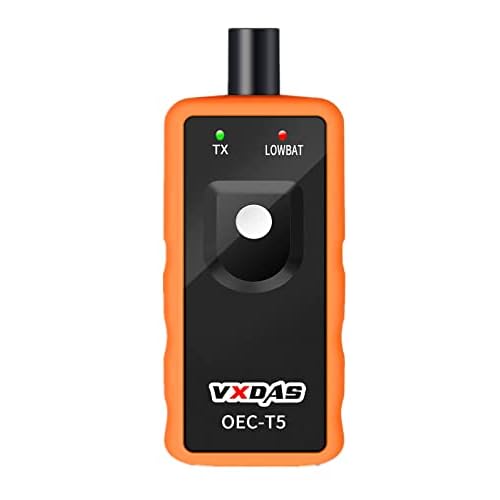
Instructions: If the light persists after all previous steps, a sensor has likely failed or lost its “ID” in the car’s computer. A professional technician can use a handheld TPMS tool (like an Autel or Bartec) to “ping” each wheel. This tool will show the battery life, internal temperature, and pressure of each sensor without removing the tire. If a sensor is dead, it must be replaced, and the new sensor’s unique hex-code must be “written” into the CR-V’s computer via the OBDII port. This is not a DIY task for most, as it requires specialized hardware to bridge the communication between the sensor and the car’s ECU.
Pro Tip: When replacing one sensor on a 2011 vehicle, consider replacing all four. If one battery has died of old age, the other three are likely only weeks or months away from failing as well.
✅ Final Checklist
- All four tires (excluding the spare) are inflated to exactly 30-32 PSI according to the door placard.
- The vehicle was driven for at least 15 minutes at speeds above 28 mph.
- You have distinguished between the “Low Pressure” icon and the “TPMS” malfunction text.
- The valve stems have been inspected for leaks or physical damage.
- The battery terminals are tight and the car’s electrical system is stable.
Important Notes:
- Safety Warning: Never drive on a tire that is visibly flat or below 20 PSI, as this can cause permanent internal damage to the sidewall and lead to a blowout.
- When to Seek Help: If the light flashes upon startup, the system has detected a hardware fault. Seek a professional if you do not have an OBDII scanner.
- Estimated Time: 20–30 minutes for inflation and driving; 1 hour for professional diagnostics.
- Cost Range: $0 (DIY air) to $50–$100 per sensor if replacement is required at a shop.
Factors That Trigger the Low Tire Pressure Warning
Seeing that light does not always mean you have a flat tire. Many environmental and mechanical factors can trip the sensor. Understanding these triggers helps you decide if you need a gas station air pump or a trip to the tire shop. Your CR-V is sensitive to changes. Its sensors are designed to be proactive rather than reactive. This helps prevent blowouts before they happen.
Seasonal Temperature Drops
Physics plays a huge role in your tire pressure. When the temperature drops, air molecules move slower and take up less space. This causes the pressure inside your tires to decrease. On the first cold morning of autumn, many 2011 CR-V owners find their TPMS light is on. Usually, the pressure is only a few pounds low. However, that is enough to cross the system’s threshold. As you drive and the tires warm up, the light might even turn off on its own. It is always best to check the pressure manually during these seasonal shifts.
Mechanical Wear and Sensor Aging
Since the 2011 model is now well over a decade old, mechanical failure is a common culprit. The sensors themselves are likely reaching the end of their functional life. If your light is blinking instead of staying solid, the system is telling you there is a malfunction. This is different from a simple low-pressure warning. Here are a few common mechanical triggers you should know:
- Dead Sensor Batteries: If the internal battery dies, the sensor stops transmitting, and the light stays on or blinks.
- Corroded Valve Stems: Road salt and moisture can eat away at the metal stems, causing tiny, slow leaks.
- Tire Rotations: Sometimes, moving wheels to different corners of the car can confuse the system if it does not recognize the new positions.
- Seal Failures: The rubber grommets that seal the sensor to the wheel can dry out and leak air over time.
- Electronic Interference: Occasionally, aftermarket chargers or electronic devices can interfere with the radio signal from the sensor.
By keeping these factors in mind, you can better diagnose why your CR-V is acting up. Most of the time, it is a simple fix related to the environment or the age of the components. Staying informed is the best way to keep your Honda running smoothly for years to come.
Comparing Sensor-Based vs. Indirect TPMS Systems
Understanding the technology behind your 2011 Honda CRV is the first step in troubleshooting that stubborn light. Your vehicle utilizes a Direct TPMS system, which relies on physical hardware inside each wheel. This is significantly different from the software-based “indirect” systems found on many modern vehicles produced after 2015.
The Direct TPMS Advantage
Because the 2011 CRV uses direct sensors, it provides a much higher level of accuracy than indirect systems. Each sensor measures the actual air pressure inside the tire and transmits that data to the car’s computer via radio frequency. This means your car knows exactly what is happening inside the rubber, regardless of how fast you are driving or the condition of your suspension.
- Real-time Accuracy: Direct sensors detect even a small 1-2 PSI drop immediately, rather than waiting for wheel speed changes.
- Independent Monitoring: Each wheel is tracked individually, making it easier for diagnostic tools to pinpoint which corner of the car is failing.
- Hardware Reliant: This system requires a working battery inside the tire sensor itself, which is a key factor in why the light might stay on as the vehicle ages.
Why “Resetting” Differs from Newer Models
On newer Honda models with Indirect TPMS, the “reset” process is essentially a recalibration of the computer’s math. On your 2011 CRV, the system is looking for a specific electronic “handshake” from the sensors. If the sensors aren’t working or the pressure is still low, the light will remain active. You are dealing with physical hardware that must meet specific parameters—it is not just a software glitch that can be swiped away.
Expert Maintenance Tips for Long-Term Sensor Health
Maintaining the TPMS on an older vehicle like the 2011 CRV requires a bit of proactive care. Since these sensors are exposed to the elements and have a finite battery life, a little bit of attention can prevent a costly trip to the mechanic and keep your dashboard clear of warning lights.
Protecting Your Sensors During Service
Every time you get your tires rotated or replaced, your TPMS sensors are at risk. It is vital to remind your technician that you have internal sensors. Using the wrong tools or being too aggressive with the tire bead breaker can snap the sensor body or damage the delicate electronics inside the rim.
- Avoid Liquid Sealants: Emergency “fix-a-flat” foams can clog the sensor’s pressure port, rendering it useless and requiring a full replacement.
- Stick to Plastic Valve Caps: Metal caps can cause galvanic corrosion with the aluminum sensor stem, eventually fusing the cap to the sensor.
- Use Nickel-Plated Cores: Always ensure your shop uses nickel-plated valve cores to prevent chemical reactions that lead to slow leaks at the valve.
Seasonal Pressures and Battery Longevity
The batteries inside your 2011 CRV sensors typically last about 7 to 10 years. If you are still running the original sensors, they are likely nearing the end of their life cycle. You might notice the TPMS light flickering during cold winter mornings; this happens because cold temperatures cause battery voltage to drop and air pressure to contract. Regularly checking your pressure manually with a high-quality gauge can help you distinguish between a genuine low-pressure event and a dying sensor battery that needs replacement.
Conclusion
Managing the TPMS system on your 2011 Honda CRV doesn’t have to be a source of frustration. By understanding that your vehicle uses a direct sensor system, you can better diagnose why that dashboard light might be staying on. Whether it is a simple pressure adjustment due to a cold snap or a sensor battery reaching its natural end, staying informed helps you keep your CRV safe and efficient on the road.
Next Steps: Check your tire pressure manually today using a reliable gauge and ensure all tires are inflated to the recommended PSI found on your driver-side door jamb. If the light persists even after a drive, consider having a professional shop scan the sensor batteries. Drive safe and keep those tires properly inflated!
💬 Quick Questions & Answers
Where is the TPMS button on a 2011 CR-V?
The 2011 Honda CR-V does not have a physical TPMS reset button; it resets automatically through driving.
How fast do I need to drive to reset the light?
You must maintain a speed of at least 28 mph for 10 to 20 minutes for the sensors to update.
Does the spare tire have a TPMS sensor?


No, the spare tire on a 2011 CR-V does not contain a sensor and will not affect the TPMS light.
What is the recommended PSI for this vehicle?
The recommended pressure is typically 30-32 PSI, but always check the sticker on the driver-side door jamb.
Can cold weather trigger the TPMS light?
Yes, dropping temperatures cause tire pressure to decrease, which often triggers the sensor during winter months.
❓ Frequently Asked Questions
Why can’t I find a reset button in my 2011 CR-V?
Unlike the 2014 and newer CR-V models that use an indirect system with a dash button, the 2011 model uses direct sensors inside the wheels. These sensors transmit data directly to the car’s computer, making a manual reset button unnecessary for standard operation.
How do I know if a TPMS sensor has failed?
If the TPMS light flashes for about one minute before staying solid, this indicates a system malfunction. This is usually caused by a dead sensor battery or a damaged sensor that can no longer communicate with the vehicle.
Can I reset the TPMS light without driving the car?
No, the 2011 CR-V requires the wheels to be in motion to activate the sensors and send new pressure data to the ECU. Simply idling the vehicle after adding air will not turn the warning light off.
Do I need a special tool to reset the light after a tire rotation?
A standard tire rotation does not require a reset tool because the system automatically recognizes the sensor IDs regardless of their position on the car. However, if you replace a sensor entirely, a professional OBD-II tool is needed to ‘relearn’ the new hardware.
What should I do if the light stays on after inflating the tires?
Check the pressure again with a high-quality manual gauge to ensure it matches the door jamb specifications exactly. If the pressure is correct and the light remains after 20 minutes of driving, a technician should inspect the sensors for interference or failure.
Is there a fuse for the TPMS system I can pull?
While there is a fuse for the TPMS module, removing it is not a recommended solution for clearing the light. Disabling the fuse will result in a permanent warning light or other electronic errors on your dashboard, as it is a critical safety system.