2024 Kia Carnival TPMS Reset Button Location & Guide
Last Updated on September 1, 2026 by Ryan
📋 Table of Contents
- 🎯 Key Takeaways
- Understanding the 2024 Kia Carnival TPMS Technology
- 2024 Kia Carnival TPMS Made Easy: Your Essential Action Plan
- Common Factors That Trigger TPMS Alerts in Kia Minivans
- Comparing Direct vs. Indirect TPMS Monitoring Systems
- Maintenance Benefits of Proper Tire Pressure Calibration
- Conclusion
- 💬 Quick Questions & Answers
- ❓ Frequently Asked Questions
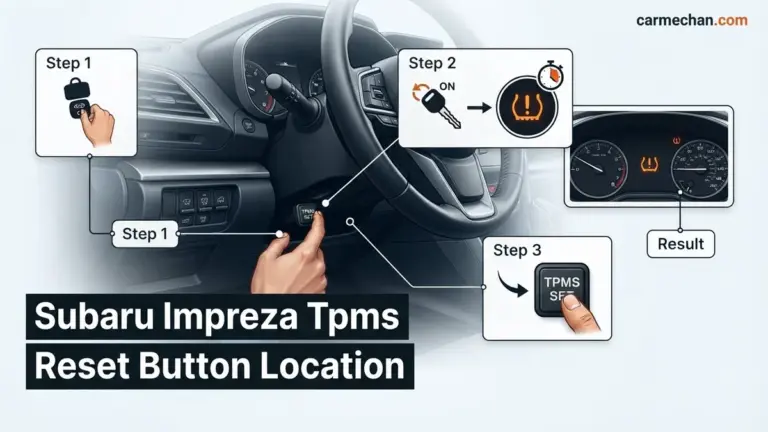
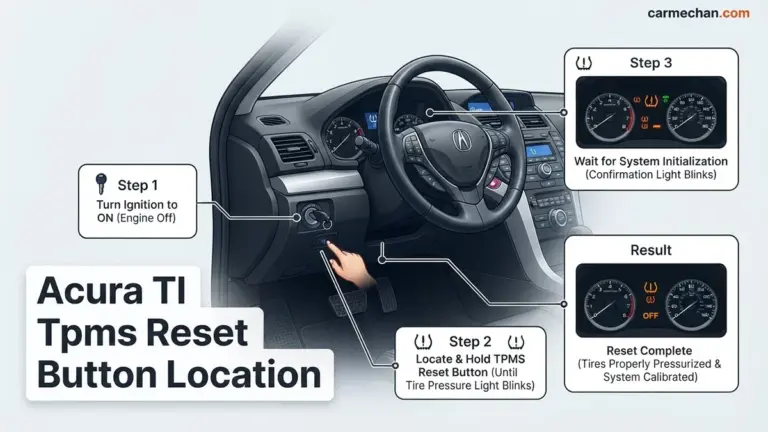
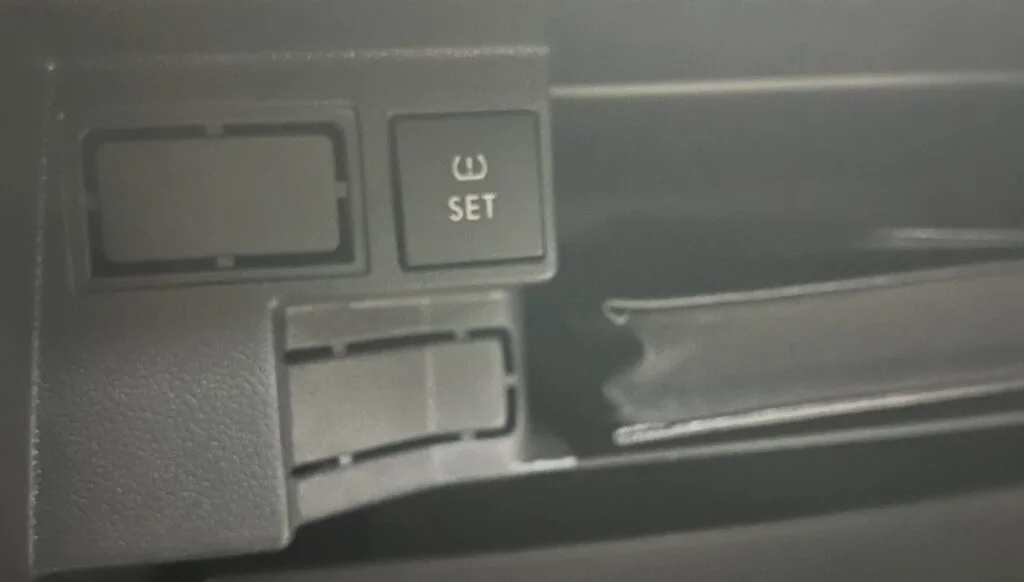
The 2024 Kia Carnival does not feature a physical TPMS reset button because the system is designed to recalibrate automatically. To clear the warning, you must inflate tires to the recommended PSI and drive for several minutes.
🎯 Key Takeaways

- No physical reset button exists on the 2024 Kia Carnival dashboard.
- Automatic recalibration occurs after driving at speeds above 15 mph.
- Correct tire pressure is found on the driver-side door jamb.
- The instrument cluster provides real-time pressure data for each tire.
- Flashing TPMS lights indicate a system malfunction, not just low pressure.
Have you ever started your morning commute only to see a glowing orange horseshoe symbol on your dashboard? It is a common sight for many 2024 Kia Carnival owners. This little light is your Tire Pressure Monitoring System (TPMS). It acts as a silent guardian for your family’s safety. While it might seem like a nuisance, this system is one of the most important safety features in your modern minivan.
The 2024 Kia Carnival is a sophisticated machine designed for comfort and security. Understanding how your TPMS works is the first step toward a stress-free driving experience. You do not want to ignore these alerts. Maintaining the correct tire pressure ensures your vehicle handles well. It also helps you get the best fuel economy possible during those long summer road trips. Let’s dive into what makes this system tick and why it reacts the way it does.
Understanding the 2024 Kia Carnival TPMS Technology
The 2024 Kia Carnival uses what experts call a Direct TPMS. This is much more advanced than the older systems used in cars ten years ago. In your Carnival, there is a physical pressure sensor attached to the inside of each wheel. These sensors are high-tech battery-powered devices. They measure the exact air pressure and temperature inside your tires every few seconds. This data is then sent wirelessly to your car’s central computer.

The High-Line Display Advantage
One of the best things about the 2024 model is the “High-Line” display. You don’t have to guess which tire is low on air. Your digital instrument cluster provides a clear graphic of all four wheels. It shows you the specific PSI (pounds per square inch) for each tire in real-time. This level of detail is a huge benefit for busy parents. You can see at a glance if you just have a slightly low tire or a serious flat that needs immediate attention. This system removes the guesswork that used to come with older “dummy lights” that only told you something was wrong without giving details.
Connectivity and Safety Integration
Your TPMS is not an isolated gadget. It is fully integrated with your Kia’s safety suite. For example, your Carnival’s traction control and stability systems rely on accurate tire data to function correctly. If one tire is significantly lower than the others, it changes the way the car grips the road. By keeping an eye on your TPMS, you are ensuring that your Forward Collision-Avoidance and Lane Keeping Assist can work at their peak performance. It is all part of a larger ecosystem designed to keep your precious cargo safe on every journey.
- Constant Monitoring: The system works even when the car is parked.
- Battery Life: Sensors are designed to last 5 to 10 years.
- Accuracy: Provides readings within 1 PSI of actual pressure.
- Safety: Helps prevent dangerous tire blowouts at high speeds.
2024 Kia Carnival TPMS Made Easy: Your Essential Action Plan
The Tire Pressure Monitoring System (TPMS) in your 2024 Kia Carnival is a vital safety feature designed to alert you when tire pressure drops below a safe threshold. However, many owners are confused because modern Kia vehicles, including the Carnival, have moved away from physical “reset buttons” located under the dashboard. Instead, the system relies on a combination of digital menu settings and an automatic calibration process that occurs while driving. This guide covers everything from finding the correct pressure specifications to triggering the software-based reset, ensuring your family hauler remains safe, fuel-efficient, and free of annoying dashboard warning lights.
Step 1: Locate Your Vehicle’s Specific PSI Requirements
What you need: Access to the driver-side door frame and a basic understanding of your vehicle’s load capacity.
Instructions: Before you can reset the TPMS, you must ensure the tires are at the exact pressure required by the manufacturer. Open the driver’s door and look at the “Tire and Loading Information” placard located on the B-pillar (the frame between the front and rear doors). For the 2024 Kia Carnival, the recommended pressure is typically 35 PSI for all four tires, though this can vary slightly based on wheel size (17-inch vs. 19-inch). Do not use the “Max Press” listed on the tire sidewall, as this is the burst pressure for the tire itself, not the optimized pressure for your Kia’s suspension and weight distribution. Note down the specific front and rear PSI requirements before proceeding to the air pump.
Pro Tip: Always check your tire pressure when the tires are “cold”—meaning the vehicle has been parked for at least three hours or has been driven less than one mile. Driving heats up the air inside, causing higher, inaccurate pressure readings.
Step 2: Precisely Adjust Tire Pressure to Specification
What you need: A high-quality digital tire pressure gauge and a portable air compressor or gas station air pump.
Instructions: Use your digital gauge to check the current pressure of each tire, including the spare if it is equipped with a sensor (most modern Carnivals do not have a sensor in the compact spare). If a tire is low, add air in short bursts. If you overfill, use the small nipple on the back of the pressure gauge to release air until you hit the exact number found on your door placard. Even a difference of 1-2 PSI between tires can sometimes prevent the TPMS light from clearing, as the system monitors “differential” pressure between the wheels. Ensure all four tires are matched perfectly to the recommended 35 PSI (or your specific trim’s requirement) to provide the system with a clean baseline for calibration.
Pro Tip: If you are filling your tires in extreme winter temperatures, add 1-2 PSI above the placard recommendation. Cold air compresses, and a tire set perfectly in a warm garage may trigger the TPMS light as soon as you pull out into the freezing air.
Step 3: Access the Vehicle Cluster Settings Menu
What you need: Your Kia Smart Key and a seated position in the driver’s seat with the ignition on.
Instructions: On the 2024 Kia Carnival, the “reset button” is actually a series of commands within your digital instrument cluster or infotainment screen. Start the engine or put the car in “Accessory” mode by pressing the Start button twice without holding the brake. Use the “Mode” button (which looks like a stack of papers) on the right side of your steering wheel to toggle through the menus on your dashboard screen. Navigate until you see the “User Settings” menu (often represented by a gear icon). If your Carnival is equipped with the dual 12.3-inch panoramic displays, you may instead need to go to the main Infotainment screen, select ‘Setup’, then ‘Vehicle’, and look for ‘TPMS’ or ‘Convenience’ settings.
Pro Tip: If you cannot find the menu while the car is moving, it is because Kia locks these deep settings for safety. Ensure the vehicle is in ‘Park’ with the electronic parking brake engaged to unlock all sub-menus.
Step 4: Initiate the TPMS Calibration Sequence
What you need: Your fingers for navigation and a moment of patience.
Instructions: Once you are in the “User Settings” or “Vehicle” menu, scroll down to find the “Tire Pressure” or “TPMS” sub-menu. In some trim levels of the 2024 Carnival, you will see an option that says “TPMS Reset” or “Set Pressure.” Highlight this option and press and hold the “OK” button on your steering wheel. The dashboard should display a message such as “Tire pressure stored” or “TPMS reset initiated.” This tells the vehicle’s computer that the current pressure in the tires is the “new normal.” If your specific trim does not have this menu option, do not worry; it means your Carnival utilizes an “Auto-Learn” system that only requires a specific driving cycle to reset.
Pro Tip: If the screen says “Drive to display,” it means your sensors are currently in sleep mode. The vehicle needs movement to wake up the radio frequency transmitters inside the wheels before it can register the new pressures.
Step 5: Perform the Calibration Drive
What you need: A clear stretch of road where you can maintain a steady speed for several minutes.
Instructions: After you have adjusted the air and initiated the menu reset (if available), you must drive the vehicle to complete the process. The 2024 Kia Carnival uses “indirect” or “intelligent direct” sensors that require centrifugal force to transmit data. Drive your vehicle at a speed of at least 15–20 mph (25–32 km/h) for approximately 10 to 20 minutes. Avoid stop-and-go traffic if possible; a steady cruise on a secondary road is ideal. During this time, the TPMS receiver is collecting data from all four wheel sensors, verifying that the pressures are stable and within the acceptable range. The warning light should blink for a few seconds and then disappear entirely once the calibration is successful.
Pro Tip: If the light begins flashing for 60 seconds and then stays solid, this indicates a system malfunction (like a dead sensor battery) rather than a low-pressure warning. If it just stays solid from the start, you likely still have a low-pressure issue.
Step 6: Verify the Digital Readout
What you need: The steering wheel toggle buttons and the digital instrument cluster.
Instructions: Once the light has turned off, use the steering wheel buttons to navigate back to the “Tire Pressure” display screen in your instrument cluster. While driving, the screen should now populate with the specific PSI numbers for each individual tire. Check that these numbers align with what you manually set in Step 2. If one tire shows a significantly different number than your manual gauge, that specific sensor may be failing or there may be a delay in data transmission. Ensure all four corners are displayed and that no “Low Pressure” text remains on the screen. This digital verification is your final confirmation that the system is fully operational and the “reset” is complete.
Pro Tip: If the display shows “—” for a long period even after driving, try parking the car, turning it off for five minutes, and then restarting the drive. This power-cycles the TPMS module and often forces a refresh of the sensor data.
✅ Final Checklist
- Tires were checked “cold” and inflated exactly to the B-pillar placard specifications (typically 35 PSI).
- All valve caps were tightened securely to prevent slow leaks and protect the sensor cores from road salt/debris.
- The TPMS menu reset was initiated (for trims with the software button) or the auto-learn drive was completed.
- The vehicle was driven for at least 15 minutes at speeds above 20 mph.
- The dashboard warning light is no longer illuminated and the digital PSI display shows active, correct readings.
Important Notes:
- Safety First: Never ignore a TPMS light. If the light comes on while driving, pull over safely to inspect for visible damage or a flat tire before attempting a reset.
- When to Seek Help: If the light returns immediately after a reset or continues to flash, visit a Kia dealership or certified mechanic. You may have a puncture, a faulty sensor battery, or a damaged TPMS module.
- Estimated Time: 20–30 minutes (including driving time).
- Estimated Cost: $0 (Free if using your own gauge/pump) to $2.00 (Gas station air pump).
Common Factors That Trigger TPMS Alerts in Kia Minivans
It can be frustrating when your light comes on for no apparent reason. However, your Kia is usually just doing its job. Several external factors can cause the pressure inside your tires to fluctuate. Understanding these causes can help you stay calm when that light pops up on your way to school drop-off. Usually, a light doesn’t mean you have a hole in your tire. It often just means the physics of the air inside has changed.
The Impact of Seasonal Temperature Shifts
Temperature is the most common reason for a TPMS alert. You might notice the light comes on during the first cold morning of autumn. This happens because of a simple scientific rule: air shrinks when it gets cold. For every 10-degree drop in outside temperature, your tires can lose about 1 PSI of pressure. If your tires were already on the edge of the limit, that chilly morning will push them low enough to trigger the sensor. This is often called a “seasonal light,” and it usually goes away once the tires warm up from driving, though you should still check the levels.
Vehicle Load and Driving Habits
The 2024 Kia Carnival is built to carry a lot of weight. Whether you are hauling eight passengers or filling the back with heavy groceries, that weight puts pressure on your tires. If you frequently drive with a full load, your tires might run hotter. High heat can cause the air inside to expand. Conversely, if you park your heavy van for several days, the “flat spotting” or cooling of the air can trigger a low-pressure warning. It is important to remember that the Carnival’s recommended PSI is calculated for its maximum weight capacity. Keeping your tires at the level listed on your driver-side door jamb is the best way to avoid these nuisance alerts.
Consider these common triggers:
- Altitude Changes: Driving into the mountains can change internal tire pressure.
- Slow Leaks: Small nails or screws can cause a drop of 1-2 PSI per week.
- Aging Valves: Sometimes the rubber valve stem can leak air slowly as it gets older.
- Sensor Interference: Occasionally, electronic devices can briefly block the wireless signal.
By staying aware of these factors, you can better manage your vehicle’s health. You will know when to worry and when to simply pull over for a quick air top-off at the local gas station.
Comparing Direct vs. Indirect TPMS Monitoring Systems
Understanding how your 2024 Kia Carnival tracks tire health is the first step in mastering vehicle maintenance. Most modern vehicles utilize one of two technologies: Direct TPMS or Indirect TPMS. The 2024 Carnival typically employs a sophisticated High-Line Direct TPMS, which offers a much higher level of precision than systems found in older minivans.
The Precision of Direct TPMS Sensors
In a Direct TPMS setup, your Kia features physical pressure sensors mounted inside each wheel, usually integrated with the valve stem. These sensors measure the actual air pressure (PSI) and temperature inside the tire in real-time. This data is transmitted wirelessly to the car’s computer, allowing you to see specific numbers on your digital instrument cluster.
- Individual Monitoring: You can see exactly which tire is low, rather than guessing which corner of the vehicle needs attention.
- Accuracy: These sensors are highly sensitive to even minor changes, providing alerts long before a tire looks visibly flat.
- Battery Life: These sensors run on internal batteries that generally last 5 to 10 years, depending on driving habits and climate.
How Indirect Systems Differ
While less common on the latest Kia models, some vehicles use an Indirect system. Instead of sensors inside the tire, this method uses the Anti-lock Braking System (ABS) wheel speed sensors. It calculates that a tire is low because a deflated tire has a smaller diameter and rotates at a different speed than its inflated counterparts. While cost-effective, it lacks the real-time PSI readouts found in your Carnival’s direct system.
Maintenance Benefits of Proper Tire Pressure Calibration
Keeping your TPMS calibrated and your tires at the recommended PSI isn’t just about making a dashboard light disappear. It is a fundamental part of vehicle care that impacts your wallet and your safety. Since the Carnival is a larger family vehicle, the weight distribution makes proper inflation even more critical for daily driving dynamics.
Maximizing Tire Longevity and Even Wear
Tires are a significant investment, and improper pressure is their number one enemy. When your tires are under-inflated, the “shoulders” of the tire bear too much weight, leading to premature wear on the edges. Conversely, over-inflation causes the center of the tread to wear down quickly. Regular calibration ensures the contact patch—the part of the tire actually touching the road—remains optimal.
- Tip: Always check your pressure when the tires are “cold” (driven less than a mile) for the most accurate reading.
- Example: Consistently driving just 5 PSI under the recommended limit can reduce your tire’s lifespan by up to 25%.
- Rotation Synergy: Calibration is especially important after a tire rotation to ensure the system recognizes the new positions of the sensors.
Fuel Efficiency and Road Safety Advantages
Properly calibrated tires offer less rolling resistance. For a family-hauler like the 2024 Kia Carnival, this translates directly to better fuel economy. Furthermore, correctly pressurized tires are essential for the vehicle’s Electronic Stability Control and emergency braking systems to function as designed. In wet or icy conditions, the right pressure helps prevent hydroplaning by allowing the tread patterns to effectively channel water away.
Conclusion
Managing the TPMS on your 2024 Kia Carnival is about more than just locating a reset procedure; it is about maintaining the delicate balance of safety, efficiency, and comfort. By understanding the difference between direct and indirect monitoring and recognizing the long-term benefits of proper calibration, you ensure your minivan remains a reliable partner for every family road trip. Remember that the TPMS is a secondary tool, and nothing replaces a manual check with a high-quality gauge.
Next Steps: First, locate the “Tire Pressure” menu in your instrument cluster to familiarize yourself with your current readings. Second, purchase a reliable digital tire pressure gauge to keep in your center console for monthly manual checks. Stay proactive with your tire maintenance, and enjoy the peace of mind that comes with a smooth, safe ride!
💬 Quick Questions & Answers
Where is the physical TPMS button located?
The 2024 Kia Carnival does not have a physical button; it uses an automated software-based reset.
How long does it take for the TPMS light to turn off?
The light typically clears after 10 to 20 minutes of continuous driving at consistent speeds.
Does the 2024 Carnival spare tire have a sensor?
No, the compact spare tire usually does not include a TPMS sensor to trigger the system.
What is the standard PSI for the 2024 Kia Carnival?
Most trims require approximately 35 PSI, but check the door sill placard for your specific model.
Can cold weather trigger the TPMS light?
Yes, temperature drops cause air density to decrease, which lowers tire pressure and triggers alerts.
❓ Frequently Asked Questions
Why did Kia remove the physical TPMS reset button?
Kia moved to an automated system to simplify the user experience and ensure the system only resets when the correct pressure is actually detected. This prevents users from accidentally clearing a legitimate warning without fixing the underlying pressure issue.
What should I do if the TPMS light stays on after I inflate the tires?
First, ensure you are using the pressure listed on the vehicle’s door placard rather than the maximum PSI on the tire sidewall. If the light remains after 20 minutes of driving, there may be a faulty sensor or a hidden puncture.
Can I see individual tire pressures on the 2024 Carnival dashboard?
Yes, the 2024 Kia Carnival features a digital instrument cluster that allows you to scroll through the ‘User Settings’ or ‘Drive Info’ menus to view the exact PSI for each wheel. This helps identify exactly which tire is low before you even get out of the car.
What does it mean if my TPMS light is flashing?
A flashing TPMS light that eventually stays solid indicates a system malfunction rather than low pressure. This usually means a sensor battery has died, a sensor is damaged, or the vehicle’s computer is unable to communicate with the wheels.
Do I need to reset the TPMS after a tire rotation?
No manual reset is required after a rotation on the 2024 Carnival. The system is smart enough to recognize the new positions of the sensors and will update the dashboard display automatically after a short drive.
Will aftermarket wheels interfere with my Kia TPMS?
Aftermarket wheels will only work with the TPMS if you transfer the original sensors or install new, compatible Kia sensors. Without these sensors, the TPMS light will remain permanently illuminated on your dashboard.