How Long Will a Tesla Last? Lifespan, Battery & More
Last Updated on September 1, 2026 by Ryan
Teslas are engineered for exceptional longevity, with many vehicles exceeding 300,000 miles and showing minimal battery degradation. Their advanced electric powertrains and robust battery technology contribute to a lifespan often comparable to or exceeding traditional gasoline cars. Proper care, especially regarding charging habits, can significantly extend its operational life.
🎯 Key Takeaways
- Tesla batteries degrade slowly, averaging ~10% after 200,000 miles.
- Electric motors often outlast gasoline engines significantly.
- Charging habits greatly influence battery health and longevity.
- High-mileage Teslas prove impressive overall vehicle durability.
- Expect 15+ years of service with optimal maintenance.
A Tesla can last a remarkably long time, often exceeding 300,000 miles and well over a decade, primarily due to the inherent durability of electric powertrains and robust battery technology. The core components, especially the battery pack and electric motors, are designed for extreme longevity, often outliving conventional gasoline engines and their complex transmissions. Understanding these lifespans gives you a clear picture of the long-term value and reliability you can expect from your Tesla investment.
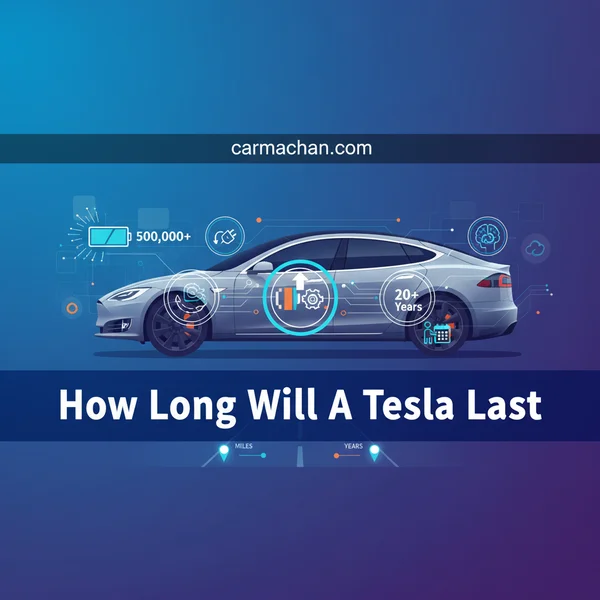


This longevity isn’t just about reaching high mileage; it’s about maintaining performance and usable range throughout the vehicle’s life. For many owners, the expected lifespan directly impacts resale value, long-term ownership costs, and overall satisfaction. Knowing the typical degradation patterns and factors influencing them helps you maximize your Tesla’s life and battery health effectively.
Tesla Battery Lifespan and Degradation Trends
The heart of any electric vehicle, the battery pack, is engineered for impressive endurance. Tesla batteries typically last between 300,000 to 500,000 miles before their capacity significantly diminishes. In terms of years, this often translates to 15-20 years for the average driver. Early models might see slightly less, while newer models benefit from continuous advancements in battery chemistry and thermal management.

Battery degradation is a natural process, but it’s not linear or sudden. Most Teslas experience their most significant capacity loss during the first 50,000 miles, typically losing around 5-10% of their original range. After this initial period, the degradation rate slows considerably. Many high-mileage Teslas still retain 85-90% of their original capacity even after hundreds of thousands of miles, proving their long-term viability.
Factors Affecting Battery Health
Your charging and driving habits significantly influence how well your Tesla’s battery retains its capacity over time. Smart practices can help you maintain excellent battery health for years.
- Charging Habits: Regularly charging to 100% or frequently depleting the battery to near 0% can stress the cells. Tesla recommends a daily charge limit of 80-90% for optimal longevity. Consistent Supercharging, while convenient, also generates more heat and can contribute to slightly faster degradation compared to slower AC charging.
- Temperature Extremes: Operating or storing your Tesla in extremely hot or cold conditions without proper thermal management can impact battery health. Tesla’s advanced thermal management system actively cools or heats the battery, but extreme and prolonged exposure still adds stress.
- Depth of Discharge (DoD): Running the battery to very low states of charge (e.g., below 10-20%) consistently before recharging puts more strain on the cells than keeping the charge between 20-80%.
Battery Warranty Information
Tesla backs its battery packs with a robust warranty, providing significant peace of mind. These warranties typically guarantee a minimum retention of battery capacity:
- Model 3/Y Standard Range & Long Range: 8 years or 100,000/120,000 miles (whichever comes first), with a minimum of 70% battery capacity retained.
- Model S/X: 8 years or 150,000 miles (whichever comes first), with a minimum of 70% battery capacity retained.
This warranty covers defects and degradation beyond what is considered normal within the specified parameters. If your battery capacity drops below 70% within the warranty period and mileage, Tesla will repair or replace it.
Durability of Tesla’s Motors and Major Components
Beyond the battery, the electric motors and major structural components of a Tesla are designed for exceptional durability. Electric drivetrains have significantly fewer moving parts than internal combustion engines, eliminating common failure points like spark plugs, timing belts, oil changes, and complex transmissions.
Tesla’s electric motors, which are often sealed units, are built to last the entire lifespan of the vehicle, frequently exceeding 500,000 miles. High-mileage Teslas frequently demonstrate this longevity, with many Model S and X vehicles logging hundreds of thousands of miles on their original motors. The lack of friction and wear parts common in gasoline engines greatly extends their operational life.
Chassis, Suspension, and Electronics
While the drivetrain is a major longevity factor, the rest of the vehicle also contributes to overall durability. Tesla’s chassis and body structures are robust, built with high-strength steel and aluminum. They are designed to withstand years of driving, much like any modern premium vehicle.
- Suspension Components: These are wear items, similar to any car, and may require replacement over time depending on road conditions and driving style. Ball joints, bushings, and shocks have expected lifespans that vary but are generally comparable to other vehicles in their class.
- Electronic Systems: Tesla vehicles are highly computerized. While electronic components can be complex, they don’t wear out in the same physical way mechanical parts do. Software updates can even improve their functionality and efficiency over time. Minor issues with sensors or modules can occur, but complete system failures are rare.
- Brakes: Due to regenerative braking, Tesla owners experience significantly less wear on their friction brakes compared to gasoline cars. This means brake pads and rotors can last much longer, often exceeding 100,000 miles for many drivers.
Evidence from owners of high-mileage Teslas across various forums and tracking sites frequently highlights the resilience of the main drivetrain components. These vehicles often continue performing reliably with only standard maintenance items, far exceeding typical expectations for conventional cars.
Factors Influencing Your Tesla’s Overall Longevity


While Teslas are engineered for durability, how you drive and care for your vehicle significantly impacts its ultimate lifespan. It’s not just about the battery; the entire vehicle’s longevity comes into play.
Driving Habits and Environment
Your driving style is a major determinant of how well your Tesla ages. Aggressive driving, with frequent hard accelerations and braking, puts more strain on components like suspension, tires, and even the drive units. Conversely, the advanced regenerative braking system inherent in Teslas actually helps extend brake pad life significantly compared to traditional cars.
- Smooth Driving: Gentle acceleration and braking minimize wear on mechanical parts and tires.
- Climate Considerations: Extreme hot or cold weather can put additional stress on the battery and other systems, although Teslas are designed with sophisticated thermal management to mitigate this.
- Charging Habits: Consistent fast charging (DC Supercharging) can contribute to slightly faster battery degradation over the very long term compared to slower AC charging, though the effect is often minor for most users.
Maintenance and Software Updates
Teslas require far less traditional maintenance than gasoline cars, but regular checks are still vital. There are no oil changes or spark plug replacements, but other items still need attention.
- Routine Checks: Regular tire rotations, fluid checks (like brake fluid and coolant for the battery/drive units), and cabin air filter replacements are important.
- Software Updates: Tesla’s over-the-air software updates are crucial. They not only add new features but also often include optimizations for battery management, drive unit efficiency, and overall vehicle health, directly contributing to longevity.
- Prompt Repairs: Addressing any minor issues or error messages promptly can prevent them from escalating into more significant, costly problems.
Expected Total Lifespan and High-Mileage Examples
Beyond the impressive battery life, the rest of a Tesla vehicle is also built for the long haul. The design ethos leans towards fewer moving parts and robust engineering, which translates into a vehicle capable of very high mileage.
Real-World Durability
While official “end-of-life” estimates are hard to pin down for such a relatively young technology, the consensus among experts and real-world examples suggests that a Tesla vehicle could easily last 300,000 to 500,000 miles, if not more, with proper care. This is a significant leap beyond many internal combustion engine vehicles.
- Taxi and Fleet Operations: Many Tesla Model S and Model 3 vehicles used in ride-sharing services or as taxis have racked up hundreds of thousands of miles (some exceeding 400,000 miles) with original batteries and drive units, demonstrating their commercial viability and robust construction.
- Individual Owners: A growing number of individual owners are reporting high mileage on their Teslas, validating the long-term durability. These cars often experience minimal battery degradation and continued strong performance.
Beyond the Warranty
Even after your battery and drive unit warranty expires (typically 8 years or 100,000-150,000 miles, depending on the model), your Tesla isn’t destined for the scrap heap. Replacement components are available, and a burgeoning third-party repair ecosystem is developing.
- Component Availability: Tesla continues to produce parts, and specialized shops are becoming more common for out-of-warranty repairs.
- Modularity: The battery pack, for instance, is a modular unit that can be replaced or serviced, rather than requiring the entire vehicle to be scrapped if a single cell group fails.
- Cost-Effectiveness: While major component replacements can be costly, the long interval between such events and the minimal routine maintenance often make them a cost-effective choice over simply buying a new car.
Conclusion
The question of “how long will a Tesla last?” increasingly points to a future where electric vehicles like Teslas outlast their gasoline counterparts. With battery packs designed for extensive lifecycles and overall vehicle architecture built for durability, your Tesla is a long-term investment. By adopting good driving habits, staying current with software updates, and performing routine checks, you can maximize your Tesla’s impressive lifespan.
Embrace the longevity of your Tesla – it’s designed to be a companion for hundreds of thousands of miles. Enjoy the journey, knowing your electric vehicle is built to go the distance.
❓ Frequently Asked Questions
What is the typical battery degradation rate for a Tesla over many years or miles?
Tesla batteries typically degrade by about 5-10% within the first 100,000 miles, with the rate slowing significantly thereafter. Many owners report retaining 90% or more of their original range even after 200,000 miles, demonstrating robust long-term performance.
How do charging habits impact the longevity of a Tesla’s battery pack?

Optimal charging involves keeping the battery between 20% and 80-90% for daily use, avoiding frequent full charges or deep discharges. While occasional Supercharging is fine, consistently relying on DC fast charging for all charges can slightly increase degradation compared to slower AC charging.
What’s the expected lifespan of Tesla’s electric motors and drive units?
Tesla’s electric motors are highly durable, often outlasting the vehicle’s body, given their fewer moving parts compared to internal combustion engines. Many units are designed to last for 500,000 miles or more, contributing significantly to the vehicle’s overall long-term reliability.
Are there common wear-and-tear items in a Tesla that might limit its lifespan?
While the powertrain is durable, components like suspension bushings, tires, brakes (less frequently than ICE cars due to regenerative braking), and 12V batteries will still require replacement over time. Regular maintenance of these non-EV specific parts is crucial for overall vehicle longevity.
How does extreme climate (hot or cold) affect Tesla battery and vehicle longevity?
Both extreme heat and cold can temporarily reduce range and potentially accelerate battery degradation if the car is regularly left in these conditions without proper thermal management. Tesla’s advanced battery management system actively works to mitigate these effects, but sheltered parking helps.
What does the Tesla battery warranty cover regarding degradation?
Tesla’s battery warranty typically covers 8 years or 100,000-150,000 miles (depending on model) and guarantees a minimum of 70% battery capacity retention. This provides assurance against significant degradation or battery failure within the covered period.