2007 Ford F150 Cruise Control Not Working: Diagnosed & Fixed
Is your 2007 Ford F-150 refusing to hold speed on the highway, making long drives a chore? Whether it’s a dead switch, a flashing light on the dash, or an unresponsive steering wheel control, cruise control issues in this truck are often tied to electrical safety interlocks. This guide covers everything you need to diagnose and fix your cruise control system safely, from checking basic fuses to addressing historical safety recalls.
Systemic Causes for 2007 Ford F150 Cruise Control Not Working
Recommended Best Deal Products


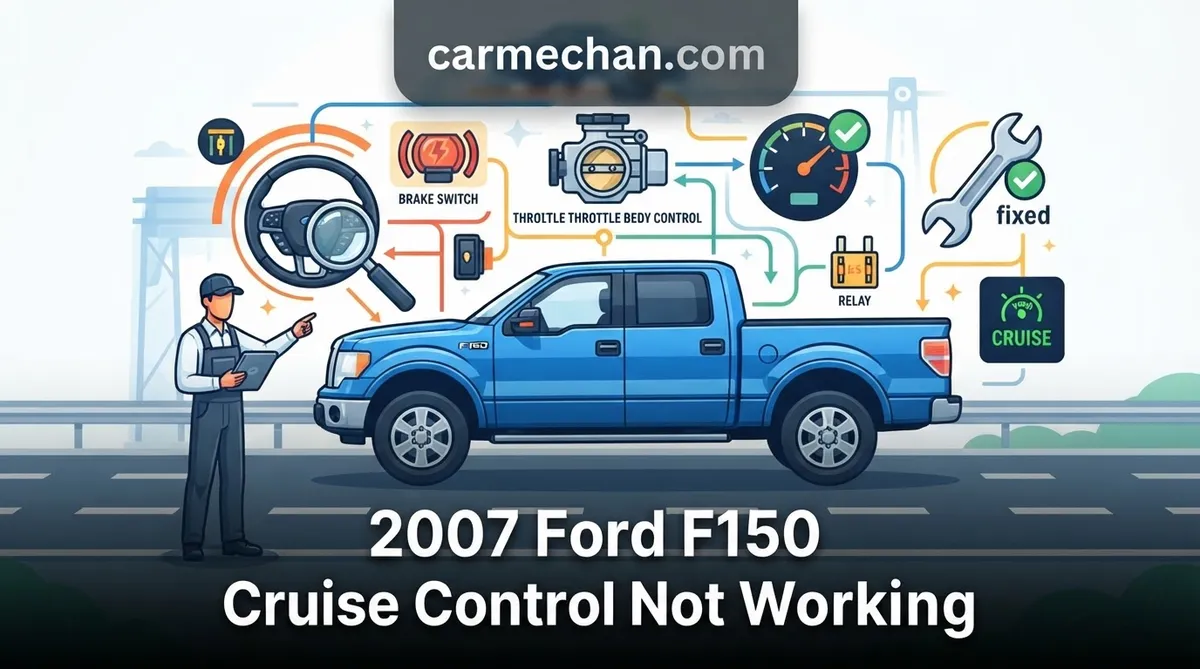
Understanding the architecture of the 2007 F-150 speed control system is vital for an efficient repair. The system relies on a series of “normally closed” and “normally open” circuits that must signal the Powertrain Control Module (PCM) to engage.
📤 Share Image

The Role of the PCM and VSS in Speed Regulation
The PCM acts as the brain of the cruise control. It monitors the Vehicle Speed Sensor (VSS) to determine if the truck is within the valid engagement window (typically 30–85 mph). If the VSS sends erratic data—often caused by debris on the sensor or failing ABS tone rings—the PCM will inhibit cruise control engagement to prevent unintended acceleration. If you notice a flashing cruise light, it is the system’s way of flagging a diagnostic code, often related to a vacuum leak in the actuator or a faulty sensor signal.
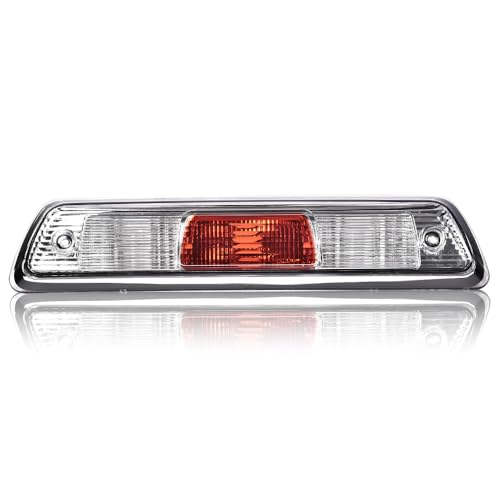
Why the Brake Light Circuit Matters for Cruise Control
A common but often overlooked culprit is the third brake light. In the 2007 F-150, the cruise control system uses the brake light circuit for ground continuity. If your brake light bulbs are burned out, the circuit logic is interrupted. This creates a scenario where the cruise control fails to “latch” because it believes the brake pedal is depressed. Always start your diagnosis by verifying that all brake lights, including the high-mount third brake light, are operational.

Signs of a Failing Clock Spring
The clock spring is a ribbon-cable assembly inside the steering column that allows electrical signals to travel from the wheel switches to the PCM while the wheel rotates. If your cruise control works sporadically or stops working entirely when you turn the steering wheel, the clock spring is likely internally frayed. This component also often triggers the SRS (airbag) light, confirming that the electrical path through the column is compromised.
By The Numbers
MPH Engagement Range
Nominal System Voltage
How to Diagnose and Fix 2007 Ford F150 Cruise Control Not Working
Following a structured, logical sequence is the best way to avoid “parts-cannon” syndrome, where components are replaced needlessly. Begin with the exterior bulbs and move inward toward the steering column.
📋
Troubleshooting Steps
Recommended Best Deal Products


Check Fuse #10 (15A) and Fuse #14 (15A) in the Central Junction Box. Ensure all three brake bulbs (left, right, and high-mount) are illuminating when the pedal is pressed.
Using a multimeter, test the brake deactivation switch (on the master cylinder) for continuity. With the pedal released, the switch should show continuity. When depressed, the circuit should break.
Locate the cruise control actuator on the driver’s side fender. Ensure the throttle cable has proper tension and is not frayed. If the cable is loose, it cannot pull the throttle plate to maintain speed.
If you have access to an OBD-II scanner capable of reading Ford-specific manufacturer codes, scan for B-series (Body) or P-series (Powertrain) codes. Often, a “Speed Control Command Switch” fault code will pinpoint the exact steering wheel button that has failed.
Safety Precautions for F-150 Steering Column Repairs
Repairing the clock spring or steering switches requires working near the airbag module. Do not take shortcuts here; the risks of accidental deployment are significant.
- Battery Disconnection: Always disconnect the negative battery terminal and wait at least 15 minutes. This allows the SRS capacitor to discharge completely.
- Handling the Airbag: When removing the driver’s side airbag, place it face-up in a secure, unobstructed location. Never place it face-down, as a deployment could propel the unit across the shop.
- Professional Intervention: If you are uncomfortable handling SRS components or if the clock spring installation requires specialized alignment that you cannot verify, consult a certified technician. Improper clock spring orientation will cause it to snap immediately upon the first full turn of the steering wheel.
Addressing Ford F-150 Cruise Control Recalls and Logic Failures
Recommended Best Deal Products


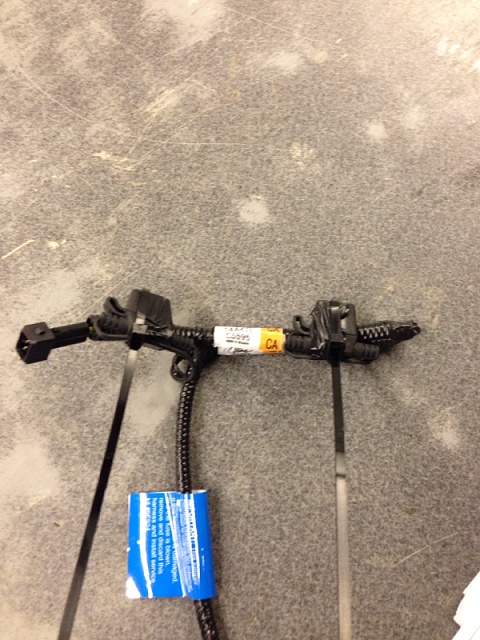
The 2007 F-150 cruise control system has a noted history regarding the brake deactivation switch. Early versions of this switch were prone to leaking fluid into the electrical contacts, leading to a high-resistance short that could trigger a fire even when the vehicle was parked.
Brake Deactivation Switch Recall History
Ford issued widespread recalls to install a fused wiring harness between the main harness and the brake deactivation switch. This harness acts as a sacrificial barrier to prevent electrical fires. If your truck still possesses the original, non-fused switch, it is a significant safety hazard regardless of whether your cruise control functions or not.
Verifying Your F-150 Recall Status
Visit the National Highway Traffic Safety Administration (NHTSA) website and input your 17-digit VIN. This will instantly confirm if your vehicle has any outstanding safety recalls. If the brake deactivation switch recall is pending, take the vehicle to a Ford dealership; this repair is typically provided free of charge under the recall safety program.
Technical Specs for 2007 F-150 Speed Control Systems
The system utilized in the 2007 model year is a hybrid of electronic control and mechanical actuation. Understanding these specs helps in choosing the right replacement parts and diagnosing issues effectively.
The 2007 F-150 uses a mechanical throttle cable pulled by an electric servo, distinct from the later “drive-by-wire” throttle bodies. If you replace the servo, you must ensure the cable slack is adjusted properly; too much slack will result in a “hunting” sensation where the cruise control struggles to find the correct throttle position.
Summary and Diagnostic Final Steps
In summary, resolving “2007 Ford F150 cruise control not working” is rarely a complex endeavor if you follow the correct diagnostic order. Most issues are electrical in nature, stemming from simple fuse or bulb failures. Remember that the system’s safety interlocks—specifically the brake deactivation switch—must be functioning for the PCM to allow speed control engagement.
- Check all brake bulbs before assuming the servo or switches are faulty.
- Test for continuity at the master cylinder deactivation switch.
- Always disconnect the battery before accessing the steering column to protect against SRS deployment.
- Verify your VIN against official recall databases to ensure your safety and address potential electrical fire risks.
If your cruise control remains non-functional after these checks, professional diagnostic tools are recommended to scan the PCM for specific manufacturer fault codes. A specialized scan will indicate if the command signal is reaching the PCM or if the issue lies downstream in the actuator motor itself.
2007 Ford f150 Cruise Control Not Working: Frequently Asked Questions
Why does my cruise control light flash?
A flashing cruise control light on your 2007 F-150 typically indicates that the powertrain control module (PCM) has detected a fault in the system’s self-test. This could be due to an open circuit, a failed switch, or an inconsistency between the expected and actual speed signals. It is the truck’s way of notifying you that the cruise system has been disabled for safety reasons.
Does a blown fuse cause cruise control failure?
Yes, a blown fuse is one of the most common reasons for cruise control failure. The system relies on constant power to operate the actuators and switches. You should check the interior fuse panel—specifically looking for fuses related to the brake circuit or speed control—to see if the filament is broken. If the fuse blows again immediately, you likely have a short-to-ground in the wiring.
How do I test if my clock spring is bad?
To test the clock spring, remove the steering wheel control switches and use a multimeter to check for continuity across the harness while turning the wheel lock-to-lock. If you notice the signal cutting out or intermittent resistance values during rotation, the internal ribbon cable within the clock spring is likely frayed or damaged. This is a common point of failure for steering-wheel-mounted electronics.
Can a bad brake light switch stop cruise control from working?
Absolutely. The cruise control system is programmed to disengage instantly when it receives a signal that the brake pedal is depressed. If the brake light switch is faulty, stuck, or improperly adjusted, it may send a ‘constant-on’ signal to the PCM. The truck interprets this as you pressing the brakes, preventing the cruise control from engaging entirely as a necessary safety precaution.
How do aftermarket LED lights affect cruise control?
Aftermarket LED tail lights often draw significantly less current than incandescent bulbs. The 2007 F-150’s electrical system sometimes misinterprets this low resistance as an ‘open circuit’ or a wiring fault in the brake light line. Because the cruise control monitors this circuit to detect braking events, it may default to a ‘fail-safe’ state, effectively disabling cruise control until you install load resistors.