How Many Catalytic Converters Are On a Car? Find Out Now
Last Updated on September 1, 2026 by Ryan
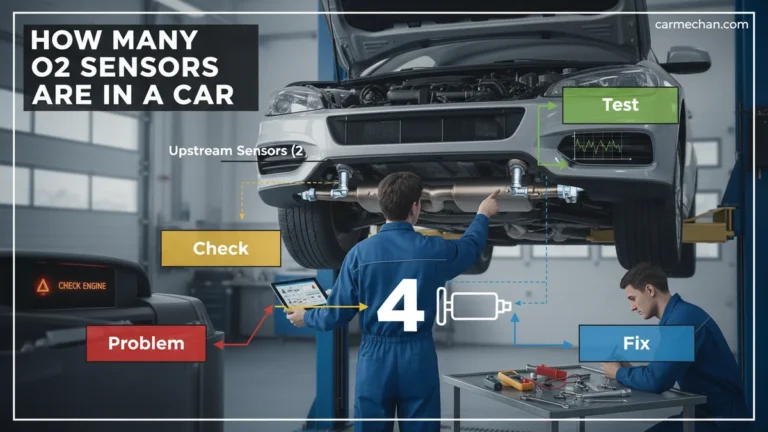
Most cars typically have one or two catalytic converters, but the exact number can vary significantly based on the engine’s design and configuration. V-style engines often require multiple converters, sometimes up to four, to process exhaust gases from separate cylinder banks efficiently. This design ensures optimal emission reduction according to environmental standards.
🎯 Key Takeaways


- Most cars come equipped with one or two catalytic converters.
- V-engines often feature two or more, with one per exhaust bank.
- Engine configuration is the primary factor determining converter quantity.
- Some advanced systems use pre-catalytic converters for efficiency.
- Emissions regulations directly influence converter number and design.
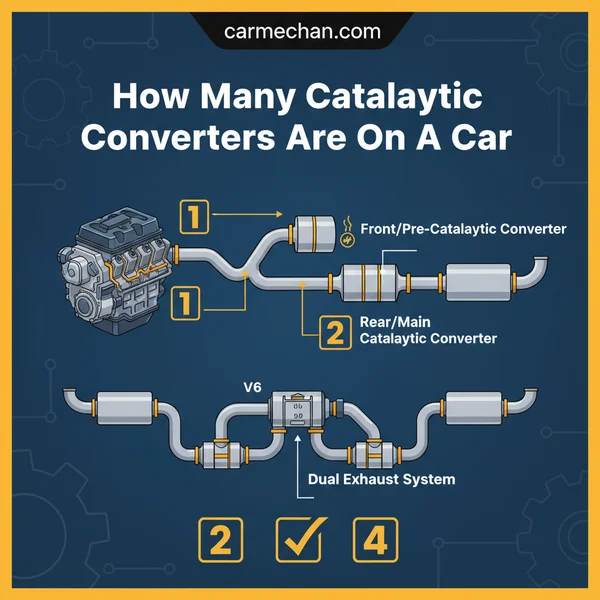
If you’ve ever wondered how many catalytic converters are under your car, you’re looking for a straightforward answer. Most cars on the road today feature either one or two catalytic converters. However, this isn’t a hard-and-fast rule; some vehicles, particularly those with powerful V-engines or designed for ultra-low emissions, can incorporate up to four units. The exact number primarily depends on your car’s engine configuration and the complexity of its exhaust system.
Understanding the number of catalytic converters your vehicle has isn’t just trivia; it helps you grasp your car’s emission control strategy. Knowing this detail provides insight into how your specific model is engineered to meet environmental standards and manage exhaust flow. This directly impacts the design and complexity of your vehicle’s undercarriage.
Understanding Catalytic Converter Numbers in Cars


The quantity of catalytic converters on a vehicle is directly tied to its engine type and exhaust system layout. There’s a clear pattern to how many you can expect to find, reflecting engineering decisions for both performance and emissions compliance.
The Typical Range You’ll Encounter
For most drivers, the answer falls into one of these common scenarios:
- Single Catalytic Converter: Many inline four-cylinder engines typically use just one catalytic converter. These engines have a single exhaust manifold that funnels all exhaust gases into one pipe, making a single converter efficient and effective.
- Two Catalytic Converters: This is a very common setup for vehicles with V6 and V8 engines. Since V-engines have two separate banks of cylinders (e.g., cylinders 1-3 on one side, 4-6 on the other for a V6), each bank often has its own exhaust manifold and dedicated catalytic converter. This ensures optimal emissions processing for both banks of cylinders.
- Three or Four Catalytic Converters: You might see more complex systems on certain high-performance vehicles, trucks, or those engineered for extremely stringent emission standards. These setups could include multiple converters per exhaust bank or specialized pre-catalytic converters.
Primary vs. Secondary Converters
When a vehicle has more than one converter, they often serve distinct roles within the exhaust stream. It’s not always just a duplicate part; there’s usually a specific purpose for each unit:
- Pre-Catalytic Converter: Often positioned very close to the engine, these smaller converters are designed to heat up rapidly. Their quick light-off helps reduce emissions significantly during the engine’s cold-start phase, a period when pollutants are typically highest.
- Main Catalytic Converter: Located further down the exhaust system, the main converter is larger and performs the bulk of the chemical conversion, reducing a wide range of harmful pollutants once the exhaust system reaches operating temperature.
This tiered approach allows for more efficient and comprehensive pollutant reduction across various engine operating conditions.
Factors Influencing the Quantity of Catalytic Converters


The number of catalytic converters isn’t arbitrary; it’s a deliberate design choice driven by several key engineering and regulatory factors. Understanding these helps explain the variation you see across different car models and engine types.
Engine Configuration is Key
The fundamental layout of your car’s engine is the primary determinant of how many catalytic converters it will have. Different engine designs necessitate different exhaust system architectures:
- Inline Engines: Engines like an inline 4-cylinder (I4) or inline 6-cylinder (I6) typically route all exhaust gases through a single exhaust manifold. This single pathway naturally leads to the use of one primary catalytic converter to treat the combined exhaust stream. It’s a straightforward and effective setup for these engine types.
- V-Engines (V6, V8, V10, V12): These engines feature cylinders arranged in two distinct banks, forming a “V” shape. Each bank of cylinders often has its own dedicated exhaust manifold and, consequently, its own exhaust path. Therefore, V-engines almost invariably use at least two catalytic converters—one for each bank of cylinders. This allows for optimized exhaust gas treatment from both sides of the engine. For example, in a V8, cylinders 1-4 might feed into one converter, while cylinders 5-8 feed into another.
This direct correlation between engine structure and exhaust bank configuration is the most significant reason for varying catalytic converter counts.
Performance and Emission Standards
Beyond engine geometry, vehicle performance goals and increasingly stringent emission regulations also play a crucial role in determining the number and type of catalytic converters:
- High-Performance Vehicles: Some performance-oriented cars might incorporate additional catalytic converters. These can be used to optimize exhaust flow, reduce back pressure, or provide more surface area for pollutant conversion, all while maintaining high performance. This might mean a “pre-cat” followed by a larger “main cat” on each bank for a V-engine.
- Ultra-Low Emission Vehicle (ULEV) Standards: Regions with particularly strict environmental regulations, such as California, often demand more sophisticated emission control systems. To meet ULEV or similar standards, manufacturers might add extra converters, including more pre-catalytic converters that activate faster, ensuring emissions are minimized even during brief periods. These additional units help achieve a higher overall reduction in pollutants.
These factors ensure that a vehicle not only performs as intended but also complies with the latest environmental mandates, regardless of where it’s sold.
Common Catalytic Converter Configurations by Engine Type
The number of catalytic converters isn’t a random design choice; it’s intricately linked to your car’s engine type, power output, and exhaust system layout. Understanding these configurations helps demystify why some cars have one and others have several.

Single vs. Dual Exhaust Systems
For many vehicles with smaller engines, typically 4-cylinder inline engines, a single exhaust system is common. In these setups, exhaust gases from all cylinders merge into one pipe, flowing through a single main catalytic converter. This converter is often located relatively close to the engine manifold to ensure it heats up quickly. Some designs even integrate the catalyst directly into the exhaust manifold, known as a “manifold catalytic converter,” for even faster light-off and emission reduction during cold starts.
In contrast, high-performance or larger-engined vehicles, particularly those with powerful V6, V8, or even V12 engines, frequently utilize a dual exhaust system. Here, each bank of cylinders often has its own independent exhaust path and, consequently, its own set of catalytic converters. This approach effectively processes the higher volume of exhaust gases generated by these engines, maintaining optimal emission control.
V-Engines and Inline Engines
Inline engines, where all cylinders are arranged in a single line (e.g., most 4-cylinders and some 6-cylinders), naturally funnel their exhaust gases into a common manifold. This streamlined flow typically lends itself to a single catalytic converter positioned either on the manifold or just downstream in the exhaust pipe. This setup is efficient for managing the exhaust from a single cylinder bank.
V-engines (such as V6s and V8s), by their very architecture, have two distinct cylinder banks. Each bank typically produces its own stream of exhaust gases that needs to be treated separately before merging. Therefore, it’s common for a V-engine to feature at least two main catalytic converters, one for each bank. You might also find additional pre-converters closer to the engine on each bank, leading to a total of three or four converters on some V-engine vehicles. If your mechanic ever references “Bank 1” or “Bank 2” catalytic converter codes, it’s a clear sign your vehicle uses a multi-bank, V-type engine configuration.
The Role of Multiple Catalytic Converters in Emission Control
More than one catalytic converter isn’t just about handling sheer exhaust volume; it’s a sophisticated strategy to achieve cleaner emissions. Each converter plays a specific role, working in concert to scrub pollutants from your car’s exhaust.
Enhanced Efficiency and Redundancy
The use of multiple catalytic converters, often arranged in a series, significantly boosts the overall efficiency of emission reduction. You’ll frequently find pre-converters (sometimes called “light-off” catalysts) positioned very close to the engine manifold. These smaller units are designed to heat up rapidly, reaching their operating temperature almost immediately after the engine starts. This rapid activation is crucial because a significant portion of harmful emissions occurs during the engine’s cold-start phase before the main converters are fully warmed up.
After the exhaust gases pass through the pre-converters, they then flow into the main catalytic converter(s). These larger units complete the chemical reactions, converting remaining pollutants like carbon monoxide, hydrocarbons, and nitrogen oxides into less harmful substances. This multi-stage approach ensures a more thorough and consistent scrubbing of pollutants across varying engine operating conditions. Furthermore, having multiple converters can offer a degree of redundancy, helping maintain overall emission compliance even if one unit’s performance slightly degrades over time.
Meeting Stricter Emission Standards
The automotive industry faces ever-tightening emission regulations globally. Regions like California, and countries in Europe and Asia, continually push for cleaner vehicles, requiring manufacturers to implement increasingly sophisticated exhaust aftertreatment systems. Using multiple catalytic converters is a direct response to these evolving standards. For instance, a vehicle designed to meet California’s Super Ultra-Low Emission Vehicle (SULEV) standards will almost certainly have a more complex and numerous catalytic converter setup than a vehicle only needing to meet basic federal standards.
The drive for lower tailpipe emissions means carmakers are constantly innovating. Adding more converters, optimizing their placement, and refining their internal chemistry are all part of the effort to reduce environmental impact. So, while it might seem like more components, it’s actually a testament to engineering efforts aimed at delivering cleaner air for everyone.
Conclusion
So, as we’ve seen, there’s no single answer to “how many catalytic converters are on a car.” It varies significantly based on your car’s engine type, design, and the emission standards it was built to meet. From a single unit on a compact inline-4 to three or four on a sophisticated V-engine, each converter plays a vital role in cleaning up exhaust gases.
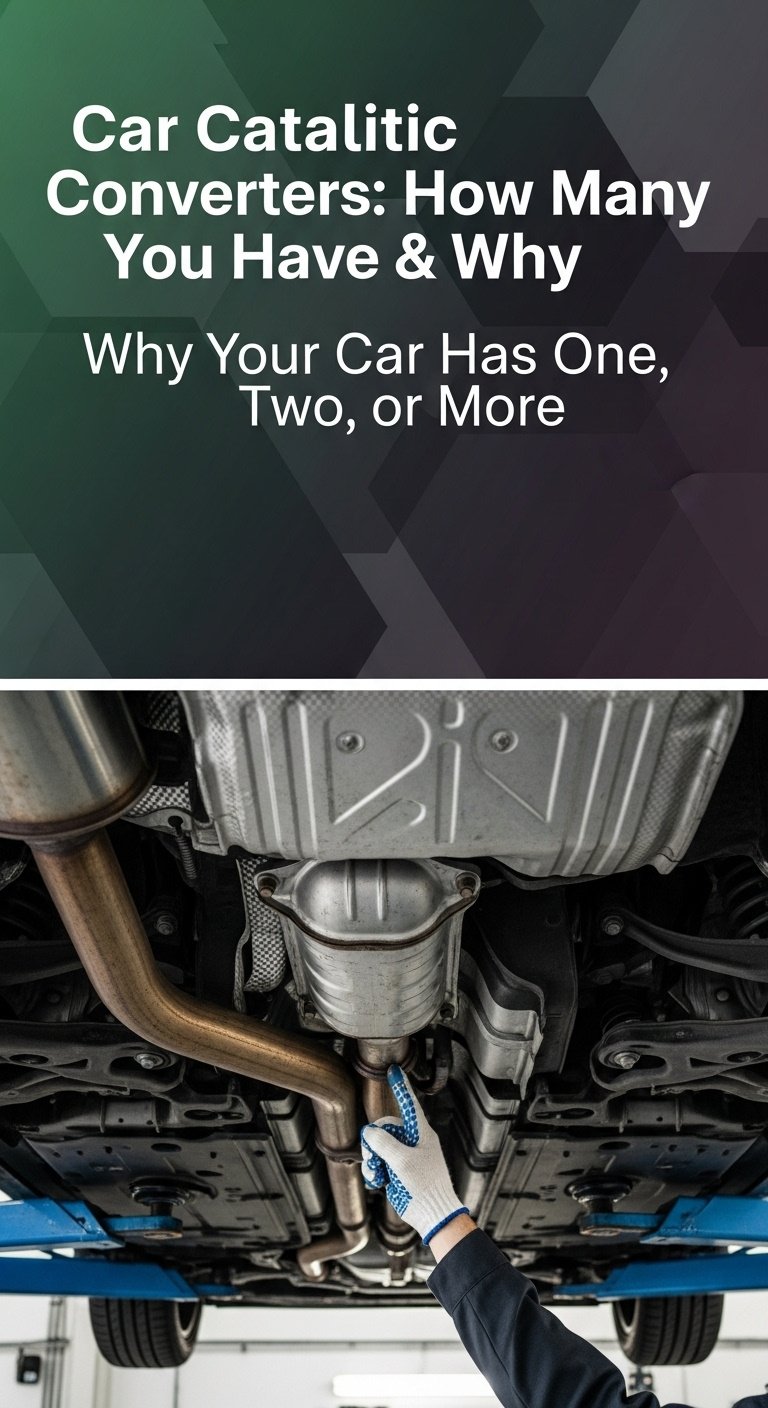
If you’re curious about your specific vehicle, the best first step is to consult your car’s owner’s manual. It often contains diagrams or descriptions of the exhaust system. Alternatively, a trusted mechanic can quickly tell you how many converters your car has and where they are located.
Understanding your car’s emission system helps you appreciate the technology designed to protect our air. Regular maintenance is key to keeping these crucial components functioning effectively. Keep your vehicle well-maintained, and you’ll do your part for a cleaner environment!
❓ Frequently Asked Questions
What’s the typical number of catalytic converters found in a standard vehicle?
A standard car most commonly has one or two catalytic converters. Four-cylinder engines usually employ one, while V6 and V8 engines often utilize two—one for each exhaust manifold or cylinder bank to manage their dual exhaust paths efficiently.
Why do some cars have more than one catalytic converter?
Cars with V-shaped engines (like V6, V8) have separate exhaust manifolds for each bank of cylinders. To efficiently treat the exhaust gases from both banks before they combine, a separate catalytic converter is often installed for each, leading to two or more in total. This design ensures comprehensive emission reduction.
Is it possible for a car to have three or four catalytic converters?
Yes, it is possible. High-performance vehicles, some luxury models, or those designed to meet ultra-low emission vehicle (ULEV) standards might incorporate additional converters. This can include close-coupled ‘pre-cats’ near the engine for quicker activation, totaling three or even four units in complex exhaust systems.
Do diesel engines use the same number and type of catalytic converters as gasoline engines?
Diesel engines often use different emission control systems tailored for diesel exhaust, such as Diesel Oxidation Catalysts (DOCs) and Selective Catalytic Reduction (SCR) systems. While these components function to reduce harmful emissions, they are distinct from gasoline catalytic converters in design and chemistry. The quantity and configuration can vary, often involving multiple components in the emission treatment train.
How does a pre-catalytic converter differ from a main catalytic converter, and how does this affect the total count?
A pre-catalytic converter (pre-cat) is smaller and located closer to the engine manifold, designed to heat up quickly and begin emission reduction immediately upon startup. Main catalytic converters are larger, further downstream, and handle the bulk of the emission conversion. Both units count towards the total number of catalytic converters on a vehicle, indicating a more sophisticated emission control system.
Can a car function properly with a missing or fewer catalytic converters?
While a car might run without all its catalytic converters, it will not function properly in terms of emission control and will almost certainly trigger a ‘Check Engine’ light due to sensor readings. Furthermore, it will fail mandatory emissions tests and is illegal in most regions, leading to fines and contributing to environmental pollution. Removing them is not recommended or legal.