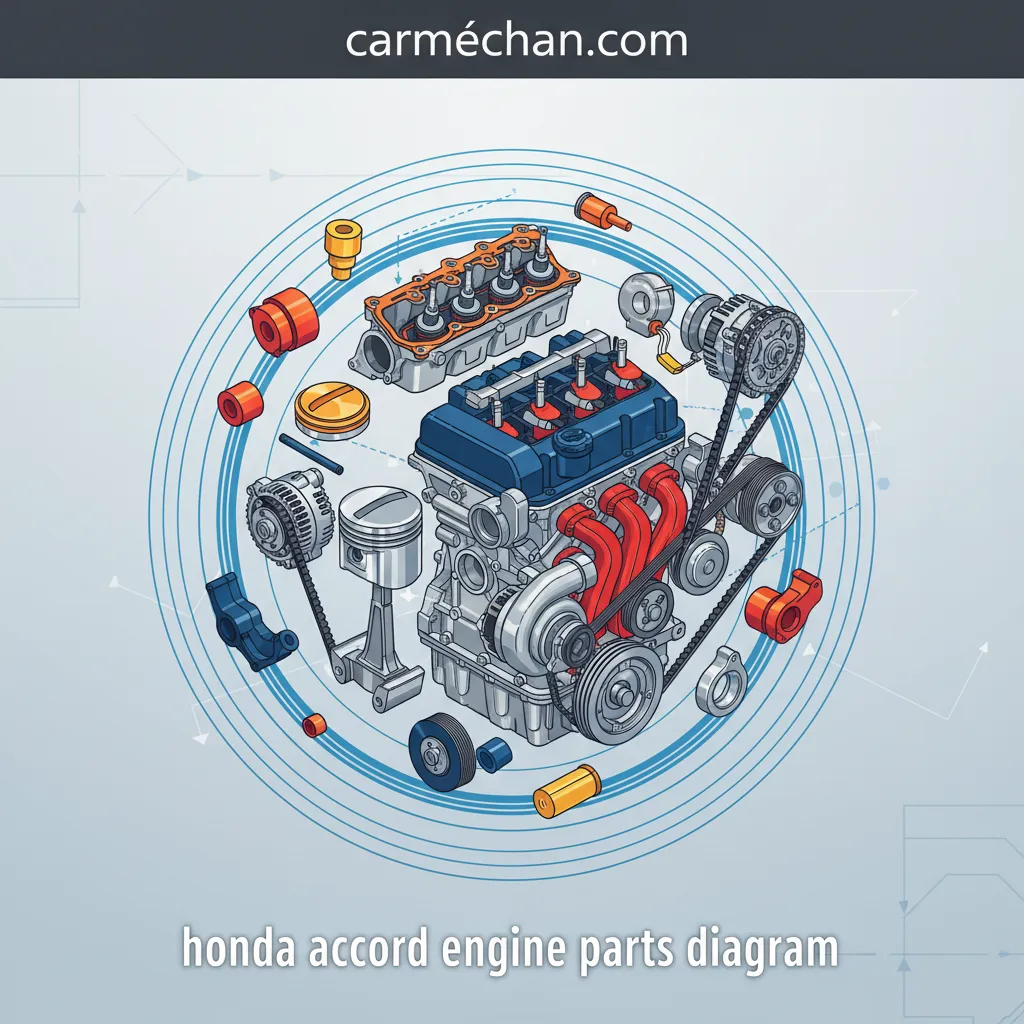
Honda Accord Engine Parts Diagram: A Professional Guide To Key Components And Systems
Understanding the intricate workings of your Honda Accord’s engine is paramount for both preventative maintenance and efficient troubleshooting. For many vehicle owners and aspiring technicians, deciphering the complex array of components within a modern internal combustion engine can be a significant challenge, often leading to confusion during repairs or parts identification. This professional guide will provide a detailed, authoritative exploration of the Honda Accord engine parts diagram, breaking down key systems and components to enhance your technical comprehension and empower informed decision-making.

The Foundation: Understanding the Honda Accord Engine Block and Cylinder Head Assembly
Recommended Best Deal Products


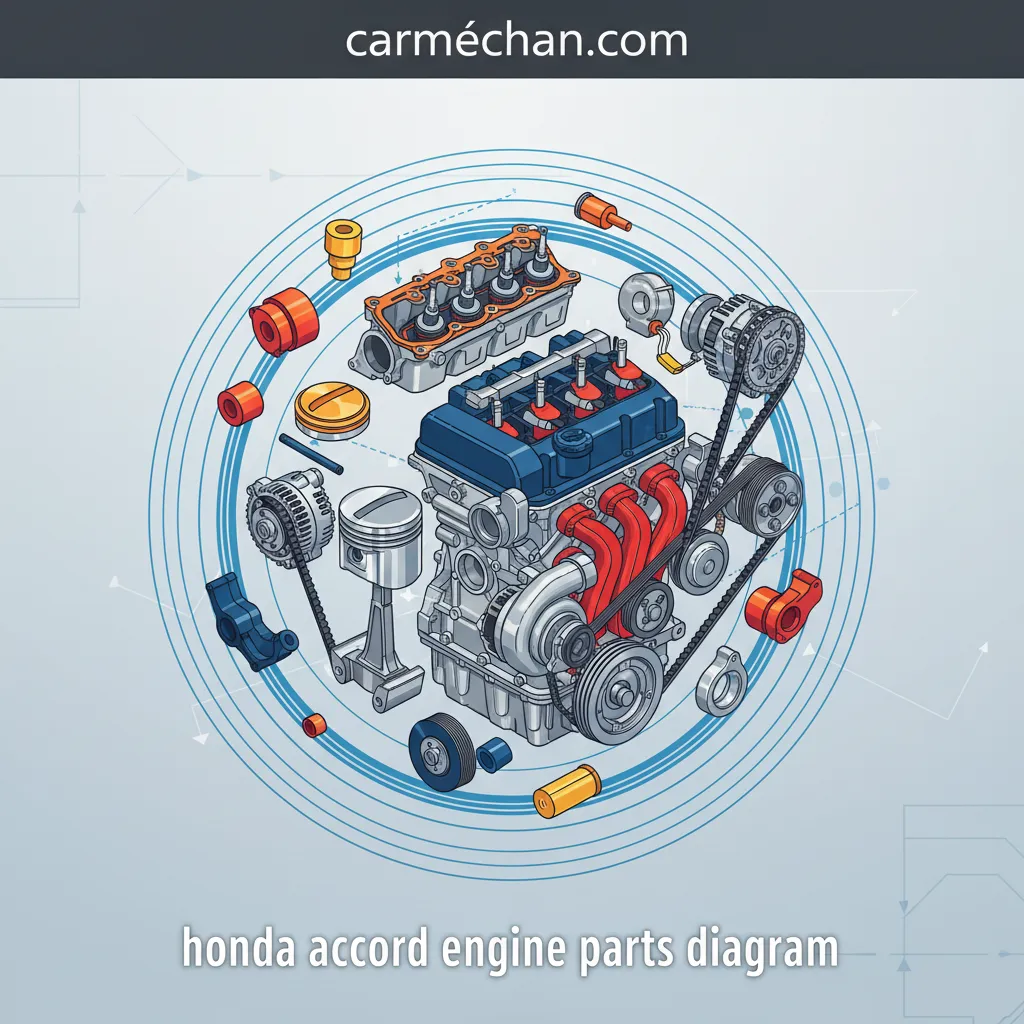
The engine block is the undisputed core structure of any Honda Accord engine, acting as the fundamental housing for virtually all other critical components. From my extensive experience, I can attest that the block dictates the engine’s architectural layout and inherent strength.
📤 Share Image
Engine Block: The Engine’s Unyielding Core
The engine block provides the rigid framework that supports the entire engine assembly. It contains the precisely machined cylinders, where combustion occurs, and is crisscrossed by intricate coolant passages and oil galleries that are vital for thermal management and lubrication. Critically, the block also houses the main bearing bores, which cradle the crankshaft. Modern Honda blocks, such as those found in the popular 4-cylinder K24 series, are typically constructed from lightweight aluminum alloy, often featuring cast-iron cylinder liners for enhanced durability and wear resistance. Observing a side-view diagram of a K24 block reveals these liners seamlessly integrated into the structure, surrounded by the coolant jackets, a testament to Honda’s expert engineering.
- Cylinders: Precision-honed bores for piston movement.
- Coolant Passages: Channels for coolant circulation, vital for temperature regulation.
- Main Bearing Bores: Machined seats for crankshaft support.
By The Numbers
Miles (Average Lifespan of a properly maintained Honda engine block)
Precision required for cylinder bore tolerances
Cylinder Head: Orchestrating Airflow and Combustion
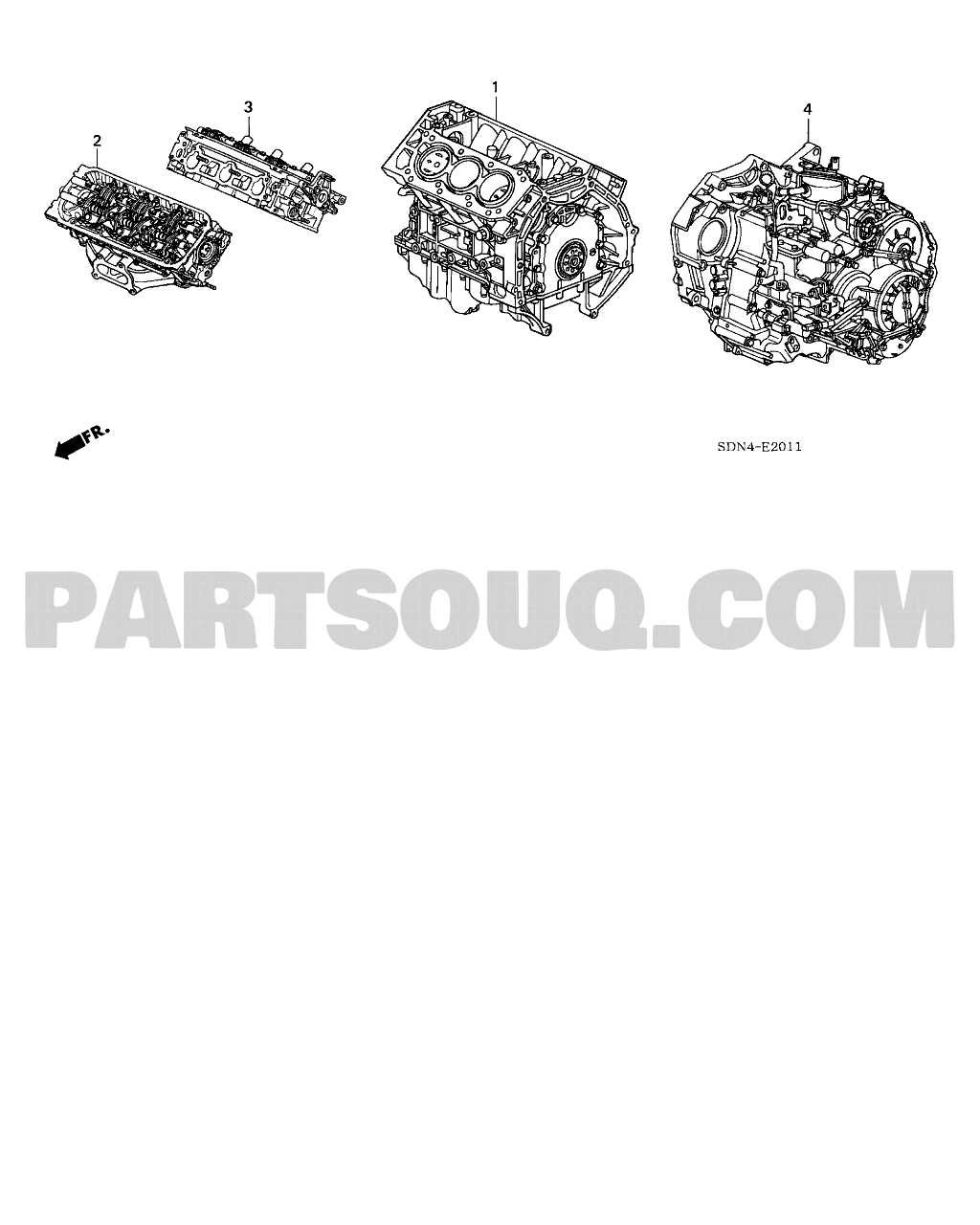
Perched atop the engine block, the cylinder head is a sophisticated casting, often made of lightweight aluminum alloy. Its primary role is to seal the combustion chambers and house the vital components of the valvetrain. Within the cylinder head, you’ll find precision-machined valve seats, where the valves seal, and valve guides, which ensure smooth valve operation. The cylinder head integrates seamlessly with the block, creating a hermetic seal for the combustion process. For instance, in the Honda J35 V6 engine, two cylinder heads are present, each governing half of the engine’s cylinders, highlighting architectural differences from the single-head K24 design.
Oil Pan and Crankcase Assembly: The Lubrication Foundation
Beneath the block, the oil pan serves as a reservoir for the engine oil, collecting it after it has circulated through the engine. The crankcase assembly, which often encompasses the lower portion of the engine block and the oil pan, acts as a protective housing for the rapidly rotating crankshaft and connecting rod assemblies. Its design is crucial for splash lubrication in certain areas and for preventing contaminants from entering the vital moving parts.
Gaskets and Seals: The Unsung Heroes of Integrity
The integrity of an engine’s internal systems—fluid containment and compression—hinges entirely on its gaskets and seals. The head gasket, positioned between the cylinder head and the engine block, is perhaps the most critical. Its multi-layered design prevents combustion gases, coolant, and oil from mixing, maintaining distinct pathways for each fluid. Any failure here, typically due to overheating, results in severe engine damage. Various other oil seals, such as the front and rear main seals or camshaft seals, are equally vital for preventing lubricant leakage. As a trusted expert, I cannot overstate the importance of using quality, OEM-specified gaskets during any engine work; shortcuts here inevitably lead to costly re-repairs.
Always consult your Honda Accord’s service manual for the exact gasket specifications. Using aftermarket gaskets of inferior quality or incorrect material can lead to premature failure and subsequent engine problems. Invest in reliable OEM or trusted aftermarket components for long-term sealing integrity.
Precision Timing: Valvetrain and Timing System Components in Honda Accord Engines
The valvetrain and timing system are the orchestrators of engine breathing, meticulously controlling when the engine inhales air and exhales exhaust gases. Their precision is paramount for optimal power delivery and efficiency.
Camshafts: The Engine’s Master Conductor
The camshaft(s) are central to the valvetrain, featuring precisely shaped lobes that push against tappets or rocker arms to open the intake and exhaust valves. Their design dictates the valve lift, duration, and overlap, directly influencing engine performance characteristics. Honda Accord engines utilize either Single Overhead Cam (SOHC), where one camshaft operates both intake and exhaust valves for a bank of cylinders (common in older J-series V6 VTEC engines), or Dual Overhead Cam (DOHC), with separate camshafts for intake and exhaust valves (prevalent in K-series 4-cylinder i-VTEC engines). DOHC systems, like those in the K-series, allow for more precise control over valve timing and enable features like VTEC on both intake and exhaust sides, enhancing the engine’s complete performance envelope.

Audible — Listen Free for 30 Days
One free credit a month and thousands of titles included.
Listen Free for 30 DaysIntake and Exhaust Valves: Regulating Gas Flow
The intake and exhaust valves are simple yet highly robust components. They act as gates, opening to allow the air-fuel mixture into the combustion chamber and closing to seal it during compression and combustion, then opening again to release exhaust gases. Most modern Accord engines feature 4 valves per cylinder (two intake, two exhaust), facilitating efficient gas flow. These valves are held closed by valve springs, which are compressed by rocker arms or tappets (also known as valve lifters) actuated by the camshaft. Retainers secure the springs to the valves, completing this crucial assembly.
Timing Chain or Timing Belt System: Synchronized Operation
The timing chain or timing belt system is responsible for maintaining the precise synchronization between the crankshaft and the camshaft(s). It ensures that the valves open and close at the exact moments relative to the piston’s position. Early Honda Accord models often used timing belts, which require replacement at specific intervals (e.g., 60,000-105,000 miles for many older models). Neglecting this service, as many people regrettably do, can lead to the belt snapping, causing the valves to collide with the pistons – a catastrophic event resulting in severe, irreparable engine damage. Modern Accord engines, however, primarily utilize more durable timing chains for enhanced longevity, often designed to last the lifetime of the engine, though tensioners and guides can still require inspection.
For Honda Accords equipped with timing belts, adhering to the manufacturer’s specified replacement intervals is non-negotiable. Failure to do so risks belt failure, leading to bent valves, damaged pistons, and a complete engine rebuild or replacement. This is not a service to defer.
Honda’s VTEC System: The Power of Variable Timing
Honda’s renowned Variable Valve Timing and Lift Electronic Control (VTEC) system is a technological marvel that provides a dual personality to the engine. At lower RPMs, VTEC uses a milder camshaft lobe profile for optimal fuel efficiency and smooth idling. As engine speed increases, typically around 4,500 RPM on certain K-series engines, the system hydraulically locks a higher-lift, longer-duration camshaft lobe into action. This dramatically improves volumetric efficiency, allowing the engine to breathe better at high RPMs, thereby boosting horsepower and torque. The intelligent VTEC system, often denoted as i-VTEC for its continuous variable timing capabilities, is a hallmark of Honda’s commitment to both performance and fuel economy across its Accord lineup, offering a reliable blend of power on demand.
Power Generation: Pistons, Connecting Rods, and Crankshaft Assembly Demystified
This section delves into the heart of power generation: the components that convert the explosive force of combustion into usable rotational motion, propelling the vehicle.
Pistons: The Combustion Translators
The pistons are arguably the hardest working components in the engine. Crafted typically from lightweight aluminum alloy, their primary function is to effectively seal the combustion chamber and transfer the immense force generated by the expanding gases to the connecting rods. Each piston is fitted with several piston rings: the upper compression rings prevent combustion gases from escaping past the piston, while the lower oil control rings scrape excess oil from the cylinder walls, preventing it from entering the combustion chamber and burning. This intricate design is crucial for maintaining the engine’s specified compression ratios, which range from 10.5:1 to 11.5:1 in many K24 engines, directly impacting engine efficiency and power output.
Connecting Rods: Bridging Linear to Rotational Motion
The connecting rods are the vital link between the reciprocating pistons and the rotating crankshaft. Their robust construction, typically forged steel, allows them to withstand incredible compressive and tensile forces during each combustion cycle. They effectively transmit the linear motion of the piston downward into the rotational force of the crankshaft. In Honda Accord’s high-revving engines, these connecting rods are engineered for exceptional strength and light weight, demonstrating a quality commitment to performance and durability.
Crankshaft: The Heart of Rotary Motion
The crankshaft is a complex, intricately balanced component, typically forged from high-strength steel. Its unique, offset design with counterweights, main journals (where it rides in the engine block), and rod journals (where connecting rods attach) is engineered to convert the pistons’ up-and-down (reciprocating) motion into continuous rotary motion. This rotational energy is then transferred to the flywheel or flexplate, eventually making its way to the transmission and driving the wheels. The complete balance and precision of the crankshaft are paramount for smooth, vibration-free engine operation.
Engine Bearings: Reducing Friction, Ensuring Longevity
Supporting the crankshaft and connecting rods are the critical engine bearings—specifically, main bearings for the crankshaft in the block, and rod bearings for the connecting rods. These aren’t traditional ball bearings but rather thin, semi-circular shells made of multiple layers of soft metals (e.g., steel shell with a bronze or aluminum alloy lining) that are designed to provide a low-friction surface. They rely heavily on a constant film of pressurized engine oil for lubrication. Proper oil viscosity and regular oil changes are absolutely crucial, as this practice can extend bearing life beyond 200,000 miles. Conversely, neglected oil changes or low oil pressure can lead to severe friction, causing a catastrophic ‘spun bearing’ failure, which often necessitates a costly engine overhaul.
Audible Premium Plus — Annual Membership
12 audiobook credits up front, plus the full Audible catalogue.
See Annual Plans✅ Pros of Quality Engine Bearings
- Reduced friction and wear on rotating components.
- Support for high engine RPMs and heavy loads.
- Quiet and smooth engine operation.
- Extended engine lifespan with proper lubrication.
Fueling Performance: Intake, Fuel Delivery, and Exhaust System Components
Efficient combustion is predicated on precise management of the air-fuel mixture and the effective expulsion of exhaust gases. This section details the components that facilitate this critical process.
Intake Manifold: The Air Distributor
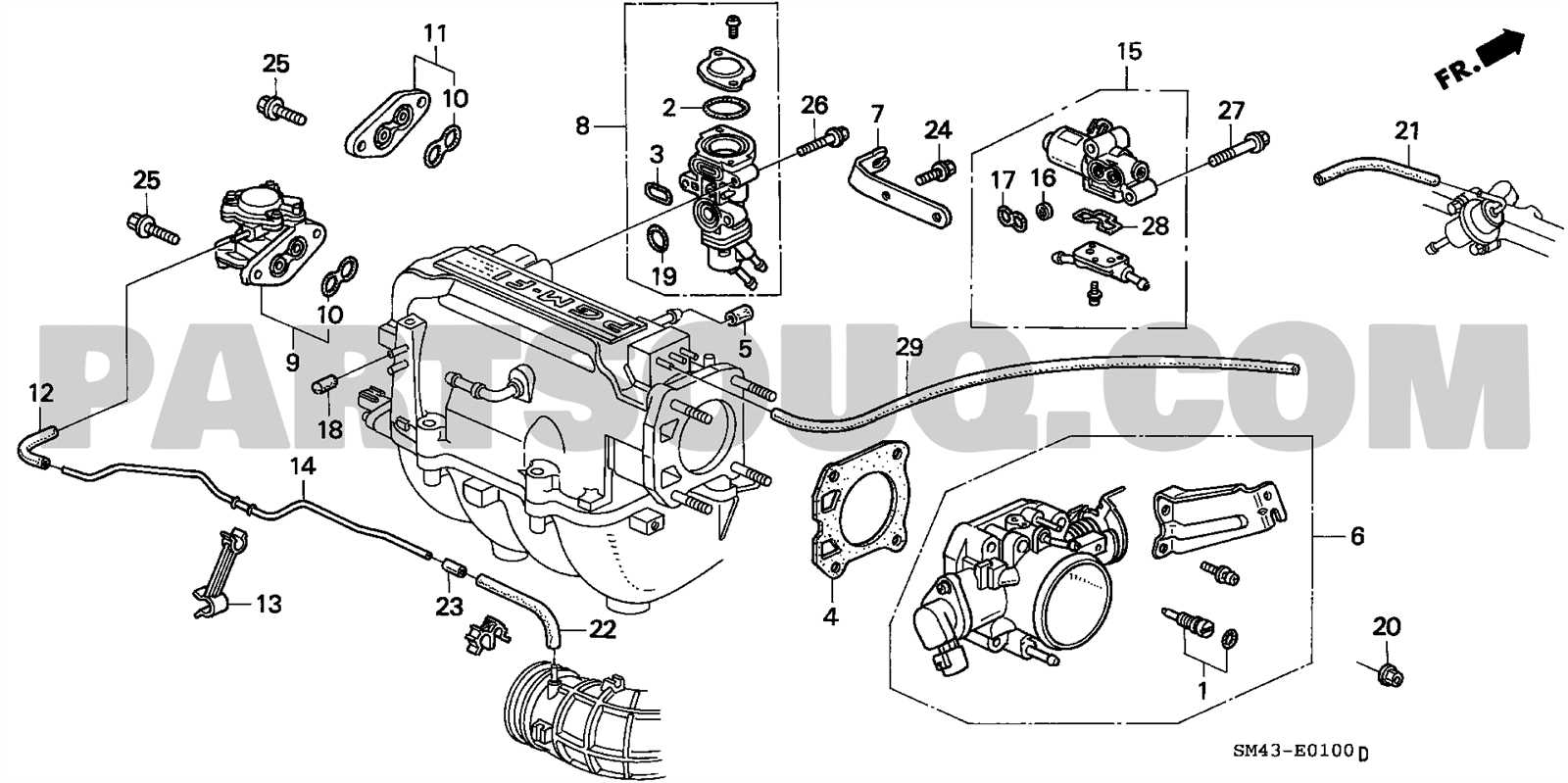
The intake manifold is responsible for drawing in ambient air, mixing it with fuel (in port-injected systems), and distributing this precise mixture evenly to each cylinder. Modern Honda Accord engines often incorporate variable intake runner technologies, which dynamically adjust the length of the runners to optimize airflow for different engine speeds. Shorter runners improve high-RPM power, while longer runners enhance low-end torque. This sophisticated design ensures a consistent, quality air supply for optimal combustion across the engine’s operating range, distinguishing it from simpler naturally aspirated designs.
Fuel Delivery System: Precision Fueling
The fuel delivery system is a complex network designed to supply fuel to the engine with pinpoint accuracy. It begins with the fuel pump, typically located in the fuel tank, which draws fuel and sends it under pressure (e.g., 45-60 PSI for port injection, much higher for direct injection) through the fuel line to the fuel rail. Mounted on the fuel rail are the fuel injectors, which precisely atomize and spray fuel into the intake runners (port injection) or directly into the combustion chamber (direct injection). A fuel pressure regulator maintains consistent pressure within the system. The transition to direct injection in newer Accord engines significantly enhances fuel efficiency and power, demonstrating Honda’s commitment to cutting-edge technology.
Exhaust Manifold and Catalytic Converter: Emission Control and Gas Flow
After combustion, exhaust gases are collected by the exhaust manifold. Its design is crucial for scavenging gases efficiently and minimizing backpressure. From the manifold, gases flow into the catalytic converter, an essential component for emissions control. This device contains precious metals (platinum, palladium, rhodium) that chemically convert harmful pollutants (carbon monoxide, hydrocarbons, nitrogen oxides) into less harmful substances (carbon dioxide, water vapor, nitrogen). A typical lifespan for a catalytic converter is 100,000-150,000 miles. Oxygen sensors, placed before and after the catalytic converter, monitor exhaust gas composition, providing critical feedback to the engine’s Electronic Control Unit (ECU) to optimize air-fuel ratios and ensure the converter functions effectively. Honda Accord vehicles consistently meet, and often exceed, strict emissions standards, a testament to their professional-grade exhaust and fuel systems.
Throttle Body: Regulating Airflow
The throttle body precisely controls the amount of air entering the engine, which directly dictates engine power output. Older Accord models utilized cable-driven throttle bodies, where a physical cable linked the accelerator pedal to the throttle plate. Modern Accord vehicles, however, employ electronic ‘drive-by-wire’ systems. In these setups, the accelerator pedal sends an electronic signal to the ECU, which then commands a motor to open or close the throttle plate. This electronic control allows for far greater precision in airflow management, better integration with other engine systems (like cruise control and traction control), and improved responsiveness.
Enhanced Fuel Economy
Direct injection and variable intake systems optimize fuel use across all RPMs.
Reduced Emissions
Sophisticated catalytic converters and oxygen sensors keep Honda Accords environmentally compliant.
Optimized Power Delivery
Variable manifold runners and electronic throttles provide seamless power and responsiveness.
Essential Operations: Lubrication and Cooling System Diagrams for Accord Engines
Beyond combustion, an engine’s longevity and reliability are directly tied to its ability to manage heat and friction. The lubrication and cooling systems are the unsung heroes, ensuring the engine operates within its optimal temperature range and preventing premature wear.
Lubrication System: The Lifeblood of the Engine
The lubrication system is undeniably critical. At its heart is the oil pump, typically a gear or rotor type, which draws oil from the oil pan and sends it under pressure through the oil filter. The filter removes contaminants before the oil is distributed through a network of oil galleries (passages) throughout the engine block and cylinder head. Engine oil performs multiple vital functions: it reduces friction between moving parts, carries away heat, cleans internal components by suspending contaminants, and provides a hydraulic medium for systems like VTEC. Neglecting recommended oil change intervals (e.g., 5,000-10,000 miles or once a year using synthetic oil for modern Accords) is the quickest way to degrade engine reliability and shorten its lifespan, leading to excessive wear on critical components like bearings and camshafts. An oil pressure sensor constantly monitors the system, alerting the driver to dangerously low pressure.
Cooling System: Battling the Heat
The engine’s intense heat generation during combustion necessitates a highly efficient cooling system. This system circulates coolant through the engine’s coolant passages, where it absorbs heat. The heated coolant then flows to the radiator, a heat exchanger that dissipates heat to the ambient air. The water pump circulates the coolant, while the thermostat regulates engine temperature by controlling coolant flow to the radiator. Its role is to ensure the engine quickly reaches its optimal operating temperature (typically 195-215°F) and then maintains it. A stuck-open thermostat will cause the engine to run cold, reducing efficiency, while a stuck-closed thermostat will lead to rapid overheating. Coolant hoses connect these components, and maintaining their integrity is essential to prevent leaks. Honda’s specific Type 2 blue coolant is designed for extended life, often up to 120,000 miles, offering reliable protection against corrosion and freezing.
Oil Coolers: Enhancing Thermal Stability
Certain higher performance or V6 Accord models, particularly those subjected to more demanding driving conditions or equipped with automatic transmissions, may incorporate an oil cooler. This component helps maintain optimal oil temperature, preventing it from breaking down under extreme heat. Typically, the oil cooler uses engine coolant or ambient air to draw heat away from the engine oil, thus enhancing the oil’s longevity and its ability to protect engine components.
Importance of Proper Fluid Maintenance
As an expert with years of hands-on experience, I cannot overstress the fundamental importance of diligent fluid maintenance. Regularly checking and replacing engine oil and coolant according to the manufacturer’s schedule is the single most effective way to ensure your Honda Accord’s engine remains reliable and achieves its full potential lifespan. These fluids are consumable items, and their quality degrades over time and use. Compromised fluids lead to reduced lubrication, inefficient cooling, and ultimately, accelerated wear and costly failures. This proactive approach is a cornerstone of professional vehicle care.
📋
Essential Fluid Check Procedure
On a level surface, with the engine warmed and off for a few minutes, pull out the dipstick, wipe it clean, reinsert fully, and withdraw again. The oil level should be between the min/max marks. Observe the oil’s color and consistency for signs of contamination or excessive breakdown. Dark color is normal, but milky or gritty textures indicate issues.
With the engine cool, check the coolant level in the translucent overflow reservoir. It should be between the “MIN” and “MAX” lines. Note the coolant color; Honda’s Type 2 is blue. If it appears rusty, discolored, or low, top up with the correct Honda-specified coolant. Never open the radiator cap when the engine is hot.
A thorough understanding of the Honda Accord engine’s components, from the block to the timing system, is critical for effective maintenance. Accurate identification of parts within the fuel, cooling, and lubrication systems directly impacts engine performance and longevity. Utilizing detailed engine diagrams empowers technicians and owners to diagnose issues and perform repairs with greater confidence and precision. Consult your Honda Accord’s specific service manual and leverage detailed parts diagrams for all maintenance and repair procedures, ensuring professional-grade accuracy and long-term reliability.
Frequently Asked Questions
What are the primary differences between the K-series and J-series Honda Accord engines in terms of layout?
The K-series (e.g., K24) is an inline 4-cylinder engine, characterized by its compact, transverse-mounted design. The J-series (e.g., J35) is a V6 engine, also typically transverse-mounted, featuring two cylinder banks at an angle. Key differences include cylinder arrangement, overall size, and often, valvetrain complexity (K-series commonly DOHC, J-series SOHC).
How do I identify specific engine parts using a diagram for my Honda Accord?
Begin by locating the main engine block and cylinder head. Then, identify larger components like the intake manifold, exhaust manifold, and timing cover. Diagrams typically use numerical callouts corresponding to a legend or parts list, which will provide exact names and part numbers. Match your engine’s year and model to the correct diagram for accuracy.
What role does VTEC play in a Honda Accord engine diagram?
VTEC (Variable Valve Timing and Lift Electronic Control) components, such as the VTEC solenoid and rocker arms, are typically shown on the cylinder head diagram. The diagram helps visualize how these components interact to alter valve timing and lift profiles, optimizing engine performance across different RPMs by switching between cam lobes.
Are there common wear points visible on a Honda Accord engine parts diagram?
While a diagram shows structure, not wear, it helps locate components prone to wear. For instance, the timing belt/chain area indicates a critical maintenance item. Gasket locations (head gasket, valve cover gasket) are points of potential leaks. Components like spark plugs, oxygen sensors, and accessory belts are also wear-prone parts whose locations are clearly identified.
Where can I find a reliable and trusted Honda Accord engine parts diagram?
Reliable diagrams can be found in the official Honda service manuals, which offer the most accurate and detailed schematics. Reputable online automotive parts retailers often provide exploded views of assemblies. Additionally, professional automotive information systems (e.g., Alldata, Mitchell1) offer comprehensive, quality diagrams for various Accord model years.