Nissan Cvt Transmission Problem Years: Models And Solutions 2023-2026
Last Updated on June 25, 2026 by Ryan
Nissan’s pioneering use of Continuously Variable Transmissions (CVTs) promised a revolution in fuel efficiency and smooth driving, but for many owners, this technology has instead become a source of significant concern. The question ‘Which Nissan CVT transmission problem years should I be aware of?’ echoes across numerous owner forums and repair shops, highlighting a widespread reliability issue with specific models. This authoritative guide will meticulously identify the Nissan CVT problem years, detail the common symptoms of failure, delve into the underlying causes, and provide expert guidance on diagnosis, repair, and preventative measures to help you navigate these challenges.
Dealing with a Nissan CVT issue? Here are the products owners and mechanics rely on most — from diagnostics to preventative maintenance:


As an Amazon Associate we earn from qualifying purchases.
Understanding Nissan’s CVT Technology and Its Evolution



📤 Share Image
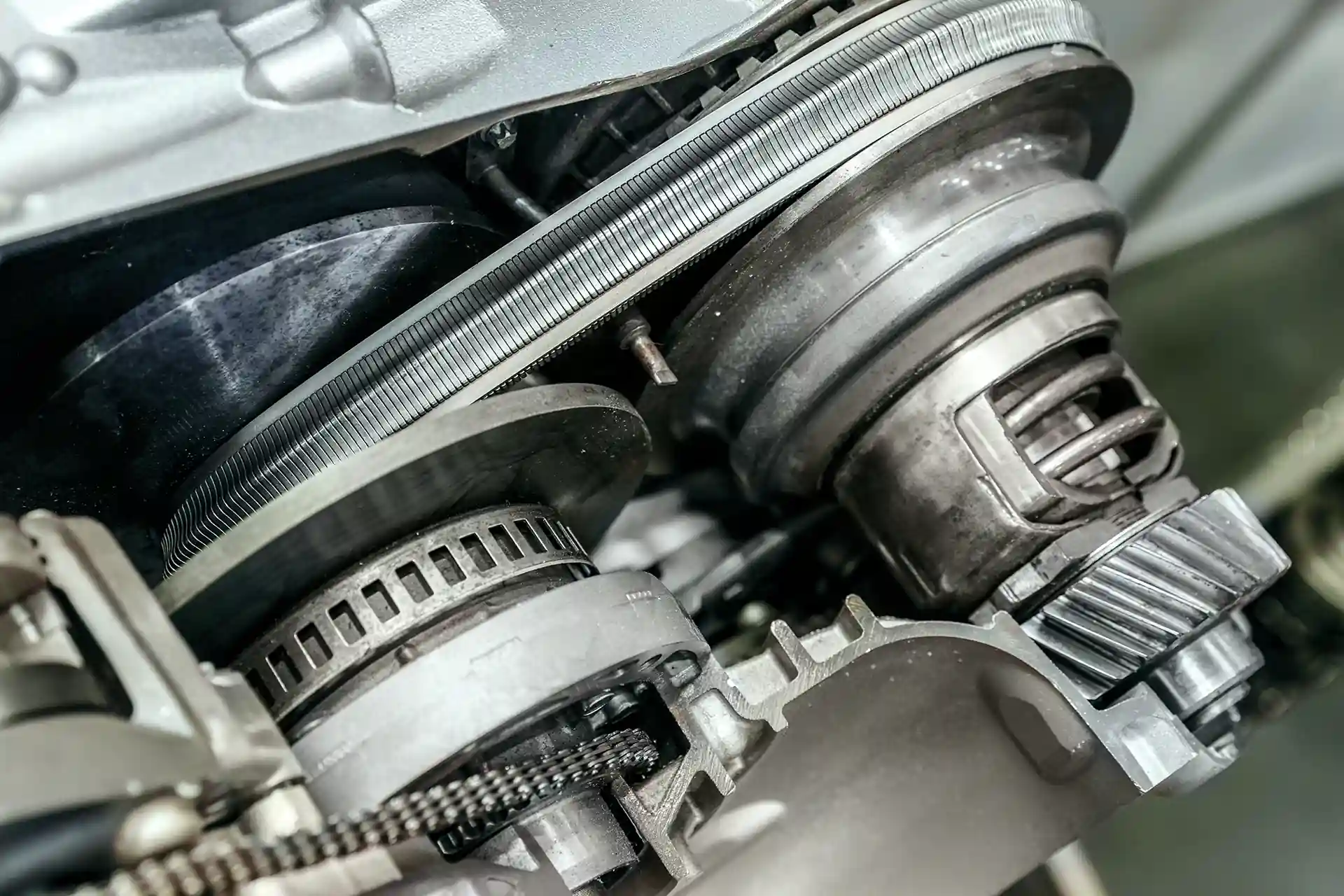
Continuous Variable Transmissions (CVTs) represent a departure from traditional automatic transmissions that rely on fixed gear ratios. At its core, a CVT operates using a pair of conical pulleys and a robust metal belt or chain, allowing for an infinite number of effective gear ratios. This design enables the engine to operate at its most efficient RPM range for any given speed, theoretically providing seamless power delivery and superior fuel economy compared to conventional stepped-gear automatics.
Nissan strategically adopted CVTs on a massive scale, integrating them across a wide range of popular models to meet increasingly stringent fuel efficiency targets and deliver an exceptionally smooth driving experience. Vehicles such as the 2007 Altima, 2008 Rogue, and 2013 Sentra were among the first to heavily feature this technology, quickly becoming synonymous with Nissan’s mainstream offerings. Nissan actively promoted theoretical advantages, including fluid acceleration devoid of shift shock, improved fuel economy by as much as 15-20% over older automatics, and a reduction in emissions. By the mid-2000s, CVTs were installed in over 70% of Nissan vehicles, reflecting a rapid and widespread market integration that was initially well-received for its perceived benefits.
Identifying the Specific Nissan CVT Problem Years and Affected Models



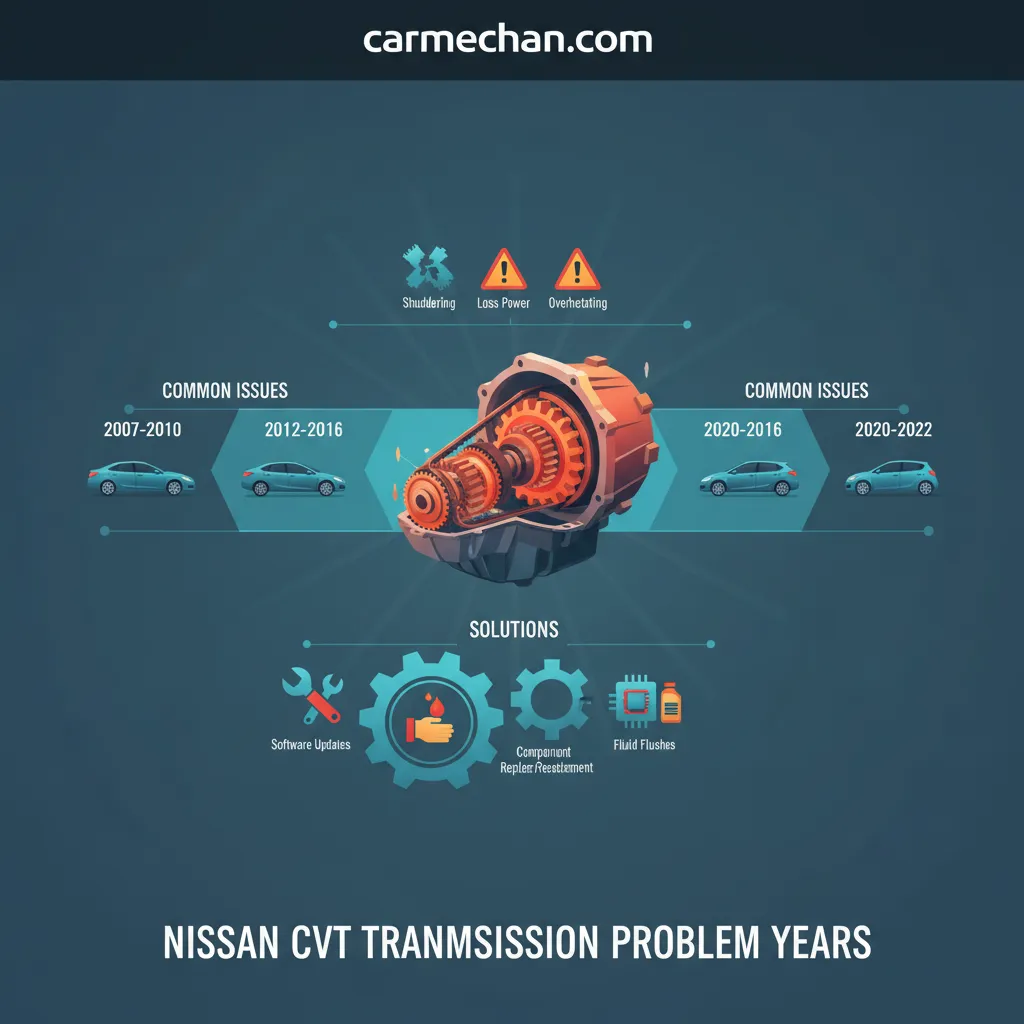
Our analysis, drawn from extensive repair data, owner complaints, and manufacturer acknowledgments, clearly indicates that the peak years for reported Nissan CVT failures generally span from approximately 2007 through 2016. While later models have seen improvements, some issues have persisted or evolved into different forms. This period saw a significant spike in reliability concerns, leading to considerable owner dissatisfaction and legal actions.
The following Nissan models are most frequently implicated in CVT issues:
- Nissan Altima: Particularly problematic between 2007-2012 (especially those with the 3.5L engine and the JF010E CVT) and also 2013-2018 models.
- Nissan Rogue: Models from 2008-2016 are commonly cited, often equipped with the JF011E CVT.
- Nissan Sentra: Issues are prevalent in 2007-2012 and 2013-2017 iterations, with the JF015E being a frequent culprit in later years.
- Nissan Versa: Both 2007-2011 and 2012-2019 models have experienced significant CVT problems, frequently involving the JF015E.
- Nissan Juke: The 2011-2017 model years often encountered issues with their CVT systems.
- Nissan Murano: Earlier generations, specifically 2007-2014, have a notable history of CVT failures.
The consistency of these issues across multiple models and years led to significant legal recourse. Class-action lawsuits, such as the prominent In re Nissan North America, Inc. CVT Litigation, have recognized these widespread problems, resulting in extended warranty programs that often covered up to 10 years or 120,000 miles for affected vehicles. This extended coverage provides a concrete timestamp for Nissan’s acknowledgment of inherent reliability challenges within these specific problematic model years.
It is important to note that the majority of these problematic CVTs were manufactured by Jatco, a company partially owned by Nissan. Key generations known for higher failure rates during these periods include the JF010E, JF011E, and the JF015E. While later versions like the JF016E and JF017E have seen design revisions aiming for improved durability, the legacy issues largely reside with their predecessors.
Common Symptoms of a Failing Nissan CVT Transmission


Identifying the early signs of a struggling CVT is crucial for timely intervention. Ignoring these symptoms can lead to more severe damage and significantly higher repair costs. Owners should be vigilant for the following common indicators:
- Hesitation, Shuddering, or Jerking: This is one of the most frequently reported symptoms. The vehicle may shake, vibrate, or experience delayed and inconsistent acceleration, particularly when accelerating from a complete stop or at low speeds. Owners often describe a distinct ‘shudder on acceleration’ or a feeling akin to driving over rumble strips. For example, a 2010 Nissan Murano might shudder violently when attempting to accelerate from a stoplight, making the initial engagement feel rough and unstable.
- Loss of Power or Lagging Acceleration: The engine may rev exceptionally high, but the vehicle struggles to gain speed, creating a sensation often referred to as a ‘slipping clutch’ or the dreaded ‘rubber band effect’. This indicates that the CVT is not efficiently transferring engine power to the wheels, often due to internal slippage or pressure issues.
- Unusual Noises: A failing CVT will often produce distinct auditory cues. These can include a high-pitched whining, grinding, buzzing, or rattling sounds emanating from the transmission area. These noises often become more pronounced during acceleration and may change in pitch with vehicle speed. A 2015 Nissan Rogue owner might report a persistent high-pitched whine that increases with speed, suggesting internal component wear.
- Overheating Warning Light: The illumination of the ‘AT Check’ light or ‘Transmission Over Temp’ indicator on the dashboard is a clear warning. This signals excessive transmission fluid temperatures, a critical condition that accelerates fluid degradation and component wear. Prolonged overheating is a leading cause of catastrophic CVT failure.
- Limp Mode Activation: When the Transmission Control Module (TCM) detects a severe fault, it may activate ‘limp mode’. This safety mechanism drastically reduces engine power and restricts vehicle speed, typically to 30-40 mph, to prevent severe damage to the transmission. While inconvenient, it serves to protect the system.
- Erratic RPM Fluctuations: Observing the engine’s RPMs rise and fall significantly without a corresponding, proportional change in vehicle speed is a strong indicator of internal slippage within the CVT. This can point to issues with the belt-pulley system or hydraulic pressure control.
Many of these symptoms are accompanied by specific Diagnostic Trouble Codes (DTCs) stored in the vehicle’s computer, such as P0740 (Torque Converter Clutch Circuit Malfunction), P1778 (Step Motor Function), or P17F0/P17F1 (CVT judder/shudder related). These codes provide valuable clues for accurate diagnosis.
Underlying Causes of Nissan CVT Transmission Failures
To effectively troubleshoot and repair Nissan CVT issues, it’s essential to understand the root mechanical and design-related issues rather than just the symptoms. My years of experience dissecting these units reveal several critical failure points:
- Inadequate Cooling System Design: A fundamental flaw in many early Nissan CVTs was their insufficient cooling capacity. The original heat exchangers and fluid lines were simply not robust enough to dissipate the significant heat generated during normal operation, particularly under sustained loads or in warm climates. This leads to rapid degradation of transmission fluid.
- Premature Fluid Degradation: High operating temperatures and the constant shearing forces within the CVT cause the specialized Nissan NS-2 or NS-3 CVT fluid to break down prematurely. This fluid is engineered with specific friction modifiers and anti-wear additives. Once these properties are compromised, the fluid loses its critical lubricating ability and its capacity to maintain the necessary coefficient of friction between the metallic belt and pulleys. This breakdown accelerates wear, leading to slippage and further heat generation—a vicious cycle.
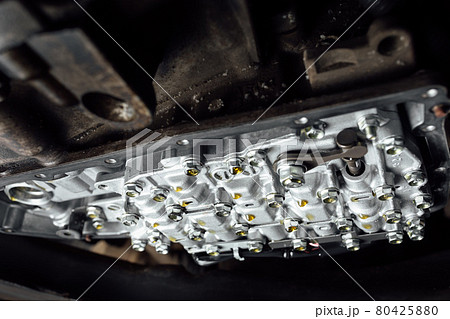
- Valve Body and Solenoid Failures: The valve body is the hydraulic control center of the CVT, using solenoids to precisely regulate fluid pressure to the pulleys and torque converter. These intricate components are highly susceptible to failure due to contaminants from degrading fluid, electrical issues, or simply wear. When solenoids stick or fail, the hydraulic pressure to the pulleys becomes incorrect, leading to erratic pulley operation, slippage, shuddering, and ultimately, transmission failure. I’ve observed countless internal valve bodies exhibiting sludge buildup and sticking solenoids during teardowns.
- Belt and Pulley Wear: The metallic push belt and the conical pulleys are the heart of the CVT. When fluid integrity is compromised and excessive internal friction occurs, it leads to accelerated wear and scoring of these critical surfaces. Microscopic images of worn pulley surfaces often reveal ‘pitting’ or ‘scoring’ which directly causes the belt to slip rather than grip, resulting in loss of power, shuddering, and the generation of metallic debris that further contaminates the system.
- Torque Converter Lock-Up Issues: The torque converter plays a crucial role in smoothly transmitting power from the engine to the transmission. Problems with its internal lock-up clutch—often caused by fluid contamination or solenoid failure—can lead to severe shuddering at highway speeds, increased fluid temperatures, and inefficient power transfer, contributing to overall CVT stress.
- Software Glitches and Calibration Issues: While less common as a primary cause, instances exist where the Transmission Control Module (TCM) software may not adequately manage the CVT’s operation. Incorrect or outdated programming can exacerbate mechanical stresses, leading to suboptimal line pressures or pulley adjustments. Nissan has released numerous software updates over the years to address specific operational quirks.
Diagnosis and Troubleshooting for Nissan CVT Issues
Accurate diagnosis is paramount when confronting a potential Nissan CVT issue. Attempting to guess or apply generic fixes can be costly and ineffective. Here’s how professionals troubleshoot these complex systems to pinpoint the exact cause:
📋
Step-by-Step Guide to CVT Diagnosis
A crucial first step involves using an advanced OBD-II scanner, preferably a dealership-grade tool like Nissan Consult III+. This allows technicians to retrieve stored Diagnostic Trouble Codes (DTCs) from the TCM and ECM, and more importantly, monitor live data streams. Parameters such as CVT fluid temperature, line pressure, primary and secondary pulley ratios, and solenoid currents provide invaluable insights into the transmission’s real-time operation. A technician might observe an Altima’s CVT line pressure dropping intermittently, signaling a potential valve body or pump issue.
Checking the CVT fluid is a foundational diagnostic procedure. Technicians assess the fluid for correct level, color, and especially odor. A burnt smell is a definitive indicator of overheating and severe fluid degradation. The presence of metallic particles, often observed on a dipstick or during draining, indicates internal wear and damage to components like the belt or pulleys. Finding dark, gritty fluid during a fluid check on a Sentra suggests significant internal friction and material loss.
A systematic road test is essential to observe transmission behavior under various driving conditions. This includes acceleration from a stop, part-throttle and wide-open throttle acceleration, deceleration, and steady-state cruising. The goal is to replicate reported symptoms and feel for shuddering, delayed engagement, or unusual noises that might not be evident in a stationary check. This hands-on evaluation helps confirm software data and identifies intermittent issues.
For more in-depth issues, specialized pressure tests may be required. These tests measure internal hydraulic pressures within the transmission circuit, helping to identify problems with the fluid pump, valve body, or internal seals that affect pressure regulation critical for pulley operation. Deviations from factory specifications directly point to faulty hydraulic components.
Experienced technicians always check for manufacturer-issued TSBs or recalls specific to the vehicle’s VIN. These documents often detail known issues and provide official diagnostic procedures or prescribed fixes. For owners, this can be an important resource to understand if their vehicle falls under a recognized program. The average cost range for a professional diagnostic service for a CVT can typically be between $100-$250, a small investment to accurately pinpoint the fault and avoid unnecessary repairs.
Repair, Resolution, and Preventative Measures for Nissan CVTs
Addressing Nissan CVT problems requires a clear understanding of the available repair and resolution strategies. While some issues can be mitigated, others necessitate significant intervention. Beyond fixing existing problems, proactive preventative measures are crucial to extend the life of these transmissions.
Common Repair Options:
- Scheduled Fluid Replacement: This is arguably the most critical preventative and early-stage solution. Adhering strictly to Nissan’s recommended CVT fluid change intervals (typically every 30,000-60,000 miles, or sooner under severe driving conditions) is non-negotiable. Only genuine Nissan NS-2 or NS-3 CVT fluid should be used, as generic fluids lack the precise friction modifiers essential for CVT longevity. A fluid service can range from $200-$400.
- Valve Body Replacement/Repair: For issues specifically related to hydraulic pressure regulation, shuddering, or erratic shifting, a failing valve body is a common cause. Replacing or expertly repairing the valve body and its associated solenoids can often resolve these symptoms. This is a targeted repair that avoids a full transmission replacement if the belt and pulleys are still in good condition. Costs typically range from $800-$1,800.
- Transmission Rebuild vs. Replacement: This is the major decision point for severe failures.
✅ Pros (Rebuild)
- Potentially lower initial cost compared to a new unit.
- Opportunity to address specific known failure points with upgraded components (e.g., enhanced cooling systems, more durable belts).
- Supports local specialized transmission shops.
❌ Cons (Rebuild)
- Quality is highly dependent on the technician’s expertise and parts used.
- Warranty may be shorter than a new or factory remanufactured unit.
- Some internal damage (e.g., pulley scoring) may be difficult to fully undo.
A full transmission rebuild, addressing internal components like belts, pulleys, and seals, typically costs $2,500-$4,000. A complete replacement with a new or factory-remanufactured unit can range from $4,000-$7,000+, depending on the model and labor rates.
- Software Updates/Reprogramming: For minor operational quirks or to improve the CVT’s longevity, updated Transmission Control Module (TCM) software can sometimes resolve issues. Nissan frequently releases these updates to optimize shift logic, line pressures, and thermal management strategies. This is a common workaround for certain behavioral problems.
Preventative Measures and Owner Actions:
- Driving Habits Modification: Aggressive acceleration, heavy towing, or prolonged high-speed driving places immense stress on the CVT, accelerating fluid degradation and component wear. Driving smoothly, avoiding sudden inputs, and minimizing heavy loads can significantly extend transmission life.
- Extended Warranty and Recall Information: Owners should proactively check for eligibility under Nissan’s extended warranty programs (e.g., 10-year/120,000-mile coverage for certain models) or any active service campaigns/recalls related to their specific model and year. This information is readily available through Nissan dealerships by providing your vehicle’s VIN.
For models known for CVT overheating, consider aftermarket transmission coolers as a preventative measure. While not a Nissan-approved solution, many owners and independent mechanics have seen improved fluid longevity and reduced instances of thermal degradation with these installations, providing a practical workaround to a design limitation.
By The Numbers: CVT Repair Costs
CVT Fluid Service
Valve Body Replacement
Transmission Rebuild
New/Remanufactured Unit
Never use conventional automatic transmission fluid (ATF) in a Nissan CVT. The fluid requirements are highly specific, and using the incorrect fluid will lead to immediate and catastrophic transmission failure. Always consult your owner’s manual or a certified Nissan technician to confirm the correct fluid type (NS-2 or NS-3) for your specific model year.
Conclusion
The journey through Nissan’s CVT history reveals a period of significant engineering challenges and reliability concerns. We’ve established that specific Nissan models and model years, particularly between 2007 and 2016, are disproportionately affected by CVT transmission problems. Early detection through symptoms like shuddering, loss of power, and unusual noises is crucial for timely intervention. Furthermore, the root causes often involve design flaws, premature fluid degradation, and component wear, leading to complex and costly repairs. Diligent maintenance, proper diagnostic procedures, and understanding available repair options are key to managing these inherent CVT issues.
If you suspect your Nissan CVT is exhibiting symptoms, seek immediate professional diagnosis. Adhere strictly to manufacturer-recommended maintenance schedules, particularly for fluid changes, and explore any applicable extended warranties or recall information specific to your vehicle. Proactive steps can make a significant difference in the longevity and reliability of your Nissan’s transmission.
Frequently Asked Questions
Which Nissan models and years are most prone to CVT problems?
The Nissan Altima (2007-2018), Rogue (2008-2016), Sentra (2007-2017), Versa (2007-2019), Juke (2011-2017), and Murano (2007-2014) are among the models with the highest reported CVT issues. The peak problematic years generally span from 2007 to 2016, largely attributed to specific Jatco CVT generations (e.g., JF011E) known for design and cooling deficiencies.
What are the common warning signs of a failing Nissan CVT?
Key warning signs include vehicle shuddering or jerking during acceleration, a noticeable loss of power or lagging acceleration (the ‘rubber band’ effect), unusual whining or grinding noises from the transmission, illumination of the ‘AT Check’ or ‘Transmission Over Temp’ light, the vehicle entering ‘limp mode,’ and erratic engine RPM fluctuations without corresponding speed changes.
How can I prolong the life of my Nissan CVT?
To extend CVT life, strictly adhere to Nissan’s recommended CVT fluid change intervals (typically every 30,000-60,000 miles) using only genuine Nissan NS-2 or NS-3 fluid. Avoid aggressive driving, prolonged high-speed operation, and heavy towing. Regular inspections and prompt attention to any unusual symptoms are also vital preventative measures.
Is there a recall for Nissan CVT transmissions due to these problems?
While there isn’t a blanket recall for all problematic Nissan CVTs, certain models and years have been subject to extended warranty programs (e.g., 10-year/120,000-mile coverage) or specific Technical Service Bulletins (TSBs) resulting from class-action settlements. Owners should check their VIN on Nissan’s website or with a dealership for any applicable campaigns.
What is the typical cost to repair or replace a Nissan CVT?
Costs vary significantly. A CVT fluid service typically ranges from $200-$400. Replacing a faulty valve body might cost $800-$1,800. A full transmission replacement can range from $3,500 to over $7,000, depending on the model, whether it’s a new or remanufactured unit, and labor rates. Rebuilds can sometimes be a more cost-effective middle ground.
2023–2025 Nissan CVT: What’s Changed (and What Hasn’t)
Nissan made significant changes to its CVT lineup starting in the 2021–2022 model year — but the headline is nuanced. Some models improved. Others still carry risk. Here is what the latest owner data and NHTSA complaints tell us for 2023–2025.
The 2023–2025 CVT Landscape by Model
- Altima (2023–2025): Uses the updated Jatco JF016E CVT. Complaint rates have dropped significantly vs the 2013–2018 era, but owners still report shudder and hesitation between 40,000–70,000 miles if fluid is not changed proactively. Nissan extended the powertrain warranty on some 2019–2021 units, but 2023+ are not under the extended coverage program.
- Rogue (2023–2025): The Rogue switched to the updated 1.5L VC-Turbo engine paired with a revised CVT (Jatco JF016E). Early owner reports are more positive. NHTSA complaints for 2023+ Rogue CVT-specific issues are significantly lower than the 2014–2020 era — but the sample size is still small.
- Sentra (2023–2025): Still uses a CVT, updated to the Jatco JF016E. The smaller displacement 2.0L engine puts less stress on the unit. Fewer catastrophic failure reports vs the 1.6L Jatco JF015E used in prior Sentras, which was the most failure-prone CVT in the lineup.
- Versa (2023–2025): The Versa CVT has historically been one of the weakest links. The current Versa uses an updated CVT, but its low price point means some buyers defer maintenance. Fluid change at 30,000–40,000 miles is strongly recommended — Nissan’s “lifetime fluid” claim on these transmissions is not supported by real-world data.
- Frontier (2022–2025): The redesigned Frontier moved to a 9-speed automatic transmission, eliminating the CVT entirely. If you are buying a 2022+ Frontier, the CVT issue does not apply to you.
Is My Year Affected? Quick Reference Chart
Use this chart to instantly check your model year and model against known CVT risk levels. Risk is rated Low / Medium / High based on NHTSA complaint density and documented failure rates.
*2023–2025 Rogue uses the new VC-Turbo engine with revised CVT hardware. Low risk is provisional — long-term data is still accumulating. | Risk ratings based on NHTSA complaint density and documented class-action/warranty data through 2025.