How Much Does a Camry Weigh? Model & Trim Differences Explained
Last Updated on September 1, 2026 by Ryan
The curb weight of a Toyota Camry typically ranges from 3,295 lbs (1,495 kg) to 3,500 lbs (1,588 kg) for gasoline models, and slightly more for hybrid variants, which can reach up to 3,570 lbs (1,620 kg). This weight varies significantly based on model year, trim level, and powertrain, including engine size, FWD/AWD options, and hybrid systems.
🎯 Key Takeaways


- Camry weight varies by model year, trim, and powertrain.
- Hybrid models are generally heavier than gasoline versions.
- AWD options add weight compared to FWD drivetrains.
- Always check specific model specs for accurate curb weight.
- Vehicle weight impacts fuel economy and handling dynamics.
A Toyota Camry’s curb weight typically ranges from approximately 3,300 to 3,600 pounds (1,497 to 1,633 kg) for gasoline models and around 3,400 to 3,500 pounds (1,542 to 1,588 kg) for hybrid variants. This range varies significantly based on the specific model year, trim level, engine, and drivetrain options.

Knowing your Camry’s exact weight is crucial for practical reasons beyond mere curiosity. It impacts everything from calculating your vehicle’s payload capacity and understanding its fuel efficiency to selecting appropriate tires and assessing its overall handling characteristics. Accurate weight data helps you make informed decisions about your car’s usage and maintenance.
Understanding Toyota Camry Curb Weights by Generation
The weight of a Toyota Camry isn’t static; it evolves with each new generation, often influenced by changes in platform, materials, and the addition of new features and safety technology. Here, we’ll focus on the most popular recent generations and their typical weight ranges.

The Current (XV70) Generation (2018-Present)
The seventh-generation Camry, introduced in 2018, rides on the Toyota New Global Architecture (TNGA-K) platform, which prioritizes a lower center of gravity and improved rigidity. Despite often adding more technology, Toyota has generally managed to keep weight competitive.
- 2.5L 4-Cylinder Gasoline Models (FWD):
- Camry LE (FWD): Approximately 3,310 lbs (1,501 kg)
- Camry SE (FWD): Approximately 3,340 lbs (1,515 kg)
- Camry XLE (FWD): Approximately 3,395 lbs (1,540 kg)
- Camry XSE (FWD): Approximately 3,420 lbs (1,551 kg)
You’ll notice a slight increase in weight as you move up the trim levels due to added features.
- 3.5L V6 Gasoline Models (FWD):
- Camry XLE V6 (FWD): Approximately 3,570 lbs (1,619 kg)
- Camry XSE V6 (FWD): Approximately 3,595 lbs (1,631 kg)
- Camry TRD (FWD): Approximately 3,595 lbs (1,631 kg)
The V6 engine and its associated components add substantial weight compared to the 4-cylinder variants.
- Hybrid Models:
- Camry LE Hybrid: Approximately 3,450 lbs (1,565 kg)
- Camry SE Hybrid: Approximately 3,480 lbs (1,578 kg)
- Camry XLE Hybrid: Approximately 3,505 lbs (1,590 kg)
- Camry XSE Hybrid: Approximately 3,530 lbs (1,601 kg)
Despite the added battery and electric motor, hybrid models are remarkably close in weight to their 4-cylinder gasoline counterparts, showcasing efficient engineering.
- All-Wheel Drive (AWD) Options:
- Adding AWD to 4-cylinder gasoline models (available since 2020) typically increases the curb weight by approximately 160 to 200 lbs (73 to 91 kg) compared to the equivalent FWD variant. For example, a Camry LE AWD would be around 3,470 lbs (1,574 kg).
The Previous (XV50) Generation (2012-2017)
If you own an earlier model Camry, it’s generally slightly lighter. The XV50 generation, while still a comfortable and reliable sedan, had fewer standard features and less complex systems compared to today’s models.
- 2.5L 4-Cylinder Gasoline Models (FWD): Ranged from approximately 3,190 to 3,290 lbs (1,447 to 1,492 kg).
- 3.5L V6 Gasoline Models (FWD): Typically around 3,400 to 3,440 lbs (1,542 to 1,560 kg).
- Hybrid Models: Generally weighed between 3,430 to 3,460 lbs (1,556 to 1,569 kg).
You can see a general trend of a slight weight increase over generations, mostly attributable to enhanced safety features, improved sound deadening, and more standard technology.
Everything You Need to Know About Camry Weight
Understanding the weight of your Toyota Camry is more than just a trivial fact; it’s crucial for various aspects like fuel efficiency calculations, towing capacity awareness, understanding payload limits, and even assessing performance characteristics. This comprehensive guide will walk you through the precise steps to determine your Camry’s weight accurately, distinguishing between different types of weight measurements and identifying reliable sources of information. By following these instructions, you’ll gain a thorough understanding of this often-overlooked but vital vehicle specification.
Step 1: Understand Key Weight Terminology
What you need: Basic familiarity with automotive terms, access to a web browser for quick definitions if needed.
Instructions: Before diving into numbers, it’s essential to differentiate between “Curb Weight” and “Gross Vehicle Weight Rating” (GVWR). Curb Weight refers to the total weight of a vehicle with all standard equipment, full fluid levels (fuel, oil, coolant), but without occupants or cargo. It’s the car’s empty, ready-to-drive weight. Gross Vehicle Weight Rating (GVWR) is the maximum permissible total weight of your fully loaded vehicle, including the weight of the vehicle itself (curb weight), all passengers, cargo, and any optional accessories. Understanding this distinction is fundamental, as “how much does a Camry weigh” typically refers to its curb weight.
Pro Tip: Always clarify which type of weight is being discussed. Most manufacturers list curb weight as the primary “empty” weight, while GVWR is critical for safety and load limits.
Step 2: Identify Your Specific Camry Model and Trim
What you need: Your Camry’s Vehicle Identification Number (VIN), registration papers, or a clear understanding of its exact model year, engine type (e.g., 2.5L 4-cylinder, 3.5L V6, Hybrid), and specific trim level (e.g., LE, SE, XLE, XSE).
Instructions: The weight of a Toyota Camry can vary significantly from one model year to another, and even more so between different engine configurations and trim levels within the same year. A 2010 Camry LE with a 4-cylinder engine will have a different curb weight than a 2023 Camry XSE V6 or a Camry Hybrid. Locate your VIN on the driver’s side dashboard (viewable through the windshield) or on the driver’s side door jamb. This unique identifier will confirm all your vehicle’s factory specifications, which are crucial for finding the precise weight.
Pro Tip: Do not guess your trim level or engine type. Even seemingly minor differences like larger wheels or a sunroof can add measurable weight, so precise identification is key for accuracy.
Step 3: Consult Your Owner’s Manual
What you need: Your physical Camry owner’s manual (typically found in the glove compartment) or access to a digital version on Toyota’s website.
Instructions: Your Camry’s owner’s manual is often the most accurate and readily available source for its specific weight specifications. Open the manual and navigate to the “Specifications” or “Technical Data” section, which is usually located towards the back. Here, you should find detailed tables listing the curb weight, gross vehicle weight rating (GVWR), and sometimes even individual axle weight ratings for various configurations of your model year. This information is direct from the manufacturer and pertains to your vehicle as it left the factory.
Pro Tip: The owner’s manual is a treasure trove of vehicle-specific information. It’s not just for troubleshooting; it’s the primary reference for all your car’s critical data.
Step 4: Leverage Toyota’s Official Website
What you need: An internet-enabled device (computer, smartphone, tablet) and the specific model year and trim details of your Camry.
Instructions: Visit the official Toyota website for your region (e.g., toyota.com). Navigate to the “Vehicles” section and select “Camry.” Then, choose your specific model year. Look for a link or tab labeled “Specs,” “Specifications,” “Features,” or “Dimensions & Weights.” On these pages, you’ll typically find a comprehensive list of technical data, including curb weight and GVWR for each available engine and trim combination. For example, a modern Camry’s curb weight typically ranges from approximately 3,295 lbs (1,495 kg) for a base 4-cylinder LE model to around 3,570 lbs (1,619 kg) for a V6 XSE model.
Pro Tip: Always prioritize official manufacturer websites for the most up-to-date and accurate published specifications. They are the authoritative source for their vehicles’ data.
Step 5: Utilize Reputable Automotive Databases
What you need: Internet access and your Camry’s model year, engine, and trim information.
Instructions: If you don’t have your owner’s manual or prefer an alternative online source, reputable automotive review and data sites can provide this information. Websites like Edmunds.com, Kelley Blue Book (KBB.com), MotorTrend.com, or CarandDriver.com often maintain extensive databases of vehicle specifications. Use their search functions to input your Camry’s year, make, model, and trim. You’ll typically find a “Specifications” or “Specs” tab that includes weight figures. It’s a good practice to cross-reference data obtained from these third-party sites with information from Toyota’s official website or your owner’s manual to ensure accuracy.
Pro Tip: While excellent for comparison and general information, always cross-verify critical data like weight with at least two independent, reputable sources, especially if you’re using the information for specific applications like towing or legal compliance.
Step 6: Understand Factors Affecting “Real-World” Weight
What you need: An awareness of what’s typically in your car (passengers, cargo, accessories).
Instructions: The published curb weight is a baseline for an empty car. However, your Camry’s actual operational weight on the road will almost always be higher. Factors that increase this include: passengers (an average adult adds 150-200 lbs), cargo in the trunk or cabin, aftermarket accessories (like roof racks, heavy floor mats, or custom sound systems), and even a full tank of fuel (gasoline weighs about 6.1 lbs per gallon, so a 14-gallon tank adds roughly 85 lbs). Consider these additions when thinking about your car’s “real” weight for a specific trip or purpose, especially when approaching GVWR limits.
Pro Tip: If you need a truly precise weight for commercial purposes, specific towing calculations, or vehicle modifications, a certified public weigh station (often found at truck stops, landfills, or moving companies) is the only reliable way to get an exact measurement of your loaded vehicle.
Step 7: Why Knowing Your Camry’s Weight Matters
What you need: An understanding of how vehicle weight influences various aspects of driving and ownership.
Instructions: Knowing your Camry’s weight has several practical implications. Firstly, it directly impacts fuel economy; heavier vehicles generally consume more fuel. Secondly, it affects performance, including acceleration, braking distances, and overall handling. Thirdly, and critically, it dictates your vehicle’s payload and towing capacity. Exceeding the GVWR or specific axle weight limits can compromise safety, damage vehicle components, and even violate legal regulations. Weight also plays a role in proper tire pressure settings and understanding how your car will behave under different load conditions.
Pro Tip: Always stay within the manufacturer’s recommended GVWR and payload capacity. Overloading your Camry can lead to premature wear on brakes, suspension, and tires, and significantly increase the risk of an accident.
✅ Final Checklist
- Confirmed your specific Camry’s model year, engine, and trim level for accurate data retrieval.
- Located the Curb Weight and Gross Vehicle Weight Rating (GVWR) from at least two reputable sources (owner’s manual, Toyota’s official website, or a trusted automotive database).
- Understood the critical difference between Curb Weight (empty vehicle) and GVWR (maximum safe operating weight).
- Considered additional factors such as passengers, cargo, and aftermarket accessories that will increase your Camry’s actual operational weight.
- Recognized the important implications of your Camry’s weight for safety, performance, fuel efficiency, and compliance with load limits.
Important Notes:
- Safety Considerations: Never exceed your Camry’s Gross Vehicle Weight Rating (GVWR) or individual axle weight ratings. Doing so can severely compromise vehicle safety, handling, braking performance, and tire integrity, potentially leading to dangerous situations or costly damage.
- When to Seek Professional Help: If you require a certified, precise weight measurement for a specific loaded condition (e.g., for commercial hauling, custom modifications, or very particular towing scenarios where exact figures are legally mandated), seek out a public weigh station or truck scale facility.
- Estimated Time and Cost Range: Finding the published curb weight and GVWR for your Camry typically takes 5-15 minutes using online resources or your owner’s manual, with no associated cost. Getting a certified weight at a public scale may take 15-30 minutes and cost anywhere from $10 to $20, depending on the facility and your location.
Factors Influencing a Camry’s Weight: Trim, Engine, and Drivetrain
Beyond the generational changes, several specific factors determine the exact curb weight of any given Camry. These are critical details to consider when you’re looking up specifications for your particular vehicle.
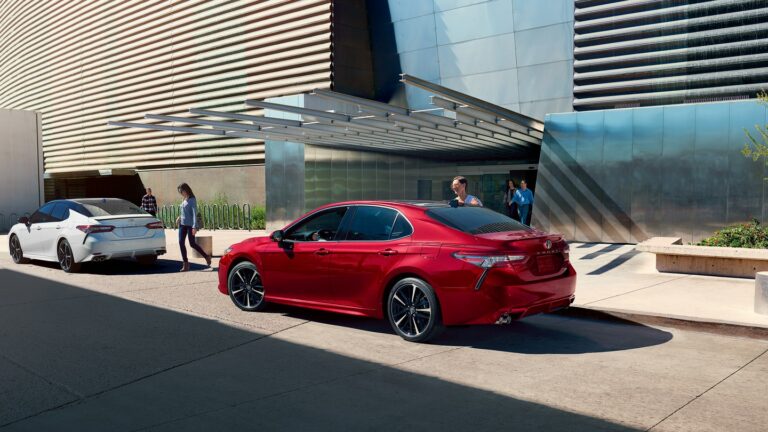
Powertrain Differences: 4-Cylinder, V6, and Hybrid Systems
- 2.5L 4-Cylinder (Dynamic Force) Engine: As the standard engine in most Camry trims, the 4-cylinder serves as the lightest gasoline powertrain option. Its efficient design helps keep the overall curb weight down, making it the baseline for comparison.
- 3.5L V6 Engine: The more powerful V6 engine significantly increases the vehicle’s weight. Not only is the engine block itself heavier, but it also necessitates more robust components like a stronger transmission, larger exhaust system, and enhanced cooling. Expect a V6 Camry to be approximately 150 to 250 lbs (68 to 113 kg) heavier than a comparable 4-cylinder model, which you clearly see in the XLE V6, XSE V6, and TRD trims.
- Hybrid Powertrain: While adding an electric motor and a high-voltage battery pack, Toyota’s hybrid engineering focuses on optimizing weight distribution and minimizing overall mass. The additional components contribute weight, but the entire system is designed for efficiency. In many cases, a hybrid Camry is comparable in weight to a 4-cylinder gasoline model and often lighter than a V6 gasoline model. For instance, an XV70 generation Camry Hybrid typically weighs between 3,450 to 3,530 lbs.
Trim Levels, Added Features, and All-Wheel Drive
The specific trim level you choose plays a substantial role in your Camry’s final curb weight, as each trim often includes different standard equipment.
- Base Trims (LE, SE): These models typically represent the lighter end of the Camry spectrum. They come with fewer luxury amenities, often smaller standard wheel sizes (e.g., 17-inch alloy wheels), and more basic interior materials, all contributing to a lower overall mass.
- Luxury and Sport Trims (XLE, XSE, TRD): Moving up to these higher trims usually means a noticeable increase in weight. These models pack in more features such as:
- Larger alloy wheels (18-inch or 19-inch) and accompanying tire packages.
- Power-adjustable seats with memory functions, which contain multiple motors and heavier framing.
- Premium audio systems with additional speakers, subwoofers, and amplifiers.
- A panoramic glass roof or moonroof, adding structural weight and glass mass.
- Additional sound-deadening materials for a quieter cabin, particularly in XLE models.
- TRD models specifically incorporate performance-oriented components like a sport-tuned suspension, larger brakes, and aerodynamic body kits, which all contribute to their higher curb weight.
- All-Wheel Drive (AWD) Option: Since its introduction in 2020 for the 4-cylinder models, the AWD system adds a significant amount of hardware. This includes a rear differential, a driveshaft, and additional rear axle components. Opting for AWD typically increases the curb weight of your Camry by an additional 160 to 200 lbs (73 to 91 kg) compared to an otherwise identical front-wheel-drive (FWD) model. This is an important consideration for both weight and potential impact on fuel economy.
Weight Comparison: Gasoline vs. Hybrid Camry Models
When exploring Camry weights, one common question is how hybrid models stack up against their gasoline-only counterparts. It’s an important distinction, as the technology under the hood significantly influences the vehicle’s curb weight.
The Hybrid Weight Factor
Generally, hybrid Camrys tend to be slightly heavier than comparable gasoline models. This isn’t surprising when you consider the additional components involved in a hybrid powertrain. You’re not just getting a gasoline engine; you’re also adding:
- Electric Motors: These powerful motors assist the gasoline engine and propel the car on electric power.
- Battery Pack: A significant component, providing energy for the electric motors. While modern batteries are increasingly compact, they still add considerable mass.
- Power Control Unit: This unit manages the flow of energy between the battery, electric motors, and gasoline engine.
Despite these additions, Toyota engineers work hard to minimize the overall weight impact. They utilize lightweight materials elsewhere in the car and optimize the packaging of components. For instance, a 2024 Camry LE Hybrid might weigh around 3,480 lbs, while a gasoline-powered 2024 Camry LE could be approximately 3,310 lbs – a difference of roughly 170 lbs. This difference can vary by trim level and generation.
Understanding the Components
It’s fascinating to see how each part contributes to the final number. The gasoline-powered Camry relies solely on its internal combustion engine, transmission, and fuel tank. The hybrid, however, introduces a parallel system. While it has a smaller fuel tank (as it’s more fuel-efficient), the battery and electric motors often tip the scales just a bit higher. This slight increase in weight for hybrids is a trade-off for their superior fuel economy and lower emissions. For many drivers, the long-term savings at the pump and reduced environmental impact are well worth the minor weight difference.
Why Car Weight Matters: Impact on Performance and Safety
Understanding a car’s weight isn’t just for bragging rights; it has tangible effects on your driving experience, vehicle performance, and even safety. Every pound makes a difference, influencing everything from how quickly you accelerate to how much you spend on gas.
Performance and Fuel Efficiency
Vehicle weight is directly tied to its performance characteristics. Think of it this way:
- Acceleration: A heavier car generally requires more power to accelerate at the same rate as a lighter car. This means lighter Camrys might feel a bit more nimble off the line.
- Braking: Heavier vehicles also need more energy to stop, potentially requiring longer braking distances. Modern braking systems are highly efficient, but fundamental physics still apply.
- Fuel Economy: This is where weight has a significant impact. More weight means the engine has to work harder to move the car, consuming more fuel. This is why lighter cars, often with smaller engines, typically boast better MPG figures. Even a small increase in weight, like carrying unnecessary items in your trunk, can incrementally reduce your fuel efficiency over time.
Toyota’s engineers constantly seek the optimal balance between robust construction and lightweight design to maximize both performance and efficiency across the Camry lineup.
Safety and Handling
While lighter cars can be more agile, a certain amount of weight can contribute to a feeling of solidity and stability, especially at highway speeds. In a collision, mass plays a role in energy absorption and occupant protection. Heavier vehicles historically have been associated with better crash protection, though modern safety features and crumple zones are designed to protect occupants effectively regardless of weight class. A well-designed, slightly heavier car can offer a more planted feel on the road, contributing to driver confidence and reducing susceptibility to crosswinds. Handling, too, is influenced; a car’s center of gravity and weight distribution are critical for responsive steering and cornering.
Conclusion
The question of “how much does a Camry weigh” doesn’t have a single, simple answer. As we’ve seen, curb weight varies significantly across different models, trim levels, and generations. Factors like engine size, added features, and particularly the presence of a hybrid powertrain all contribute to the final figure. Generally, higher trims with more amenities and hybrid models tend to be a bit heavier than their base gasoline counterparts. This weight directly impacts your Camry’s performance, fuel efficiency, and even how it feels on the road.
Understanding these differences empowers you to make an informed choice. Always check the official specifications for the exact model and year you’re interested in. Considering your driving needs, desired fuel economy, and preferred driving dynamics will help you choose the perfect Camry that feels just right for you.
❓ Frequently Asked Questions
What are the specific curb weights for popular recent Camry models (e.g., SE, XLE, XSE)?
For the latest generations, a Camry SE FWD might be around 3,310 lbs (1,501 kg), while an XLE Hybrid could be closer to 3,570 lbs (1,620 kg). The exact weight varies by model year, engine (4-cyl, V6), and whether it’s FWD or AWD, so always check the specific trim’s specifications.
How does the engine type (4-cylinder vs. V6) affect a Camry’s weight?
Generally, a 3.5L V6 engine will make a Camry slightly heavier than one equipped with a 2.5L 4-cylinder engine due to the larger engine block and additional components. This difference is usually in the range of 50-100 pounds, contributing to varied performance characteristics.
What’s the difference between curb weight and gross vehicle weight rating (GVWR)?
Curb weight is the vehicle’s empty weight with all fluids and standard equipment. GVWR, on the other hand, is the maximum permissible total weight of the vehicle when fully loaded with passengers, cargo, and any optional equipment, and it’s always significantly higher than the curb weight.
Does the addition of luxury features or safety packages increase a Camry’s weight?
Yes, optional luxury features like panoramic sunroofs, premium sound systems, and advanced safety sensors or reinforced structures can add incremental weight to a Camry. While individual items might seem small, their cumulative effect can be noticeable on higher trim levels.
How has the Camry’s weight evolved across different generations?
Over its multiple generations, the Camry’s weight has seen fluctuations. Newer generations might introduce lighter materials or more compact designs to save weight, while simultaneously adding heavier safety technology or luxury features, leading to a dynamic evolution in overall curb weight.
Why is it important for drivers to know their Camry’s curb weight?
Knowing your Camry’s curb weight is crucial for several reasons, including understanding its impact on fuel efficiency, handling dynamics, and potential towing capacity if applicable. It also plays a role in safety calculations and can be important when comparing vehicles for performance or suitability for specific tasks.