Most Reliable Ram 1500 Years: Your Guide to Best Used Models
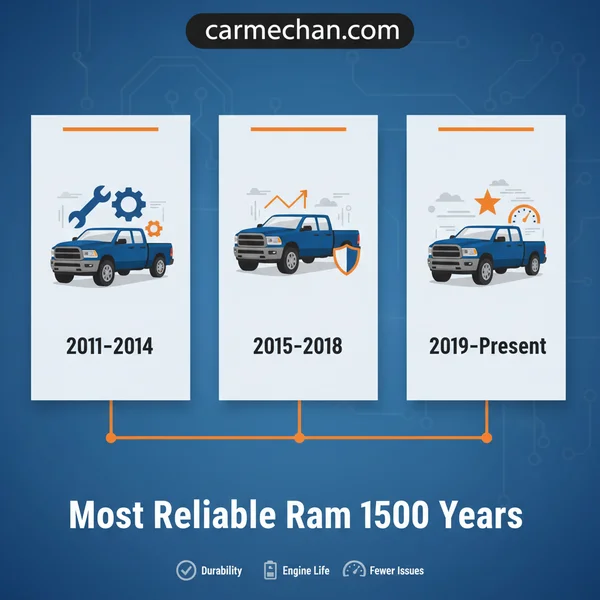
For a used Ram 1500, the 2015-2018 model years are frequently highlighted as a sweet spot for reliability, particularly when equipped with the 5.7L Hemi engine and 8-speed automatic transmission. These years benefited from a mature design before a major redesign introduced new complexities. Thorough inspection and consistent maintenance history are paramount for any used truck.
🎯 Key Takeaways


- Target 2015-2018 Ram 1500 for peak reliability.
- Prioritize the 5.7L Hemi engine with 8-speed auto.
- Carefully inspect air suspension on all model years.
- Avoid early 4th-gen models (2009-2012) due to common issues.
- Review full service records before purchasing any used Ram.
When searching for a used truck, reliability is paramount, especially with a vehicle as crucial as the Ram 1500. You want a workhorse, not a money pit. The good news is that certain model years of the Ram 1500 stand out for their exceptional dependability. Knowing which years to target, and equally important, which to avoid, can save you significant time and expense in the long run.
This guide cuts straight to the chase, identifying the most robust Ram 1500 model years that offer the best blend of performance and longevity. We’ll also highlight years where common issues might lead to unexpected repairs. Your goal is to find a reliable truck; our goal is to show you exactly where to look for your next Ram 1500.
Identifying the Most Reliable Ram 1500 Model Years


If you’re in the market for a Ram 1500 known for its staying power, several model years from the fourth and fifth generations consistently receive high marks for reliability. These trucks benefit from proven powertrains, refined systems, and a lack of widespread, debilitating issues.
The 2014-2017 Ram 1500: The 4th Gen Sweet Spot
The middle years of the fourth-generation Ram 1500 (DS/DJ chassis) represent a pinnacle of reliability. These models combine solid engineering with the introduction of a game-changing transmission.
- Refined Powertrains: The 5.7L HEMI V8 engine in these years is robust and well-understood. While high-mileage examples might eventually see cam/lifter wear, it’s generally a powerful and durable engine. The 3.6L Pentastar V6 also offers excellent reliability for lighter-duty tasks.
- 8-Speed Automatic Transmission: Starting in 2013 for the V6 and 2014 for the V8, the ZF-sourced 8HP (known as the 845RE or 8HP70) automatic transmission was a massive upgrade. It’s renowned for its smooth shifts, efficiency, and exceptional durability, significantly contributing to the overall reliability of these model years.
- Matured Systems: Early issues with the optional air suspension found in earlier 4th-gen models were largely ironed out by this period. Electrical systems also became more stable, reducing common gremlins.
The 2020-2022 Ram 1500: Fifth Gen Refinement
After initial launch year quirks, the fifth-generation (DT chassis) Ram 1500 models from 2020 onwards have demonstrated strong reliability, building on a refined platform.
- Solid Mechanicals: The core components, including the 5.7L HEMI V8 (with or without eTorque) and the 3.6L Pentastar V6, continue to be solid performers. The 8-speed automatic transmission carries over its excellent reputation.
- Post-Recall Stability: The 2019 launch year saw its share of recalls, primarily for software and electrical issues. These were largely addressed, making the subsequent 2020, 2021, and 2022 models much more stable and dependable.
- Advanced Yet Reliable: Despite integrating more advanced technology, such as the eTorque mild-hybrid system, and sophisticated Uconnect infotainment, the later 5th-gen models have proven their reliability once initial bugs were ironed out.
Ram 1500 Model Years to Approach with Caution


While many Ram 1500s are reliable, certain model years are known for specific, recurring problems that can lead to costly repairs. Being aware of these potential pitfalls will help you make a more informed purchase decision.
2002-2005 Ram 1500 (Early 3rd Gen): Transmission and Exhaust Woes
The early years of the third-generation Ram 1500 (DR chassis) are frequently cited for significant mechanical issues, particularly in the powertrain and structure.
- Transmission Failures: The 46RE and 545RFE automatic transmissions in these models are prone to premature failure, often requiring expensive rebuilds or replacements. This is a common and costly issue for owners.
- Exhaust Manifold Bolt Breakage: A notorious problem involves exhaust manifold bolts breaking off in the cylinder head, leading to noisy exhaust leaks and complex, expensive repairs.
- Rust and Body Issues: Rust can be a significant concern, especially on older frames, wheel wells, and rocker panels. Blend door actuators also frequently fail, leading to climate control issues.
2009-2012 Ram 1500 (Early 4th Gen): Air Suspension and Lifter Concerns
The initial years of the fourth-generation Ram 1500, while introducing a redesigned truck, faced several teething problems that were later resolved.
- First-Generation Air Suspension Problems: Early versions of the optional air suspension system were prone to leaks, compressor failures, and control module glitches, leading to expensive repairs and an uneven ride.
- HEMI MDS Lifter and Camshaft Wear: While present in later years, the 5.7L HEMI in these early 4th-gen trucks saw more frequent reports of lifter and camshaft wear, often manifesting as a ticking noise and requiring extensive engine work.
- Less Refined Transmissions: Before the excellent 8-speed automatic arrived, these models used the less efficient and sometimes less reliable 5-speed or 6-speed automatic transmissions.
2019 Ram 1500 (First Year 5th Gen): Early Adopter Issues
The first model year of a new generation often comes with initial glitches, and the 2019 Ram 1500 was no exception, experiencing several recalls and common complaints.
- Software and Electrical Recalls: The 2019 model year was hit with numerous recalls, many pertaining to software bugs, electrical system issues, and problems with the Uconnect infotainment system.
- eTorque System Glitches: As the inaugural year for the eTorque mild-hybrid system, some owners reported issues with the 48-volt battery or the system’s integration, leading to warning lights and operational problems.
- Fit and Finish Quirks: Being a new design, some early production quality control issues were reported, ranging from minor rattles to interior trim discrepancies.
Key Factors Influencing Ram 1500 Reliability
Beyond specific model years, several universal factors profoundly influence the long-term reliability of any used Ram 1500. Understanding these can help you make an even more informed decision.
Engine and Transmission Durability
The heart of your Ram 1500 lies in its powertrain. Both the robust 5.7L HEMI V8 and the efficient 3.6L Pentastar V6 engines have proven their mettle over time when properly maintained. The 8-speed automatic transmission, common across many modern Ram 1500s, is also a solid performer.
- Engine Choice: The HEMI is known for its power and resilience, but requires regular oil changes with the correct viscosity. The Pentastar is reliable and offers better fuel economy.
- Transmission Maintenance: The 8-speed transmission is generally durable, but ensure previous owners adhered to recommended fluid and filter change intervals, especially if the truck was used for heavy towing.
- Common Issues: Listen for any abnormal engine noises (ticking, knocking) and check for smooth, consistent shifts during a test drive.
Maintenance History and Driving Conditions
A truck’s past life is often the best predictor of its future performance. A diligently maintained Ram 1500, even with higher mileage, can be a better buy than a lower-mileage truck with a spotty service record.
- Service Records: Always request detailed service records. Look for evidence of regular oil changes, tire rotations, brake inspections, and scheduled maintenance.
- Driving Usage: Understand how the truck was used. A Ram 1500 primarily driven on highways for commuting will likely show less wear than one consistently used for heavy hauling, off-roading, or commercial work.
- Geographical Factors: Trucks from areas with harsh winters and heavy road salt can suffer from accelerated rust and corrosion underneath. Always inspect the frame, brake lines, and suspension components for excessive rust.
Expert Tips for Buying a Used Ram 1500
Once you’ve narrowed down your search to a few promising Ram 1500 models, these expert tips will guide you through the final stages of vetting your potential new truck.
Thorough Pre-Purchase Inspection
This is arguably the most critical step in buying any used vehicle, especially a truck. Don’t skip it!
- Independent Mechanic: Always arrange for an independent, certified mechanic to perform a comprehensive pre-purchase inspection (PPI). They can identify potential issues that are not visible to the untrained eye or during a brief test drive.
- Diagnostic Scan: A good PPI will include a scan of the vehicle’s computer for any stored error codes, even if the check engine light isn’t currently on.
- Fluid Checks: Ensure all fluids (engine oil, transmission fluid, coolant, brake fluid) are at appropriate levels and appear clean, without signs of burning or contamination.
Checking Service Records and Recalls
Information is power, and a truck’s history report can reveal a lot about its past life and potential future headaches.
- Vehicle History Report: Invest in a CARFAX or AutoCheck report. These reports can reveal accident history, previous ownership, odometer discrepancies, and reported service history.
- Manufacturer Recalls: Check the National Highway Traffic Safety Administration (NHTSA) website using the truck’s VIN to see if there are any outstanding recalls that haven’t been addressed. Unfixed recalls can pose safety risks and indicate a lack of owner diligence.
- Dealership Records: If the truck was serviced at a Ram dealership, sometimes they can provide additional service history not found on third-party reports, especially if the current owner doesn’t have all records.
Conclusion
Finding the most reliable used Ram 1500 doesn’t have to be a gamble. By focusing on model years known for their solid performance, such as the 2013-2018 fourth generation and the improved 2019+ fifth generation, you’re already on the right track. Remember to prioritize trucks with documented maintenance, opt for a pre-purchase inspection, and verify its history.
Armed with this knowledge, you can confidently navigate the used truck market. Take your time, do your homework, and you’ll soon be driving a dependable Ram 1500 that serves you well for years to come. Your next adventure awaits!
❓ Frequently Asked Questions
Which specific Ram 1500 model years stand out for their reliability, and why?
The 2015-2018 Ram 1500 models are often praised for their reliability. These years represent a mature stage of the fourth generation, where initial kinks were largely resolved, offering robust 5.7L Hemi engines and the efficient, durable ZF-sourced 8-speed automatic transmission without the complexities introduced in later redesigns.
What are the most common problems found in less reliable Ram 1500 years?
Less reliable Ram 1500 years, particularly earlier 4th gens (2009-2012), often face issues like the ‘Hemi tick’ (exhaust manifold bolts), transmission problems, electrical glitches, and premature wear in suspension components. The early 5th generation (2019-2020) also saw some initial issues related to new technologies and component changes.
How does the choice of engine (Hemi vs. Pentastar vs. EcoDiesel) impact Ram 1500 reliability?
The 5.7L Hemi V8 is a robust and proven engine, generally offering excellent reliability with proper maintenance. The 3.6L Pentastar V6 is also reliable but less common in the 1500. The EcoDiesel V6, while fuel-efficient, has had known reliability challenges, particularly in earlier iterations (2014-2019), including EGR cooler and fuel pump issues, making it a more cautious choice for some buyers.
What should a buyer look for when inspecting a used Ram 1500 for reliability concerns?
When inspecting a used Ram 1500, check for common signs of wear: listen for the ‘Hemi tick’ (exhaust manifold leak), check air suspension for sagging or compressor noise, inspect for fluid leaks, ensure all electrical components (especially Uconnect) function correctly, and look for any persistent dashboard warning lights. A pre-purchase inspection by a trusted mechanic is highly recommended.
Are there any specific Ram 1500 transmissions that are more or less reliable?
The 8-speed automatic transmission, introduced in 2013 and widely used from 2014 onwards, is generally considered very reliable and efficient. Earlier 6-speed automatics (found in 2012 and older models) were also decent but less refined. The key to transmission longevity is regular fluid and filter changes as per manufacturer recommendations.
How important is vehicle maintenance history for Ram 1500 reliability?
Vehicle maintenance history is absolutely crucial for Ram 1500 reliability, especially for models with the Hemi engine or air suspension. Consistent oil changes, transmission services, and attention to recalls or preventative maintenance indicate an owner who cared for the vehicle, significantly increasing its chances of long-term dependability. Always request detailed service records.