Why Does My Car Jerk When I Brake Why Car Jerks When 2026
Last Updated on September 1, 2026 by Ryan
When your car jerks during braking, it usually signals an issue with your braking system, most commonly warped rotors, worn brake pads, or sticky calipers. Addressing this promptly is crucial for your vehicle’s safety and performance.
When your car jerks during braking, it usually signals an issue with your braking system, most commonly warped rotors, worn brake pads, or sticky calipers. Addressing this promptly is crucial for your vehicle’s safety and performance.
The unsettling feeling of your car jerking when you brake is a common automotive concern many drivers face. This sensation, often described as a pulsation, vibration, or shudder through the brake pedal or steering wheel, signals that something is amiss within your vehicle’s braking system. Ignoring these symptoms can lead to compromised safety and more expensive repairs down the line.
Understanding why your car behaves this way is crucial. It not only helps you diagnose the problem but also guides you on when to seek professional assistance. Addressing jerking brakes promptly ensures your stopping power remains reliable and your drives stay safe for you and others on the road.
We will explore the most common culprits behind this issue, helping you pinpoint the problem.
Key Takeaways

- Braking jerking often points to rotor or pad issues.
- Ignoring symptoms can lead to dangerous driving conditions.
- Many diagnostic steps are simple for any driver.
- Professional repair costs vary by specific component.
- Regular maintenance prevents most common braking problems.
7 Most Common Causes for Car Jerking When Braking

Several factors can cause your car to jerk when you brake, ranging from common wear-and-tear to more complex system failures. Pinpointing the exact cause helps guide your next steps toward a solution.
Warped Rotors Cause Vibrations
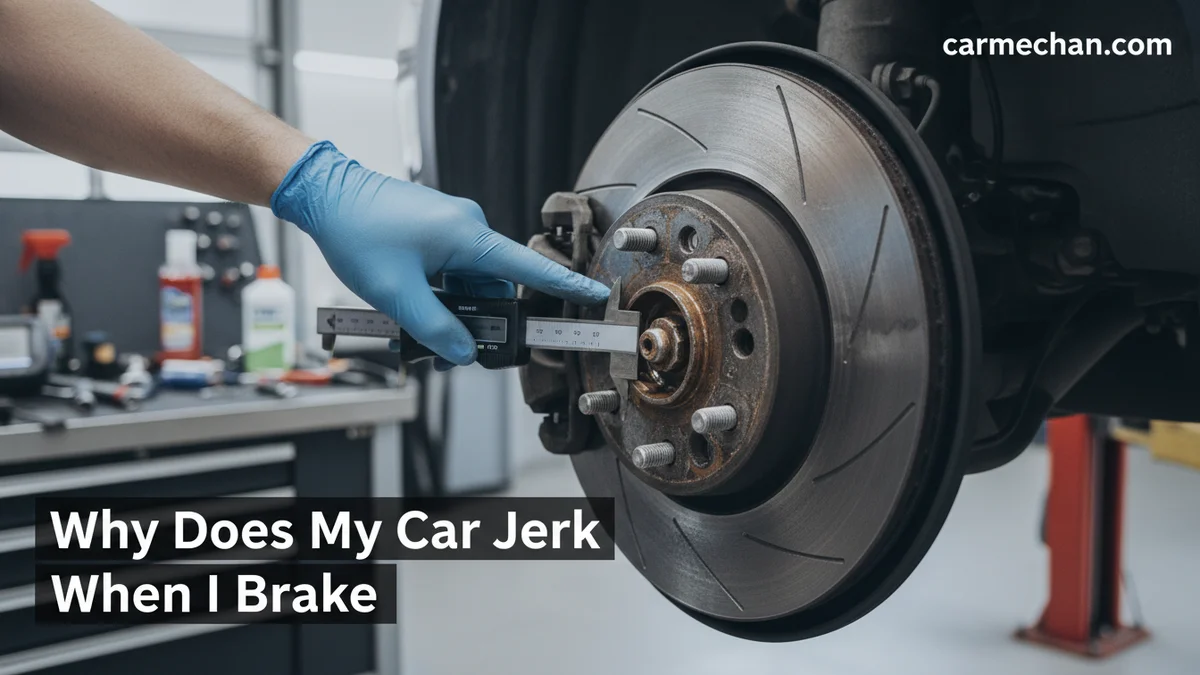
One of the most frequent reasons for a car jerking when you brake is warped brake rotors. Rotors can warp due to excessive heat from heavy braking, causing their surfaces to become uneven. When brake pads press against these irregular surfaces, you feel a pulsing or vibrating sensation through the pedal and steering wheel. This is a classic symptom of “warped brake rotors”.
Worn Brake Pads Make Noise
Brake pads wear down over time, reducing their effectiveness and leading to uneven contact with the rotors. If the pads are excessively worn or have worn unevenly, they can cause a shudder or jerking sensation during braking. You might also hear squealing, grinding, or a “worn brake pads” warning indicator.
Stuck Calipers Create Drag
A brake caliper’s job is to squeeze the pads onto the rotor. If a caliper piston or slide pin seizes or “sticks,” it can fail to release properly, causing constant friction on one side. This uneven braking force leads to a pull or jerk to one side when braking, indicating a “brake caliper problem”.
Suspension Problems Affect Stability
While not directly part of the braking system, issues with your car’s suspension components can amplify or even cause jerking during braking. Worn ball joints, tie rod ends, control arm bushings, or shock absorbers can allow excessive movement. This instability can manifest as a shake or shudder when your car slows down.
ABS Issues Trigger Jerking
The Anti-lock Braking System (ABS) prevents wheels from locking up. If there’s a malfunction within the ABS system, such as a faulty wheel speed sensor or a problem with the ABS module, it can trigger the system to engage improperly. This might lead to unexpected pulsations or jerking, even under normal braking conditions.
Loose Components Shake Car
Sometimes, the problem isn’t with the brake components themselves but with related parts. Loose lug nuts, worn wheel bearings, or even unbalanced tires can cause a “car shakes when braking at high speed” sensation. These issues create vibrations that become more pronounced under the stress of braking.
Uneven Pad Transfer Feels Rough
“Uneven pad transfer” occurs when brake pad material doesn’t deposit uniformly onto the rotor surface. This creates high and low spots, mimicking the effect of warped rotors. This can happen from improper bedding-in procedures or frequent light braking, leading to a rough or juddering feel when you brake.
Understanding these potential causes is the first step; next, we must consider the severity of the problem and when it demands immediate action.
When Is Jerking While Braking Seriously Dangerous?
While a minor brake pulsation might be inconvenient, certain symptoms of jerking while braking signal immediate danger and require urgent attention. Your safety and the safety of others depend on recognizing these critical warnings.
Immediate Stop Signals
If your car experiences severe jerking, a sudden loss of braking power, or the pedal goes to the floor, pull over safely immediately. Grinding noises, a burning smell, or smoke from your wheels also indicate severe failure. Do not attempt to drive further; arrange for towing. These are critical symptoms not to ignore.
Gradual Deterioration Signs
A gradually worsening jerking sensation, increased stopping distance, or consistent pulling to one side are concerning. While not an immediate roadside stop, they demand prompt professional inspection. Driving with these symptoms increases accident risk and can lead to more extensive, costly repairs.
Minor Pulsation Levels
A very slight, occasional pulsation felt lightly through the pedal might not be an immediate emergency. However, even minor “pulsating brake pedal” issues should not be ignored. They often indicate the beginning of a problem, such as slightly uneven rotors or early wear. Schedule an inspection soon to prevent escalation.
Knowing when to be concerned helps you decide your next steps, but accurately diagnosing the issue yourself can save time and money.
How to Diagnose Your Car’s Braking Issues in 5 Steps

Before visiting a mechanic, you can perform several simple checks to help pinpoint “why does my car jerk when i brake”. These observations provide valuable information. Always prioritize safety when performing any vehicle checks.
Listen for Strange Sounds
Pay close attention to noises when braking. Squealing often indicates worn brake pads. Grinding sounds usually mean metal-on-metal contact, signifying severely worn pads or rotors. A rhythmic clicking or clunking could point to loose components. Note when the sound occurs.
Feel the Pedal Feedback
How does the brake pedal feel? A “pulsating brake pedal” suggests warped rotors. A spongy or soft pedal could indicate air in the brake lines or a fluid leak. A hard pedal might point to a failing brake booster. Note if the car still jerks despite normal pedal feel.
Observe Steering Wheel Shake
If your “steering wheel shakes when you brake”, especially at higher speeds, it strongly suggests a front brake component problem. This could be warped front rotors or uneven wear on front pads. A mild shake could also be due to unbalanced tires, but braking intensifies it.
Visually Check Components
With your car safely jacked and supported, remove the wheels. Look at your brake pads for uneven wear or low thickness. Examine rotors for deep grooves, discoloration, or uneven surfaces. Check for leaks around calipers or lines. Ensure all lug nuts are tightened.
Perform a Test Drive
Drive your car in a safe, unpopulated area. Apply brakes gently, then moderately, and firmly (if safe). Note at what speed jerking occurs, if it’s consistent, and if the car pulls to one side. This test confirms symptoms and narrows potential causes.
After identifying potential issues, understanding the typical repair costs can help you budget and prepare for necessary professional services.
How Much Do Braking Repairs Cost for Common Issues?
Understanding the potential repair costs for your car’s jerking brakes helps you prepare financially and make informed decisions. Prices can vary significantly based on vehicle make, model, parts quality, and regional labor rates.
Rotor Resurfacing Costs
If your rotors are only slightly warped and still thick enough, a mechanic might be able to resurface them. This is typically less expensive than replacement. However, many modern rotors are too thin to be safely resurfaced. Expect resurfacing to cost around per axle. Full replacement of “warped brake rotors” can range significantly higher, depending on the rotor type.
Brake Pad Replacement Prices
Replacing “worn brake pads” is a common maintenance item. The cost varies based on the type of pad (ceramic, semi-metallic, organic) and your vehicle. Generally, you can expect to pay between per axle for parts and labor. It is highly recommended to replace pads and rotors at the same time for optimal performance.
Caliper Service Expenses
Addressing “brake caliper problems” can involve servicing a sticky caliper, which might include cleaning and lubricating pins, or a full replacement if it’s seized. A caliper service might cost less, but a full replacement can range from per caliper. This includes parts and labor. Always ensure a qualified professional handles brake system work.
While repairs are often necessary, many common braking problems can be avoided through diligent maintenance practices.
3 Best Ways to Prevent Future Braking Jerking
Preventing “why does my car jerk when i brake” in the future often comes down to proactive maintenance and smart driving habits. Adopting these practices extends your braking system’s life and ensures consistent, safe stops.
Practice Smooth Braking
Aggressive or sudden braking generates excessive heat, a primary cause of “warped brake rotors”. By anticipating stops and braking smoothly, you reduce thermal stress on your rotors and pads. This prevents jerking and prolongs your entire braking system’s life, saving money.
Perform Regular Inspections
Don’t wait for symptoms. Regular inspections by a qualified mechanic are vital. They identify issues like uneven “worn brake pads”, sticky caliper pins, or early rotor wear before they become major problems. typically suggests annual inspections.
Choose Quality Components
When it’s time for brake service, opting for quality brake pads and rotors makes a substantial difference. While cheaper parts save money initially, they often wear faster and are more susceptible to warping or uneven performance. Investing in reputable brands ensures better performance and durability.
Even with preventative measures, questions can arise, so let us answer some common inquiries about brake jerking.
Final Thoughts on Smooth Braking
Experiencing your car jerk when you brake is a clear indicator that attention is needed for your vehicle’s health and safety. From common culprits like “warped brake rotors” and “worn brake pads” to more complex “brake caliper problems” or suspension issues, understanding the root causes empowers you to take appropriate action. Never underestimate the critical importance of a properly functioning braking system for your safety on the road.
Whether your diagnostics point to a minor issue you can address or a more complex problem requiring professional expertise, acting promptly is key when asking “why does my car jerk when i brake”. Delaying repairs can escalate the problem, increase costs, and most importantly, compromise your ability to stop effectively. Implement regular maintenance checks, adopt informed driving habits, and choose quality components as your best defense against future braking concerns. Keep your vehicle performing optimally and your journeys safe for years to come.
Is It Safe to Drive With My Car Jerking When I Brake?
It depends on the severity of the jerking. Minor pulsation might be tolerable for a short distance to a mechanic, but severe jerking, grinding, or a soft brake pedal indicates immediate danger. If braking performance is significantly compromised, pull over safely and arrange for towing. Your safety and the safety of others on the road are paramount.
How Often Should I Have My Brakes Inspected?
Most manufacturers recommend a brake inspection at least once a year or every 12,000 miles, whichever comes first. However, if you experience any unusual symptoms like jerking, noise, reduced stopping power, or a “pulsating brake pedal”, have them checked immediately by a professional, regardless of the last inspection date. Proactive checks prevent issues.
Can I Fix Jerking Brakes Myself?
Some minor issues, like cleaning brake dust buildup or ensuring proper lug nut torque, can be DIY tasks. However, complex problems such as significantly “warped brake rotors”, seized calipers, or ABS malfunctions require professional expertise and specialized tools for safe and effective repair. Attempting advanced repairs without proper experience can compromise your vehicle’s safety.
What Is Brake Rotor Warping, and How Does It Cause Jerking?
Brake rotor warping refers to uneven surface wear or thickness variations on the rotor, typically caused by excessive heat from heavy braking cycles. When the brake pads contact this uneven surface, they momentarily lose and regain friction, creating the “pulsating brake pedal” and jerking sensation you feel. This uneven contact reduces braking efficiency.
What If My Car Shakes Only When Braking at High Speed?
If your “car shakes when braking at high speed”, it often points to issues with the front brake components, specifically “warped brake rotors” or unevenly worn front brake pads. Higher speeds amplify these imperfections significantly. It could also indicate suspension issues or unbalanced front tires, which become more noticeable under braking stress and demand attention.