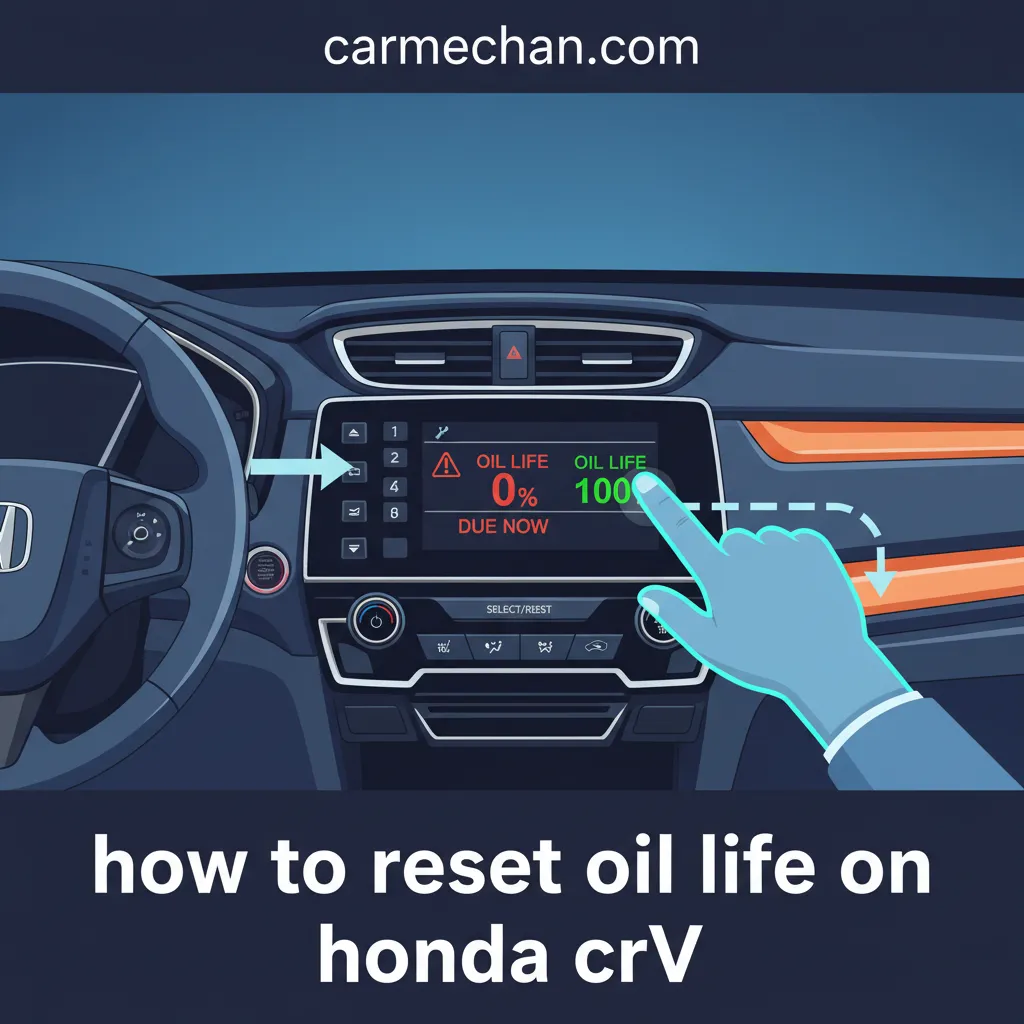
Reset Oil Life On Honda Crv: A Step-By-Step Guide For Owners
Last Updated on June 25, 2026 by Ryan
Title: Reset Oil Life On Honda Crv: A Step-By-Step Guide For Owners
Maintaining your Honda CRV’s engine health is paramount, and a crucial aspect of this is accurately tracking your oil life. After an essential oil change, many CRV owners face the common dilemma of a persistent ‘oil life’ warning light, indicating the Maintenance Minder system needs to be reset. This can be confusing if the proper procedure isn’t clear. This comprehensive guide will walk you through the precise steps to reset the oil life indicator on your Honda CRV, covering various generations and offering expert insights to ensure your vehicle’s maintenance system reflects its current, ‘fresh start’ status.
Resetting your Honda CR-V oil life? Make sure you have the right oil ready:


As an Amazon Associate we earn from qualifying purchases.
Decoding Your Honda CRV’s Maintenance Minder System: What the Codes Mean
Recommended Best Deal Products


📤 Share Image
The Honda Maintenance Minder system is an advanced algorithmic tool, not a simple mileage counter. It continuously monitors a range of critical driving conditions including engine temperature, ambient temperature, vehicle speed, engine speed, and overall run time. This sophisticated analysis allows the system to accurately determine oil life and other maintenance requirements, moving beyond the limitations of traditional, fixed-interval reminders. When you acquire a new CRV, the system typically starts with a 100% oil life indication, counting down based on your specific driving habits.
Understanding the Maintenance Minder codes is crucial for proactive vehicle care. The primary codes indicate:
- Main Codes (A or B):
- A: Indicates an engine oil change is required.
- B: Signifies an engine oil and oil filter change, along with an inspection of various vehicle components (brakes, tie rod ends, suspension, fluid levels, etc.).
- Sub-Codes (1-6): These supplemental codes appear alongside the main codes, dictating additional services:
- 1: Rotate tires.
- 2: Replace air cleaner element, inspect drive belt, replace dust and pollen filter.
- 3: Replace transmission fluid.
- 4: Replace spark plugs, inspect valve clearance, replace timing belt (if applicable), inspect water pump.
- 5: Replace engine coolant.
- 6: Replace rear differential fluid (for AWD models).
For instance, an ‘A1’ code on your display clearly signifies an oil change (A) and tire rotation (1) are due. The system typically recommends an oil change when the oil life reaches 15-20%, providing ample warning for service.
Adhering to the Maintenance Minder’s recommendations offers significant benefits. It extends engine longevity by ensuring components are lubricated with fresh, effective oil. It optimizes fuel efficiency by maintaining engine health and ensuring filters are clean. Most critically, it prevents costly premature component failures that often arise from neglected service. Ignoring the system can even void parts of the vehicle’s warranty if severe neglect is proven, underscoring the importance of following these advisories. Honda’s system is designed to provide greater accuracy than simple mileage-based reminders, considering actual usage conditions to give you the most accurate maintenance schedule.
Extended Engine Life
Proactive maintenance, guided by the Minder, ensures your engine lasts longer.
Optimized Fuel Efficiency
Timely service keeps your CRV running at peak efficiency, saving fuel.
Prevents Costly Repairs
Addressing issues early avoids more significant, expensive component failures.

Preparing for an Accurate Oil Life Reset on Your CRV: Pre-Reset Checks
Before you initiate the oil life reset procedure, it is absolutely critical to understand that this action should ONLY be performed after an actual engine oil and oil filter change has been meticulously completed. The reset function merely updates the Maintenance Minder system to a ‘fresh start’ condition, indicating that new oil is in the engine. It is not, and should never be used as, a workaround to postpone essential service. Resetting the system without replacing the degraded oil can lead to a false sense of security, potentially causing significant engine damage due to insufficient lubrication or excessive wear from contaminants.
Resetting the oil life indicator without actually changing the oil and filter is a severe oversight. The system will operate as if fresh oil is present, leading to prolonged use of degraded oil, which can cause accelerated engine wear, sludge formation, and potentially catastrophic engine failure. Always complete the physical oil change first.
Verification of the correct oil type and viscosity is paramount. For most modern Honda CRVs (especially 5th generation and newer), Honda recommends 0W-20, API certified oil, such as Honda HFS-41 or an equivalent. Using an incorrect oil viscosity, for example, 5W-30 instead of 0W-20, can reduce fuel efficiency by up to 1-2% and increase engine wear over time, as the engine’s internal clearances and oil pump are designed for specific oil flow characteristics. After the oil change, always check the oil level on the dipstick to confirm it’s within the proper range. Additionally, remember that the oil filter plays a vital role, typically removing particles as small as 20-25 microns, underscoring the importance of fresh filtration with every oil change.
Finally, locate your Honda CRV’s owner’s manual. While this guide provides comprehensive instructions, slight variations can exist between specific model years and trims. The owner’s manual remains the definitive source for your particular vehicle. Confirm the ignition is in the ‘ON’ (II) position, not just accessory (I), before attempting the reset. This ensures all necessary electronic systems are active and ready to receive the ‘reboot’ command.

Step-by-Step Guide: How to Reset Oil Life on Various Honda CRV Generations
Recommended Best Deal Products


The procedure for resetting your Honda CRV’s oil life indicator varies slightly depending on the vehicle’s generation. Below, we’ve broken down the steps for the most common CRV model years, ensuring you can confidently perform the procedure for your specific vehicle. Ensure the engine is not running during the reset procedure. The average time required for a successful oil life reset across all generations is typically under 30 seconds once familiar with the controls. Confirm the system ‘restores’ to 100% before turning off the ignition to finalize the reset.
📋
Step-by-Step Guide
For 2017+ Honda CRV (5th Generation and Newer)
Turn the ignition to the ON (II) position without starting the engine. Ensure your Multi-Information Display (MID) is active.
Using the steering wheel-mounted controls, press the ‘HOME’ button. Then, scroll to and select ‘Maintenance’ or ‘Vehicle Settings’ from the MID menu.
Within the Maintenance menu, navigate to and select ‘Oil Life’ or ‘Maintenance Info’. The current oil life percentage will be displayed.
Press and hold the ‘SEL/RESET’ button (usually on the steering wheel) for approximately 10 seconds until the oil life display resets to 100%. Some models may ask for confirmation to ‘restore’ to default; confirm this prompt.
For 2012-2016 Honda CRV (4th Generation)
Turn the ignition to the ON (II) position without starting the engine.
Locate the ‘SELECT/RESET’ stem/knob on your instrument panel (often near the speedometer). Press it repeatedly until the ‘Oil Life’ or ‘Maintenance Minder’ display appears.
Once the oil life is displayed, press and hold the same ‘SELECT/RESET’ stem/knob for approximately 10-15 seconds. The oil life indicator will reset to 100%, indicating a full ‘reboot’ of the system.
For 2007-2011 Honda CRV (3rd Generation)
Turn the ignition to the ON (II) position, without starting the engine.
Locate the ‘SELECT/RESET’ button, often a stalk protruding from the instrument cluster. Press this button repeatedly until the oil life indicator (or Maintenance Minder) is displayed.
Press and hold the ‘SELECT/RESET’ button for approximately 10 seconds until the display flashes. This signifies it’s ready for a full ‘factory’ reset.
Release the button, then press and hold it again for another 5 seconds until the oil life display resets to 100%. This completes the full initialize sequence. Attempting to reset the system with the engine running may prevent the reset from completing correctly, requiring a re-attempt with the ignition in the proper position.
Troubleshooting Common Issues When Resetting Your Honda CRV’s Oil Life
Recommended Best Deal Products


Even with precise instructions, occasionally owners encounter hiccups when attempting to reset the oil life on their Honda CRV. These issues are typically minor and easily resolvable, often related to user error rather than a system fault. Approximately 1 in 10 first-time DIYers may encounter a minor hiccup during the reset, primarily due to insufficient hold time or incorrect ignition position.
Oil Life Fails to Reset to 100%
This is the most common issue. Here’s why it might occur and how to address it:
- Insufficient Hold Time: The reset button/knob often requires a sustained press, typically 10-15 seconds. Releasing too early will prevent the system from registering the command. If you release the button prematurely, simply re-initiate the ‘default’ reset sequence from the beginning.
- Incorrect Ignition Position: The ignition must be in the ‘ON’ (II) position, where all dashboard lights are illuminated, but the engine is not running. Attempting a reset in the accessory (I) position or with the engine running will usually fail.
- Navigating Away: Accidentally pressing another button or scrolling away from the ‘Oil Life’ or ‘Maintenance Minder’ screen before the reset is complete can interrupt the process. Ensure your focus remains on the correct screen until confirmation.
‘Service Due Soon’ or Maintenance Code Reappears Immediately
If a service warning reappears right after you believe you’ve performed a successful reset, consider these possibilities:
- Reset Not Confirmed: Some CRV models, particularly newer ones, require an explicit confirmation (e.g., ‘Are you sure you want to reset?’ or a second press to confirm ‘restore’). Ensure you’ve completed all confirmation prompts.
- Underlying Issue: While rare for immediate reappearance after a proper oil change, if the Maintenance Minder is detecting another urgent issue (e.g., a sensor fault, although not directly tied to oil life reset), it might trigger a warning. However, for oil life specifically, this is unlikely without prior symptoms. The Maintenance Minder system is designed to be robust; persistent issues after multiple correct attempts could warrant a professional diagnostic check.
Potential Electrical System Issues
Though less common for a simple oil life reset, an electrical system anomaly can sometimes interfere. If persistent issues occur despite following all steps precisely and trying multiple times, consider:
- Weak Battery: A weak or failing 12V battery can cause erratic electrical behavior and module communication issues. While not a primary suspect for a simple button press, if other electronic systems are also behaving strangely, have your battery health checked.
- Control Unit Glitch: In extremely rare cases, the vehicle’s engine control unit (ECU) or multi-information display module might experience a temporary glitch. Turning the ignition off, waiting a few minutes, and then attempting a full ‘reboot’ (reset) again can sometimes clear these.
When troubleshooting, always verify dashboard messages carefully. A message like ‘Maintenance Due’ might indicate other codes (e.g., A2, B3) are active, not just the oil life. Resetting only the oil life won’t clear those other specific service reminders. You might need to reset all Maintenance Minder items, if your model allows for a full ‘initialize’ function, or address each code individually.
Beyond the Reset: The Crucial Role of Regular Maintenance for Your CRV
Resetting your Honda CRV’s oil life indicator is a fundamental step in routine maintenance, signifying a ‘clean’ slate for your engine’s lubrication system. However, this action is merely a small component of a broader, critical practice: consistent, comprehensive vehicle maintenance. The fundamental reasons for regular oil changes extend far beyond simply keeping a dashboard light off.
Engine oil performs several indispensable functions:
- Lubrication: It minimizes friction and wear between rapidly moving metal components, preventing catastrophic damage.
- Cooling: Oil helps dissipate heat from critical engine parts, preventing overheating and thermal degradation.
- Cleaning: Modern oils contain detergents and dispersants that suspend contaminants like soot and sludge, preventing them from accumulating. Neglecting oil changes can lead to severe engine sludge formation, often visible upon inspection of the oil cap or dipstick, which can significantly reduce engine life.
- Sealing: It helps create a seal between piston rings and cylinder walls, maintaining compression and power output.
Over time, even with minimal driving, engine oil loses its lubricating properties, accumulates contaminants, and its additives degrade. This is why a fresh start with new oil is essential.
The Maintenance Minder system, in its entirety, promotes a holistic ‘fresh start’ approach to vehicle health. Beyond oil changes, it cues for other vital services:
- Tire Rotations (Code 1): Ensures even wear, extending tire life and maintaining optimal handling and safety.
- Air Filter Replacement (Code 2): Crucial for engine efficiency, clean combustion, and cabin air quality. A clogged air filter can significantly reduce fuel economy and engine power.
- Fluid Checks/Changes (Codes 3, 5, 6): Transmission fluid, coolant, and rear differential fluid are vital for the smooth operation and longevity of their respective systems. Contaminated or degraded fluids can lead to premature component failure.
The long-term benefits of adhering to these ‘factory’ recommended maintenance schedules are substantial. A well-maintained CRV commands a higher resale value, demonstrating meticulous care through a comprehensive service history. It ensures optimal fuel economy, saving you money at the pump. Most importantly, it enhances safety and reliability, giving you peace of mind on every journey. Studies show that properly maintained vehicles can last 50% longer than those with neglected service. Overlooking a single recommended service can cost an owner an average of $500-$1000 in accelerated wear or repairs down the line, far outweighing the cost of preventative care.
By The Numbers
Longer Vehicle Lifespan with Maintenance
Potential Cost of Neglecting a Single Service
Resale Value Increase with Service Records
Verifying Your Honda CRV Oil Life Reset and Future Maintenance Planning
After successfully performing the oil life reset, the final crucial step is to verify that the system has been properly initialized. Turn your ignition back to the ‘ON’ (II) position and visually confirm that the oil life display now shows 100%. This ensures that the Maintenance Minder system is properly ‘rebooted’ and ready to accurately track your next maintenance cycle from a ‘clean’ baseline.
Proactive documentation of your vehicle’s service history is a practice that cannot be overstated. After every oil change and corresponding reset, make it a habit to log the date, mileage, and specific services performed. Whether you prefer a physical service logbook kept in the glove compartment or a digital record, consistent service record-keeping can add 5-10% to a vehicle’s resale value, as it demonstrably proves meticulous care to prospective buyers. This backup of maintenance records is a hallmark of a responsible owner.
With your oil life restored to its default 100% state, you can now plan for future maintenance with confidence. The Maintenance Minder system will begin its intelligent countdown, constantly evaluating your driving conditions. As conditions warrant, it will trigger new service codes (e.g., A1, B2) to remind you of upcoming needs. Most modern Honda CRVs are designed for oil change intervals between 7,500 to 10,000 miles or 12 months under normal driving conditions after a ‘restore’ to 100%. By understanding these indicators and planning accordingly, you maintain a systematic approach to vehicle care, ensuring continuous optimal performance and a healthy, long-lasting Honda CRV. Set a calendar reminder based on your typical driving patterns, but always defer to what your CRV’s Maintenance Minder ultimately indicates.
Understanding your CRV’s Maintenance Minder is key to proactive vehicle health. Resetting the oil life indicator is a simple procedure that must follow an actual oil change. Knowing your specific CRV generation ensures the correct reset process is followed, restoring the system to its ‘default’ state. Ensure your Honda CRV’s engine receives the attention it deserves by consistently following its Maintenance Minder system. Bookmark this guide for future reference and drive with confidence, knowing your vehicle is properly maintained.
Frequently Asked Questions
Can I reset the oil life without actually changing the oil?
While technically possible to perform the reset procedure without an oil change, it is strongly advised against. The Maintenance Minder system is designed to alert you when the oil’s protective qualities are degrading. Resetting it without fresh oil creates a false sense of security and can lead to severe engine wear or damage over time, potentially voiding your warranty.
Why does my CRV have a ‘Maintenance Due Soon’ message even after I reset the oil life?
If you see a ‘Maintenance Due Soon’ message shortly after resetting the oil life, it likely indicates other pending maintenance items that the Maintenance Minder system is tracking. The oil life reset only addresses the oil service. Check your display for additional alphanumeric service codes (e.g., A1, B2) to identify these other required services, like tire rotations or filter replacements.
Does resetting the oil life clear all Maintenance Minder codes?
No, resetting the oil life specifically addresses the oil service component of the Maintenance Minder system. While it effectively ‘restores’ the oil life percentage to 100%, other maintenance codes (e.g., for tire rotation, air filters, spark plugs) will persist until those specific services are performed and their respective parts of the system are reset, if applicable.
How often should I change the oil in my Honda CRV?
Honda CRVs equipped with the Maintenance Minder system typically recommend an oil change when the oil life indicator reaches 15-20%. Under normal driving conditions, this usually translates to an interval of 7,500 to 10,000 miles or approximately 12 months, whichever comes first. Always refer to your owner’s manual for precise ‘factory’ recommendations for your specific model year.
What happens if I don’t reset the oil life after an oil change?
If you don’t reset the oil life indicator after an oil change, your Honda CRV’s Maintenance Minder system will continue to display the decreasing oil life, eventually showing 0% and triggering warning messages. This won’t harm your engine if the oil was actually changed, but it defeats the purpose of the system, preventing it from accurately tracking your next service interval from a ‘fresh start’ point.