Why People Pass Out on Rides: The Science of G-Forces & Your Brain
Last Updated on September 1, 2026 by Ryan
People primarily pass out on rides due to G-forces redirecting blood away from the brain, leading to temporary cerebral hypoxia. This physiological response, known as syncope, can be exacerbated by factors like anxiety, dehydration, and rapid changes in acceleration, as the body struggles to maintain adequate blood supply to vital organs.
🎯 Key Takeaways
- G-forces disrupt blood flow to the brain, causing temporary syncope.
- Stay hydrated and well-fed to reduce fainting risk on rides.
- Anxiety and fear can trigger a vasovagal response, increasing faint likelihood.
- Understand your personal health limits before riding intense attractions.
- Consult a doctor if you frequently experience fainting on rides.


People pass out on amusement park rides primarily because intense G-forces temporarily restrict blood flow to their brain, leading to a brief but critical lack of oxygen. This physiological response, known as cerebral hypoxia, is the core reason you might lose consciousness, even if just for a few seconds. Understanding these mechanisms isn’t just academic; it helps you prepare for rides, make informed choices, and ensures a safer, more enjoyable experience by recognizing your body’s limits and the stressors at play.
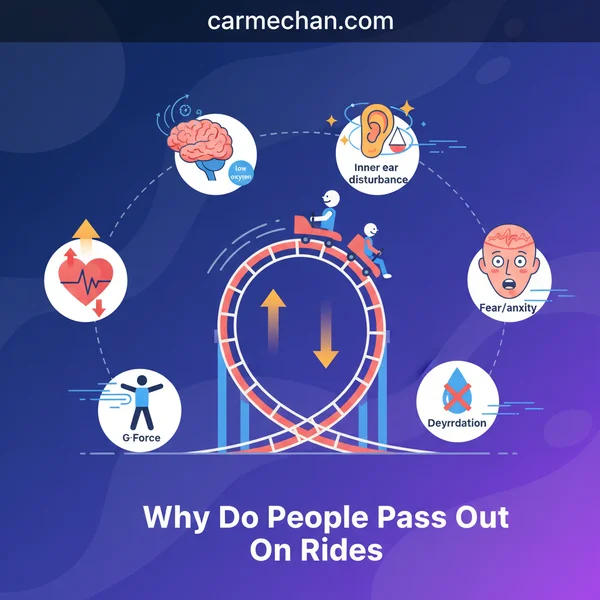
Beyond the raw power of G-forces, several secondary factors amplify this effect or trigger fainting independently. Anxiety, dehydration, low blood sugar, and even pre-existing medical conditions can all contribute to a sudden loss of consciousness. Knowing these contributing elements empowers you to take preventative measures, turning what could be a jarring experience into pure thrill.
Understanding G-Forces and Cerebral Hypoxia on Rides
The Impact of Positive G-Forces on Your Blood
When you feel pressed into your seat during a steep drop or a tight loop on a roller coaster, you’re experiencing positive G-forces. G-forces are multiples of Earth’s gravity (1G). On rides, you can experience forces of 3G, 4G, or even higher. These forces push your blood downwards, away from your head and towards your lower extremities. Your brain, critically, needs a constant supply of oxygen-rich blood to function.

- Reduced Cerebral Blood Flow: As blood pools in your legs and abdomen, less makes it to your brain.
- Cerebral Hypoxia: This reduction in blood flow means your brain receives insufficient oxygen.
- Symptoms Before Fainting: You might first experience “gray out” (loss of color vision, tunnel vision) or “black out” (complete loss of vision) before losing consciousness. These are warning signs your brain is struggling.
- Ride Examples: Intense positive Gs are common on rides with rapid acceleration, inversions, or sharp turns, like many modern thrill coasters.
Your body has reflexes to combat this, like increasing heart rate and constricting blood vessels, but on high-G rides, these compensatory mechanisms can be overwhelmed, leading to momentary oxygen deprivation in the brain and a blackout.
Rapid Changes and Orthostatic Hypotension
It’s not just the sustained G-forces, but also the rapid changes in motion that challenge your body. Sudden acceleration, abrupt stops, or extreme vertical drops can induce a phenomenon similar to orthostatic hypotension. This is the sudden drop in blood pressure you might feel when standing up too quickly.
- Artificial Orthostatic Stress: On a ride, intense G-force changes rapidly shift blood distribution, mimicking the effect of quickly changing body positions.
- Baroreceptor Overload: Your body’s baroreceptors, specialized sensors that regulate blood pressure, struggle to adapt quickly enough to these dramatic, sudden shifts.
- Momentary Brain Starvation: The result is a brief, acute period where your brain doesn’t receive enough blood pressure to ensure adequate flow, causing you to faint. Your brain literally “shuts down” temporarily to protect itself.
This rapid shift is a common culprit on rides designed for maximum “airtime” or intense, unpredictable movements, as your body’s internal systems simply cannot keep pace with the external forces.
Beyond G-Forces: Other Factors Contributing to Fainting
The Vasovagal Response and Anxiety
Even without extreme G-forces, strong emotions can cause you to pass out. This is often due to the vasovagal response, a common reflex where your body overreacts to certain triggers like fear, anxiety, or even the sight of blood. On a ride, the sheer height, speed, or perceived danger can be enough.
- Vagus Nerve Stimulation: Your vagus nerve, which runs from your brainstem to your abdomen, becomes overstimulated.
- Heart Rate & Blood Pressure Drop: This causes your heart rate to slow significantly and your blood vessels to dilate (widen).
- Reduced Brain Blood Flow: The combined effect drastically reduces blood flow to your brain, leading to fainting.
- Hyperventilation: Anxiety often causes rapid, shallow breathing. This reduces carbon dioxide in your blood, which can constrict blood vessels to the brain, exacerbating the problem.
For many, the psychological impact of a ride is just as powerful as the physical, making the vasovagal response a significant factor in ride-induced fainting.
Physiological Vulnerabilities and Environmental Stressors
While G-forces and anxiety are primary causes, several other physiological and environmental factors can make you more susceptible to passing out on a ride. These elements reduce your body’s resilience and its ability to cope with the stresses of a thrill ride.
- Dehydration: Not drinking enough water reduces your overall blood volume, making it harder for your body to maintain blood pressure and supply blood to your brain under G-force stress.
- Low Blood Sugar (Hypoglycemia): Your brain relies heavily on glucose for energy. If your blood sugar is low (perhaps from skipping meals), your brain becomes more vulnerable to any reduction in blood flow, potentially triggering a faint.
- Exhaustion or Lack of Sleep: A tired body is less efficient at regulating its internal systems. When fatigued, your body’s ability to cope with stress, including G-forces and rapid changes, is significantly impaired.
- Heat Exposure: Amusement parks are often hot. Heat causes your blood vessels to dilate, moving blood away from vital organs like the brain to your skin to cool your body. This combined with dehydration increases fainting risk.
- Pre-existing Medical Conditions: Certain health issues can greatly increase your risk. Anemia (low red blood cell count) means less oxygen delivery. Heart conditions or low blood pressure make you inherently more vulnerable to inadequate brain blood flow. Some medications can also lower blood pressure or affect heart rhythm, increasing susceptibility.
The Physiology of Syncope: What Happens When You Pass Out
When we talk about “passing out,” the medical term is syncope. It’s your body’s incredibly efficient, albeit jarring, protective mechanism. On a high-speed roller coaster or a spinning flat ride, the extreme G-forces play a significant role in triggering this response, primarily by disrupting the critical blood flow to your brain.

When Your Brain Needs a Break: Cerebral Hypoperfusion
The core issue leading to syncope on rides is a temporary lack of sufficient blood flow to the brain, medically known as cerebral hypoperfusion. When subjected to positive G-forces (pulling you “down” into your seat), the strong acceleration literally pushes your blood downwards, away from your head and towards your lower extremities. This effect is compounded by centrifugal forces on spinning rides, which also displace blood.
- Blood Pooling: Gravity and acceleration cause blood to pool in your legs and abdomen, reducing the volume returning to your heart.
- Reduced Cardiac Output: With less blood returning, the heart has less to pump upwards, decreasing the amount of oxygenated blood reaching your brain.
- Brain’s “Off Switch”: When oxygen and nutrient delivery to the brain drops below a critical threshold, your brain, as a survival mechanism, temporarily shuts down non-essential functions to conserve energy, leading to a brief loss of consciousness. It’s like a computer rebooting when it overloads.
This shutdown is usually very brief, lasting only a few seconds, as soon as the G-forces subside or your body is in a position where blood can more easily flow back to the brain (like lying down).
The Warning Signs: Prodromal Symptoms
Fortunately, your body often sends out distress signals before a full blackout. These are called prodromal symptoms, and recognizing them is key to understanding your limits and potentially preventing a full syncope episode. These symptoms are your brain’s last-ditch effort to tell you it’s struggling.
Common warning signs include:
- Lightheadedness or Dizziness: A feeling of being woozy or unsteady.
- Visual Disturbances: Often described as "tunnel vision," where your peripheral vision darkens or narrows, or a grey-out/black-out where vision fades entirely. Stars or spots may also appear.
- Auditory Changes: A ringing in the ears (tinnitus) or muffling of sounds.
- Nausea and Sweating: Feeling queasy or suddenly breaking out in a cold sweat.
- Weakness or "Jelly Legs": A sudden feeling of muscle weakness.
These symptoms indicate that your cerebral blood flow is compromised. If you experience them, it's a clear signal to take a break and potentially avoid similar rides in the future.
Minimizing Risk: Recognizing Your Limits and Preparing for Rides
While the physics of G-forces are universal, how our bodies react is highly individual. Understanding your personal susceptibility and taking proactive steps can significantly reduce your chances of passing out on a ride. It’s about smart preparation and self-awareness, not avoiding fun altogether.
Know Thyself: Understanding Your Body’s Responses
Your body has a unique threshold for tolerating G-forces and motion. What one person finds thrilling, another might find overwhelming. Factors like your cardiovascular health, recent activity, and even genetic predispositions can influence your susceptibility to syncope.
- Listen to Your Body: Pay attention to how you feel on different types of rides. A gentle spinning teacup ride might be a good indicator of your motion sickness threshold before you tackle a high-G coaster.
- Consider Your History: If you’re prone to motion sickness, car sickness, or have ever felt faint in other situations (like standing up too quickly), you might be more susceptible to ride-induced syncope.
- Identify Personal Triggers: Certain rides might affect you differently. Some people are fine with drops but not inversions, or vice-versa. Take mental notes of what causes you discomfort.
It’s always a good idea to start with less intense rides if you’re unsure of your tolerance, gradually working your way up to more extreme attractions.
Pre-Ride Preparation: Setting Yourself Up for Success
Before you even step into the queue, there are several practical steps you can take to give your body the best chance of handling the intense forces of theme park rides. These steps focus on optimizing your body’s overall resilience and cardiovascular function.
- Hydrate Adequately: Dehydration significantly reduces your blood volume, making it harder for your body to maintain blood pressure and push blood to your brain against G-forces. Drink plenty of water throughout the day, especially in warm park environments.
- Eat Light and Smart: A heavy, greasy meal right before a ride can divert blood flow to your digestive system, leaving less for your brain. Conversely, very low blood sugar from skipping meals can also increase faintness. Opt for light, balanced snacks and meals.
- Prioritize Rest: Fatigue can lower your body’s overall resilience and make you more susceptible to dizziness and fainting. Get a good night’s sleep before a day at the park.
- Utilize Muscle Tensing (The "G-Stain"): This technique, often used by fighter pilots, involves tensing your abdominal and leg muscles just before and during high-G sections of a ride. This muscular contraction helps to squeeze blood upwards, maintaining cerebral blood flow. Breathe short, rapid breaths or exhale against a closed glottis (like bearing down) to increase intrathoracic pressure.
By preparing your body and being mindful of its signals, you can greatly enhance your ride experience and reduce the likelihood of passing out.
Conclusion: Ride Smart, Stay Safe
Passing out on a ride, while alarming, is typically your body's built-in defense mechanism against insufficient blood flow to the brain, driven by the intense G-forces inherent in these thrilling attractions. It's a temporary response to cerebral hypoperfusion, often preceded by clear warning signs like tunnel vision or dizziness. Understanding these physiological responses empowers you to ride smarter and safer.
Remember to listen to your body's signals, prepare adequately by staying hydrated and well-rested, and don't push your limits. By being mindful of your personal tolerance and taking simple preventative measures, you can fully enjoy the excitement of theme park rides while minimizing the risk of an unwanted blackout. Ride on, safely and consciously!
❓ Frequently Asked Questions
Why do G-forces make you pass out on rides?
High positive G-forces, like those experienced during rapid ascent or tight turns, push blood towards your feet and away from your head. This temporary reduction in blood supply to the brain (cerebral hypoxia) causes a brief loss of consciousness, or syncope, as your body tries to restore blood flow.
What is a vasovagal response and how does it relate to rides?
A vasovagal response is your body’s overreaction to certain triggers, like extreme fear or pain, causing your heart rate and blood pressure to drop suddenly. On rides, intense anxiety can initiate this response, leading to a temporary decrease in blood flow to the brain and subsequent fainting.
Are there specific medical conditions that increase the risk of fainting on rides?
Yes, individuals with conditions like anemia, low blood pressure (hypotension), heart conditions (e.g., arrhythmias), diabetes, or certain neurological disorders are at a higher risk. Consult a doctor if you have concerns about existing medical conditions before riding.
What should someone do if they feel like they’re about to pass out on a ride?
If you feel lightheaded or dizzy, try to keep your head as low as possible or lean forward if the ride allows, and focus on breathing deeply. Inform the ride operator immediately after the ride stops, and seek medical attention if symptoms persist or worsen.
How does dehydration or hunger contribute to passing out on rides?
Dehydration reduces overall blood volume, making it harder for your body to maintain adequate blood pressure and supply blood to the brain, especially under G-force stress. Similarly, low blood sugar from hunger can also impair brain function and increase susceptibility to fainting.
Can hyperventilation play a role in fainting during a ride?
Yes, hyperventilation, often caused by anxiety or fear, can lead to a decrease in carbon dioxide levels in the blood. This can constrict blood vessels in the brain, reducing blood flow and making individuals more prone to feeling lightheaded or even passing out.