How Many Tires Does Car Insurance Cover? A Coverage Guide
Last Updated on September 1, 2026 by Ryan
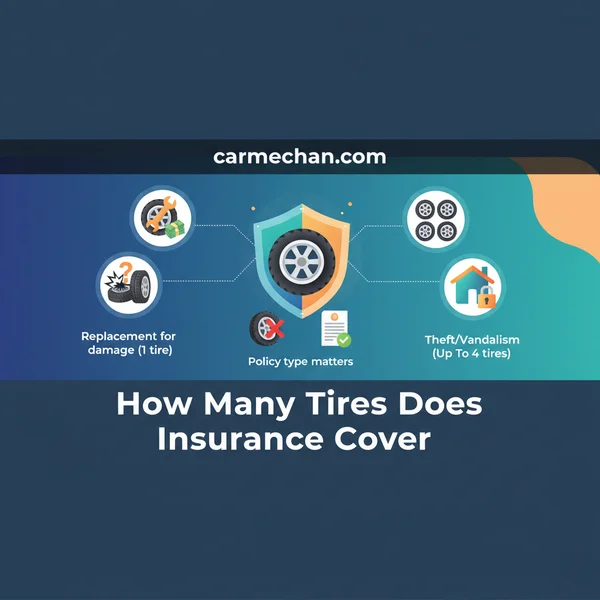
The number of tires car insurance covers depends heavily on your policy type and the cause of damage. While collision or comprehensive policies generally cover all tires damaged in a single covered incident, standalone tire damage often requires a specific road hazard or wheel protection add-on, which may have limits.
🎯 Key Takeaways


- Collision/comprehensive typically covers all tires in a covered accident.
- Single tire damage often needs specific road hazard coverage.
- Your deductible can often exceed a single tire’s replacement cost.
- Depreciation significantly reduces payout for older, worn tires.
- AWD vehicles may require multiple tires replaced for safety reasons.
Understanding how many tires your car insurance covers isn’t as straightforward as a simple number; it primarily depends on the cause of the damage and the specific types of coverage you carry. Generally, if multiple tires are damaged in a covered accident or incident, all of them are typically included as part of your overall vehicle repair claim. However, if only a single tire suffers isolated damage, coverage is much less common under standard policies, often requiring a specialized add-on.
This distinction is crucial because it dictates when you can expect your insurance to step in. Knowing the nuances between broad accident coverage and specific single-tire protection can save you from unexpected out-of-pocket expenses and clarify what to expect when filing a claim for tire damage. Let’s break down how different policy types address tire coverage and the factors that influence the number of tires an insurer will replace.
Understanding Tire Coverage: Collision vs. Comprehensive vs. Road Hazard


Collision Coverage and Multiple Damaged Tires
If your vehicle is involved in an accident with another vehicle or object (like a guardrail or a ditch), your Collision Coverage comes into play. In these scenarios, if multiple tires are damaged, destroyed, or become unsafe as a direct result of the collision, your policy will typically cover the repair or replacement of all those damaged tires. There isn’t usually a strict limit on the number of tires covered in a single collision claim, as they are considered an integral part of the overall vehicle damage. For example, if you swerve to avoid an obstacle and hit a curb, blowing out two tires, both would be covered under your collision policy, minus your deductible.

Comprehensive Coverage and Non-Collision Tire Damage
Comprehensive Coverage handles damage to your vehicle from events other than collisions. This includes incidents like fire, theft, vandalism, falling objects (e.g., a tree branch or hail), or striking an animal. Similar to collision coverage, if multiple tires are damaged in such a comprehensive-covered event, your policy will generally cover the repair or replacement of all of them. For instance, if vandals slash all four of your tires, your comprehensive coverage would likely cover the replacement of all four, subject to your deductible. However, it’s vital to remember that comprehensive coverage does not cover wear and tear, manufacturing defects, or isolated punctures from road hazards.
Road Hazard / Tire & Wheel Protection: The Single Tire Solution
For isolated damage to a single tire, such as a nail puncture, hitting a pothole, or other road debris, standard collision or comprehensive policies typically offer no coverage unless it stems from a larger, covered incident. This is where Road Hazard Protection, often purchased as an add-on to your auto insurance or as a separate warranty from a tire dealer, becomes invaluable. These specialized policies often do have specific limits on the number of tires covered per incident or per year, such as one or two tires. They are designed to cover precisely these common, single-tire damages that regular insurance misses. These plans usually have a low or no deductible, making a claim for one tire economically feasible.
Factors Influencing the Number of Covered Tires in a Claim


The “Total Loss” Scenario
In the unfortunate event that your vehicle is declared a “total loss” following a covered incident, the question of individual tire coverage becomes moot. When a vehicle is a total loss, your insurer compensates you for the vehicle’s Actual Cash Value (ACV) immediately before the damage occurred. This compensation inherently includes the value of the tires as part of the entire vehicle. You won’t be reimbursed for a specific number of tires separately; instead, the entire vehicle, including its wheels and tires, is factored into the total settlement. This situation effectively covers all tires by covering the whole car.
Severity and Cause of Damage
The severity and underlying cause of tire damage are paramount in determining coverage. If the damage to multiple tires is a direct consequence of a larger, covered event—be it a multi-car collision, hitting a significant obstruction (covered by collision), or an act of vandalism or natural disaster (covered by comprehensive)—then all tires deemed damaged or irreparable from that event are typically covered. Conversely, minor, isolated damage, like a single flat tire from a small nail, is almost never covered by standard collision or comprehensive policies unless it falls under a specific road hazard add-on. The key is whether the tire damage is an incidental part of a broader, covered claim, or an isolated, common occurrence.
Your Policy Limits and Deductibles
While standard collision and comprehensive policies don’t typically impose a numerical limit on tires in a claim, the overall cost of repairing your vehicle (including tire replacement) must remain within your policy’s maximum payout limits. More importantly, your deductible plays a significant role. You pay your deductible once per claim, not per tire. For example, if replacing a single tire costs $200 but your deductible is $500, it makes no financial sense to file a claim under your collision or comprehensive policy. The cost would be entirely out-of-pocket. This is precisely why specialized road hazard protection policies, with their lower or zero deductibles, are designed for economical single-tire repairs.
When a Single Tire Claim Makes Sense (or Doesn’t)
Understanding when to file a claim for a single damaged tire versus simply replacing it out-of-pocket is a crucial financial decision. It’s not always as straightforward as it seems, especially with deductibles and potential premium impacts looming.

Weighing the Deductible vs. Tire Cost
Your deductible is the amount you pay before your insurance kicks in. If your comprehensive or collision deductible is, for example, $500, and a new tire costs $200, it makes no financial sense to file a claim. You’d pay the entire cost yourself anyway, and you would have gone through the claims process for nothing. However, if you’re replacing two expensive, specialized tires after a significant impact, and each tire costs $400, your total damage is $800. After a $500 deductible, your insurer would cover $300. In this scenario, filing a claim could be beneficial, especially if the incident also involved other damage to your vehicle.
- Consider the total loss: Is it just the tire, or is there related wheel or suspension damage?
- High-value tires: Performance or specialty tires can be very expensive, making a claim more viable.
- Deductible amount: Always compare the estimated repair cost to your deductible first.
Impact on Future Premiums
Even if a claim is technically covered and exceeds your deductible, consider the long-term implications. Insurance companies often track claims, and even small ones can sometimes lead to increased premiums upon renewal, especially if you have a history of claims. This is a subtle cost that many drivers overlook. A small claim might save you a few hundred dollars now but could cost you more over several years through higher rates. It’s often a good strategy to save claims for significant damages, protecting your claims-free discount and keeping your premiums stable.
Before proceeding, ask yourself:
- Is the immediate savings worth a potential increase in my annual premium?
- Have I filed other claims recently that could make this one look less favorable?
Sometimes, paying for a single tire out-of-pocket, even if expensive, is the smarter long-term financial move.
Maximizing Your Tire Coverage and Navigating the Claim Process
Being prepared and informed is your best defense when dealing with tire damage. Knowing the ins and outs of your policy and what’s expected during a claim can save you headaches and ensure you get the coverage you deserve.
Understanding Your Policy Details
The golden rule for any insurance claim is to truly understand your policy. Don’t just assume what’s covered. Take the time to review the specifics of your comprehensive, collision, and any additional endorsements like road hazard protection. Look for details on:
- Exclusions: Are there specific types of tire damage not covered (e.g., wear and tear, intentional damage)?
- Limits: Is there a maximum payout for tire replacement?
- Depreciation: Does your policy pay for the “actual cash value” (ACV) of the tire, which accounts for its age and wear, or “replacement cost value” (RCV), which pays for a brand-new tire? This can significantly impact your payout.
- Deductibles: Confirm the deductible for the specific type of coverage that applies to tire damage.
When in doubt, don’t hesitate to call your insurance agent. They can explain the nuances of your policy in plain language and clarify any uncertainties before you need to file a claim.
Documentation is Key
When tire damage occurs, thorough documentation can be the difference between a smooth claim and a denied one. Insurers need evidence to process your claim fairly. This isn’t about lengthy procedures, but about providing clear, concise proof of what happened.
- Photographs: Take clear pictures of the damaged tire, the overall vehicle, and the scene where the damage occurred (e.g., pothole, debris).
- Incident Report: If the damage was due to vandalism or a hit-and-run, a police report is often essential.
- Witness Information: If anyone saw the incident, their contact details can support your claim.
- Maintenance Records: Proof of regular tire rotation and balancing can demonstrate you maintained your tires properly, which may be helpful, especially if there’s a question about existing wear.
- Repair Estimates: Obtain estimates from a reputable repair shop.
Having these items ready when you contact your insurer can expedite the process and strengthen your claim for legitimate tire damage.
Conclusion
Navigating car insurance coverage for tires can feel complicated, but it ultimately boils down to understanding your policy’s specifics. While standard comprehensive and collision coverage often protect against unexpected damages like potholes, vandalism, or accidents, they won’t cover wear and tear or manufacturing defects. Remember to always weigh the cost of repairs against your deductible and the potential impact on your future premiums before filing a claim. The best approach is to be proactive: review your policy, understand its limitations, and consider additional road hazard protection if it aligns with your driving habits and tire investment. Stay informed, and you’ll be well-equipped to handle any tire trouble that comes your way.
❓ Frequently Asked Questions
How many tires does car insurance generally cover in a collision?
If your vehicle is involved in a covered collision, your collision insurance typically covers all tires that are damaged as part of the overall vehicle repair, up to the policy limits after your deductible. There isn’t a specific tire count limit in this scenario; all damaged tires are usually included.
Does comprehensive insurance cover all tires if my car is vandalized?
Yes, if your car’s tires are damaged due to a covered comprehensive peril like vandalism, fire, or falling objects, your comprehensive coverage would typically pay for all damaged tires as part of the claim, minus your deductible. This usually includes all four if they are deflated or slashed in one incident.
Is there a specific limit to the number of tires covered by a road hazard policy?
Road hazard or tire and wheel protection policies often come with specific limits, such as covering 1-2 tires per incident or per year, or up to a maximum dollar amount. It’s crucial to check your specific policy details for these quantitative limitations, as they vary widely by provider.
What if only one tire is damaged and needs replacing; will my standard policy cover it?
Standard comprehensive or collision policies typically do not cover isolated damage to a single tire, such as a nail puncture or hitting a pothole, unless it’s part of a larger incident causing vehicle damage that exceeds your deductible. For single-tire incidents, a specific road hazard add-on is usually required.
Will insurance cover replacing more than one tire if only one is damaged on an AWD vehicle?
Yes, for All-Wheel Drive (AWD) vehicles, if one tire is damaged beyond repair, your insurer might cover the replacement of multiple tires (often all four) to maintain proper drivetrain function and prevent mechanical issues. This is due to the importance of consistent tread depth on AWD systems for optimal performance and safety.
How does depreciation affect the payout for damaged tires?
Insurance policies typically pay the actual cash value (ACV) of your tires, which means their replacement cost minus depreciation based on age and wear. If your tires are old or significantly worn, the payout will be less than the cost of brand-new tires, potentially making a claim less worthwhile due to the deductible amount.