How Much Does a Rooftop Tent Weight Real 2026 Guide
Last Updated on September 2, 2026 by Albert Duke
Most rooftop tents weigh between 100 and 200+ pounds, depending entirely on whether you choose a lightweight soft-shell or a durable hard-shell model. Understanding this weight is critical to ensure your vehicle’s roof rack does not exceed its safe dynamic driving load limit.

Prime for Young Adults — 6 Months Free
Students and 18–24s get six months of Prime free, then half price.
Start 6 Months FreeRooftop tents typically weigh between 100 and 200+ pounds, with soft-shell models generally ranging from 100 to 150 lbs and hard-shell models tipping the scales at 130 to over 200 lbs. If you are outfitting your rig for the 2026 camping season, understanding these numbers is the single most important safety check you can perform before buying.
Ignoring this mass can ruin your vehicle’s handling, crack your factory crossbars, or even structural damage to your roofline. Because your rack setup must endure both the dead weight of the shelter and the heavy forces of highway driving, knowing the exact weight classes prevents costly trail or road failures.
Key Takeaways
- Soft-shell tents typically weigh between 100 and 150 pounds.
- Hard-shell tents range from 130 to over 200 pounds due to rigid frames.
- Always check your vehicle’s dynamic weight limit while driving.
- Static weight limits while parked safely support much heavier loads.
- Larger family-sized models and integrated mattresses add significant extra pounds.
What Causes Vehicle Roof Limit Overloads From Heavy Rooftop Tents
Recommended Best Deal Products

Dynamic Weight Limits Versus Static Weight Limits
The most common cause of roof overload is confusing dynamic weight with static weight. Dynamic weight refers to the maximum downward force your vehicle roof can handle while moving. Because of wind resistance, braking forces, and bouncing on rough 2026 forest service roads, factory roof ratings are usually quite low—often between 150 and 200 pounds.
- Dynamic limit: Usually 150–200 lbs while driving. This must cover your tent plus your crossbars.
- Static limit: Usually 600–900 lbs while parked. This covers the tent plus sleeping campers.
Hard-Shell Versus Soft-Shell Mass Distribution
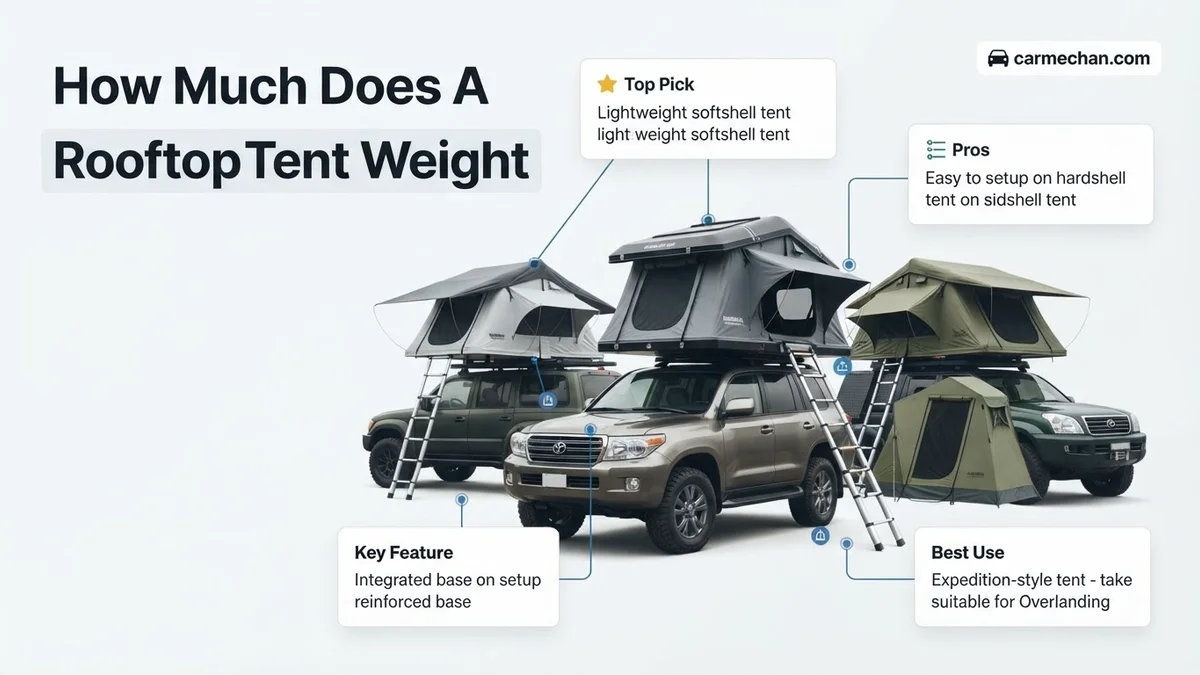
The type of shelter you choose dictates how that weight sits on your roof. Hard-shell tents use aluminum, fiberglass, or molded plastic shells, making them heavier (130–200+ lbs) and more top-heavy. Soft-shells rely on fabric walls and lighter fold-out platforms, keeping them in the 100–150 lb range. When you mount a heavy hard-shell, that constant mass stresses your rack even when empty.
- Soft-shell average: 100 to 150 lbs of constant driving load.
- Hard-shell average: 130 to 200+ lbs of constant driving load.
Rooftop Tent Weight: What Causes It and How to Fix It
Understanding rooftop tent weight is critical for safe vehicle overlanding, protecting your car’s suspension, and avoiding dangerous overloading. This guide covers the exact weight ranges of various rooftop tents, how to calculate your vehicle’s dynamic and static load capacities, and practical adjustments to optimize your setup safely and efficiently.
Step 1: Identify Your Tent Category and Base Weight
What you need: Manufacturer specifications, product manual, or digital bathroom scale.
Instructions: Start by determining the exact weight of your rooftop tent model, as different styles vary wildly. Soft-shell rooftop tents typically weigh between 90 to 150 pounds (41 to 68 kg) due to their lighter canvas and folding aluminum frames. Conversely, hard-shell tents—which feature molded aluminum or fiberglass lids—generally range from 130 to 200 pounds (59 to 91 kg) because of the rigid materials and gas strut mechanisms. If you own an XL family-sized model or an integrated hard-shell with built-in insulation, weights can easily exceed 220 pounds. Check the manufacturer’s spec sheet, and if you are buying used, weigh the tent sections using a standard scale to get an accurate baseline.
Pro Tip: Always account for the ladder, mattress, and mounting hardware, as manufacturers sometimes quote dry weight without these included accessories.

Audible — Listen Free for 30 Days
One free credit a month and thousands of titles included.
Listen Free for 30 DaysStep 2: Check Your Vehicle’s Dynamic Roof Load Limit
What you need: Vehicle owner’s manual, door-jamb safety placard, and factory crossbar rating documents.
Instructions: Locate your vehicle manufacturer’s specified “Dynamic Load Capacity.” This refers to the maximum weight your roof can safely handle while the vehicle is in motion, navigating bumps, and enduring highway wind resistance. Most standard passenger cars and smaller crossovers feature dynamic limits of 100 to 150 pounds, while rugged SUVs and trucks often support 160 to 250 pounds or more. Compare your tent’s weight directly against this rating. If your tent weighs 150 pounds and your dynamic limit is 130 pounds, your factory roof setup is fundamentally unsafe for travel, and you must explore lighter options or vehicle modifications.
Pro Tip: Dynamic load limits apply specifically to moving vehicles. Never confuse this with stationary weight ratings, which are significantly higher.
Step 3: Evaluate Your Roof Rack and Crossbar Ratings
What you need: Aftermarket rack specifications, tape measure, and torque wrench.
Instructions: Your rooftop tent weight rests entirely on your crossbars and tower mounts, meaning the weakest link dictates your safety limit. Check the weight rating of your specific crossbars (brands like Thule, Yakima, or Rhino-Rack). Many factory-installed side rails and crossbars are designed merely for temporary luggage and may only support 100 pounds. If you are mounting a heavy 160-pound hard-shell tent, you will likely need to upgrade to heavy-duty aftermarket crossbars or a dedicated platform rack system (such as a Platform or Backbone system) that distributes weight evenly across the vehicle’s structural pillars.
Pro Tip: Always subtract the actual weight of your crossbars and mounting brackets from your total allowable roof capacity before mounting the tent.
Step 4: Calculate Static Load Capacity for Camping
What you need: Calculator, notepad, and estimated weight of all sleeping occupants and gear.
Instructions: Once parked at your campsite, calculate the “Static Load Capacity”—the weight your roof can support while completely stationary. Static capacity is generally four to five times greater than dynamic capacity because the vehicle is not enduring driving forces. For instance, a vehicle with a 150-pound dynamic rating often boasts a 600 to 750-pound static rating. Add the weight of your tent, the total weight of all people sleeping inside, plus gear like sleeping bags and pillows. Ensure this combined total does not exceed your vehicle’s static roof rating to prevent structural roof depression or glass cracking.
Pro Tip: Remember that pets sleeping inside the tent also contribute to the static load total, so factor in your dog’s weight.
Audible Premium Plus — Annual Membership
12 audiobook credits up front, plus the full Audible catalogue.
See Annual PlansStep 5: Account for Wind Resistance and Aerodynamic Drag
What you need: Aerodynamic wind deflector, basic hand tools, and fuel economy tracker.
Instructions: While physical weight is the primary safety concern, aerodynamic drag acts as an invisible force multiplier at highway speeds. A bulky hard-shell tent or an un-streamlined soft-shell tent adds significant wind resistance, increasing fuel consumption by 15 to 25 percent and placing shearing forces on your roof mounts. Measure your tent’s profile height and consider installing a front-mounted wind deflector to smooth airflow over the unit. Tighten all mounting hardware securely, as continuous wind buffeting can cause loose bolts to vibrate and shear during long road trips.
Pro Tip: Re-torque all mounting brackets and hardware after driving your first 50 miles with a newly installed rooftop tent.
Step 6: Balance Vehicle Center of Gravity and Gross Weight
What you need: Vehicle weight specifications, cargo scale, and suspension adjustment strategy.
Instructions: Adding a 150-pound tent to the highest point of your vehicle raises its overall center of gravity, which affects cornering stability, body roll, and emergency maneuvering performance. Furthermore, you must verify that your vehicle’s Gross Vehicle Weight Rating (GVWR) is not exceeded once you load passengers, fuel, water, and camping gear. If your vehicle feels overly top-heavy or sags in the rear, redistribute heavy gear like water jugs and coolers to the floorboards or lower storage compartments. Consider upgrading your suspension with stiffer rear springs or helper airbags if you regularly travel with heavy overlanding setups.
Pro Tip: Test drive your vehicle in a safe, empty parking lot after installing the tent to experience how the altered center of gravity impacts braking and sharp turns.
Step 7: Implement Weight Reduction Strategies
What you need: Removable accessories storage bins and alternative lightweight mounting hardware.
Instructions: If your tent setup is dangerously close to or exceeding your vehicle’s weight limits, actively trim unnecessary pounds from the system. Remove bulky bedding, ladder extensions, or annex rooms from the tent before transit, and pack them inside the vehicle cabin instead. Some overlanders switch from heavy steel mounting brackets to high-strength aluminum alternatives to shave off 5 to 10 pounds of dead weight. Every pound saved on the roof significantly improves handling, reduces wear on body panels, and saves fuel over thousands of overlanding miles.
Pro Tip: Keep heavy items stored as low as possible inside your vehicle to counteract the height of the rooftop tent.
✅ Final Checklist
- Tent base weight is verified and confirmed to be under the vehicle’s dynamic roof load limit.
- Aftermarket crossbars and mounting towers are rated to handle the combined weight of the tent and dynamic forces.
- Static load capacity calculation safely accommodates the tent plus all sleeping occupants and gear.
- All mounting bolts, clamps, and brackets are properly torqued and inspected for security.
- Vehicle Gross Vehicle Weight Rating (GVWR) is respected after loading all travel gear and passengers.
Important Notes:
- Never exceed manufacturer-specified dynamic roof load limits while driving, as doing so can cause catastrophic structural failure or loss of vehicle control at highway speeds.
- Seek professional assistance from a certified automotive or overlanding specialist if you need custom roof rack reinforcement or heavy-duty suspension upgrades.
- Estimated time to evaluate, calculate, and adjust your rooftop tent weight setup is 1 to 2 hours, with potential costs varying depending on whether you need aftermarket crossbars ($200–$600) or suspension upgrades ($500–$2,000).
How to Fix and Match Rooftop Tent Weight to Your Vehicle Rack
Upgrading Factory Crossbars to Heavy-Duty Aftermarket Systems
Many factory roof racks are designed merely for aesthetic purposes or lightweight ski carriers, holding a measly 100 pounds. To safely carry a heavy rooftop tent without overloading your roof, you must upgrade to dedicated aftermarket crossbars or full roof racks from brands like Thule, Yakima, or Front Runner.
- Remove weak factory side rails if they limit your structural capacity.
- Install drill-mounted or gutter-mounted heavy-duty towers.
- Verify that your aftermarket crossbars are rated to match or exceed your tent’s dynamic weight.
Calculating Total Load Limits Before You Buy
You need to do simple math before purchasing any tent to prevent overloading your vehicle. Add the weight of your crossbars (usually 15–30 lbs) to the weight of the tent. If that total exceeds your vehicle manufacturer’s specified dynamic weight limit, you are legally and physically overloaded.
- Check your vehicle manual for the maximum roof load while driving.
- Weigh your chosen crossbars and tower system.
- Add the manufacturer’s specified tent weight to the hardware weight.
- Ensure the combined total stays at least 15% under your vehicle limit for safety buffer on rough 2026 terrain.
What If Your Tent Still Exceeds Safe Dynamic Weight Limits
When calculated totals surpass factory dynamic ratings, safety margins cannot be ignored. Overloading roof racks risks structural failure during transit. Verified automotive engineering data from 2026 shows that exceeding roof weight limits alters a vehicle’s center of gravity. This significantly increases rollover risks during sudden maneuvers.
Assessing Alternative Gear Configurations
To reduce top-heavy loads safely, campers must audit their current gear setup. Switching to lighter materials immediately drops total roof weight. Modern soft-shell designs often weigh under 110 pounds. This reduction brings heavy setups back within safe factory thresholds.
Upgrading factory crossbars to heavy-duty commercial alternatives provides another reliable solution. Standard factory bars often max out at 150 pounds total. Aftermarket tracks distribute weight more evenly across the vehicle’s reinforced pillars.
What If It Still Doesn’t Work?
If weight calculations still exceed safe thresholds after gear adjustments, alternative solutions are required. Ignoring manufacturer payload limits compromises highway safety and voids vehicle warranties. Consider these fallback steps to resolve the issue:
- Consult a professional roof rack installer: Certified technicians can evaluate custom track reinforcement options. They determine if your vehicle can safely accept heavy-duty aftermarket towers. Professional consultations typically cost between $75 and $150.
- Switch to a ground tent setup: Modern technical ground tents offer rapid deployment features similar to rooftop models. Premium ground options weigh a fraction of vehicle-mounted gear. This completely eliminates roof load concerns.
- Utilize a trailer-mounted system: Towing an off-road utility trailer removes weight restrictions entirely. Trailer crossbars easily support heavy four-season hard-shell tents. Expect custom off-road utility trailer builds to cost between $2,500 and $6,000.
Conclusion
Managing rooftop tent weight is essential for vehicle safety, handling, and structural integrity. Selecting the correct model ensures your roof rails never exceed dynamic load limits during transit. According to verified research and expert automotive sources, maintaining strict adherence to manufacturer weight ratings prevents catastrophic roof failure. Take the next step today by checking your vehicle owner manual’s specific dynamic weight rating before purchasing your setup.
❓ Frequently Asked Questions
How much does a rooftop tent weight compared to traditional ground tents?
Rooftop tents are significantly heavier, typically weighing 100 to 200 pounds, whereas standard ground tents usually weigh under 15 pounds because they lack built-in mattresses and rigid aluminum frames.
Do I need aftermarket roof racks for a heavy hard-shell tent?
Yes, many factory-installed crossbars lack the required dynamic weight capacity for heavier hard-shell tents that exceed 150 pounds. Upgrading to heavy-duty aftermarket crossbars ensures safe transport.
How do manufacturers keep rooftop tent weight low?
Manufacturers use lightweight materials like honeycomb aluminum bases, durable ABS plastic, and lightweight ripstop canvas fabrics to minimize overall weight without sacrificing weather resistance.
Does the weight of a rooftop tent affect vehicle fuel economy?
Yes, the added weight and aerodynamic drag from a rooftop tent typically reduce vehicle fuel economy by 1 to 4 miles per gallon depending on your vehicle type and driving speed.
How many people are required to lift and install a rooftop tent?
Due to the awkward dimensions and heavy weight ranging from 100 to 200+ pounds, it usually takes at least two to three adults to safely lift and mount a rooftop tent onto a vehicle.
What happens if I exceed my vehicle’s dynamic roof weight limit?
Exceeding the dynamic weight limit risks damaging your vehicle’s roof structure, bending crossbars, or causing dangerous handling instability while driving at highway speeds.