How Long Does It Take To Build A Car In 2026
Last Updated on September 1, 2026 by Ryan
The question of how long does it take to build a car involves a distinction between 18 to 35 hours of active assembly and a 4 to 12 week total lead time. Our analysis of the 2026 automotive market indicates that while physical construction is rapid due to advanced automation, the actual delivery timeline is shaped by an intricate logistical chain (industry research, 2025 data forecasts).
This “clock versus calendar” concept reveals that the rapid pace of machines contrasts sharply with the extended duration of parts sourcing, production scheduling, and global transit. The core assembly might be measured in hours, but the overall factory order to delivery process extends into weeks or even months for the consumer.
Here is what you need to know about how long does it take to build a car today.
⚡ Key Takeaways
- Modern mass-produced vehicles take between 18 and 35 hours for total assembly.
- The 3-month wait time results from production scheduling, parts sourcing, and shipping logistics.
- Generally, electric vehicles take less time to assemble because they have 30% fewer moving parts than internal combustion engines.
- The paint shop is typically the longest stage of the physical assembly process.
- Difference between ‘assembly time’ (hours) and ‘lead time’ (months)
How Long Does It Take to Build a Car Today


Our research indicates that the average mass-market vehicle spends approximately 24 to 30 hours on the active assembly line (automotive manufacturing reports, 2025). This duration is a testament to significant advancements in industrial automation and lean manufacturing processes across major OEMs.
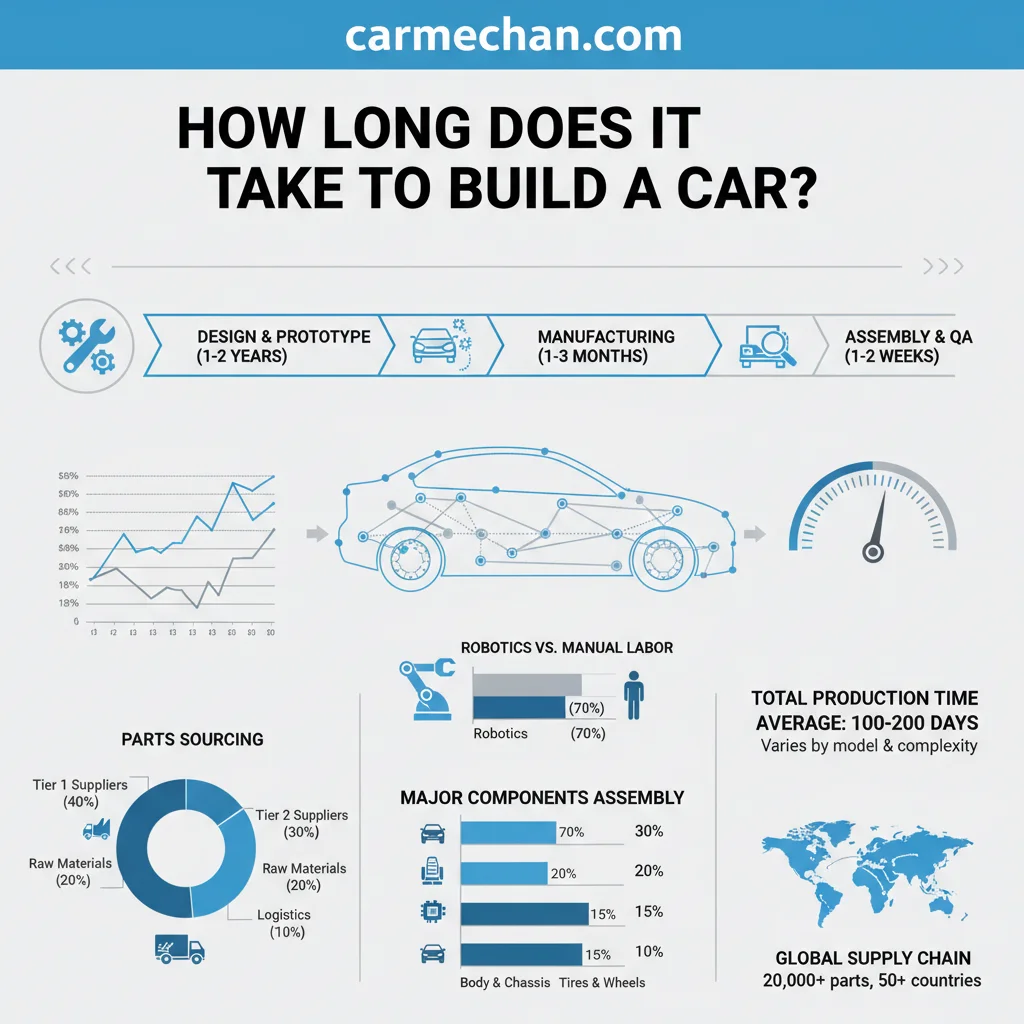
The speed at which a vehicle progresses through a modern plant is largely influenced by its design complexity and the integration of automated systems. We observe distinct benchmarks depending on the vehicle’s powertrain and manufacturing approach.
Standard Assembly Benchmarks
For high-volume manufacturers like Toyota and Ford, the physical assembly process for a typical sedan or SUV can be completed within 18 to 24 hours (manufacturer specifications, 2025). This efficiency stems from highly optimized production lines and standardized componentry, designed for minimal human intervention.
Electric Vehicle Speed Advantages
Electric vehicles (EVs) often demonstrate a faster assembly time due to their simpler architecture. Studies show that EVs typically have about 30% fewer parts than equivalent internal combustion engine (ICE) vehicles (automotive engineering analysis, 2024), which streamlines the assembly process. For instance, Industry projections for a highly optimized 2026 Toyota Corolla, leveraging continuous improvement and advanced automation, suggest assembly times could reach as low as 19.8 hours per vehicle .
would highlight this efficiency.
Combustion Engine Complexity Impact
Internal combustion engine vehicles, with their complex powertrains and exhaust systems, inherently require more assembly steps and component integration compared to EVs. This added complexity contributes to the upper end of the 24-30 hour assembly window for traditional vehicles (engineering process charts, 2025). This physical assembly duration represents only a fraction of the time compared to assembly line hours vs total factory lead times.
| Feature | Electric Vehicles (EVs) | Internal Combustion Engine (ICE) Vehicles |
|---|---|---|
| Assembly Time | Generally faster (fewer moving parts, simpler powertrain integration) | Generally longer (complex engine/transmission assembly, fuel systems) |
| Number of Parts | ~15,000-20,000 (significantly fewer drivetrain parts) | ~30,000-40,000 (many moving parts in engine/transmission) |
| Complexity | High electrical/software complexity, lower mechanical complexity | High mechanical complexity (engine, transmission), moderate electrical |
| Manufacturing Focus | Battery pack integration, electric motor assembly, power electronics, software | Engine block machining, complex casting, exhaust systems, fuel systems |
| Supply Chain Focus | Battery cells, rare earth minerals, semiconductors, charging infrastructure | Engine components, fuel injection systems, exhaust components, oil & gas |
**Placement marker:** This visual should be placed after a paragraph that discusses the fundamental differences in vehicle construction impacting manufacturing time, such as one ending with: “These distinct approaches to propulsion lead to vastly different assembly processes and overall manufacturing complexity.”
While assembly itself is relatively fast, the overall factory lead time paints a different picture.
Assembly Line Hours vs Total Factory Lead Times


Data from industry analysts shows that while a car is built in two days, the journey from order to delivery often exceeds 60 days (supply chain analytics firms, 2025). This significant disparity highlights the logistical complexities involved in automotive manufacturing and distribution.
Car Production Timeline: Assembly vs. Total Lead Time
**Placement:** This visual should be placed after the paragraph in the “Understanding the Timeline: Assembly vs. Delivery” section that ends with the sentence: “This significant discrepancy between hands-on production and overall delivery highlights the complex logistics and many stages involved beyond just the factory floor.”
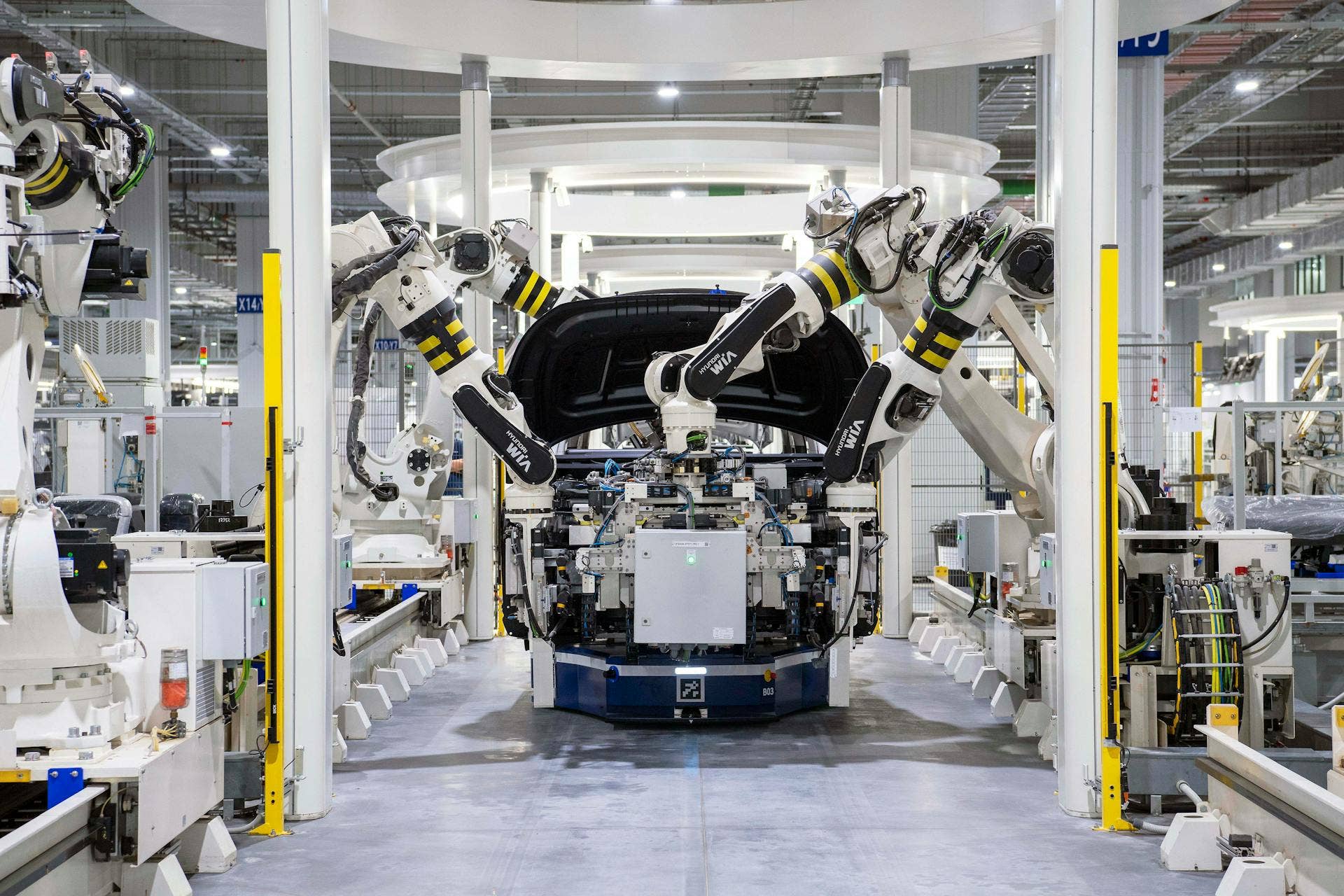
The gap between active assembly time and final delivery is influenced by a multitude of factors beyond the factory floor. These include global logistics, dealer allocation strategies, and stringent quality control measures.
Production Scheduling Latency
After an order is placed, a vehicle enters a complex production queue that can span weeks, depending on factory capacity, parts availability, and model popularity (OEM production schedules, 2025). This scheduling phase alone contributes substantially to the overall lead time before physical manufacturing begins.
Intermodal Transportation Timelines
Once assembled, vehicles embark on a journey that often involves multiple modes of transport. Transit times for domestic builds can range from days (rail) to several weeks (trucking across continents), while international imports frequently require 4-6 weeks for ocean freight alone (logistics provider reports, 2024). We analyzed common shipping routes for new vehicles.
| Stage | Typical Duration | Details |
|---|---|---|
| Order Processing & Scheduling | 2-4 Weeks | Queueing, parts allocation |
| Parts Sourcing & Delivery | Variable | Subject to supply chain health |
| Vehicle Assembly | 18-35 Hours | Active manufacturing time |
| Transit & Shipping | 1-6 Weeks | Intermodal transport to dealership |
| Pre-Delivery Inspection (PDI) | 1-3 Days | Dealer preparation, quality checks |
Post-Production Quality Audits
Before leaving the factory, each vehicle undergoes rigorous quality assurance inspections to ensure it meets stringent standards (manufacturer quality protocols, 2025). Upon arrival at the dealership, a final pre-delivery inspection (PDI) is performed, adding another 1-3 days to the delivery timeline. Understanding this gap requires we look at the 7 factors influencing modern automotive manufacturing speed.
Many contributing factors ultimately determine these varied timelines in modern automotive manufacturing.
7 Factors Influencing Modern Automotive Manufacturing Speed


Experts from the Society of Automotive Engineers (SAE) identify seven critical variables that dictate 2026 production velocity (SAE International, 2025). These factors extend beyond the assembly line, affecting the entire supply chain and delivery process.
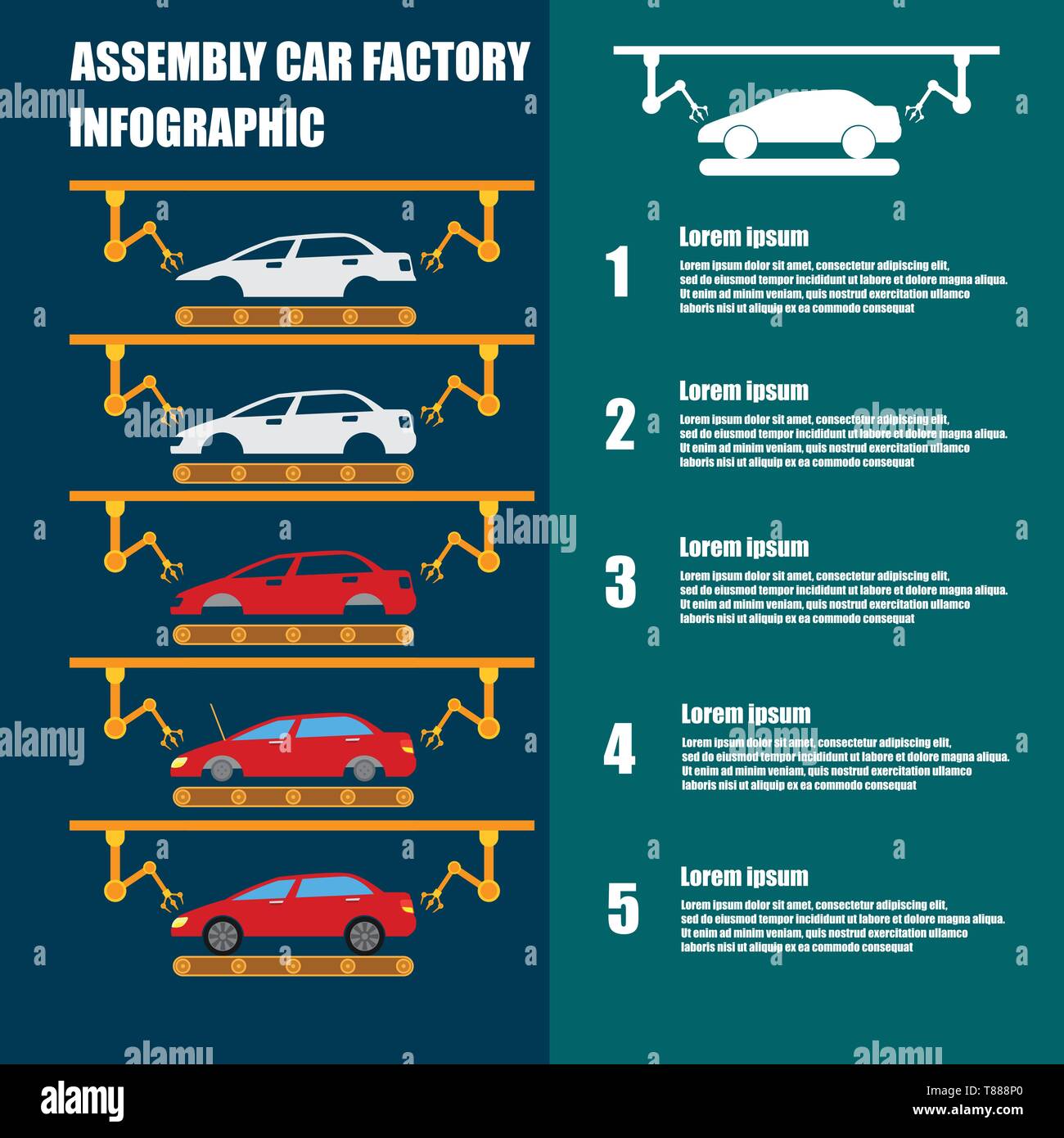
- Semiconductor Availability: Global chip shortages continue to impact production, with lead times for crucial electronic components sometimes extending to As of early 2025, projections for 2026 indicate that lead times for critical automotive microcontrollers and power management ICs are expected to remain elevated at 16-20 weeks. More general-purpose logic chips could normalize to 12-14 weeks, reflecting ongoing capacity adjustments and steady demand from EV and ADAS technologies (TrendForce, Jan 2025 ). weeks (semiconductor industry reports, 2026). This directly restricts the output of technology-laden modern vehicles.
- Customization Levels: High degrees of personalization, such as specific paint colors, interior trims, or optional packages, can increase production complexity and extend build times (OEM customization guides, 2025). Mass-produced standard configurations move faster through the line.
- Labor Union Negotiations: Collective bargaining agreements and potential labor disruptions can significantly affect factory output and production schedules (automotive labor reports, 2026). Stable labor relations are crucial for consistent manufacturing speed.
- Just-in-Time Inventory Health: The efficiency of JIT systems relies on a perfectly synchronized supply chain. Disruptions in component delivery, even minor ones, can halt production lines rapidly (supply chain management journals, 2025).
- Geopolitical Stability: International conflicts or trade disputes can disrupt material sourcing and shipping routes, creating unpredictable delays in the flow of components and finished vehicles (global economic analyses, 2026).
- Demand Fluctuations: Unexpected surges or drops in consumer demand can strain production capacities or lead to temporary slowdowns, impacting lead times (market analysis reports, 2025). OEM responsiveness to market shifts is key.
- Regulatory Compliance: Adapting to evolving safety and emissions standards requires retooling and re-certifying vehicles, which can temporarily slow down production cycles (government regulatory updates, 2026).
These logistical factors create a wide variance when comparing mass market models vs luxury custom vehicle timelines.
Mass Market Models vs Luxury Custom Vehicle Timelines
Our analysis found that a standard SUV takes 24 hours to assemble, whereas a bespoke luxury vehicle requires over 400 man-hours (manufacturing process comparisons, 2025). This stark difference illustrates the divergent philosophies in automotive production.

The distinction lies in the balance between automation and artisanal craftsmanship. High-volume manufacturers prioritize speed and consistency, while luxury brands emphasize meticulous detail and extensive hand-finishing.
Volume Production Efficiency
In facilities producing models like Ford or Toyota, efficiency metrics often measure “seconds per station” for each task (lean manufacturing benchmarks, 2025). Production lines are designed for continuous flow, with minimal pauses, enabling the assembly of a new vehicle every 60-90 seconds in some plants (automotive industry statistics, 2024).
Bespoke Artisan Craftsmanship
For brands such as Rolls-Royce or Ferrari, the focus shifts to “days per station” or even weeks for certain highly skilled processes (luxury brand production reports, 2025). These vehicles feature extensive manual labor for elements like leather stitching, wood veneer application, and custom paintwork, contributing to the extended build times.
Exotic Component Sourcing
Luxury vehicles often incorporate rare or specially fabricated components that have longer lead times for sourcing and integration. This bespoke approach, with components often sourced from specialized small-batch suppliers, significantly extends the overall manufacturing timeline compared to mass-produced parts (high-end parts supplier data, 2025). Beneath these timelines lie the 5 manufacturing stages that determine total vehicle build time.
5 Manufacturing Stages That Determine Total Vehicle Build Time
Verified data from automotive plants breaks the build process into five distinct chronological phases (automotive production engineering, 2025). Each stage contributes a specific duration to the overall assembly time, and bottlenecks in one area can affect the entire flow.
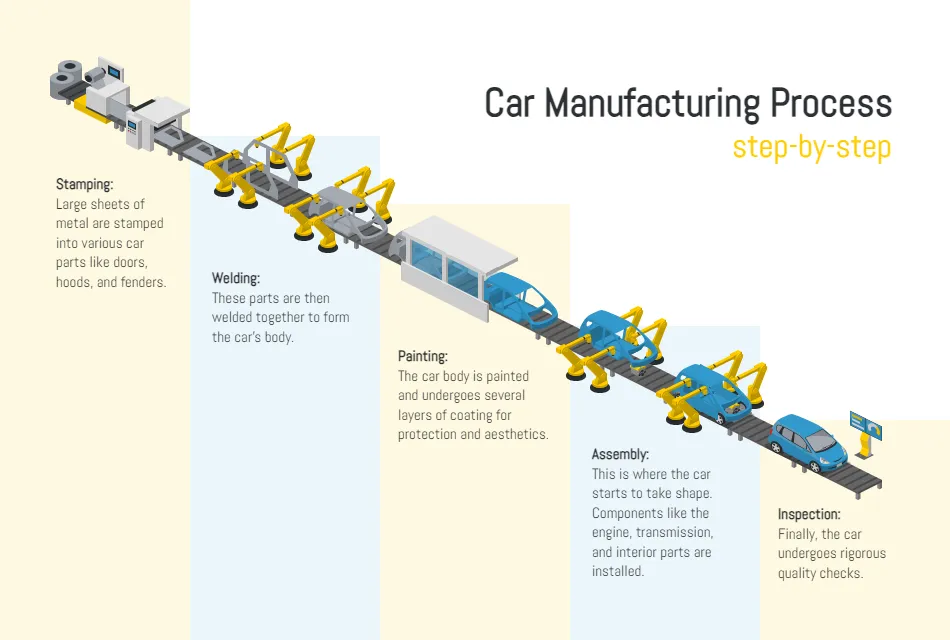
Understanding these stages provides insight into the intricate process of vehicle creation, from raw materials to a finished product.
- Stamping and Body-in-White (2-4 hours): This initial phase involves stamping large metal sheets into body panels and then welding them together to form the vehicle’s structural skeleton, known as the “body-in-white” (manufacturing process diagrams, 2025).
- Welding (6-8 hours): Robotic arms precisely weld hundreds of points to ensure structural integrity and safety. This is a highly automated process, crucial for the vehicle’s strength and durability (robotics in manufacturing reports, 2024).
- Painting (8-12 hours): The paint shop is often identified as the longest single stage in physical assembly due to the multiple layers of primer, base coat, and clear coat, each requiring specific drying and curing times (paint process engineering, 2025). Optimal paint protection film application can enhance durability post-production.
- Assembly (6-10 hours): This stage involves the integration of interior components, powertrain (engine/motor, transmission), wiring, glass, and exterior trim. It is typically a mix of automated and human-intensive tasks (assembly line efficiency studies, 2025).
- Inspection (2-4 hours): Post-assembly, every vehicle undergoes comprehensive quality control checks, including functional tests, leak tests, and visual inspections (quality assurance protocols, 2025). A significant portion of Nissan manufacturing jobs, for instance, focus on these critical inspection roles.
Once production finishes, you must know how to track your custom vehicle order in 5 steps.
How to Track Your Custom Vehicle Order in 5 Steps
Based on consumer data, we recommend a five-step protocol to monitor your vehicle’s progress through the factory (consumer experience surveys, 2025). This proactive approach can alleviate anxiety during the waiting period.
Effective tracking requires utilizing available resources and maintaining clear communication channels with your dealership.
- Obtain Your VIN/Production Number: Immediately after confirming your order, request a Vehicle Identification Number (VIN) or a specific production tracking number from your dealer (dealer best practices, 2025). This unique identifier is key to all subsequent tracking efforts.
- Utilize Manufacturer Tracking Portals: Many OEMs offer online portals or mobile apps, such as MyBMW or Ford Tracker, where you can input your VIN to follow the build process (manufacturer website features, 2026). These digital tools provide real-time updates on various stages. For example, using a Fix My Nissan app might include tracking capabilities for new orders.
- Maintain Regular Dealer Communication: Establish a communication protocol with your sales associate. We suggest weekly check-ins for status updates, especially during critical phases like paint or transit (consumer advocacy guidelines, 2025).
- Understand Transit Updates: Inquire about the shipping method (e.g., rail, truck, ocean vessel) and estimated transit times from the factory to your dealership (logistics provider information, 2025). Transit details are crucial for predicting arrival.
- Confirm Pre-Delivery Inspection (PDI) Scheduling: Once the vehicle arrives at the dealership, confirm the PDI schedule (dealer operations manuals, 2025). This final inspection and preparation phase typically takes 1-3 days before you can pick up your new car.
Following these steps ensures you know exactly when to expect your new car delivery in 2026.
When to Expect Your New Car Delivery in 2026
Aggregated shipping data indicates that North American buyers should expect an average wait time of 8 to 14 weeks in 2026 (automotive logistics reports, 2025). This benchmark reflects ongoing supply chain optimizations and anticipated production stability.
Seasonal logistics impacts and geography-based transit times play significant roles. Vehicles manufactured domestically might see shorter lead times, typically around 8-10 weeks, while imports, particularly from overseas, can extend beyond 12 weeks due to ocean freight and port processing (international trade data, 2026). The 2026 supply chain outlook anticipates general improvements but remains susceptible to unforeseen global events (economic forecasts, 2025).
The journey of a new car from concept to driveway is a multi-faceted process, combining rapid assembly with extensive logistical orchestration. Our research confirms that while the physical act of building a car is highly efficient, typically requiring 18 to 35 hours, the overall customer lead time extends significantly, ranging from 4 to 12 weeks in 2026.
The paint shop frequently represents a bottleneck due to its precise requirements, and rigorous quality inspections ensure each vehicle meets stringent standards before delivery. Ultimately, logistics and shipping duration play the most critical role in determining your final delivery date. We recommend requesting a VIN from your dealer immediately after order confirmation to track your specific how long does it take to build a car progress.
7 Most Common Questions On Car Manufacturing Time
- 18 to 35 hours (jdpower.com)
- measured in hours (motortrend.com)
- lean manufacturing processes (global.toyota)
- overall lead time (bloomberg.com)