How Much Does It Cost To Start A Car Wash Car Wash 2026
Last Updated on September 1, 2026 by Albert Duke
Starting a car wash business in 2026 can range significantly, typically from $50,000 for a basic self-service model to over $5 million for a high-volume tunnel wash. These figures encompass initial investments like land, construction, and equipment, alongside crucial ongoing operational expenses.
If you are asking how much does it cost to start a car wash, prepare for a significant but potentially rewarding investment ranging from approximately $50,000 for a small self-service operation to over $5 million for an advanced tunnel system. The cost to establish and operate a car wash in 2026 is highly complex.
It depends heavily on the type, location, and scale of your chosen venture. We will explore the critical initial startup capital and the ongoing operational expenses. Understanding these initial capital requirements is the first critical step for any aspiring car wash owner.
Key Takeaways


- Car wash costs vary greatly by type and scale.
- Startup capital includes land, build, and key equipment.
- Ongoing expenses cover utilities, labor, and chemicals.
- Location and car wash type impact overall profitability.
- Thorough financial planning is absolutely essential.
5 Key Startup Investments for Car Washes
Your journey to start a car wash begins with substantial initial capital outlays, often representing the largest portion of your overall investment.

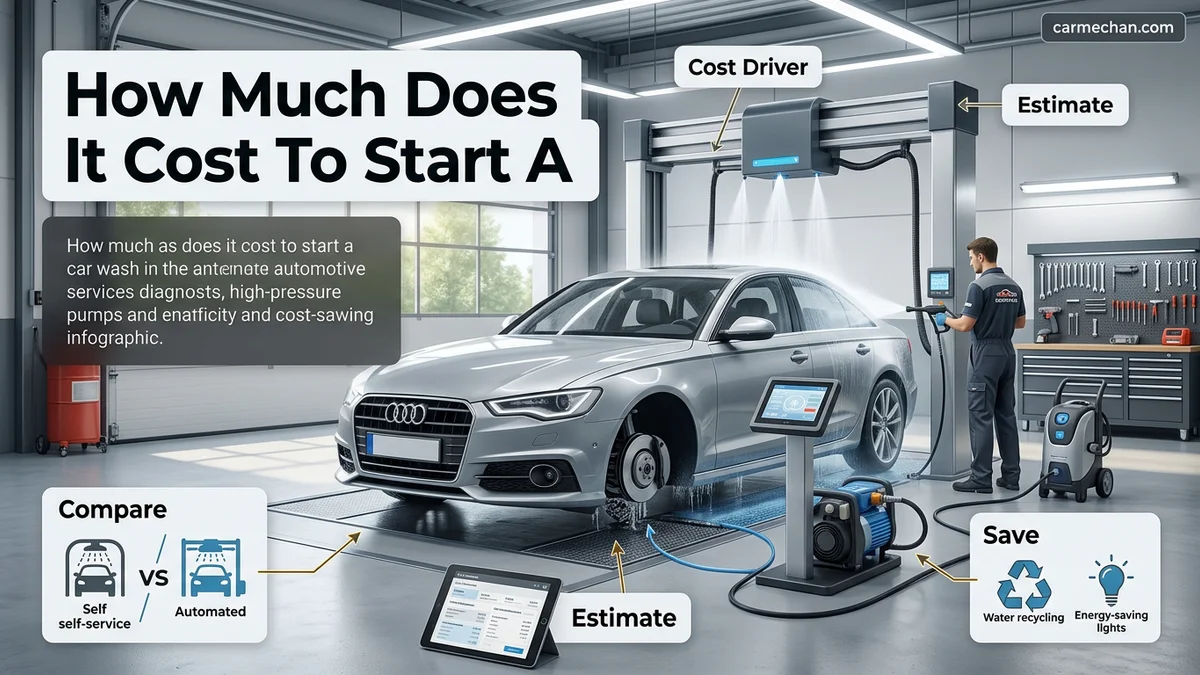
Land Acquisition Expenses
Purchasing suitable land is a primary startup cost. Prices vary dramatically based on location, population density, and visibility. Urban or high-traffic suburban areas command significantly higher prices.
- Self-service/In-bay Automatic:
- Express Tunnel: This model requires more space, increasing land acquisition costs.
Construction Buildout Budgets
Developing the site and constructing the car wash facility is another major expense. This includes grading, plumbing, electrical work, building structures, and landscaping.
- Self-service: Lower construction costs due to simpler structures.
- In-bay Automatic: Moderate construction for enclosed bays and utility connections.
- Express Tunnel: Highest construction costs for longer tunnels and larger buildings.
Equipment Purchase Costs
The type and quality of your washing equipment directly impact your initial investment. This covers wash bays, automatic machines, vacuums, point-of-sale systems, and water treatment units.
- Self-service: $50,000 – $150,000 per bay.
- In-bay Automatic: $100,000 – $500,000 per machine, including installation.
- Express Tunnel: $750,000 – $3,000,000+ for a full system.
Permitting and Licensing Fees
Navigating regulatory requirements involves various fees for permits, licenses, and inspections. These ensure compliance with local zoning, environmental, and business operation laws.
- These costs can range from a few thousand dollars to tens of thousands.
Initial Marketing Outlays
Launching your business successfully requires an initial marketing push. This includes branding, signage, local advertising, digital marketing, and grand opening promotions.
- Budgeting 1% to 5% of your total startup cost is common for effective initial outreach.
While these initial investments secure your business foundation, a complete financial picture demands an understanding of your ongoing operational commitments.
What Are Monthly Operational Costs for Car Washes?
Beyond the initial build, a significant portion of car wash costs comes from the recurring expenses necessary to keep your operation running smoothly month after month.
Utilities Expenditure
Water, electricity, and natural gas are essential for car wash operations. Usage and rates vary based on car wash type, volume, and local utility providers. High-volume washes will naturally incur higher costs.
- Average Monthly Utility Costs (2026):
Labor Payroll Demands
Even automated car washes require some staffing for supervision, maintenance, customer service, and detailing. Tunnel washes have higher labor needs compared to self-service models.
- Average Monthly Labor Costs (2026):
Chemical Supply Costs
The detergents, waxes, and specialized cleaning agents used are a constant expense. Cost depends on the volume of washes, the quality of chemicals, and your suppliers.
- Monthly Chemical Spend (2026):
Maintenance Budget Allocations
Regular maintenance, repairs, and part replacements are critical to prevent downtime and extend equipment life. Proactive maintenance can significantly reduce costly emergency repairs.
- Typical Maintenance Budget (2026):
Insurance Premium Rates
Protecting your asset and business from liabilities, property damage, and worker’s compensation claims is mandatory. Premiums vary based on coverage, location, and claims history.
- Annual Insurance Premiums (2026):
Understanding these ongoing expenses is crucial, but these figures can fluctuate dramatically based on core decisions about your car wash model and location.
Automatic vs Self-Service Car Wash Costs Compared
The overall cost to start a car wash is not a static figure, but rather a dynamic range heavily influenced by several critical decisions you make during the planning phase.
Car Wash Type Differences
Each car wash type presents a distinct cost profile. Self-service washes typically have the lowest entry cost but also lower per-wash revenue. In-bay automatics offer a balance, while express tunnel washes demand the highest investment but promise greater throughput and revenue potential.
- Initial Setup & Monthly Operations:
Location Demographic Impacts
The geographical location of your car wash significantly affects land costs, property taxes, utility rates, and potential customer volume. Urban locations are more expensive but offer higher traffic, while rural areas are cheaper but may have lower demand.
- Property Value Variation:
New Construction or Acquisition
Deciding between building a new facility from the ground up or acquiring an existing car wash impacts your budget. New construction offers customization but often higher upfront costs. Acquiring can reduce initial setup time and some costs, but may involve renovation expenses and existing operational challenges.
- Cost Savings/Increases:
Franchise Model Variations
Opting for a car wash franchise can provide a proven business model, brand recognition, and operational support. However, this comes with franchise fees, ongoing royalties, and marketing fund contributions, which independent operations avoid.
- Franchise vs. Independent Costs:
While these visible factors significantly shape your budget, some critical financial considerations often get overlooked, potentially derailing even the most meticulous plans.
4 Common Hidden Costs in Car Wash Budgets
Beyond the obvious expenditures, understanding how much it costs to start a car wash fully requires acknowledging certain ‘hidden’ or easily overlooked financial commitments.
Working Capital Reserves
Often underestimated, working capital is crucial for covering initial operating expenses before your business generates sufficient revenue. This reserve covers early payroll, chemical purchases, and utilities during the ramp-up phase.
Professional Services Fees
Engaging lawyers, accountants, consultants, and engineers for site planning, legal entity formation, permits, and financial projections adds up. These services are vital for compliance and sound business practices.
Technology Integration Expenses
Modern car washes rely on sophisticated payment systems, surveillance, and operational software. These include point-of-sale systems, loyalty programs, remote monitoring, and security, each with its own setup and ongoing subscription costs.
Water Reclamation Systems
Environmental regulations and water conservation goals often necessitate water recycling systems. While they offer long-term savings on water bills, the initial installation cost for these advanced systems can be substantial.
Understanding these often-overlooked expenditures allows for a more accurate financial projection and leads us to consider the ultimate goal: profitability and how to get there.
Charting Your Course to Car Wash Profitability
Starting a car wash business in 2026, while a considerable investment, holds strong potential for profitability. Your return on investment (ROI) will be heavily influenced by your choice of car wash type, location, and operational efficiency. Express tunnel washes generally offer the highest revenue potential due to their speed and volume capabilities.
However, self-service and in-bay automatic models can also be highly profitable with strategic marketing and cost management.
Financial projections are essential to assess viability, factoring in anticipated revenue, operating costs, and projected customer traffic. Securing financing options typically involves a combination of personal savings, small business loans, or private equity. A well-researched business plan, detailing all these costs and revenue streams, is critical for attracting investors and lenders.
Frequently Asked Questions About Car Wash Costs
What Is the Minimum Cost to Open a Car Wash?
The minimum cost to open a basic self-service car wash in 2026 is generally around $50,000 to $100,000. This estimate covers minimal equipment, simple construction, and essential permits, assuming you own or can lease suitable land at a low rate.
How Much Does an Automatic Car Wash Cost to Build?
Building an automatic car wash, specifically an in-bay automatic, typically costs between $300,000 and $1,000,000 in 2026. This includes land, construction of the bay and support facilities, and the automatic washing equipment itself, alongside necessary utility infrastructure.
What Are the Main Ongoing Expenses for a Car Wash?
The main ongoing expenses for a car wash include utilities (water, electricity, gas), labor wages, chemical supplies, regular maintenance and repairs for equipment, and insurance premiums. These recurring costs are vital to budget for sustained operation.
Can You Finance a Car Wash Business?
Yes, financing a car wash business is common. Options include traditional small business loans (e.g., SBA loans), equipment financing, commercial mortgages for land and construction, and potentially private investment. Lenders will require a business plan and detailed financial projections.
Is a Car Wash a Profitable Business in 2026?
Yes, a car wash can be a very profitable business in 2026, particularly with increasing consumer demand for convenience. Profitability depends on factors like location, efficiency, wash volume, pricing, and effective cost management. Many operators achieve healthy profit margins.