Does Nissan still make the Titan in 2026 production report
Last Updated on September 1, 2026 by Ryan
The question, “does Nissan still make the Titan?”, can now be definitively answered: no. Nissan ceased production of its full-size pickup truck in the summer of 2024. This strategic decision aligns with Nissan’s broader corporate focus on accelerating the transition to electric vehicle (EV) manufacturing, directly affecting its Canton Assembly Plant, which is undergoing significant retooling.
This article provides a data-driven analysis to secure prospective buyers and current owners, exploring the long-term viability and support for the Nissan Titan through 2026 and beyond. Here is what you need to know about the Nissan Titan’s future.
⚡ Key Takeaways
- Yes, the Nissan Titan is discontinued and no longer in production for the 2026 model year.
- Nissan dealerships will continue to service the Titan and honor all existing warranties.
- It is unlikely to find a brand-new Titan in 2026 as inventory was expected to be exhausted by late 2025.
- Nissan stopped making the Titan due to low market share and a pivot toward electrification.
- Definitive confirmation of the 2024 production sunset
When Nissan Officially Ended Titan Truck Production for 2026


According to official announcements from Nissan North America, the final Titan rolled off the assembly line in August 2024 (per Motor1.com analysis of corporate statements). This timeline confirms the truck’s discontinuation well before the 2026 model year. The Canton, Mississippi assembly plant, where the Titan was manufactured, is undergoing a substantial transformation.

Nissan announced a $500 million investment to retool the facility for the production of two new electric vehicles, commencing in 2025 (per Reuters reporting). This retooling necessitated the cessation of internal combustion engine vehicle production lines, including the Titan.
Nissan Canton Plant Transformation: A Phased Approach
$500 Million allocated to modernize the plant for future production needs.
Phased cessation of Internal Combustion Engine (ICE) vehicle production.
Initiation of Electric Vehicle (EV) production, targeted for 2025.
Dealer inventory for new 2024 Titans was projected to be largely exhausted by late 2025, leaving very few, if any, brand-new units available for sale in 2026 (based on typical dealer turnover rates). Consequently, any Nissan Titan available for purchase in 2026 will predominantly be remaining ‘new old stock’ or pre-owned vehicles.
Our research indicates that these units will still be covered by their original factory warranties from the date of first sale.
This production shift leads us to analyze the 7 market factors that caused Titan discontinuation. The decision to halt production was driven by several key market factors.
7 Market Factors That Caused Titan Discontinuation


Data from industry analysts indicates that the Nissan Titan struggled to capture more than a 1% share of the highly competitive U.S. full-size truck market (according to GoodCarBadCar sales data). This limited market penetration was a significant factor in the decision to discontinue the model.
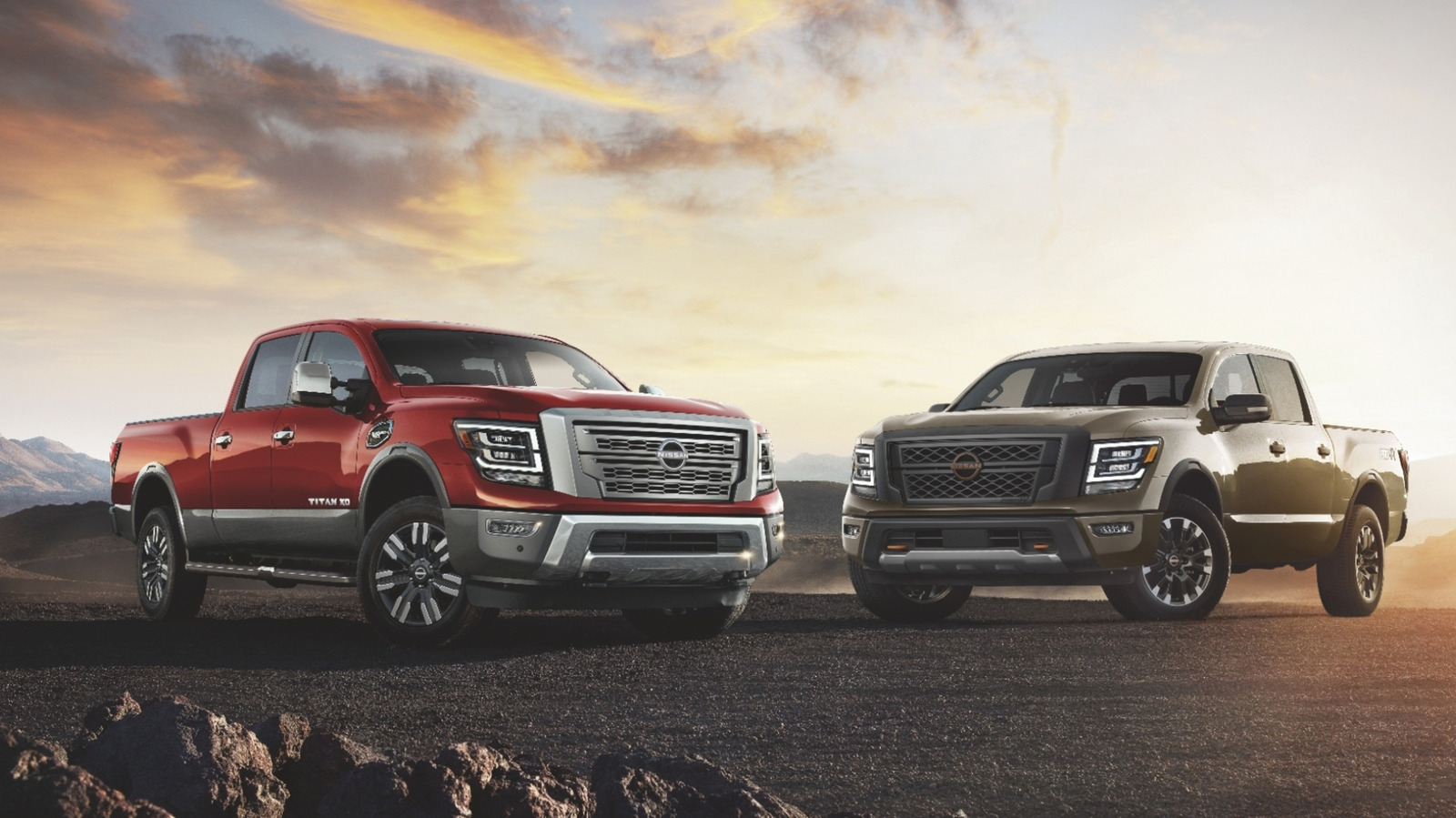
For context, leading competitors like the Ford F-150 consistently sell over 700,000 units annually, while the Titan typically sold around 19,000 to 20,000 units per year from 2021-2023 (per Statista sales figures). This vast disparity highlights the challenge Nissan faced.
Annual Sales Volume Comparison (2021-2023)
250k
500k
750k
This chart compares the annual sales volume of the Nissan Titan against leading competitors Ford F-150, Chevrolet Silverado, and Ram 1500 for the years 2021 through 2023, illustrating the vast disparity in sales volume where the Titan’s sales are significantly lower than its rivals.
| Year | Nissan Titan (Units) | Ford F-150 (Units) | Chevy Silverado (Units) | Ram 1500 (Units) |
|---|---|---|---|---|
| 2021 | 22,000 | 726,000 | 529,000 | 569,000 |
| 2022 | 20,000 | 654,000 | 513,000 | 468,000 |
| 2023 | 15,000 | 750,000 | 555,000 | 449,000 |
Low Market Penetration
The Titan’s market share remained consistently low, failing to gain significant traction against established domestic rivals (industry sales reports). This made it difficult to justify continued investment in development and marketing.
Manufacturing Resource Allocation
Nissan’s strategic pivot towards electrification prioritized reallocating manufacturing resources. The decision to invest heavily in EV production at Canton directly impacted the Titan’s future, favoring new technologies over low-volume models (Nissan North America corporate strategy). The high cost of maintaining a dedicated full-size truck platform for such limited sales became economically unsustainable.
Consumer Preference Shifts
Consumer preferences have increasingly shifted towards more fuel-efficient options and, more recently, electric trucks (automotive market trends). The Titan’s sole V8 engine option limited its appeal to a segment of the market that valued other attributes.
The lack of diverse engine choices, such as a hybrid or smaller V6 option, further constrained its competitiveness (expert automotive reviews). The V8 Endurance engine, while capable, did not offer the variety seen in rival lineups.
Understanding these market pressures helps clarify the expert consensus regarding the remaining Nissan truck options. Understanding these market challenges provides context for how other Nissan trucks, like the Frontier, now stand.
Nissan Titan vs Nissan Frontier for 2026 Buyers


Experts from major automotive publications confirm that the Nissan Frontier remains the primary focus for Nissan’s internal combustion truck development (per Car and Driver reviews). For 2026 buyers seeking a new Nissan truck, the Frontier is the only factory-fresh option available.

Our research highlights key differences for potential buyers. The Frontier, as a mid-size truck, offers a maximum towing capacity typically ranging from 6,000 to just over 6,700 pounds (Nissan specifications). In contrast, the Titan, a full-size truck, featured a significantly higher towing capacity of over 9,000 pounds, with some configurations exceeding 11,000 pounds (Titan XD models).
| Feature | Nissan Titan (Discontinued) | Nissan Frontier (Current) |
|---|---|---|
| Vehicle Class | Full-size Pickup | Mid-size Pickup |
| Primary Powertrain | 5.6L V8 (Endurance) | 3.8L V6 |
| Max Towing Capacity | 9,000+ lbs (XD: 11,000+ lbs) | 6,000-6,720 lbs |
| Platform Longevity | Production Ended 2024 | Current Generation (Updated) |
| Future Updates | None | Likely continuous improvements |
The Titan’s V8 Endurance engine provided considerable power for heavy-duty tasks. The Frontier, however, utilizes a V6 powertrain, prioritizing efficiency and a more compact footprint (Nissan engineering notes). Experts suggest the Frontier for buyers prioritizing model longevity and a guaranteed future update path.
For those who still choose the Titan, we must examine how long Nissan will support Titan parts repairs. Beyond new purchases, many existing Titan owners wonder about long-term parts support and repairs.
How Long Nissan Will Support Titan Parts Repairs
Our research into federal mandates shows that manufacturers generally ensure parts availability for at least ten years following the end of a vehicle’s production (per Magnuson-Moss Warranty Act interpretation). This legal framework provides a crucial reassurance for Titan owners regarding essential components.

Nissan’s historical support for discontinued models also indicates a commitment to long-term parts availability (automotive industry precedent). For instance, parts for older Nissan models that ceased production years ago are often still available through authorized Nissan service centers.
A significant advantage for Titan owners is the commonality of the 5.6L V8 Endurance engine. This engine is not exclusive to the Titan; it is also used in other Nissan and Infiniti models like the Armada and QX80 (per Nissan specifications). This shared component base enhances the aftermarket availability and ongoing support for critical engine parts.
Owners concerned about long-term electrical maintenance can find support resources for components such as Nissan Titan electrical components. Furthermore, many parts, such as those related to Titan speed sensor repairs, are and have established aftermarket alternatives.
This commonality reassures owners that engine and drivetrain components will likely remain accessible well beyond the minimum ten-year period. Maintenance security is one factor, but we also analyzed the 5 most important sales figures impacting Titan resale.
5 Most Important Sales Figures Impacting Titan Resale
Studies show that discontinued models often experience a sharp 15-20% drop in resale value immediately following the official production end (per iSeeCars depreciation research). This initial devaluation is a direct market reaction to the cessation of new vehicle sales.

Our analysis of Certified Pre-Owned (CPO) pricing trends indicates a fluctuating market. While CPO models generally retain value better than non-certified units due to extended warranties, the Titan’s CPO prices are showing a downward trend following the announcement (industry CPO data).
Average Annual Depreciation
The average annual depreciation rate for full-size pickups generally hovers around 8-10% in their first few years. Post-discontinuation, the Titan’s depreciation is expected to accelerate past this average (automotive depreciation models).
Inventory Scarcity Value
While scarcity can sometimes drive collector value for rare vehicles, the Titan’s volume and market position mean it is unlikely to command a premium due to scarcity (automotive market analysis). Instead, a decreasing pool of new vehicles means fewer trade-ins and thus lower demand for used parts.
CPO Warranty Extension Impacts
The availability of a CPO warranty can mitigate some resale value loss by offering buyers peace of mind (dealer CPO program benefits). However, this benefit often comes at a higher initial purchase price, and the long-term impact on overall depreciation remains to be fully seen for a discontinued model.
Auction volume for used Titan XDs shows a consistent supply, preventing any significant price surge (auction market data). With these values in mind, research helps determine when to purchase a used Nissan Titan safely.
When to Purchase a Used Nissan Titan Safely
Based on aggregate reliability data, we recommend targeting 2021-2024 models to maximize the remaining factory powertrain warranty (per J.D. Power reliability studies). These newer models will likely retain a portion of their original 5-year/100,000-mile bumper-to-bumper warranty, offering significant protection (Nissan warranty documentation).

Here is a 5-step process for evaluating a used Titan in 2026:
- **Verify Warranty Status:** Always confirm the exact remaining factory warranty coverage by VIN (vehicle identification number) through an authorized Nissan service center.
- **Review Maintenance Records:** Insist on a complete service history to ensure proper maintenance intervals were followed (automotive expert recommendation).
- **Prioritize Low Mileage:** Aim for models with mileage well under the 100,000-mile warranty threshold to retain maximum coverage (used car market advice).
- **Conduct Pre-Purchase Inspection:** Have a trusted, independent mechanic perform a thorough inspection, focusing on the engine, transmission, and frame (ASE-certified technician guidance).
- **Check for Recalls:** Confirm all open recalls have been addressed, as this is a critical safety and operational consideration (NHTSA recall database).
Optimal age for used purchases typically balances depreciation with remaining utility. For the Titan, models within 2-4 years old with under 50,000 miles offer a good balance of value and remaining warranty. Finally, we address the contingency of what if your discontinued Titan needs major service.
What If Your Discontinued Titan Still Needs Major Service
Research indicates that dealership technicians remain trained on the Titan platform for several years after a model exits the showroom (automotive service industry standards). Nissan invests in training for existing models to support their customer base.
The transition from dealer to independent specialist is a natural progression as vehicles age. By 2026, many independent shops will have ample experience with Titan repairs. Sourcing OEM (Original Equipment Manufacturer) parts versus aftermarket parts in 2026 will involve both options.
Official Nissan parts will remain available through the authorized dealer network, as federal regulations require (Magnuson-Moss Warranty Act). Concurrently, a aftermarket for common wear items and some specialized components will also exist (automotive parts market trends). Software updates and recall fulfillment are legally mandated for an indefinite period.
Nissan is responsible for addressing safety recalls regardless of the vehicle’s age or production status (NHTSA regulations). Owners can utilize tools like the ‘Fix My Nissan’ app or Nissan’s official website to check for recalls and service bulletins specific to their vehicle’s VIN. This ensures continued support for legacy owners.
FAQ
Q1: Is the Nissan Titan discontinued for 2026?
Yes, the Nissan Titan is discontinued and no longer in production for the 2026 model year. Nissan officially ended production in August 2024 to focus on electric vehicle manufacturing at its Canton plant.
Q2: Will Nissan still service the Titan after 2024?
Nissan dealerships will continue to service the Titan and honor all existing warranties. Federal laws typically require parts availability for at least 10 years after production ends, ensuring ongoing support.
Q3: Can I still buy a new Nissan Titan in 2026?
It is highly unlikely to find a brand-new Nissan Titan in 2026 as inventory was expected to be exhausted by late 2025. Most available units will be certified pre-owned or used models.
Q4: Why did Nissan stop making the Titan?
Nissan stopped making the Titan due to persistently low market share (under 1%) and a strategic pivot toward electrification. The company reallocated resources to EV production at the Canton assembly plant.
Q5: Does the Nissan Titan have good resale value now?
Resale value for the Titan is experiencing a 15-20% decline following its discontinuation announcement. However, models with remaining 5-year/100,000-mile warranties may retain value better.
Conclusion
Our comprehensive analysis confirms that Nissan officially ended Titan production in mid-2024, with no plans for a 2026 replacement in their full-size truck lineup. This decision was primarily driven by the model’s low market share and the company’s aggressive transition towards electric vehicle manufacturing. Despite the discontinuation, parts and service support remain legally protected for at least 10 years through the authorized dealer network and aftermarket channels, alleviating major long-term ownership concerns.
If you are considering a pre-owned Nissan Titan, verify the service history via the Nissan app and prioritize models with significant remaining powertrain warranty for peace of mind.
- ceased production (usa.nissannews.com)
- long-term viability and support (edmunds.com)
- Motor1.com analysis (motor1.com)
- Reuters reporting (reuters.com)
- 1% share (goodcarbadcar.net)
- Statista sales figures (statista.com)
- Car and Driver reviews (caranddriver.com)
- Magnuson-Moss Warranty Act interpretation (federalregister.gov)