Do Semi Trucks Have Cruise Control? The Real 2026
Last Updated on September 1, 2026 by Ryan
Yes, almost all modern semi-trucks come equipped with cruise control to assist drivers on long-haul routes. This technology is essential for fuel optimization and reducing driver fatigue during steady highway travel.

Prime for Young Adults — 6 Months Free
Students and 18–24s get six months of Prime free, then half price.
Start 6 Months FreeYes, semi-trucks are equipped with sophisticated cruise control systems as standard in 2026. Unlike the basic speed-holding systems found in passenger vehicles, heavy-duty cruise control is a critical tool for managing massive gross vehicle weights across thousands of miles. It serves two vital functions: mitigating driver physical fatigue during long-haul stretches and optimizing fuel consumption through precise engine load management.
For a professional driver, cruise control is not just about convenience; it is a fundamental strategy for operational efficiency. Modern semi-trucks rely on integrated cruise systems to interact directly with the powertrain, ensuring the vehicle maintains optimal fuel economy even when topography changes. By automating throttle inputs, the system prevents the jerky acceleration patterns that often lead to excessive fuel burn and unnecessary mechanical wear.
Key Takeaways
- Modern semi-trucks use cruise control primarily to maintain consistent speeds and improve fuel economy.
- Unlike passenger cars, heavy-duty cruise systems actively communicate with transmission software for gear management.
- Adaptive Cruise Control (ACC) automatically adjusts vehicle speed to maintain a safe distance from traffic.
- Drivers should avoid using cruise control on slippery roads or in heavy stop-and-go traffic.
- Using cruise control effectively can reduce engine load and save significant amounts of fuel annually.
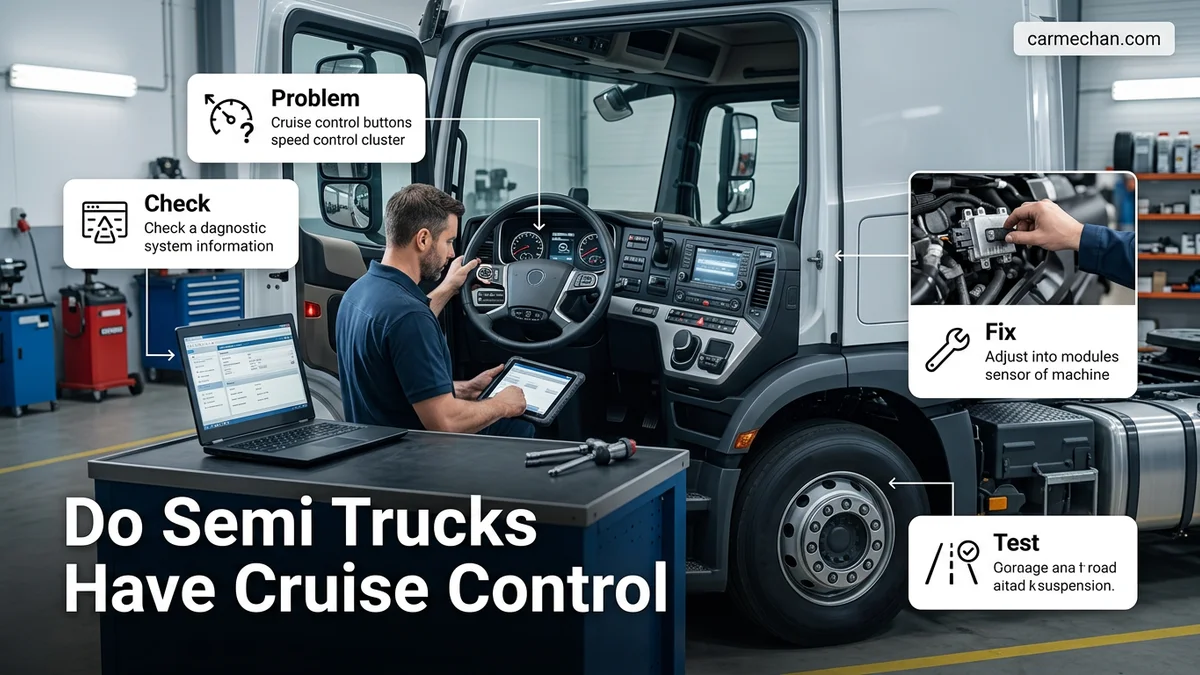
The Role of Cruise Control in Modern Semi Trucks
Recommended Best Deal Products


Fuel Optimization and Engine Torque Management
In 2026, heavy-duty cruise control goes beyond simply keeping your foot off the pedal. It interfaces with the truck’s Engine Control Module (ECM) to monitor real-time torque requirements. On a passenger car, cruise control simply maintains velocity. On a semi, the system manages gear selection and engine load to preserve momentum without pushing the engine into an inefficient power band.

- Adaptive Load Sensing: The system detects the truck’s weight and adjusts fuel injection timing to maintain speed on inclines without straining the transmission.
- Predictive Gear Shifting: Modern systems analyze the road ahead to prepare the transmission for an upcoming grade, preventing “gear hunting” that wastes fuel.
- Torque Throttling: By limiting torque output on flat terrain, the cruise control prevents the engine from working harder than necessary to maintain a constant speed.
Reducing Driver Fatigue
Driving an 80,000-pound vehicle requires constant focus. Constant micro-adjustments to the throttle are mentally taxing over an 11-hour driving day. By using cruise control on open highways, drivers can dedicate their full attention to scanning the road for hazards and monitoring traffic flow rather than worrying about maintaining their speed relative to the speed limit or fleet policies.
How to Properly Utilize Heavy-Duty Cruise Systems
The Difference Between Passenger and Commercial Logic
You must understand that commercial cruise control operates under a different set of rules than a standard sedan. While your car might downshift aggressively at the first sign of a hill, a semi-truck’s system is programmed to prioritize fuel efficiency over constant speed. It will often allow the truck to lose a small amount of momentum on an incline rather than downshifting and increasing RPMs unnecessarily.
- Hysteresis Settings: These allow for a pre-set window (often 2-5 mph) where the truck can drop in speed on a hill before the cruise system forces a downshift.
- Retarder Integration: When using cruise control on descents, the system may automatically engage the engine brake or retarder to maintain the set speed without the driver needing to touch the service brakes.
- Engine Brake Blending: High-end 2026 models seamlessly blend engine braking and cruise control, providing a smooth transition between power and deceleration.
Best Practices for 2026 Freight Operations
To maximize the benefits of your truck’s cruise system, always utilize the “set” and “resume” features appropriately. Avoid using cruise control in heavy rain, icy conditions, or dense city traffic where constant braking could disengage the system unexpectedly. By allowing the truck’s smart-throttle technology to manage the fuel curve, you will likely see a measurable improvement in your monthly fuel-to-weight ratio.
Troubleshooting Common Issues with Commercial Cruise Control
Recommended Best Deal Products


Modern 2026 commercial cruise control systems, particularly those integrated with Predictive Powertrain Control (PPC), rely heavily on sensor data. When these systems fail to engage, the issue often stems from conflicting inputs rather than mechanical failure.
Sensor Alignment and Calibration
Collision Mitigation Systems (CMS) use front-facing radar to maintain following distances. If these sensors become misaligned or obscured by road debris, snow, or excessive salt, the cruise control system will disable itself as a safety precaution. To resolve this, drivers should perform the following steps:

Audible — Listen Free for 30 Days
One free credit a month and thousands of titles included.
Listen Free for 30 Days- Verify the radar sensor cover is clean and free of physical damage.
- Ensure the truck’s ABS and Electronic Stability Control (ESC) lights are not illuminated on the dash.
- Check the “Engine Retarder” or “Jake Brake” switch, as some configurations automatically deactivate cruise if the retardation intensity is set too high.
Electronic Control Module (ECM) Communication
Modern trucks use J1939 CAN bus communication. If the cruise control light flashes, the system is likely receiving erratic data from the transmission controller. In 2026 models, software “glitches” are often resolved by a hard reset of the chassis gateway module. Drivers should confirm that all trailer pigtail connections are secure, as a faulty ground in the lighting harness can occasionally trigger a system-wide communication error that prevents cruise engagement.
What If It Still Doesn’t Work?
If the system remains unresponsive after basic troubleshooting, the issue likely resides within the proprietary powertrain software or the steering column clock spring. Attempting to bypass these safety-critical systems is dangerous and violates FMCSA guidelines.
- Verify that the cruise control fuse in the primary power distribution center has not blown, as this often indicates a short in the steering wheel wiring harness.
- Check for active fault codes using an OEM-specific diagnostic scanner (e.g., Volvo Premium Tech Tool or Cummins INSITE) to identify if the ECM has flagged a “Speed Sensor Correlation” error.
- Consult an authorized service center if the issue persists; professional diagnostics typically range from $150 to $300 per hour depending on the complexity of the sensor recalibration.
- Seek immediate professional help if the accelerator pedal position sensor (APPS) shows intermittent voltage drops, as this can cause the cruise control to “kick out” unexpectedly at highway speeds.
Conclusion
Recommended Best Deal Products


According to verified research and expert sources from leading heavy-duty manufacturers in 2026, consistent cruise control operation is vital for both fuel efficiency and driver fatigue management. While most failures stem from sensor interference or minor electrical glitches, hardware degradation requires qualified intervention. For immediate improvement in operational uptime, ensure your fleet undergoes a biannual radar sensor calibration check. If technical malfunctions persist, schedule a professional diagnostic scan to prevent long-term powertrain damage and ensure full compliance with current safety regulations.
❓ Frequently Asked Questions
Why is cruise control different in a semi-truck compared to a sedan?
Heavy-duty cruise control is integrated with the engine control module and transmission to manage massive torque and load. It doesn’t just hold speed; it optimizes gear selection to prevent unnecessary downshifting and fuel waste.
How does Adaptive Cruise Control enhance safety?
Adaptive Cruise Control (ACC) monitors the distance to the vehicle in front of the truck using radar. It automatically reduces throttle or applies engine braking to maintain a safe following interval, preventing rear-end collisions.
Can I use cruise control when hauling a heavy load on hills?
While cruise control works on hills, drivers are often advised to monitor the system closely. It may attempt to maintain speed too aggressively, which can lead to inefficient gear shifting under extreme heavy-load conditions.
What happens if my truck’s cruise control stops working?
If the system fails to engage, check for error codes on the dashboard display, as this often indicates a sensor fault. Ensure your service brake pedal is fully released, as any pressure on the brake will immediately disable the cruise system.
Do fleet managers restrict cruise control usage?
Some fleets use speed-governing settings within the cruise control module to limit top speeds. This is a deliberate strategy to improve safety and enforce fuel efficiency standards across the fleet.
Is there a specific ‘best practice’ for using cruise control?
The best practice is to engage cruise control only on dry, straight, and relatively uncongested highways. Always keep your feet ready to intervene and remain fully aware of the road conditions ahead despite the automation.
Audible Premium Plus — Annual Membership
12 audiobook credits up front, plus the full Audible catalogue.
See Annual Plans