2023 Kia Sportage TPMS Reset Button Location & Guide
Last Updated on September 1, 2026 by Ryan
📋 Table of Contents
- 🎯 Key Takeaways
- Understanding the 2023 Kia Sportage Automatic TPMS Logic
- Master Your 2023 Kia Sportage TPMS in 7 Simple Steps
- Factors Influencing Tire Pressure Sensor Accuracy
- Comparing Direct vs. Indirect TPMS in Modern Kia Models
- Benefits of Proper Tire Calibration for Vehicle Longevity
- Conclusion
- 💬 Quick Questions & Answers
- ❓ Frequently Asked Questions
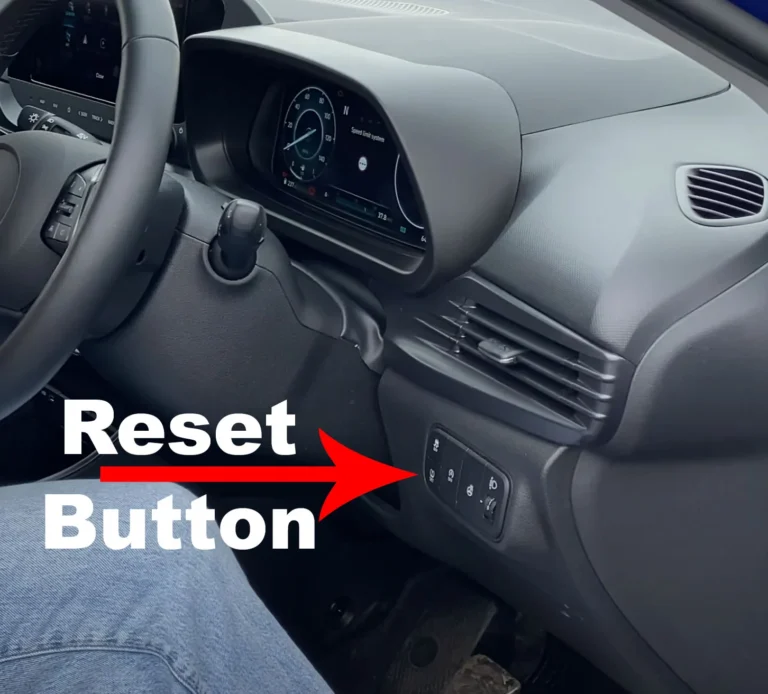
The 2023 Kia Sportage does not feature a physical TPMS reset button because the system is engineered to recalibrate automatically. Drivers must simply inflate tires to the correct PSI and drive for several miles to clear the dashboard warning light.
🎯 Key Takeaways


- The 2023 Kia Sportage utilizes an automatic TPMS reset system instead of a manual button.
- Inflate tires to the specific PSI listed on the driver-side door jamb sticker.
- Drive the vehicle for 10-20 minutes above 15 mph to trigger sensor recalibration.
- Significant outdoor temperature drops often cause temporary low-pressure alerts in the Sportage.
- A flashing TPMS light usually indicates a sensor malfunction rather than low tire pressure.
Have you ever started your 2023 Kia Sportage on a chilly morning only to be greeted by a glowing orange light on your dash? That tiny horseshoe-shaped icon can cause instant stress for any driver. It is your Tire Pressure Monitoring System (TPMS), and it is designed to keep you safe on the road. Knowing how this system works is the first step toward a smoother, safer drive every day.
Your Kia Sportage is a high-tech machine that relies on precise data to perform its best. Proper tire pressure does more than just keep the light off. It helps you save money on gas and makes your tires last much longer. In this guide, we will dive deep into where that elusive reset button is hiding and how your Kia thinks about its tires. Understanding your vehicle helps you stay in control and avoids unnecessary trips to the mechanic.
Understanding the 2023 Kia Sportage Automatic TPMS Logic


The 2023 Kia Sportage uses a very modern approach to monitoring your tires. If you are looking for a physical “Reset” button under the steering wheel or in the glove box, you might be looking for a long time. In this model year, Kia has moved away from manual buttons in favor of an automatic relearning logic. This means the car is smart enough to know when you have fixed the pressure without you needing to tell it.

The Shift from Physical Buttons to Digital Sensors
In older cars, you often had to press and hold a button to tell the computer that the tires were full. The 2023 Sportage uses a “Direct TPMS” setup. This system features battery-powered sensors located inside each wheel. These sensors talk directly to the car’s main computer using radio frequencies. Because the system is constant and direct, it recognizes changes in real-time. This eliminates the need for a physical button, as the software handles the calibration process on its own while you drive.
How the Auto-Reset Logic Operates
The “logic” of the Sportage system is based on motion and stability. When the sensors detect that the air pressure has returned to the recommended levels, they prepare to clear the alert. However, the car wants to be sure the pressure is stable before it turns the light off. It looks for a consistent signal over a short period of driving. This smart logic prevents the light from flickering on and off every time you hit a small bump or a puddle.
- No manual input required: You do not need to navigate complex menus just to reset the light.
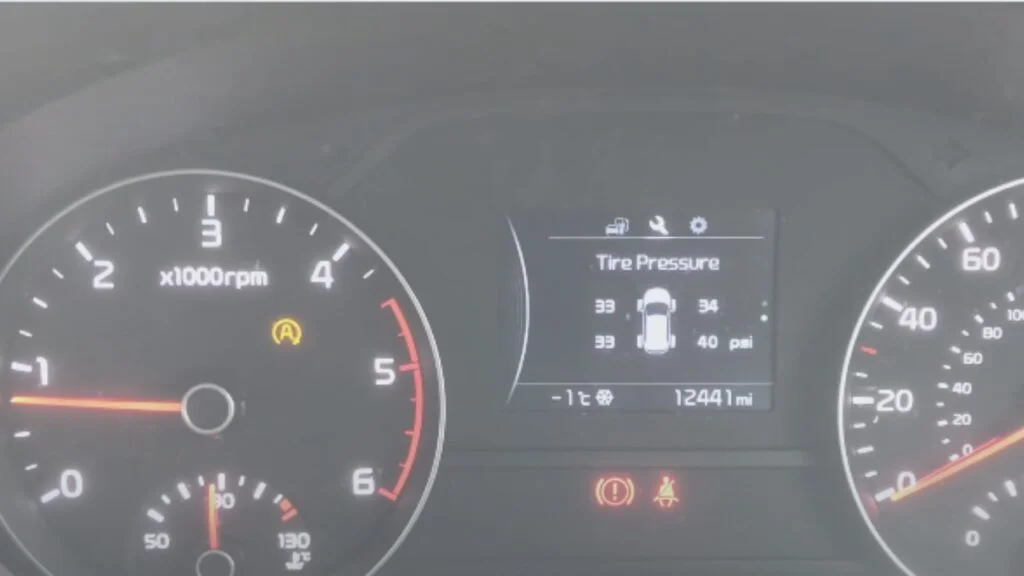
- Real-time updates: The digital cluster displays the exact PSI for each tire once the vehicle is in motion.
- Constant Protection: The system monitors pressure even when the car is parked, though it usually updates the display once you start driving.
- Error Reduction: Automatic logic reduces the chance of “false resets” where a driver might accidentally clear a warning without actually fixing the tire.
Master Your 2023 Kia Sportage TPMS in 7 Simple Steps


The Tire Pressure Monitoring System (TPMS) in your 2023 Kia Sportage is a critical safety feature designed to alert you when your tire pressure drops to a dangerous level. However, unlike older vehicles that utilized a physical button hidden under the dashboard, the modern Sportage utilizes a sophisticated digital interface and an auto-learning system. Following these steps correctly ensures that your sensors are calibrated, your fuel economy is optimized, and your safety on the road is maintained. This guide will walk you through the digital “location” of the reset function and the physical actions required to clear that persistent dashboard light.
Step 1: Locate and Verify Your Cold Tire Pressure Specifications
What you need: Access to the driver’s side door jamb (B-pillar) and a clear view of the Tire and Loading Information placard.
Instructions: Before attempting any digital reset, you must know the exact PSI (pounds per square inch) your vehicle requires. Open the driver’s door and look at the white and red sticker located on the frame. For the 2023 Kia Sportage, this is typically 33 to 35 PSI depending on your specific trim and wheel size (17, 18, or 19 inches). It is crucial to check this when the tires are “cold,” meaning the car has been parked for at least three hours or driven less than a mile. Using the pressure listed on the tire sidewall itself is a common mistake; that number represents the maximum pressure the tire can hold, not the recommended pressure for your Kia’s suspension and weight distribution.
Pro Tip: Take a quick photo of this sticker with your phone. Having it handy prevents you from having to reopen the door repeatedly while at the air pump, especially in rainy or cold weather.
Step 2: Inspect and Adjust All Four Tires
What you need: A high-quality digital tire pressure gauge and an air compressor or gas station air pump.
Instructions: Remove the valve stem caps from all four tires. Use your digital gauge to check the current pressure. If the TPMS light is on, you will likely find one or more tires are below the threshold (usually 25% below recommended levels). Inflate the tires precisely to the PSI found in Step 1. Even if only one tire looks low, temperature fluctuations often cause all tires to drop slightly; ensuring they are all equal is the only way to satisfy the TPMS computer. Don’t forget to check the condition of the valve stems for any audible leaks or cracks in the rubber. Once finished, replace the caps tightly to prevent dirt and moisture from entering the sensor mechanism.
Pro Tip: If you are filling your tires at a gas station after driving several miles, add an additional 2-3 PSI above the door placard recommendation to account for the “hot” air expansion. Once the tires cool down, they will settle at the correct cold PSI.
Step 3: Accessing the Instrument Cluster Menu
What you need: The vehicle must be parked, the engine can be running, or the ignition can be in the “ON” position (press the Start button twice without hitting the brake).
Instructions: Sit in the driver’s seat and look at the right side of your steering wheel. You will see a button that looks like a stack of pages or a “Menu” icon. Press this button to cycle through the different modes on your digital instrument cluster or the central infotainment screen. You are looking for the “User Settings” or the “Information” tab (often represented by a small gear icon or a car icon). In the 2023 Sportage, the TPMS data is usually found under the “Convenience” or “Vehicle” sub-menus. Navigating this correctly is the digital equivalent of finding the “reset button” found in older car generations.
Pro Tip: If your Sportage is equipped with the dual 12.3-inch panoramic displays, you may find it easier to navigate via the “Setup” button on the infotainment dash, then selecting “Vehicle” -> “Cluster” -> “Tire Pressure.”
Step 4: Navigating to the Tire Pressure Display
What you need: The steering wheel “OK” button and the toggle switch located on the right spoke of the steering wheel.
Instructions: Once you are in the correct menu, use the toggle switch (moving it up or down) to find the screen that displays individual tire pressures. On the 2023 model, this screen will often show a bird’s-eye view of the vehicle with four numbers indicating the current PSI of each tire. If the vehicle has been stationary, it might show a message saying “Drive to display.” This is normal. The “reset” on a 2023 Sportage is not a single click but a process of system recognition. Ensure that the screen shows all tires are roughly at the same level you set in Step 2. If one is significantly different, you may have a faulty sensor or a puncture.
Pro Tip: If the screen says “Drive to display,” do not panic. The 2023 Sportage uses “Direct TPMS” sensors that require centrifugal force (wheel rotation) to wake up and transmit data to the ECU.
Step 5: Performing the “Auto-Learn” Drive Cycle
What you need: A clear stretch of road where you can maintain a steady speed of at least 15-20 mph.
Instructions: The 2023 Kia Sportage does not require you to hold a button to reset; it uses an “Auto-Learn” feature. To trigger this, you must drive the vehicle. Start the car and drive at a consistent speed of over 20 mph (32 km/h) for approximately 10 to 20 minutes. During this time, the TPMS sensors inside the wheels send updated high-frequency signals to the vehicle’s central computer. The computer compares these new readings to the factory-set thresholds. If the pressures are consistent and within the correct range, the computer will automatically extinguish the low-pressure warning light and update the digital display with the new PSI readings.
Pro Tip: Avoid stop-and-go traffic for this specific drive. A steady cruise on a suburban road or highway is much more effective at helping the sensors “check-in” with the vehicle’s receiver.
Step 6: Troubleshooting a Persistent Light
What you need: Observation of the dashboard light’s behavior (Steady vs. Flashing).
Instructions: If you have completed the drive and the light remains on, pay close attention to how the light behaves when you first start the car. If the TPMS light flashes for about 60 seconds and then stays solid, this indicates a system malfunction—likely a dead battery in one of the sensors or a faulty receiver. If the light stays solid from the moment you start the car, it simply means the pressure is still detected as too low. Re-check your gauges. In some 2023 trims, the system is very sensitive and might require you to over-inflate by 2 PSI, drive to reset, and then bleed the air back down to the recommended level to “shock” the sensor into updating.
Pro Tip: Cold snaps (winter mornings) are the most common cause of “phantom” lights. Air densifies in the cold, dropping the PSI just enough to trigger the light. If the light goes off after 10 minutes of driving in the cold, your tires are likely just on the edge of the threshold.
Step 7: Confirming the System Status
What you need: A final glance at the instrument cluster after the drive cycle.
Instructions: Once the light has disappeared, toggle back to the tire pressure display screen on your dashboard. You should now see active readings for all four wheels. If the numbers match your manual gauge readings within 1-2 PSI, the system is successfully calibrated. The 2023 Sportage is designed to be user-friendly, and once this “handshake” between the sensors and the computer is complete, no further action is needed until your next significant temperature change or tire rotation. Ensure you have replaced all valve caps, as these protect the delicate internal components of the TPMS sensors from road salt and debris.
Pro Tip: After a tire rotation, the system may briefly show the wrong tire in the wrong position. The “Auto-Learn” drive cycle mentioned in Step 5 also re-maps the sensor locations, so be patient for the first 10 miles.
✅ Final Checklist
- Verified PSI on the driver-side door B-pillar sticker?
- Adjusted all four tires (including the spare if it has a sensor) to the correct cold PSI?
- Drove the vehicle for at least 10 minutes at speeds above 20 mph?
- Confirmed the TPMS warning light on the dashboard has extinguished?
- Verified that the digital PSI display in the instrument cluster shows active, accurate numbers?
Important Notes:
- Safety First: Never ignore a TPMS light. Driving on underinflated tires can cause a blowout, reduce braking efficiency, and cause permanent damage to your rims.
- Professional Help: If the light continues to flash after a reset attempt, a sensor may be physically damaged. Seek a professional technician to use a TPMS scan tool to identify the specific failing sensor.
- Estimated Time: 20–30 minutes (including the drive cycle).
- Cost: $0 (Free if using your own gauge and pump; $1.50 at a gas station air pump).
Factors Influencing Tire Pressure Sensor Accuracy
Even though the 2023 Kia Sportage is advanced, several outside factors can trick your sensors. You might notice your TPMS light coming on even if you don’t have a nail in your tire. Understanding these factors can save you from a lot of confusion. Sensors are sensitive instruments, and they react to the environment just as much as they react to the air inside your rubber tires.
Weather and Temperature Fluctuations
Temperature is the most common reason for a TPMS alert. Physics tells us that air shrinks when it gets cold and expands when it gets hot. For every 10-degree drop in temperature, your tires can lose about one pound of pressure (PSI). On a very cold winter morning, your tires might drop just enough to trigger the light. Once you start driving and the tires warm up from friction, the pressure rises, and the light might disappear. This is why it is always best to check your pressure when the tires are “cold” or have been sitting for a while.
Sensor Age and Battery Life
Each sensor inside your Kia Sportage wheel has a small internal battery. These batteries are designed to last a long time, usually between five and ten years. However, extreme heat or heavy driving can wear them out faster. If a battery starts to fail, the sensor may send “garbage data” to the car’s computer. This can cause the TPMS light to blink or show an error message even if your tires are perfectly inflated. If your car is brand new, this is unlikely, but it is something to keep in mind as your Sportage grows older.
Common Environmental Impacts on TPMS
Beyond just the weather, where you drive matters. If you live in a high-altitude area, the outside air pressure is lower. This change in “ambient pressure” can affect how the sensor reads the pressure inside the tire. Additionally, electronic interference from large power lines or certain radio towers can occasionally disrupt the signal between the wheel and the car. While rare, these “ghost” signals can cause a temporary warning light.
- Seasonal Changes: Expect the TPMS light more often during the transition from autumn to winter.
- Altitude Shifts: Driving from sea level to the mountains can cause pressure readings to fluctuate.
- Physical Damage: Hitting a deep pothole or a curb can sometimes jar a sensor, causing it to read incorrectly or fail entirely.
- Aftermarket Wheels: If you change your wheels for winter, you must ensure the new wheels have compatible sensors, or the light will stay on forever.
By keeping these factors in mind, you can approach a TPMS light with calm. Most of the time, your Kia is just reacting to the world around it. Knowing that there is no button to find allows you to focus on the actual health of your tires rather than searching for a shortcut. Maintaining that perfect PSI is the best way to keep your Sportage running like it just rolled off the showroom floor.
Comparing Direct vs. Indirect TPMS in Modern Kia Models
The 2023 Kia Sportage utilizes a highly sophisticated Tire Pressure Monitoring System (TPMS) to keep you safe on the road. However, not all TPMS setups are created equal. In the automotive world, systems generally fall into two categories: Direct and Indirect. Understanding which one your Sportage uses is key to managing your vehicle’s maintenance expectations and troubleshooting that persistent dashboard light.
The Precision of Direct TPMS Sensors
The 2023 Kia Sportage is equipped with a Direct TPMS. This means each wheel has a physical pressure sensor mounted inside the tire, usually integrated with the valve stem. These sensors transmit real-time data directly to the vehicle’s computer. This system is significantly more accurate than older technology because it measures the actual air pressure in pounds per square inch (PSI) rather than guessing based on wheel speed.
- Individual Monitoring: You can often see the specific PSI for each tire on your digital instrument cluster.
- Temperature Sensitivity: These sensors are sensitive enough to detect pressure drops caused by cold morning temperatures before you even start driving.
- Battery Powered: Because these are physical devices, they rely on small internal batteries that typically last 5 to 10 years.
Why the Distinction Matters for Sportage Owners
Indirect systems, often found in older or budget-conscious models, use the Anti-lock Braking System (ABS) to track how fast the wheels are spinning. If one tire is low, its diameter changes, and it spins at a different rate. While simpler, this method is prone to “false positives” and cannot provide specific pressure readings. Because your Sportage uses the Direct method, the information you see on your dashboard is far more reliable, meaning when the light comes on, there is almost certainly a genuine pressure deviation that needs your attention.
Benefits of Proper Tire Calibration for Vehicle Longevity
Keeping your tires calibrated to the manufacturer’s specifications is about much more than just making a warning light disappear. For a modern SUV like the 2023 Kia Sportage, proper inflation is a foundational element of vehicle health. When your tires are at the “sweet spot” indicated on your driver-side door jamb, every other system in the car performs more efficiently.
Maximizing Fuel Efficiency and Tire Tread Life
Under-inflated tires create more rolling resistance, which forces your Sportage’s engine to work harder and consume more fuel. Over time, even a slight dip in pressure can lead to a noticeable increase in your monthly gas bill. Furthermore, improper calibration leads to uneven tire wear, which can cut the lifespan of a premium set of tires in half.
- Even Wear: Correct pressure ensures the “contact patch” meets the road evenly, preventing premature balding on the edges or the center of the tread.
- Optimized MPG: Maintaining the recommended 35 PSI (average for most trims) ensures the engine isn’t fighting against “mushy” rubber.
- Cost Savings: Regular calibration can save a driver hundreds of dollars in premature tire replacements over the life of the vehicle.
Enhancing Handling and Suspension Health
Your tires act as the first line of defense for your suspension system. If tires are over-inflated, they become rock-hard, transferring every bump and pothole vibration directly into the struts and bushings. Conversely, under-inflated tires make the steering feel “heavy” and sluggish during emergency maneuvers. By keeping the TPMS system calibrated and the tires correctly filled, you ensure the Sportage handles with the agility and comfort the Kia engineers intended.
Conclusion
Understanding the nuances of the 2023 Kia Sportage TPMS is essential for any proactive owner. By recognizing that your vehicle uses a precision Direct TPMS, you can better appreciate the accuracy of your dashboard alerts and the importance of maintaining those individual sensors. Consistent tire calibration isn’t just about safety; it is a simple way to protect your investment, improve your fuel economy, and ensure a smoother ride for years to come.
Moving forward, make it a habit to check your tire pressure manually at least once a month, especially during seasonal temperature shifts. Don’t wait for the light to tell you there is a problem! Take five minutes this weekend to verify your PSI levels—your Sportage will thank you for it.
💬 Quick Questions & Answers
Where is the 2023 Kia Sportage TPMS reset button?
There is no physical button; the system resets automatically once correct tire pressure is detected during driving.
How long does it take for the TPMS light to turn off?
It typically takes 10 to 20 minutes of continuous driving at speeds over 15 mph.
What is the recommended PSI for a 2023 Sportage?
The standard recommendation is usually 35 PSI, but you should always verify the sticker on your driver-side door frame.
Does cold weather trigger the TPMS light?
Yes, air contracts in cold temperatures, which can lower tire pressure enough to trigger the sensor.
Can I reset the TPMS while the car is parked?
No, the vehicle must be in motion for the sensors to transmit new data to the ECU.
❓ Frequently Asked Questions
Why did Kia remove the physical TPMS reset button in the 2023 Sportage?
Kia transitioned to a high-frequency direct monitoring system that communicates with the car’s computer in real-time. This automation removes human error and ensures the system only clears when the tires are actually safe.
What should I do if the TPMS light stays on after inflating the tires?
First, ensure all tires, including the spare if equipped with a sensor, are at the exact recommended PSI. If the light persists after 20 minutes of driving, you may have a slow leak or a faulty sensor that requires professional diagnosis.
How do seasonal temperature shifts impact the Sportage TPMS?
Tire pressure can drop approximately 1 PSI for every 10-degree Fahrenheit decrease in outdoor temperature. This is why many Sportage owners see the warning light during the first cold morning of autumn.
Is there a difference in TPMS functionality between the Sportage LX and SX trims?
While the reset logic is the same, higher trims like the SX or X-Line often display individual tire pressures on the digital cluster. The base LX trim may only show a general warning light without specifying which tire is low.
Can aftermarket wheels interfere with the TPMS system?
Yes, if the aftermarket wheels do not have compatible Kia TPMS sensors installed, the system will show a persistent error. You must ensure that any new sensors are programmed to the 433MHz frequency used by Kia.
What does it mean if my TPMS light is flashing instead of solid?
A flashing TPMS light for approximately one minute followed by a solid light indicates a system malfunction. This usually means one of the sensor batteries has died or a sensor is no longer communicating with the vehicle.