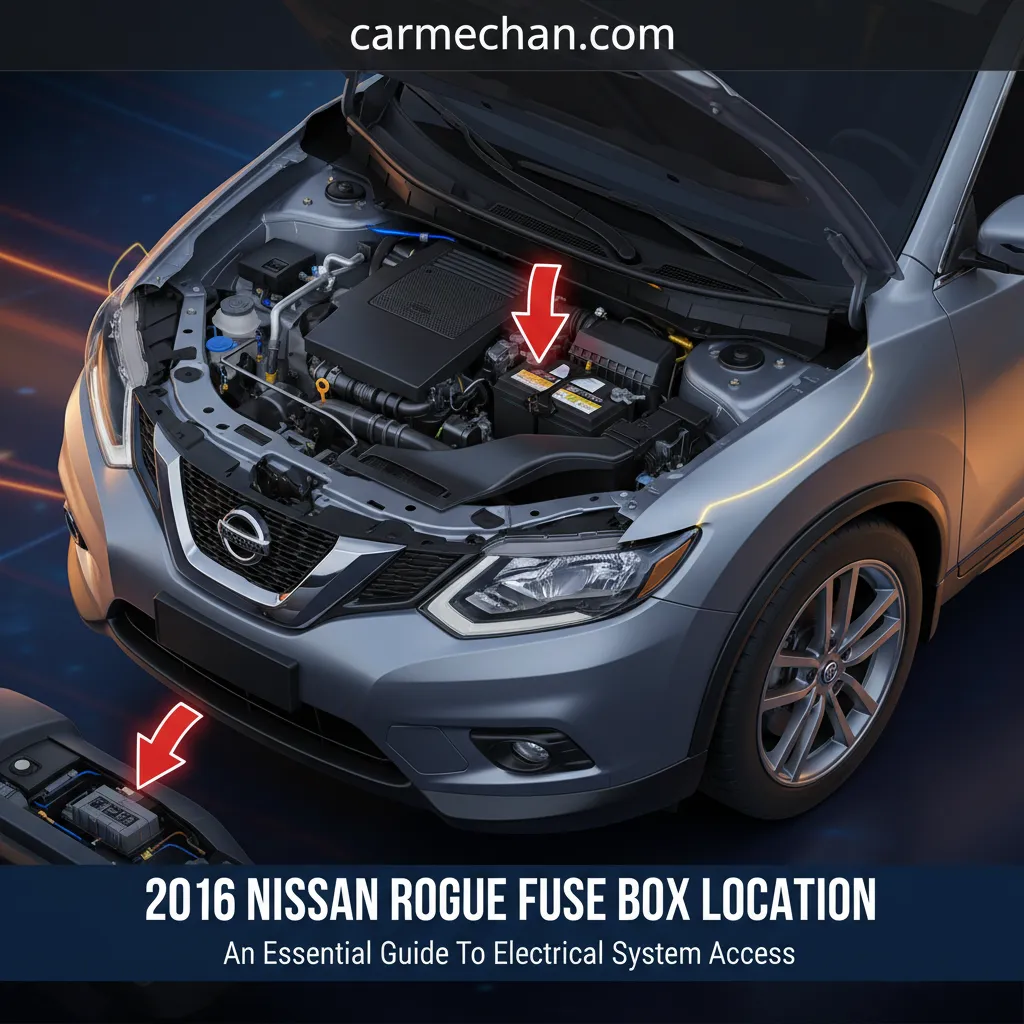
2016 Nissan Rogue Fuse Box Location: An Essential Guide To Electrical System Access
Ensuring the reliable operation of your 2016 Nissan Rogue often hinges on understanding its fundamental electrical components. Modern vehicles, while sophisticated, are fundamentally powered by intricate electrical systems, each protected by a network of fuses. For many owners, however, locating and understanding the function of fuse boxes in these complex machines can be a challenging task, leading to uncertainty when an electrical issue arises. This authoritative guide will meticulously detail the precise locations of both interior and under-hood fuse boxes in your 2016 Nissan Rogue, explain their respective functions, and provide comprehensive instructions for safe access and inspection, empowering you to address common electrical concerns with confidence and maintain your vehicle’s peak performance.


Understanding the 2016 Nissan Rogue’s Electrical System and Fuse Principles

📤 Share Image
At the core of any modern vehicle’s functionality lies its intricate electrical system, a complex web of wires, sensors, and electronic control units. Protecting this vital network are fuses, fundamental safety devices engineered to prevent severe damage from overcurrent events. A fuse functions as a deliberate weak link in an electrical circuit. When the current flowing through a circuit exceeds a predetermined safe limit, the metallic filament within the fuse heats up and melts, thereby breaking the circuit and instantly cutting off power. This sacrificial action safeguards more expensive components, prevents wiring from overheating, and mitigates the risk of electrical fires.
The 2016 Nissan Rogue, like most contemporary automobiles, utilizes various types of fuses tailored to specific current ratings and circuit demands. The most common are blade fuses (also known as ATO or mini-blade fuses), which are compact and often color-coded to indicate their amperage rating. For lower amperage circuits, such as those for interior lighting or the radio, you’ll primarily find ATM mini fuses. Higher amperage circuits, supplying power to systems like the anti-lock brakes or cooling fans, frequently employ larger Maxi fuses. Additionally, some main power distribution lines are protected by fusible links, which are essentially high-amperage, slow-blow fuses designed to protect against catastrophic overloads.
A blown fuse is a clear indicator of an underlying electrical anomaly. Common reasons include a short circuit, where insulation has worn away and a live wire touches a ground, creating an abnormally low resistance path for current. Component malfunctions, such as a faulty power window motor drawing excessive current, can also cause a fuse to blow. Furthermore, an excessive load on a particular circuit, perhaps from aftermarket accessories, can push the system beyond its design limits. For instance, a sudden failure of the radio, power windows, or a section of the dashboard lights often points directly to a likely blown fuse. Modern vehicles like the 2016 Nissan Rogue can have upwards of 50-70 individual fuses, highlighting the complexity and importance of understanding this critical safety system for reliable vehicle operation. A typical automotive fuse is designed to interrupt a circuit within milliseconds of an overcurrent event, demonstrating its rapid response and protective efficacy.
Component Protection
Fuses prevent expensive electrical components from being damaged by power surges or short circuits, saving on costly repairs.
Fire Prevention
By breaking the circuit during an overload, fuses prevent wires from overheating and igniting, significantly reducing fire hazards.
System Isolation
A blown fuse isolates the problematic circuit, often allowing other vehicle systems to continue functioning normally, thereby simplifying diagnostics.

Precise Location of the Interior Fuse Box in Your 2016 Nissan Rogue
When an electrical component within the cabin of your 2016 Nissan Rogue suddenly ceases to function, your first point of investigation should be the interior fuse box. This primary fuse box, responsible for managing circuits related to cabin electronics, is conveniently situated on the driver’s side of the vehicle. Specifically, you will find it nestled behind a removable access panel, typically located near the left kick panel or knee bolster, adjacent to the steering column. Its accessible location is designed for quick inspection and replacement of common fuses.
Accessing this fuse box cover is a straightforward process, though it requires a gentle touch to avoid damage. The panel is usually held in place by small retaining clips or, in some models, a single Phillips-head screw. To gain entry:
- Ensure the vehicle’s ignition is completely off.
- Locate the edge of the access panel. It may have a small notch or groove for easier gripping.
- Using a plastic trim removal tool (recommended to prevent scratching) or a flathead screwdriver wrapped in tape, gently pry open the panel. Apply steady, even pressure, and listen for the disengagement of the retaining clips.
- Once the panel is removed, the fuse box itself will be visible, along with its array of fuses.
Crucially, the interior fuse box cover or an associated sticker within the panel typically features a fuse diagram or legend. This diagram is indispensable, as it clearly identifies the function and amperage rating of each individual fuse. Without this guide, troubleshooting becomes a tedious process of trial and error. Always consult your owner’s manual for the most accurate and detailed fuse diagram specific to your 2016 Nissan Rogue model year. Nearby Nissan dealerships or service centers often have these diagrams readily available, ensuring the community can easily access crucial information for basic diagnostics.
This interior fuse box typically manages circuits for cabin electronics such as the radio, navigation system, power windows, power locks, interior lighting, and auxiliary power outlets (e.g., the 12V charging port). For instance, if the power outlet for charging devices or the interior dome light stops working, the interior fuse box is the specific location to check. In many vehicles, over 60% of common electrical issues resolved by owners involve these easily accessible interior fuses, making their proper identification and maintenance a valuable skill.
Always store a copy of your Nissan Rogue’s fuse diagram in your glove compartment. While a digital version might be available, a physical copy provides immediate reference, especially if your vehicle’s power is out or your phone battery is dead. This simple step makes fuse identification significantly more convenient and accessible.

Identifying the Under-Hood Fuse Box (IPDM E/R) in the 2016 Nissan Rogue
Beyond the cabin, your 2016 Nissan Rogue houses another crucial electrical nerve center: the under-hood fuse box. In Nissan vehicles, this module is often referred to as the Intelligent Power Distribution Module Engine Room (IPDM E/R). This robust unit is engineered to manage and protect the high-amperage electrical circuits essential for critical vehicle systems and engine operation. You will typically find the IPDM E/R situated in the engine bay, usually on the driver’s side, near the battery or adjacent to the fender wall. Its strategic location is dictated by the need for proximity to the engine and main power sources.
Accessing the under-hood fuse box requires a methodical approach, with an emphasis on safety due to its proximity to the vehicle’s battery and hot engine components. Follow these steps:
- Ensure the vehicle is parked on a level surface in a safe nearby area, the engine is off and cool, and the parking brake is engaged.
- Pop the hood using the release lever inside the cabin.
- Locate the IPDM E/R, typically a black plastic box with a secure lid.
- The cover is usually fastened by several clips or tabs that need to be unlatched or gently pried open. Some models might feature a bolt or two. Exercise caution and do not force the cover, as plastic components can become brittle with age and heat.
- Once opened, you’ll see a collection of larger fuses, relays, and possibly some circuit breakers.
When working under the hood, always ensure the engine is cool to prevent burns. Additionally, be acutely aware of the battery terminals. Accidental contact or shorting can cause serious injury or damage to the vehicle’s electrical system. For any high-amperage work, disconnecting the negative battery terminal is a crucial safety step.
The circuits controlled by the under-hood fuse box are distinct from those in the interior, handling systems with significantly higher current draws. These include critical components such as the engine management system (ECU), headlights, fog lights, horn, radiator cooling fan, anti-lock brakes (ABS), fuel pump, and various powertrain components. For instance, if your headlights suddenly stop working or the horn becomes inoperative, your investigation should primarily focus on the fuses within this under-hood location. A specific example would be a non-functioning high-beam headlight requiring inspection of a fuse within this robust unit.


The IPDM E/R in a 2016 Nissan Rogue is more than just a fuse box; it often integrates fuses, relays, and sometimes even control modules to efficiently manage substantial electrical loads and complex power distribution. Fuses in this box often range from 10A to 50A or higher, depending on the circuit’s demand. This box also frequently contains fusible links, which provide primary protection for main power distribution lines from the battery to major electrical systems. Understanding the function of both fuse boxes provides a comprehensive grasp of your Rogue’s electrical architecture.
Safe Access, Inspection, and Replacement Procedures for 2016 Rogue Fuses
Performing fuse inspections and replacements on your 2016 Nissan Rogue is a manageable task for owners, provided you adhere strictly to established safety protocols. Ignoring these precautions can lead to electrical shock, vehicle damage, or even fire. Before you begin any work on fuses, always:
- Ensure the vehicle’s ignition is completely off and the key is removed from the ignition barrel or placed well away from the push-start button.
- If working with high-amperage circuits or the under-hood fuse box, consider disconnecting the negative battery terminal to eliminate all power to the system.
- Wear appropriate personal protective equipment (PPE), such as work gloves and safety glasses, to protect against potential sparks or sharp edges.
📋
Step-by-Step Guide: Fuse Inspection and Replacement
Following the instructions from Section 2 or 3, safely remove the cover of the relevant fuse box (interior or under-hood) where you suspect a problem.
Consult the fuse diagram (on the cover or in your owner’s manual) to pinpoint the fuse corresponding to the faulty component (e.g., a 15A fuse for the radio). Use the plastic fuse puller (often found clipped inside the fuse box cover) to gently extract the suspected fuse. Hold it up to the light and visually inspect the small metallic filament inside. A blown fuse will have a visibly broken or burnt filament, appearing as a gap in the wire. Some fuses might also have a discolored casing.
Once a blown fuse is confirmed, replace it only with a new fuse of the identical amperage rating and physical type. This is paramount. For example, if you removed a 10A mini-blade fuse, replace it with another 10A mini-blade fuse. Using a fuse with a higher amperage rating (e.g., a 20A where a 10A is specified) is extremely dangerous and can lead to severe electrical damage, component failure, or even a vehicle fire. Insert the new fuse firmly into its slot until it feels secure. You can easily source appropriate replacement fuses from most auto parts stores nearby or even at your trusted local Nissan dealership, ensuring they are readily available to the community.
With the new fuse in place, reconnect the negative battery terminal (if it was disconnected) and turn the ignition on to test the affected electrical component. If it now works, you’ve successfully resolved the issue. Replace the fuse box cover securely, ensuring all clips or fasteners are re-engaged. Keep a few spare fuses of common amperages in your glove compartment for future convenience.
Using an incorrect amperage fuse, particularly one with a higher rating than specified, defeats the safety purpose of the circuit. This can lead to severe electrical damage, potentially costing hundreds or thousands of dollars in repairs, or even vehicle fires by allowing excessive current to flow through wiring not designed for it. Statistics show that improper fuse replacement is a leading cause of preventable vehicle electrical system failures among DIYers. Always confirm part availability and specifications at your trusted local auto parts suppliers.
Troubleshooting Common Electrical Issues and Professional Consultation for Your 2016 Nissan Rogue
While replacing a blown fuse often resolves simple electrical hiccups, a logical troubleshooting process is essential for identifying the root cause of persistent problems in your 2016 Nissan Rogue. When an electrical component fails, start by determining which fuse box is most likely to contain the relevant fuse based on the component’s function (cabin vs. engine systems). Visually inspect the suspected fuse. If visual inspection is inconclusive, a multimeter set to continuity mode can precisely test the fuse’s integrity without removal. If the fuse tests good, the problem lies elsewhere in the circuit.
There are clear signs that indicate an electrical problem extends beyond a simple, one-time blown fuse and warrants professional intervention. These include:
- Repeatedly blowing fuses for the same circuit: This is a definitive indicator of a persistent short circuit or a component drawing excessive current, and simply replacing the fuse will not fix the underlying issue. For example, if the fuse for the power windows blows immediately after replacement, it signals a deeper electrical fault that requires professional intervention.
- A burning smell or visible melted wires: Any evidence of heat damage within the fuse box or wiring harness points to a serious electrical overload that demands immediate professional assessment.
- Multiple unrelated electrical failures: If several distinct electrical systems fail simultaneously, it could signal a major power distribution issue, a fault with a main control module (like the IPDM E/R), or a widespread wiring harness problem.
- Intermittent issues: An electrical component that works sometimes but not others can be incredibly frustrating to diagnose and often requires specialized equipment to trace. An intermittent battery drain that isn’t traceable to a single fuse, for instance, suggests a deeper module or wiring issue.
For these complex or recurring electrical issues, seeking professional automotive electrical diagnosis is not just recommended, but often essential. Certified technicians possess the specialized equipment and nuanced understanding required to pinpoint elusive faults. They utilize advanced scan tools to communicate with the vehicle’s electronic control units, oscilloscopes to analyze electrical waveforms, and dedicated circuit testers to trace wiring paths. Modern vehicles like the 2016 Nissan Rogue utilize intricate multiplexed wiring systems, making complex electrical diagnostics challenging without these specialized tools and expertise. Many reputable garages serving the area specialize in Nissan diagnostics, offering services that are available to the community.
While an average advanced electrical diagnostic service might range from $100-$200, this initial investment can prevent more significant repair costs down the line by accurately identifying a problem before it escalates. Over 70% of complex electrical faults require dealership-level diagnostic equipment for accurate resolution, underscoring the value of professional service when DIY troubleshooting reaches its limits. Trusting a certified local service shop ensures your Nissan Rogue receives the precise care it needs to maintain its integrity and safety on the road.
By The Numbers
Fuses in a 2016 Rogue
DIY Resolved Issues (Interior Fuses)
Complex Faults Need Pro Tools
Average Diagnostic Cost
In summary, the 2016 Nissan Rogue features two primary fuse box locations: one conveniently positioned within the cabin near the driver’s side kick panel, managing interior electronics, and another, the Intelligent Power Distribution Module Engine Room (IPDM E/R), located under the hood, safeguarding critical engine and high-amperage systems. When inspecting or replacing vehicle fuses, always prioritize safety protocols, which include ensuring the vehicle’s ignition is off, and crucially, replacing a blown fuse only with a fuse of the identical amperage rating and type. For recurring electrical issues, persistent component malfunctions, or complex diagnostics that extend beyond simple fuse replacement, seeking professional assistance from certified technicians is highly recommended to ensure your vehicle’s integrity, safety, and optimal long-term reliability. We strongly advise you to familiarize yourself with your Rogue’s fuse box locations today. For any complex electrical concerns or if you require professional assistance, consult your local certified Nissan service center to ensure your vehicle remains in optimal condition, keeping you safely on the road.
Frequently Asked Questions
What types of fuses does the 2016 Nissan Rogue typically use?
![[2026 Upgrade] Windshield Sun Shade Umbrella for Mazda CX-5/Nissan Rogue 2008-2026 Windshield…](https://m.media-amazon.com/images/I/41ncmmsNUxL._SS500_.jpg)

The 2016 Nissan Rogue primarily uses blade-type fuses, specifically mini (ATM) and standard (ATO/ATC) blade fuses, with various amperage ratings. The under-hood fuse box may also contain larger MAXI fuses for high-current circuits, along with several relays. Always refer to your vehicle’s fuse diagram for exact specifications and locations.
Can I use a higher amperage fuse if the correct one isn’t immediately available?
No, it is critically important to replace a blown fuse only with one of the exact same amperage rating as specified in your vehicle’s fuse diagram. Using a higher amperage fuse can lead to severe circuit overload, wiring damage, and potentially a vehicle fire, as the fuse will not blow when intended.
Where can I find a fuse diagram for my 2016 Nissan Rogue?
Fuse diagrams for your 2016 Nissan Rogue are typically located on the inside cover of each fuse box itself (both interior and under-hood). Additionally, a comprehensive fuse diagram and detailed explanations can be found in your vehicle’s owner’s manual. Digital versions are often available on Nissan’s official website.
What are common signs of a blown fuse in a 2016 Nissan Rogue?
Common signs of a blown fuse include the complete failure of a specific electrical component, such as interior lights, power windows, the radio, or a specific headlight. Sometimes, a visual inspection of the fuse will reveal a broken or melted wire filament within its transparent casing. Multiple component failures might indicate a larger issue.
When should I consult a professional for electrical issues in my Rogue?
You should consult a professional if a fuse repeatedly blows, if multiple seemingly unrelated electrical components fail simultaneously, if you detect a burning smell, or if you’re uncomfortable performing the diagnosis yourself. Modern vehicle electrical systems are complex, and certified technicians possess specialized diagnostic tools for intricate issues.