Resetting Oil Life On A Honda Accord 2008: A Step-By-Step Guide
Title: Resetting Oil Life On A Honda Accord 2008: A Step-By-Step Guide
Is your 2008 Honda Accord’s ‘Maintenance Required’ light stubbornly shining after your latest oil change? Many Honda Accord owners face the common dilemma of needing to manually reset their vehicle’s oil life indicator, a crucial step to accurately track future maintenance cycles. This expert guide provides a professional, step-by-step procedure to precisely reset the oil life on your 2008 Honda Accord, ensuring your Maintenance Minder system is properly recalibrated and ready for its next service interval.
Understanding the Maintenance Minder System in the 2008 Honda Accord
Recommended Best Deal Products


📤 Share Image
For over a decade, the Honda Maintenance Minder system has been a cornerstone of intelligent vehicle diagnostics, moving far beyond traditional fixed-mileage service schedules. In your 2008 Honda Accord, this system is a sophisticated algorithm designed to dynamically calculate the optimal service intervals for various components, primarily your engine oil. It’s not merely a timer or a mileage counter; it actively monitors a range of operational parameters.
Dynamic Calculation of Oil Life
The ‘Maintenance Required’ light or the corresponding oil life percentage displayed on your dashboard serves as a critical alert for necessary service. Unlike older systems that simply flagged service every 3,000 or 5,000 miles, the Maintenance Minder in your 2008 Accord utilizes proprietary algorithms that consider real-world driving conditions. This includes factors such as engine load, ambient and engine operating temperatures, duration of trips, and even the frequency of engine starts. These inputs allow the system to accurately gauge the actual degradation of the engine oil, rather than relying on a generic estimate. For instance, frequent short trips in cold weather will deplete oil life faster than long highway cruises, a nuance the Maintenance Minder effectively captures.
Oil Life Indicator vs. Physical Oil Condition
It’s crucial to understand that the displayed oil life percentage (e.g., 15%, 5%) indicates the estimated remaining life of the oil’s effectiveness, not its physical level or immediate state of contamination. Even with 5% oil life remaining, your engine oil level might be perfectly adequate. The indicator signals that the oil’s lubricating, cleaning, and cooling properties are nearing their maximum operational limit, requiring replacement to prevent accelerated engine wear. Under ideal driving conditions, Honda estimates an average oil life cycle to be around 7,500-10,000 miles or 12 months, whichever comes first, though this is highly variable based on how the vehicle is used.
Understanding Maintenance Minder Codes
Beyond the oil life percentage, the Maintenance Minder system also presents specific codes that denote other routine services. These typically appear as an alphanumeric combination, such as ‘A’ or ‘B’ (main items) followed by numerical sub-items (‘1’, ‘2’, ‘3’, etc.). For example, an ‘A’ code typically signifies an oil change, while a ‘B’ code indicates an oil and filter change along with an inspection of various components. A ‘1’ might call for tire rotation, and a ‘2’ for an air cleaner element and dust/pollen filter replacement. Understanding these codes is key to comprehensive preventative maintenance, ensuring your 2008 Accord receives the precise attention it requires when it needs it, keeping its systems clean and efficient.
By The Numbers
Months or 10,000 Miles (Typical Max Oil Life)
Average Miles for Oil Change (Honda’s System)

Precision Steps to Reset Oil Life on Your 2008 Honda Accord
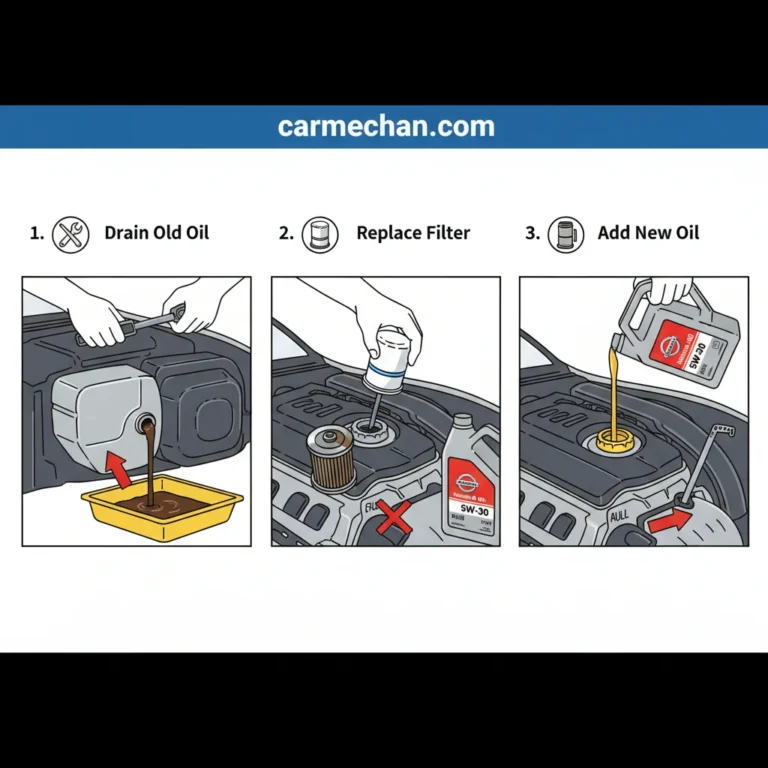
Once you’ve completed an oil change – or had it professionally done – the next critical step is to reset the oil life indicator. This tells your 2008 Accord’s Maintenance Minder that a ‘fresh start’ has occurred, allowing it to accurately begin monitoring the new oil’s lifespan. Failing to reset it will lead to inaccurate service interval calculations and persistent ‘Maintenance Required’ warnings. Follow these precision steps to restore your system to its default 100% oil life setting.
📋
Step-by-Step Guide
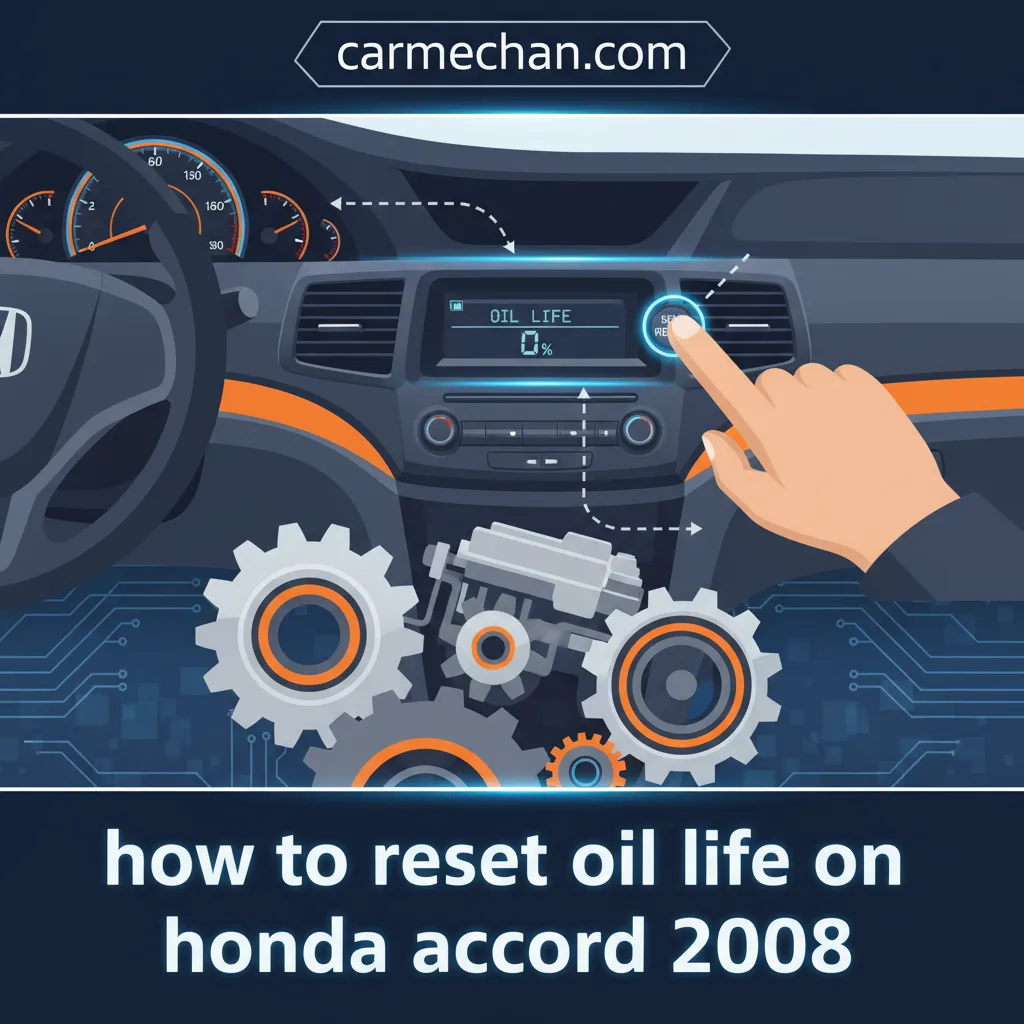
Before starting, ensure your 2008 Honda Accord is parked safely. The ignition must be in the ‘II’ (ON) position, but the engine should NOT be running. This is crucial for the system to accept the reset command. Locate the trip/reset button on your instrument cluster, usually a small protrusion or button near the odometer/trip meter display. This is often labeled ‘SEL/RESET’.
With the ignition in the ‘ON’ position, press and hold the ‘SEL/RESET’ button. You will typically hold this button for a specific duration, usually between 10 to 15 seconds. During this time, observe the multi-information display. The oil life percentage display will likely begin to flash or show a changing pattern, indicating that the system is recognizing the reset command. Patience here is key; do not release the button too early.
After holding the button for the required duration (10-15 seconds), release it. The display should now show the oil life percentage flashing again. Immediately press and hold the ‘SEL/RESET’ button once more, but this time for a shorter period, typically around 5-8 seconds. The oil life display should then change to ‘100%’, signaling a successful reset. This action essentially confirms the desire to reboot the oil life calculation. The system will then restore to its default 100% reading upon successful completion.
Verifying Successful Oil Life Reset and Post-Procedure Observations
Once you have completed the reset procedure, it’s imperative to verify that the system has successfully recalibrated. A quick check provides assurance that your Maintenance Minder is ready to accurately track your next service interval from a true ‘fresh start’.
Methodical Verification
To definitively confirm the oil life reset, turn the ignition off, then back to the ‘II’ (ON) position without starting the engine. Cycle through your multi-information display modes using the same ‘SEL/RESET’ button (or other designated display button, depending on your Accord’s trim) until you navigate back to the oil life percentage reading. You should explicitly see “OIL LIFE 100%” displayed. This confirms that the system has been properly initialized and is now tracking the new oil.
Understanding Initial Readings and Display Behaviors
Immediately after a reset, you might observe a momentary flicker or a brief display of the old oil life percentage before it registers the new 100% reading. This is normal system behavior as it processes the command and updates its internal memory. As long as the final reading consistently shows 100% after cycling the ignition, the reset was successful. The system effectively performs an internal ‘reboot’ of its oil life calculation.
Importance of Personal Maintenance Records
While the Maintenance Minder is highly effective, maintaining personal records is a best practice. Note the exact mileage at which the oil change and reset were performed. This provides a valuable backup reference and allows you to cross-verify the Maintenance Minder’s calculations over time. These logs are also invaluable for documenting your vehicle’s service history, which can be beneficial for resale value and warranty purposes.
Checking for Other Warning Lights
After any vehicle procedure, take a moment to ensure no other unrelated warning lights have inadvertently appeared on your dashboard. The oil life reset procedure specifically targets the Maintenance Minder. Other indicators, such as the Check Engine Light, TPMS (Tire Pressure Monitoring System) warning, or ABS light, are separate systems and should not be affected by this reset. If any new warning lights appear, they require independent diagnosis.
Troubleshooting Common Issues When Resetting 2008 Accord Oil Life
Even with clear instructions, issues can arise during the oil life reset process. As an experienced technician, I’ve seen common pitfalls. Understanding these can save you time and frustration, ensuring your 2008 Accord’s Maintenance Minder is accurately initialized.
Issue 1: The Reset Does Not Take Effect
One of the most frequent complaints is that the oil life percentage simply doesn’t change after attempting the reset. This is almost always due to procedural errors:
- Insufficient Button Hold Time: Users often release the ‘SEL/RESET’ button too quickly. Remember, the initial press requires a sustained hold of 10-15 seconds until the display begins to flash, followed by a second hold of 5-8 seconds to confirm. A common scenario: “I held the button for 5 seconds and nothing happened.” Solution: “Ensure you hold it for the full 10-15 seconds and then the subsequent 5-8 seconds.”
- Incorrect Ignition Position: The ignition must be in the ‘II’ (ON) position, where all dashboard lights illuminate, but the engine must not be running. Attempting the reset with the engine running or only in the ‘I’ (ACC) position will prevent the system from registering the command.
- Prior Oil Change: While not a technical error, it’s worth reiterating that the reset should only be performed after an actual oil change. Resetting prematurely gives the system a false ‘fresh start,’ leading to inaccurate service intervals for your old, degraded oil.
Issue 2: Oil Life Defaults Back to Low Reading or Doesn’t Change
If, after attempting the reset, the oil life defaults back to its previous low reading or fails to register ‘100%’, it often indicates a timing issue during the button presses. The system requires a precise sequence of presses and holds. Go back and carefully repeat the steps, paying close attention to the duration of each hold. Sometimes, a full power cycle (turning the car off, removing the key, waiting a minute, then restarting the process) can help reset a stubborn system, giving you a proper ‘reboot’ opportunity. If the ‘Maintenance Required’ light persists despite diligent reset attempts, it suggests a more fundamental procedural error or, less commonly, a system glitch.
When performing the reset, count slowly and deliberately for the hold times. It’s better to slightly over-hold than under-hold. Consistency is paramount for the system to correctly initialize. Ensure the display confirms the flashing before the second hold. This careful execution helps restore the system to its proper default state.
Issue 3: Other Dashboard Warning Lights Remain Illuminated
It’s crucial to understand that resetting the oil life indicator is a specific command for the Maintenance Minder system. It will not clear other unrelated dashboard warning lights, such as the Check Engine Light (MIL), ABS warning, or SRS (airbag) indicator. These lights signify distinct issues within your vehicle’s diagnostic systems. For instance, if your Check Engine Light is on, it indicates an issue detected by the Powertrain Control Module (PCM) that requires scanning for diagnostic trouble codes (DTCs) with an OBD-II scanner, not an oil life reset. Attempting to clear these with the oil life reset is ineffective and can mask real problems.
If you encounter persistent issues with the oil life reset or if other warning lights remain illuminated, do not ignore them. These can indicate underlying problems that require professional attention. A certified Honda technician possesses specialized diagnostic tools (like the Honda Diagnostic System or HDS) to accurately diagnose and resolve complex system glitches or component failures that extend beyond a simple reset. Delaying diagnosis can lead to more significant and costly repairs.
Beyond the Reset: The Critical Role of Timely Oil Changes and Preventative Maintenance
While understanding how to reset your 2008 Honda Accord’s oil life indicator is important, it pales in comparison to the paramount importance of performing actual, timely oil changes. The reset simply recalibrates a light; the oil change itself is the fundamental act of preventative maintenance that directly impacts your engine’s health and longevity. It’s about ensuring a truly ‘clean’ engine system.
The Foundation of Engine Health: Regular Oil Changes
Engine oil is the lifeblood of your vehicle. It performs multiple critical functions: providing lubrication for moving parts to reduce friction and wear, acting as a coolant to dissipate heat generated by combustion, and serving as a cleansing agent to pick up contaminants and metal particles. Over time, engine oil degrades, losing its viscosity, breaking down its additive package, and becoming saturated with combustion byproducts and sludge. Regular, high-quality oil changes are fundamental to:
- Maintain Lubrication Efficiency: Fresh oil ensures engine components like pistons, camshafts, and crankshafts move smoothly, preventing metal-on-metal contact.
- Optimal Cooling: Clean oil efficiently carries heat away from critical engine parts, preventing overheating and thermal stress.
- Prevent Sludge Buildup: High-detergency new oil keeps internal engine surfaces clean, preventing the formation of harmful sludge and varnish that can restrict oil flow and cause blockages.
- Extend Component Lifespan: Proper lubrication significantly prolongs the life of expensive engine components.
Consequences of Neglecting Oil Changes
The repercussions of neglecting timely oil changes are severe and often irreversible. Old, contaminated oil fails to lubricate effectively, leading to:
- Accelerated Engine Wear: Increased friction causes premature wear on bearings, piston rings, and cylinder walls.
- Reduced Fuel Efficiency: Higher friction forces the engine to work harder, consuming more fuel.
- Potential for Costly Engine Damage: Extreme cases can lead to engine seizure, requiring a complete engine overhaul or replacement—a repair that far outweighs the cost of regular oil changes.
- Diminished Vehicle Longevity: An engine that isn’t properly maintained simply won’t last as long.
An illustrative example: an engine running on degraded oil might develop a distinct knocking sound, a harbinger of imminent bearing failure. This noise is the direct result of inadequate lubrication, a situation entirely preventable with routine maintenance.
Adhering to Honda’s Recommendations and Using the Right Oil
Always refer to your 2008 Honda Accord’s owner’s manual for the specific oil specifications and service schedule. While the Maintenance Minder is an excellent guide, the manual provides the definitive manufacturer’s guidelines for optimal engine care. For many modern Honda engines, including the 2008 Accord, using the correct viscosity (e.g., SAE 0W-20 or 5W-20, depending on engine and climate, always check your specific manual) and a high-quality oil (often a synthetic blend or full synthetic) is critical for performance and protection. These oils are formulated to maintain stability across a wider temperature range and resist breakdown more effectively, contributing to a truly clean and efficient engine system.
Extended Engine Life
Regular oil changes are the single best factor in preventing premature engine wear and extending your vehicle’s lifespan.
Optimal Fuel Efficiency
Clean, correctly specified oil reduces internal friction, allowing your engine to run more smoothly and efficiently, boosting MPG.
Preserved Resale Value
A complete and documented service history, including regular oil changes, significantly enhances your vehicle’s resale value.
Maintaining Optimal Performance: Broader Maintenance Considerations for Your 2008 Accord
Resetting the oil life is a single, albeit important, task within the broader spectrum of vehicle maintenance. For your 2008 Honda Accord to deliver consistent reliability and optimal performance for years to come, a holistic preventative care strategy is essential. Think of each maintenance task as contributing to the overall ‘fresh start’ mentality for your vehicle’s health.
Connecting Oil Changes to Comprehensive Service
An oil change often serves as the cornerstone of routine service appointments, presenting an ideal opportunity to address other critical maintenance tasks. These commonly include:
- Tire Rotation: Essential for even tire wear and extending tire life, typically recommended every 5,000-7,500 miles.
- Air Filter Inspection/Replacement: A clean engine air filter ensures optimal combustion and fuel efficiency, usually every 15,000-30,000 miles. A clogged filter can significantly reduce power and increase fuel consumption.
- Fluid Level Checks: Inspecting and topping off brake fluid, power steering fluid, transmission fluid, and coolant levels is crucial for system integrity.
- Brake Inspection: Checking brake pad thickness, rotor condition, and brake fluid health ensures safe stopping power.
Many of these are indicated by the Maintenance Minder’s sub-codes, reinforcing the integrated nature of Honda’s service recommendations.
The Value of Genuine Parts and Fluids
When replacing components or fluids, opting for genuine Honda parts or high-quality OEM (Original Equipment Manufacturer) equivalent components and fluids is paramount. These parts are engineered to precise specifications for your 2008 Accord, ensuring compatibility, optimal performance, and durability. Using inferior parts can lead to premature wear, reduced efficiency, and even damage to other systems. This commitment to quality helps ‘restore’ your vehicle to its peak operating state, protecting your initial investment.
Proactive Approach to All Vehicle Alerts
The dashboard of your 2008 Accord is equipped with various indicators beyond just the oil life. Become familiar with the significance of lights like the Check Engine Light, ABS (Anti-lock Braking System) warning, Battery/Charging System warning, and TPMS. A proactive approach to investigating and addressing any illuminated warning light is crucial for preventing minor issues from escalating into major, costly repairs. Ignoring these warnings is a common pitfall that undermines vehicle reliability.
Long-Term Benefits of Consistent Preventative Care
Consistent preventative care extends far beyond just keeping your vehicle running. It directly translates into tangible benefits:
- Enhanced Resale Value: A well-maintained vehicle with a documented service history commands a significantly higher resale price. Buyers are willing to pay a premium for a car that has been cared for diligently.
- Extended Vehicle Lifespan: Cars that receive regular, comprehensive maintenance reliably exceed 200,000 miles, significantly extending your investment.
- Improved Safety: Properly maintained brakes, tires, and steering components ensure your vehicle is safe and responsive.
- Greater Peace of Mind: Knowing your vehicle is in optimal condition reduces the stress of unexpected breakdowns and repairs.
Embracing a ‘fresh start’ mentality with every service is not just about the oil life indicator; it’s about nurturing your entire vehicle for maximum performance, longevity, and enjoyment.
The 2008 Honda Accord’s oil life reset procedure is straightforward but requires precise execution. Successfully resetting the oil life ensures your Maintenance Minder accurately tracks subsequent service intervals. Timely oil changes and comprehensive preventative maintenance are critical for engine longevity and overall vehicle health. Follow these authoritative steps to reset your 2008 Honda Accord’s oil life, and maintain a rigorous service schedule for optimal vehicle performance and reliability. Consult your owner’s manual or a certified Honda technician for any persistent issues.
Frequently Asked Questions
Can I reset the oil life on my 2008 Honda Accord without changing the oil?
While technically possible, it is strongly advised against. Resetting the oil life indicator without performing an actual oil change misrepresents your vehicle’s maintenance status. This can lead to severe engine wear, reduced performance, and costly damage due to extended use of degraded oil. The reset is intended to ‘restore’ the monitor after new oil has been introduced, not to bypass essential service.
What happens if I don’t reset the oil life after an oil change?
If you neglect to reset the oil life, the Maintenance Minder system will continue to display a low or expired oil life percentage, even with fresh oil. This can lead to confusion about when the next service is genuinely due and may trigger unnecessary ‘Maintenance Required’ warnings, undermining the system’s intended purpose of accurately tracking your service intervals.
Does resetting the oil life affect other dashboard warning lights on my Accord?
No, resetting the oil life specifically addresses the ‘Maintenance Required’ indicator associated with oil service. It does not clear or affect other dashboard warning lights such as the ‘Check Engine’ light, TPMS (Tire Pressure Monitoring System) light, or ABS light. These indicators signify distinct issues requiring separate diagnosis and resolution.
Is the oil life reset procedure the same for all Honda Accord models?
The general principle of pressing and holding a trip/reset button is common across many Honda models, but the exact button location, required ignition position, and holding duration can vary significantly between different Accord generations and model years. Always consult your specific model’s owner’s manual or a reliable source for the precise steps for your vehicle.
What type of oil is recommended for a 2008 Honda Accord?
For the 2008 Honda Accord, the recommended oil type typically varies by engine. Most models specified SAE 5W-20 or 5W-30 motor oil. Always refer to your 2008 Honda Accord owner’s manual for the precise viscosity grade and API certification (e.g., API Service SN or higher) recommended by the manufacturer to ensure optimal engine performance and longevity.