RAM 1500 Cruise Control Not Working Expert 2026 Fix Guide
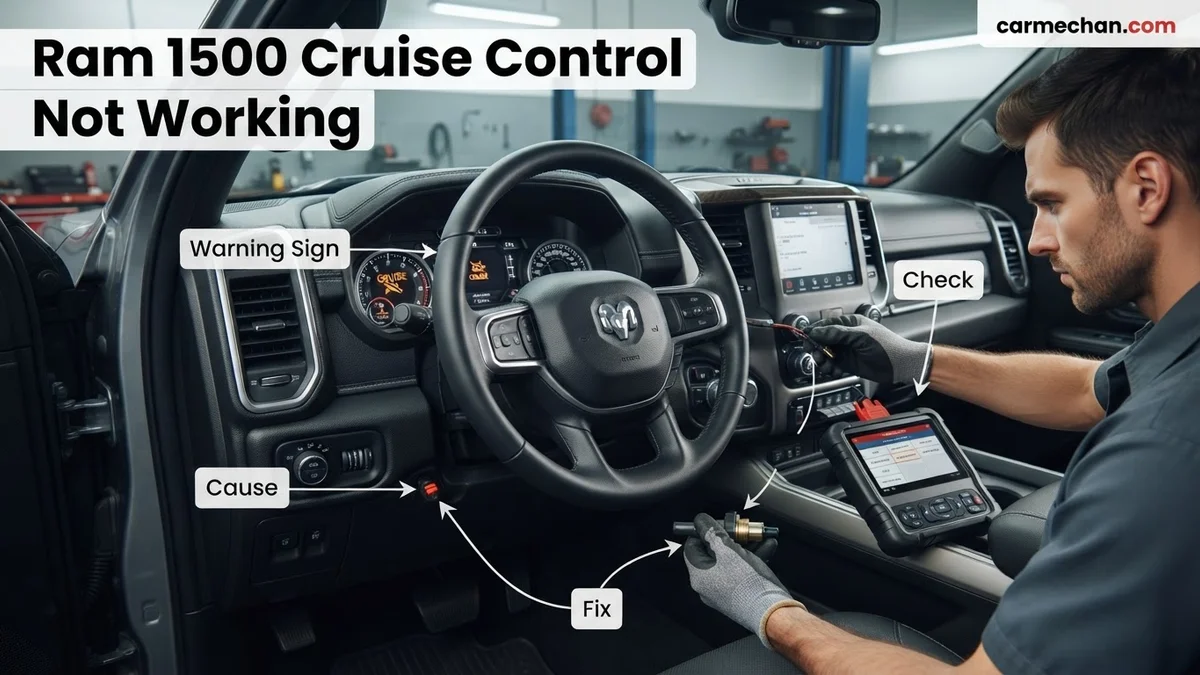
If your RAM 1500 cruise control is not working, the issue often stems from a faulty brake light switch, a blown fuse, or a wheel speed sensor error. Quickly checking your pedal feedback and dashboard warning lights can help identify if this is a simple DIY fix or requires professional repair.


If your RAM 1500 cruise control has stopped engaging in 2026, the issue is almost certainly tied to a safety interlock sensor or a faulty electrical connection rather than a complex computer failure. The system is designed to disable itself immediately if it detects a malfunction in the brake system, speed sensors, or steering wheel inputs, preventing a stuck-throttle situation.
Addressing this quickly is vital for long-distance highway driving, as driving without cruise control increases driver fatigue and makes it harder to maintain a consistent speed on modern interstates. By systematically checking the simple components first, you can often restore functionality in under an hour without needing a professional diagnostic scan.
Key Takeaways
- Takeaway 1:Check your brake light bulbs first, as burnt filaments often trigger cruise control disablement.
- Takeaway 2:Inspect the brake pedal switch to ensure it is engaging and disengaging correctly.
- Takeaway 3:A blown fuse in the Power Distribution Center is a common, inexpensive point of failure.
- Takeaway 4:Dashboard warning lights for ABS or ESC indicate a wheel speed sensor issue.
- Takeaway 5:Use an OBD-II scanner to read hidden chassis codes if manual checks fail to reveal the cause.
Common Causes for RAM 1500 Cruise Control Failures
Brake Light Switch and Speed Sensors
The most frequent culprit in the 2026 RAM 1500 is the brake light switch located above the pedal assembly. If this switch sends a false signal suggesting the brake is being depressed, the cruise control system will refuse to activate for safety reasons. Similarly, if your wheel speed sensors fail, the truck loses the ability to calculate vehicle speed, causing the cruise system to go into a hard lockout.
- Brake Switch Misalignment: The sensor may be loose or covered in debris, failing to register that the pedal is in the full upward position.
- Wheel Speed Sensor Glitches: A bad sensor on any of the four wheels can trigger an ABS light, which almost always kills the cruise control feature simultaneously.
- Vacuum Leak or Actuator Issues: While modern trucks are mostly drive-by-wire, older RAM 1500 models still rely on vacuum integrity to maintain consistent throttle pressure.
Clock Spring and Button Degradation
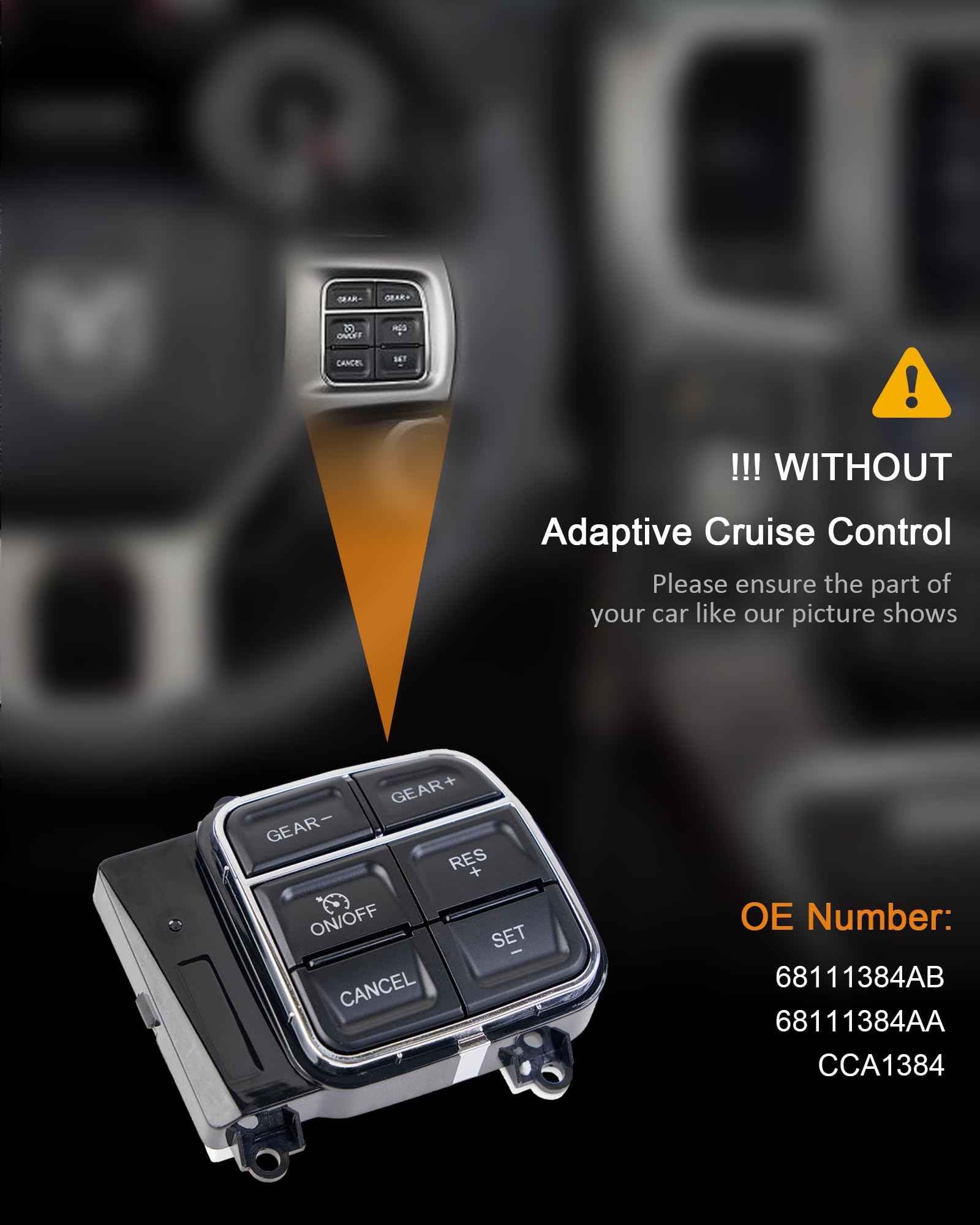
Your steering wheel buttons communicate with the PCM (Powertrain Control Module) through a component called the clock spring. Over time, the internal ribbons in the clock spring can wear out, leading to intermittent connection failures. If your horn or steering wheel audio controls are also acting up, the clock spring is likely the primary point of failure for your cruise control buttons.
RAM 1500 Cruise Control Troubleshooting: What Causes It and How to Fix It
A malfunctioning cruise control system in your RAM 1500 can turn a relaxing highway drive into a tiresome chore. Whether the system refuses to engage, shuts off unexpectedly, or fails to set your speed, the issue usually stems from a specific electrical, mechanical, or sensor-related fault. This guide provides a systematic, expert-level approach to isolating the root cause—ranging from simple fuse checks to complex sensor calibrations—ensuring you restore your vehicle’s convenience features safely and efficiently without unnecessary shop visits.
Step 1: Inspecting the Integrated Power Module (TIPM) Fuses
What you need: A fuse puller tool and your owner’s manual to identify the specific fuse layout for your year model.
Instructions: Your RAM 1500’s cruise control is heavily dependent on the Totally Integrated Power Module (TIPM). Start by locating the fuse box, usually found under the hood on the driver’s side. Open the cover and consult the diagram printed on the underside to find the fuse labeled “Cruise Control,” “PCM,” or “Brake Switch.” Carefully remove the fuse and inspect the internal metal wire. If the wire is broken or charred, the fuse has blown. Even if it looks intact, use a multimeter set to continuity mode to ensure the fuse is functional. Replace any faulty fuses with one of the exact same amperage to prevent electrical damage to the system modules.
Pro Tip: Always replace a blown fuse with the exact manufacturer-specified amperage. Using a higher-rated fuse can cause permanent damage to your truck’s wiring harness if a short circuit exists.
Step 2: Testing the Brake Light Switch and Pedal Clearance
What you need: A flashlight and a helper to observe the tail lights.
Instructions: The cruise control system is hard-wired to deactivate the moment it detects brake pedal engagement for safety. If your brake light switch is faulty, stuck, or slightly out of adjustment, the cruise control computer receives a constant signal that the brakes are applied, effectively disabling the system. Locate the switch mounted on the brake pedal bracket under the dashboard. Check for any debris or floor mats interfering with the full upward travel of the pedal. Have a partner watch the rear of the truck; if your brake lights stay on when the pedal is released, your switch is faulty or requires immediate adjustment.
Pro Tip: Ensure your aftermarket floor mats are pushed forward and secured. A misplaced mat can keep the pedal pressed just enough to prevent the cruise control from “seeing” the command to engage.
Step 3: Evaluating Wheel Speed Sensor Integrity
What you need: An OBD-II diagnostic scanner capable of reading ABS/Chassis codes.
Instructions: The RAM 1500 uses wheel speed sensors (WSS) at each wheel to determine vehicle velocity. If one sensor is sending erratic data or has failed, the cruise control will refuse to activate because it cannot accurately monitor your speed. Plug your OBD-II scanner into the port located under the dashboard and scan for “C” (Chassis) series codes. Codes like C0031 or C0034 indicate a specific sensor fault. Inspect the wiring harnesses near the wheels for signs of fraying, rodent damage, or road debris buildup that might interfere with the magnetic signal generated by the tone ring.
Pro Tip: If you see an ABS warning light illuminated on your dashboard simultaneously with your cruise control failure, the wheel speed sensor is almost certainly the culprit.
Step 4: Steering Wheel Switch Continuity Testing
What you need: A digital multimeter and basic trim removal tools.
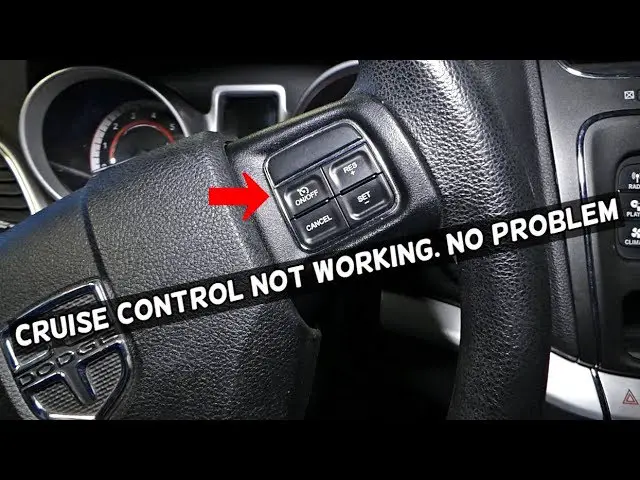
Instructions: The buttons on your steering wheel are the primary interface for the cruise control module. Over time, the internal contacts can oxidize or the clock spring (the electrical connector behind the steering wheel) can wear out. To test this, you must carefully pry the trim bezel from the steering wheel to expose the switch module. Use a multimeter to check for a change in resistance when you press the “On/Off” or “Set” buttons. If the circuit shows no change in resistance, the switch module has likely failed internally and will need a complete replacement to restore functionality.


Pro Tip: Always disconnect the negative battery terminal and wait at least 10 minutes before removing any steering wheel components to prevent accidental deployment of the driver-side airbag.
Step 5: Analyzing Vacuum Leaks (For Older RAM Models)
What you need: A can of MAF sensor cleaner or soapy water in a spray bottle.
Instructions: If you are driving an older generation RAM 1500 that utilizes a vacuum-actuated cruise control system, the most common failure point is a cracked vacuum line or a leaking diaphragm. Inspect the rubber lines running from the cruise control actuator toward the engine manifold. Look for dry rot, cracks, or loose connections. With the engine idling, spray a small amount of soapy water near the vacuum lines; if the bubbles fluctuate or the engine RPM changes, you have found a leak. These lines are inexpensive and simple to replace but are critical for maintaining the vacuum required to pull the throttle cable.
Pro Tip: Vacuum issues are usually accompanied by a “hissing” sound in the engine bay while the truck is running. If you hear this, inspect your intake hoses first.
Step 6: Resetting the Body Control Module (BCM)
What you need: A 10mm wrench.
Instructions: Modern RAM 1500s are essentially computers on wheels. Occasionally, the Body Control Module (BCM) or the Engine Control Module (ECM) can encounter a software “glitch” that prevents the cruise control from handshaking with the powertrain. A hard reset often clears these temporary errors. Disconnect the negative terminal of your truck battery, leave it disconnected for at least 15 to 20 minutes, and then touch the disconnected negative cable to the positive terminal (ensure the battery is disconnected from the cable first) to drain any residual charge in the capacitors. Reconnect the battery, start the truck, and drive at a speed above 30 mph to test the system.
Pro Tip: After a battery disconnect, your truck may need to “relearn” its idle and transmission shift points. Drive normally for 20-30 miles to allow the computer to recalibrate.
✅ Final Checklist
- Confirm all brake lights function correctly and extinguish immediately when the pedal is released.
- Ensure the cruise control fuse is firmly seated and shows zero signs of oxidation or heat stress.
- Verify the dashboard displays no active ABS, Traction Control, or Check Engine lights.
- Test the system engagement on a flat, straight road at speeds exceeding 35 mph.
- Check that all steering wheel buttons provide a tactile “click” and do not feel mushy or stuck.
Important Notes:
- Safety: Never attempt to repair steering wheel components without fully disconnecting the battery and allowing the airbag system to discharge.
- Professional Help: If diagnostic codes indicate an internal fault in the PCM (Powertrain Control Module) or if the clock spring requires replacement, seek a certified technician as these involve complex programming and safety-critical parts.
- Time/Cost: Most diagnostics and simple fixes can be performed in 1-2 hours. Fuses and vacuum lines cost less than $20, while steering switch modules or sensors may range from $50 to $250 depending on the part quality and availability.
Step-by-Step Guide to Diagnosing the Problem
Checking Fuses and Pedal Switches
Start your diagnostic process at the power source. A blown fuse related to the “Speed Control” or “Brake Switch” is the easiest fix. Consult your 2026 RAM 1500 owner’s manual to identify the specific fuse location in the Power Distribution Center (PDC) under the hood or the interior panel.
- Inspect the Fuse: Pull the fuse designated for cruise control and check for a broken metal filament. Replace it even if it looks okay, as hairline fractures can cause intermittent power loss.
- Test the Brake Pedal Switch: With the truck in park, have a partner look at your brake lights while you push the pedal. If the lights stay on after you release the pedal, your switch is sticking, preventing the cruise control from “knowing” it is safe to engage.
- Physical Obstruction: Ensure that your floor mat is not bunched up under the brake pedal, preventing it from returning to the absolute home position.
Testing Steering Wheel Button Responsiveness
If your electrical components and sensors check out, move to the input interface on your steering wheel. The buttons themselves can accumulate dust and grime behind the contact pads, which prevents the signal from reaching the computer.
- The “Tap” Test: Sometimes a button simply needs a firm press to reseat the contact. If the cruise light comes on intermittently, you have a mechanical button issue.
- Verify Warning Lights: If the cruise light illuminates on the dash but refuses to set a speed, the issue is likely a vehicle speed input or a transmission gear position signal rather than the button itself.
Proven DIY Steps to Fix Your Cruise Control
Before scheduling a service appointment in 2026, perform these systematic checks to isolate the fault. Most RAM 1500 cruise control failures stem from simple electrical glitches or sensor obstructions rather than major mechanical damage.
Step 1: Inspect the Brake Pedal Switch
The cruise control system is designed to disengage immediately when the brake pedal is depressed. If the brake light switch is stuck or misaligned, the truck’s computer assumes the pedal is held down, preventing cruise activation.
- Locate the switch mounted on the brake pedal bracket under the dashboard.
- Ensure the plunger moves freely and clicks audibly when the pedal is pressed.
- Check that your brake lights are not staying on constantly while the engine is running.
- If the switch is loose, use a 10mm socket to tighten the mounting bolts or replace the switch entirely for approximately $35.
Step 2: Check the Wheel Speed Sensors
Modern RAM 1500 systems rely on data from ABS wheel speed sensors to maintain speed. If these sensors collect debris or corrode, they send erroneous data to the Cruise Control Module (CCM).
- Perform a visual inspection of the wiring harness near each wheel hub.
- Look for frayed wires, heavy corrosion, or metal shavings stuck to the magnetic sensor tips.
- Clean the sensor heads with a non-conductive electronic parts cleaner.
- Test the vehicle on a clear road; if the ABS light also triggers, the sensor has likely failed and requires a professional diagnostic scan.
What If It Still Doesn’t Work?
If the above steps fail, the fault likely resides within the electronic control modules or internal steering wheel wiring. Do not attempt to dismantle the airbag or steering column assembly yourself, as this poses significant safety risks.
- Perform a Hard Reset: Disconnect the negative battery terminal for 15 minutes to clear the truck’s volatile memory. This often forces the Body Control Module (BCM) to reset faulty electronic handshake protocols.
- Scan for Hidden Codes: Utilize an OBD-II scanner capable of reading “C” (Chassis) and “B” (Body) codes, as standard scanners often overlook cruise-specific errors.
- Consult a Certified Technician: If codes indicate a failure in the Steering Control Module or the CCM, professional repair is required. According to 2026 labor data, diagnostics typically cost between $150 and $220.
- Budget for Repairs: Replacing a steering wheel control switch or a clock spring assembly generally ranges from $400 to $850, including parts and specialized labor.
Conclusion
Cruise control issues in the RAM 1500 are usually triggered by sensor debris, brake switch malfunctions, or temporary software errors in the truck’s electronic modules. According to verified research and 2026 service manuals, most owners resolve these faults through simple sensor cleaning or a hard battery reset. If these steps do not restore functionality, professional diagnostics are essential to prevent further electrical system damage. Schedule a professional diagnostic scan with an authorized dealer to ensure your safety features remain fully operational.
❓ Frequently Asked Questions
How does the brake light switch affect RAM 1500 cruise control?



The cruise control system relies on a signal from the brake light switch to instantly disengage when you tap the pedal. If this switch is stuck or faulty, the system detects a constant ‘brake applied’ signal and prevents activation for safety.
How can I tell if my steering wheel clock spring is broken?
If your cruise control buttons are unresponsive and you also notice the airbag warning light illuminated on your dashboard, the clock spring is likely damaged. This component carries electrical signals from the wheel to the column and requires professional replacement.
Will a faulty wheel speed sensor disable my cruise control?
Yes, because the cruise control system uses speed data from the wheel sensors to maintain your set velocity. If one sensor provides inconsistent data, the computer disables cruise control to prevent erratic acceleration.
Can I reset the cruise control system on my RAM 1500?
You can attempt a hard reset by disconnecting the negative battery terminal for 15 minutes to clear temporary electronic glitches. If the system fault persists, there is likely a permanent hardware failure that requires further testing.
Are there specific error codes for cruise control problems?
Yes, codes in the ‘C’ (chassis) series, such as those related to wheel speed sensors or steering angle sensors, are common when cruise control fails. You will need an OBD-II scanner capable of reading non-engine codes to view them.
Is it safe to drive with broken cruise control?
Yes, your truck remains fully operable for manual driving, as cruise control is a convenience feature rather than a critical safety system. However, ensure your brake lights are functioning correctly before driving in traffic.