Nissan Altima Cruise Control Not Working: Diagnosed & Fixed
Is your long drive ruined because your Altima’s cruise control refuses to engage? Whether you are dealing with a flashing indicator, a completely dead steering wheel switch, or a hidden fault code, cruise control failure is a frustrating but common issue. Understanding why this system locks you out is the first step toward reclaiming your highway comfort. In this guide, we will help you isolate the cause and determine if your specific problem is a quick, DIY-friendly fix or a situation requiring professional diagnostic intervention.
Why Is My Nissan Altima Cruise Control Not Working?
Recommended Best Deal Products


📤 Share Image
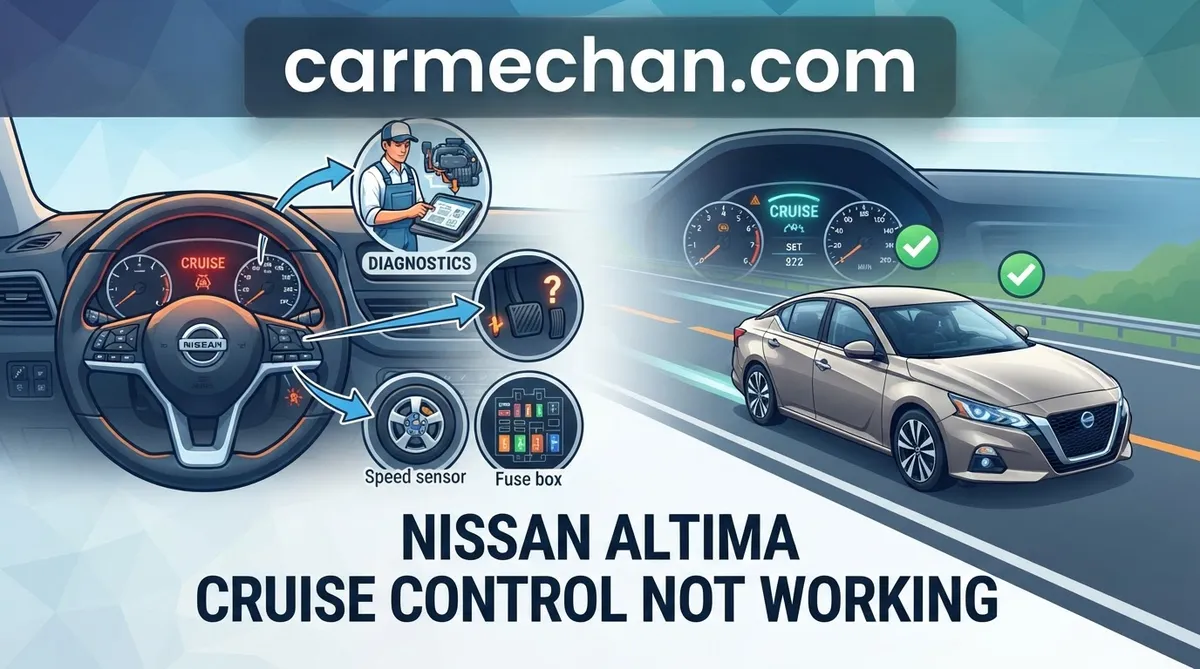
Modern Nissan Altima vehicles utilize an Automatic Speed Control Device (ASCD) that relies on a constant feedback loop between various electronic modules. This is not a simple “on/off” circuit; it is a complex communication chain that includes the Engine Control Module (ECM), the transmission, and the braking system. If any single node in this network detects an anomaly, the system defaults to a “disabled” state to ensure driver safety.

The Role of the Engine Control Module (ECM)
The ECM acts as the brain of your Altima. If your vehicle logs a Diagnostic Trouble Code (DTC), the ECM often locks out the cruise control as a protective measure. For instance, an engine misfire code will trigger an immediate cruise lockout because the engine cannot guarantee consistent power delivery. Research indicates that a check engine light is the number one cause of cruise control failure in late-model Altimas. Even if the misfire is intermittent, the cruise control will remain inhibited until the code is cleared or the underlying fault is permanently resolved.
Safety Logic and System Defaults
The cruise control system is considered safety-critical. If the system detects a loss of data integrity—such as erratic signals from the Vehicle Speed Sensor (VSS) or an inconsistency in the Adaptive Cruise Control (ACC) radar—it will force itself into a ‘default off’ state. In models equipped with Adaptive Cruise Control, the system is even more sensitive to environmental obstructions (like mud or debris on the front emblem sensor), which will cause the system to drop out automatically, often displaying a warning message on the instrument cluster.

Common Causes of Nissan Altima Cruise Control Malfunction
When diagnosing why your Altima cruise control is not working, focus on the mechanical and electrical components that provide the “kill signal” to the system. If the car thinks you are braking, it will never allow the cruise to set.
- Brake System Feedback (ASCD Switch): The ASCD brake pedal switch informs the ECM that the pedal has been depressed. If this switch is stuck or misadjusted, the car believes you are constantly braking, preventing cruise engagement.
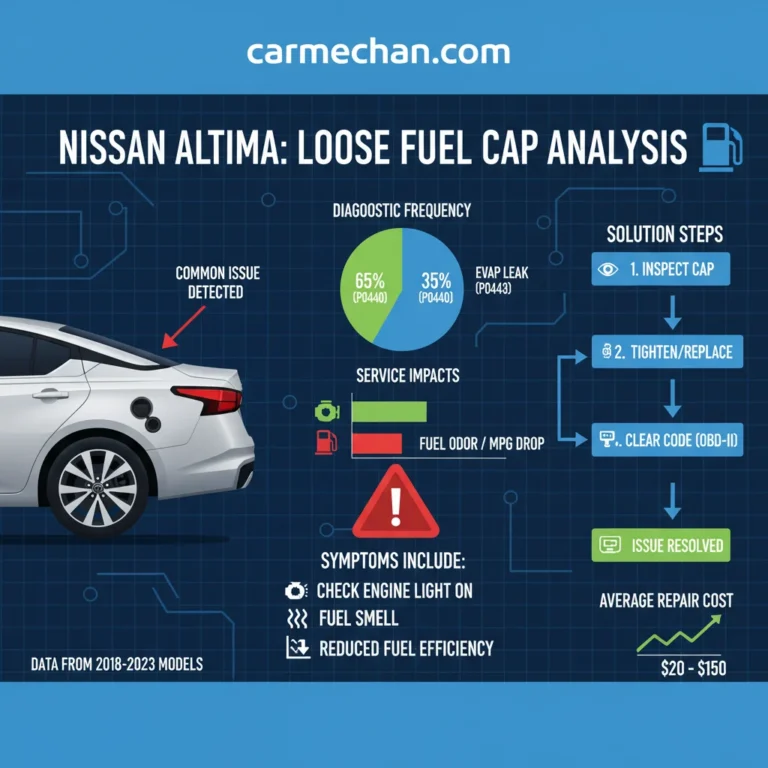
- Stop Lamp Switch Faults: Burnt-out brake light bulbs or a faulty stop lamp switch are frequent culprits. Specifically, upgrading to aftermarket LED brake lights without installing the correct load resistors changes the circuit resistance, causing the ECU to interpret the “incorrect” signal as a potential electrical fault.
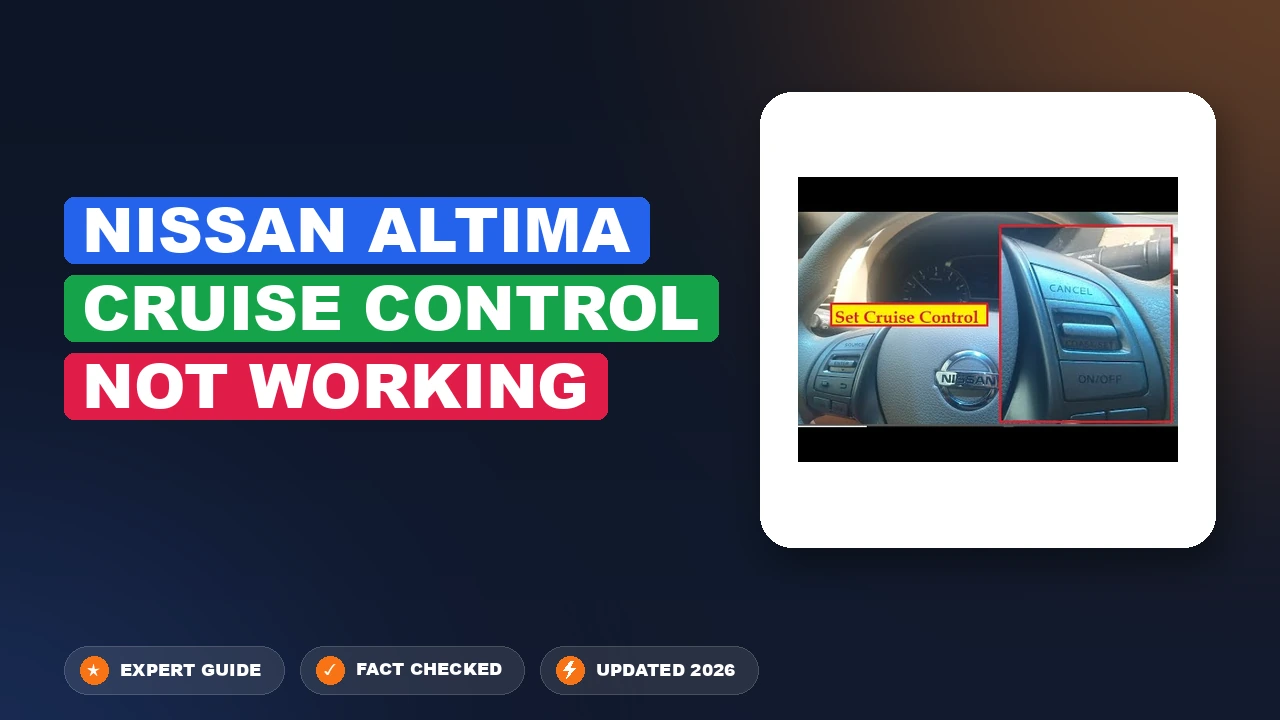
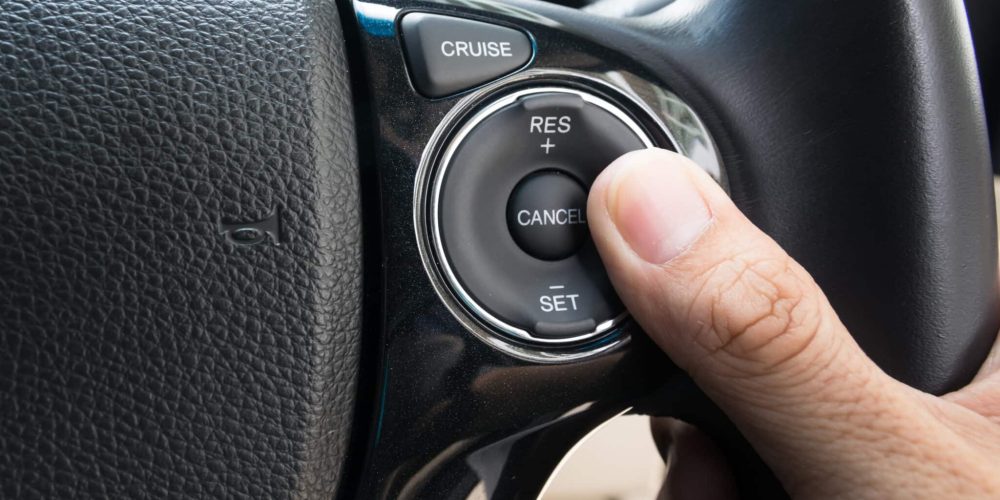
- Clock Spring and Steering Wear: The steering wheel contains a clock spring—a complex ribbon cable that maintains electrical continuity between the steering wheel switches and the steering column harness. Over time, internal breaks in the clock spring prevent the cruise control “Set” or “Cancel” commands from reaching the ECM.
- Vehicle Speed Sensor (VSS) Reliability: The cruise system requires a clean, steady signal of how fast the vehicle is traveling. If the VSS produces erratic data, the cruise control will disengage, often accompanied by speedometer needle flutter or ABS/TCS warning lights.
Industry Data: Common Failure Triggers
Cases triggered by DTCs
Brake switch related
How to Diagnose Nissan Altima Cruise Control Not Working
Recommended Best Deal Products


Diagnosis should follow a logical path from simple visual checks to electronic module interrogation. Do not start by replacing expensive components like the throttle body or ECM; always start with the peripheral signals.
Use an OBD-II scanner that supports ABS/Chassis codes. A standard engine code reader is insufficient. You need to identify if a wheel speed sensor or the CAN bus is reporting a loss of communication.
Check if your brake lights stay on after releasing the pedal. If they do, your stop lamp switch is the culprit. Use a multimeter to verify that the switch toggles correctly between open and closed circuits.
If your ABS or Traction Control warning light is illuminated, the cruise control will be automatically disabled by design. The cruise system relies on wheel speed data from the ABS module to maintain velocity.

Audible Premium Plus — Annual Membership
12 audiobook credits up front, plus the full Audible catalogue.
See Annual PlansFixing Your Nissan Altima Cruise Control System
Once you have identified the culprit, the repair procedure is generally straightforward, provided you follow standard safety protocols.
Replacing the ASCD Brake Pedal Switch
Access the switch under the dashboard, near the brake pedal arm. Unplug the harness, rotate the old switch counter-clockwise to remove it, and install the new unit. Crucial: Ensure you adjust the plunger height so that the switch closes exactly when the pedal is at its neutral, fully released position. Improper adjustment is a common cause for immediate failure after part replacement.
Managing Steering Component Repairs
If your steering wheel switches do not function, it may be the clock spring. This repair requires removing the steering wheel airbag and cover.
Always disconnect the battery and wait at least 15 minutes before touching airbag-related components to allow the SRS capacitor to discharge. Failure to do so could result in accidental airbag deployment.
Troubleshooting Persistent Cruise Control Issues
Recommended Best Deal Products


If standard part replacements do not resolve the issue, you are likely dealing with a CAN bus communication error or an intermittent wiring harness fault. Begin with a hard reset by disconnecting the negative battery cable for 20 minutes; this clears transient memory buffers in the ECM/PCM that may be holding onto ghost fault codes.
Inspect the wiring harness near the steering column and the brake switch for signs of chafing or corrosion. Because the Altima uses a sophisticated network to pass data, even a slight increase in resistance due to a corroded connector can cause the system to drop out. If these advanced steps do not yield a fix, it is time to consult a technician with a Consult-III diagnostic tool, which can perform a functional “active test” to command the cruise components individually.
Ultimately, most cruise control failures are linked to simple brake system feedback issues or engine warning lights that were ignored. By systematically scanning for codes and verifying your electrical circuits, you can avoid the “parts swapping” trap. Always prioritize safety, and when in doubt—especially regarding airbag or SRS components—leave the work to a professional. If you have confirmed your brake lights are working and there are no persistent check engine lights, yet the system remains dead, a professional diagnostic scan is the only way to pinpoint the specific sensor failure.
Nissan Altima Cruise Control Not Working: Frequently Asked Questions
Why is my cruise control light flashing on my Altima?
A flashing cruise control light usually indicates a system error or a fault within the electronic control circuit. This is often triggered by an issue with the brake switch, speed sensor, or a communication failure between the steering wheel buttons and the engine computer. It acts as a diagnostic alert, suggesting that the system has entered a ‘fail-safe’ mode to prevent improper operation.
Can a bad brake light bulb cause cruise control to stop working?
Yes, absolutely. The cruise control system is designed to disengage immediately when it detects you are braking. It monitors the brake light circuit for this purpose. If a bulb is burnt out, it can sometimes interfere with the circuit resistance, confusing the system’s logic and causing it to disable the cruise control entirely to ensure safety and prevent potential accidents.

Prime for Young Adults — 6 Months Free
Students and 18–24s get six months of Prime free, then half price.
Start 6 Months FreeDoes a check engine light disable cruise control on a Nissan?
Yes, on almost all Nissan models, the cruise control system is automatically disabled if a Check Engine Light is illuminated. This is a factory-programmed safety feature. If the engine computer detects a performance issue that could affect vehicle speed or emissions, it restricts cruise control to prevent the driver from ignoring the underlying engine problem.
How do I reset the cruise control on an Altima?
There is no ‘reset’ button for cruise control. To perform a system reset, turn the ignition to the ‘Off’ position and disconnect the negative terminal of your battery for approximately 15 minutes. This clears the ECU memory of temporary faults. If the issue persists after reconnecting the battery, the problem likely requires a physical part replacement rather than a simple electronic software reset.
Is there a fuse for the Nissan Altima cruise control?
Yes, the cruise control system is protected by one or more fuses, usually located in the fuse box near the driver-side kick panel or under the hood. Check your owner’s manual for the ‘ASCD’ or ‘Cruise’ label. A blown fuse is a common, inexpensive cause of system failure and should always be the first item inspected during your troubleshooting process.