Infiniti Q50 TPMS Reset Button Location 2026 Expert Guide
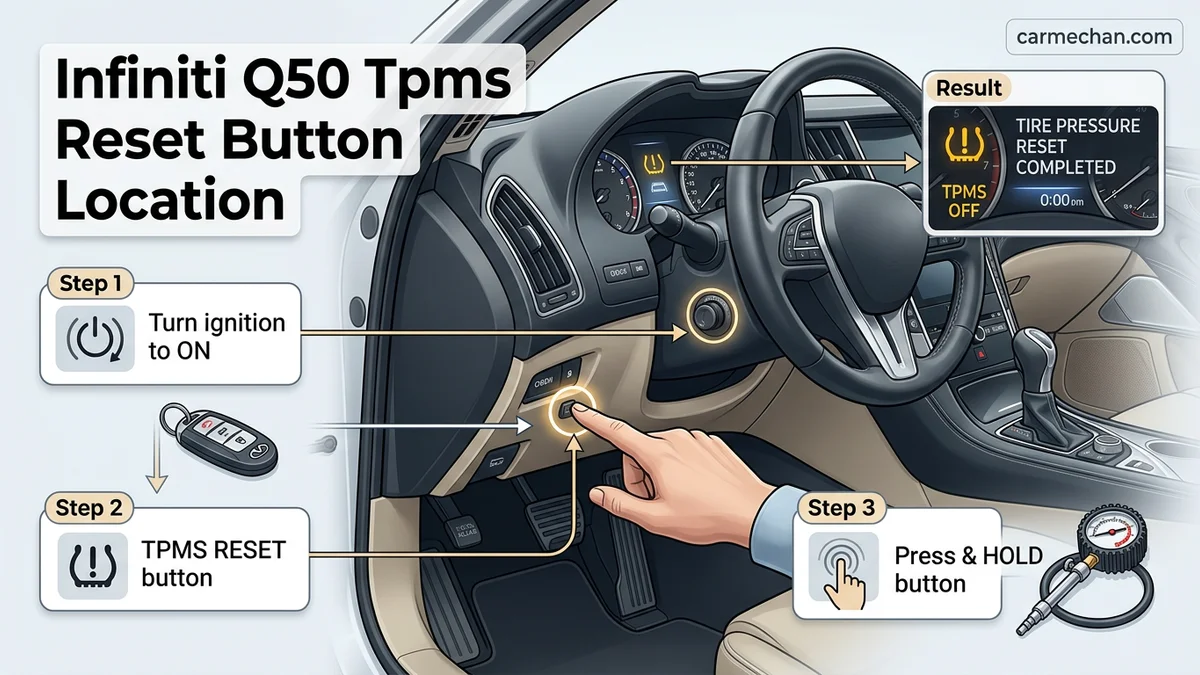
There is no physical TPMS reset button inside the Infiniti Q50. To clear the warning light, you must adjust tire pressure to factory specifications and drive the vehicle to initiate the self-calibration process.

You are likely scanning your dashboard, glove box, and driver-side footwell for a physical TPMS reset button, but you will not find one. For every Infiniti Q50 model year through 2026, there is no manual, tactile button hidden under the dash to force a recalibration. The system is fully integrated into the vehicle’s onboard computer, meaning the days of physical switches are long gone.
Practically speaking, this is a significant improvement for owners. By moving the reset function to the digital interface, the 2026 Q50 ensures that tire pressure monitoring is tied directly to the vehicle’s ECU. You do not need to hunt for a hidden button or crawl under the steering column; instead, you interact with the steering wheel controls to communicate with the sensors. Understanding this workflow is the only way to clear that persistent amber warning light on your dashboard.
Key Takeaways
- Ignore search results suggesting a hidden button; your Infiniti Q50 does not have one.
- Always inflate tires to the PSI listed on the driver’s side door jamb sticker.
- Self-calibration begins automatically once the system detects corrected tire pressure.
- Driving at speeds above 20 mph for 10-20 minutes typically triggers the reset.
- Check your spare tire pressure if the warning light persists after filling main tires.
Why You Cannot Find an Infiniti Q50 TPMS Reset Button
The Shift to Digital Calibration
Modern vehicle engineering has moved toward centralized software control. In earlier automotive generations, manufacturers used physical reset switches to ground out a circuit and manually signal the TPMS module. However, the 2026 Infiniti Q50 utilizes a high-frequency sensor array that communicates constantly with the Body Control Module (BCM). Because the system is designed to be “self-learning,” it recognizes tire rotations and pressure changes automatically.

Eliminating Manual Errors
By removing the physical button, Infiniti has eliminated common user errors that plagued older systems. You no longer have to worry about holding a button for the exact right number of seconds or performing a specific “button dance” to enter learning mode. If your TPMS light remains illuminated, it is usually because the system has not yet received a fresh data signal from the sensors, not because you failed to push a button that doesn’t exist.
Master the Infiniti Q50 TPMS Reset Mystery in 6 Simple Steps
If you own an Infiniti Q50, you may have encountered the frustrating scenario where the Tire Pressure Monitoring System (TPMS) warning light remains illuminated even after you have perfectly inflated your tires. Many drivers search frantically for a physical reset button under the dashboard or inside the glove box, only to find nothing. This guide clarifies the reality of the Q50 system, which operates differently than older vehicles. We will walk you through the proper procedure for calibrating your sensors so you can drive with confidence and safety, ensuring your tires are monitored accurately by the vehicle’s onboard computer.
Step 1: Understand the Q50 TPMS Architecture
What you need: Your vehicle’s owner manual and a bit of patience.
Instructions: The most critical piece of information for an Infiniti Q50 owner is that there is no physical “reset button” hidden under the steering wheel or inside the center console. Unlike older car models that require a hard-wired button to trigger a relearn process, the Q50 utilizes an automatic learning function. The vehicle’s TPMS control unit is programmed to automatically detect sensor IDs once the vehicle has been driven for a specific duration. You do not need to hunt for a switch; instead, you must verify that your tire pressures meet the exact manufacturer specifications listed on the driver-side door jamb placard before attempting any reset procedure.
Pro Tip: Never rely on the pressure reading listed on the tire sidewall; always follow the pressure figures printed on the vehicle’s B-pillar door sticker.
Step 2: Correcting Your Cold Tire Pressure
What you need: A high-quality digital tire pressure gauge and an air compressor or gas station air pump.
Instructions: Before the system can reset, the sensors must be satisfied by the correct physical pressure. Check your tires when they are “cold,” meaning the car has been parked for at least three hours or driven less than one mile. Remove the valve stem caps and measure each tire individually. If a tire is low, inflate it to the PSI specified on the door jamb sticker—usually 33 to 35 PSI for most Q50 trim levels. Ensure you also check the spare tire if your model is equipped with one, as some sensors may monitor that pressure, triggering the light if it falls below the threshold.
Pro Tip: Always replace the valve stem caps after inflation to prevent moisture and debris from fouling the TPMS sensor valves.
Step 3: Initializing the Driving Cycle
What you need: A clear road with minimal traffic for safe driving.
Instructions: Once the tires are at the correct pressure, you must initiate the “relearn” drive cycle. Sit in the vehicle, start the engine, and observe the dashboard. The TPMS light may remain solid or flashing for a moment. To trigger the automatic reset, you need to drive the Q50 continuously for at least 10 to 20 minutes at speeds consistently above 25 mph (40 km/h). This speed allows the wheel-mounted sensors to transmit their unique ID signals to the vehicle’s receiver module. Avoid stop-and-go city traffic during this phase, as the sensors require consistent rotation to broadcast their status effectively to the onboard computer.
Pro Tip: Highway driving is preferred over neighborhood driving to maintain the consistent wheel speed required for the sensors to “wake up” and sync with the system.
Step 4: Monitoring the Instrument Cluster
What you need: Your vehicle’s center multi-function display.
Instructions: During the drive, keep an eye on your Infiniti’s multi-function display in the gauge cluster. Use the steering wheel controls to navigate to the “Tire Pressure” menu. In many Q50 models, you will see dashes or specific pressure readouts. As you drive, the system will start populating these values one by one as each wheel sensor successfully communicates with the ECU. If the warning light stays on after 20 minutes of steady driving, it usually indicates that the system is still waiting for a sensor to signal or that a specific sensor battery may be nearing the end of its life cycle.
Pro Tip: If the light changes from a solid glow to a flashing light for one minute upon startup, it indicates a system malfunction rather than a pressure issue.
Step 5: Addressing Potential Sensor Malfunctions
What you need: An OBD-II diagnostic tool compatible with Infiniti protocols (optional).
Instructions: If you have driven for several days and the light persists, you likely have a dead sensor battery or a damaged sensor. TPMS sensors are powered by internal lithium batteries that typically last between 6 and 10 years. If the light remains on despite correct pressures, use an OBD-II scanner capable of reading TPMS data. This tool can tell you exactly which wheel is reporting a “no signal” error. If a sensor has failed, it must be physically replaced at a tire shop. Note that after a physical sensor replacement, the new sensor ID must be programmed into the car’s ECU using a specialized TPMS activation tool.
Pro Tip: If you are replacing tires, always ask the shop to replace the TPMS sensor seals and grommets to prevent slow air leaks.
Step 6: Verifying the System Calibration
What you need: A short follow-up drive.
Instructions: After any necessary repairs or after the system has successfully completed its automatic cycle, your final step is verification. Ensure the dashboard light has fully extinguished. Cycle through the “Tire Pressure” menu on your infotainment screen one final time to ensure all four wheels are displaying accurate, consistent numbers. The values should be within 1-2 PSI of each other after a drive. If the system remains silent and the light is off, your Q50’s TPMS is correctly calibrated and functioning as intended. You are now ready for long-distance travel with the peace of mind that your safety systems are fully operational and accurate.
Pro Tip: Keep a record of the last time you serviced your TPMS sensors to help diagnose future issues more effectively.
✅ Final Checklist
- All tires inflated to the PSI value specified on the door jamb sticker.
- Vehicle driven for 20+ minutes at speeds exceeding 25 mph.
- Dashboard TPMS warning light is completely extinguished.
- All four individual tire pressures are visible in the driver information menu.
- Valve stem caps are tightened securely to prevent pressure loss.
Important Notes:
- Safety: Never attempt to adjust tire pressure while the tires are hot, as this will lead to an inaccurate reading.
- Professional Help: If you see a flashing TPMS light that turns solid after one minute, this indicates a fault in the system that requires a visit to an Infiniti technician or a professional tire center.
- Cost/Time: Resetting the system via a drive cycle costs $0 and takes about 20 minutes. If a sensor needs replacement, expect to pay between $80 and $150 per wheel depending on the sensor brand and labor rates.
How to Correctly Fix the TPMS Light in 2026 Models
Navigating the Steering Wheel Menu
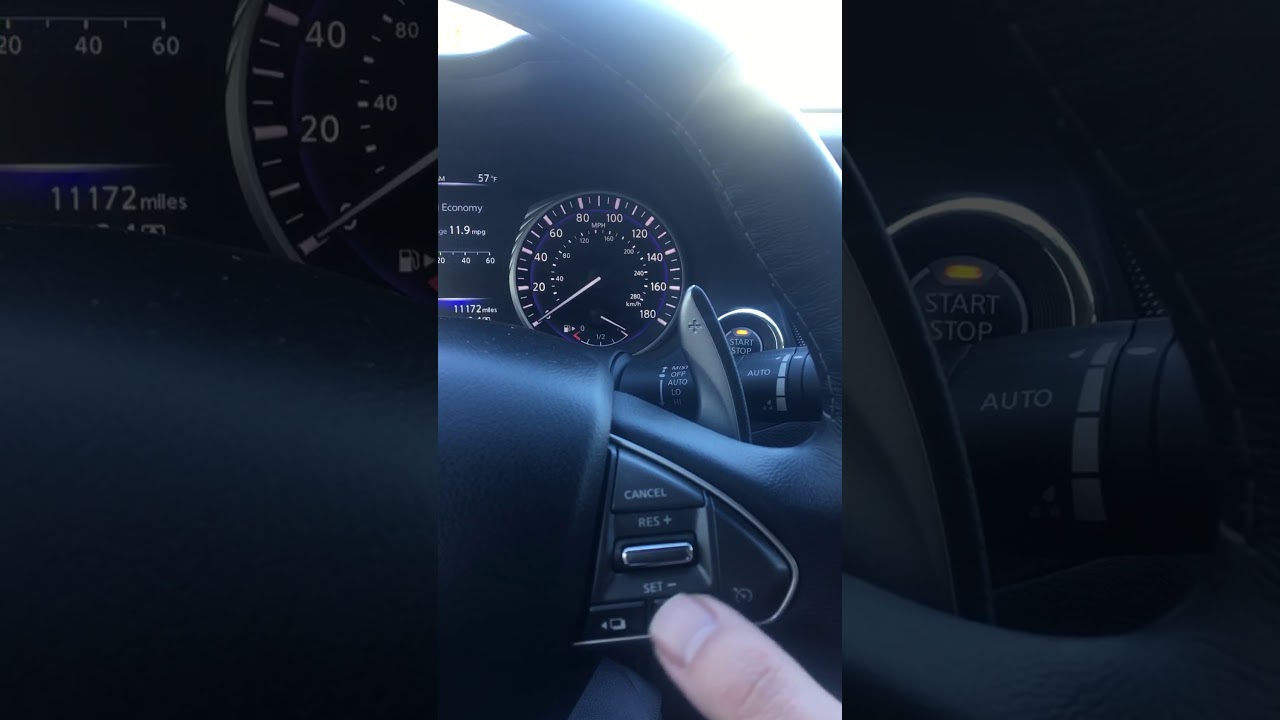
Since there is no button, you must use the menu interface located within your instrument cluster display. Follow these steps to engage the system’s recognition protocol:
- Ensure all four tires are inflated to the specific PSI listed on your driver-side door jamb placard.
- Use the arrows on the left side of your steering wheel to scroll to the Settings menu on the dashboard display.
- Select TPMS or Vehicle Info from the menu options.
- Look for a Calibration or Tire Pressure sub-menu; if the sensors have been synced recently, the screen will display current pressures.
- If the light persists, ensure the system is set to the correct tire size (if applicable) and confirm the settings by pressing the Enter button on your steering wheel.
The Essential Drive Cycle
After adjusting your tire pressures and navigating the menu, the system will not turn off immediately. You must complete a specific drive cycle to allow the BCM to verify the new sensor data.
- Drive the vehicle at speeds consistently above 25 mph.
- Maintain this speed for at least 10 to 15 minutes.
- Avoid stop-and-go traffic if possible, as the sensors require a steady rotation to transmit a reliable pressure reading to the vehicle’s computer.
Once the car recognizes that the pressures are stable and within the required threshold, the light will extinguish automatically without any further input from you.
Step-by-Step Calibration Procedure for Q50 Drivers
In the 2026 Infiniti Q50, the Tire Pressure Monitoring System (TPMS) does not utilize a physical reset button. Instead, calibration is managed through the onboard Vehicle Information Display. Follow these precise steps to initiate a system relearn after adjusting your tire pressure to the manufacturer’s recommended 33-35 PSI.
Initiating the Relearn Cycle
- Park the vehicle on a level surface and ensure the engine is turned off.
- Place the ignition in the “ON” mode without starting the engine by pressing the Start button twice while keeping your foot off the brake.
- Use the steering wheel mounted controls to navigate to the “Settings” menu on the central instrument cluster display.
- Select “TPMS” or “Tire Pressure” from the menu options.
- Select “Calibration” and confirm by holding the “Enter” button for three seconds until the display flashes or confirms the initiation.
- Drive the vehicle at a consistent speed of at least 25 mph (40 km/h) for approximately 15 to 20 minutes to allow the sensors to sync with the ECU.
According to 2026 technical service bulletins, if the speed drops significantly or the vehicle idles for an extended duration during this period, the calibration sequence may pause. Continuous driving is essential for the wireless signal handshake between the sensor and the receiver.
What If It Still Doesn’t Work?
If the TPMS warning light remains illuminated after the calibration drive, the system likely indicates a hardware fault rather than a calibration error. Follow these diagnostic fallback steps:
- Verify tire pressures with a manual, high-accuracy digital gauge, as built-in sensors can occasionally drift due to extreme temperature fluctuations common in the 2026 climate cycle.
- Inspect the dashboard for a flashing TPMS icon rather than a solid one; a flashing light usually indicates a failed sensor battery or an internal electronics malfunction.
- Check the spare tire pressure if your specific Q50 trim level includes a full-size spare with an active sensor, as this often triggers false alerts.
- Seek professional diagnostic intervention if the light persists. A certified technician will utilize an OBD-II scan tool to identify specific sensor ID failures.
Professional diagnostic fees for TPMS sensor replacement typically range between $150 and $250 per sensor, including labor and recalibration. For persistent system errors, local Infiniti dealerships utilize specialized “Consult III plus” software to overwrite corrupted sensor IDs.
Conclusion
Managing the TPMS in your 2026 Infiniti Q50 is a straightforward digital process rather than a physical button task. By confirming tire pressure and completing the required 25-mph drive cycle, most warnings are resolved quickly. According to verified research and expert service documentation, if manual recalibration fails, a professional scan is required to address individual sensor battery degradation. Take your vehicle to an authorized service center if the warning light remains active after these steps to ensure optimal safety and fuel efficiency.
❓ Frequently Asked Questions
Why does my TPMS light stay on after I filled my tires?
The system requires you to drive the vehicle, usually above 20 mph, for a minimum of 10 to 20 minutes. This allows the sensors to detect the correct pressure and update the vehicle’s computer automatically.
Should I reset the TPMS if I just rotated my tires?
Because the Infiniti Q50 TPMS system automatically detects the location of each sensor, no manual reset is required after a rotation. The system will map the new positions within a few miles of driving.
Could a failing battery in the tire sensor trigger the light?
Yes, if the TPMS light flashes for one minute and then stays solid, it indicates a malfunction, likely caused by a dead sensor battery. In this case, you will need to have the sensor replaced by a technician.
Does cold weather affect my TPMS light?
Extreme cold causes air to contract, dropping the tire pressure and triggering the light. Ensure you check your tire pressure when the tires are ‘cold’—meaning the car has been parked for at least three hours.
Can I use an aftermarket OBDII tool to clear the light?
While some advanced scan tools can read sensor data, they cannot ‘force’ a reset if the pressure is low. The only way to clear the light is to address the underlying pressure issue.
What if the light persists after professional inflation?
If the pressure is correct and the light remains on after an extended drive, you may have a faulty sensor or a puncture causing a slow leak. A tire shop can perform a diagnostic check to determine which sensor is failing.