How to Start a Car: Key Ignition & Push-Button Guide
Last Updated on September 1, 2026 by Ryan
Successfully starting a car requires ensuring it’s in Park or Neutral with your foot on the brake (or clutch for manual) before activating the ignition. This guide provides clear instructions for both traditional key and modern push-button systems, emphasizing crucial safety checks for a smooth start.
🎯 Key Takeaways


- Always ensure P/N and brake before starting.
- Differentiate between key and push-button starts.
- Manual cars require clutch pedal engagement.
- Conduct quick pre-start safety checks.
- Understand basic troubleshooting for non-starts.
Successfully starting your car’s engine is a straightforward process, whether you have a traditional key or a modern push-button ignition. It primarily involves ensuring your vehicle is in the correct gear, engaging the necessary safety pedals, and then activating the ignition system. Mastering these steps ensures a smooth, safe start every time you get behind the wheel, making your daily commute or weekend adventure begin without a hitch.
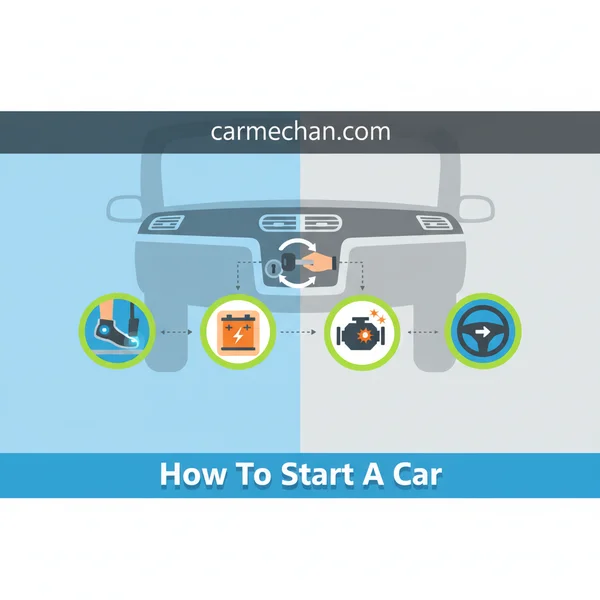
Car’s Starting System”>Understanding these fundamental actions is crucial not just for new drivers, but for anyone who might encounter an unfamiliar vehicle. Proper ignition sequence safeguards your car’s mechanical components and, more importantly, prevents unexpected movement. Let’s break down the essential steps and variations to get you confidently on the road.
Understanding Ignition Systems: Key vs. Push-Button

The method you use to bring your engine to life largely depends on your car’s ignition system. While both achieve the same outcome, their interactions differ significantly, impacting how you prepare to start the vehicle. Knowing your system is the first step.

Traditional Key Ignition
Many vehicles still rely on a physical key that you insert into a tumbler. This system is robust and familiar. Your key typically has specific positions, each serving a different purpose. When starting, you interact with three primary positions:
- OFF/LOCK: The key is fully inserted, and the steering wheel is locked. No power is supplied to accessories.
- ACC (Accessory): Turning the key one click forward provides power to non-essential accessories like the radio, windows, and dashboard lights, without engaging the engine. This is useful for charging devices or listening to music while the car is off.
- ON/RUN: Turning the key two clicks forward powers all vehicle systems, including the fuel pump and ignition system, preparing the engine to start. Warning lights illuminate on your dashboard for a moment as the car performs self-checks.
- START: This is the final, spring-loaded position. You turn the key fully forward, holding it briefly until the engine cranks and starts. Once the engine engages, release the key, and it will spring back to the “ON/RUN” position. Never hold the key in the “START” position once the engine is running, as this can damage the starter motor.
Always use the correct key for your vehicle and avoid forcing it. A worn key or tumbler can sometimes make it difficult to turn, but excessive force can damage the ignition cylinder.
Modern Push-Button Start
Newer vehicles frequently feature a push-button ignition, offering convenience and a sleek design. This system requires your car’s electronic key fob to be present inside the cabin for it to function. The button itself often has LED indicators to show the current power state.
- Proximity Detection: The car senses your key fob’s presence. Without the key, the button will not initiate any power functions.
- Accessory Power: Pressing the start button once without your foot on the brake pedal (or clutch for manual transmission) will activate accessory power (similar to the key’s “ACC” position).
- “On” Position: Pressing the button a second time without the brake engaged will put the car into the “ON” or “RUN” state, powering all systems but not starting the engine. Dashboard warning lights will illuminate.
- Engine Start: To start the engine, you must firmly press the brake pedal (for automatic transmissions) or the clutch pedal (for manual transmissions) and then press the start button once. The engine will crank and come to life. There is no need to hold the button; a single press is sufficient. The button light usually changes color to indicate the engine is running.
This system streamlines the starting process but relies on a functioning key fob battery. Always ensure your fob is in the car when attempting to start.
From Start to Finish: Getting Your Car Roaring Explained
Welcome to your essential guide on how to successfully start a car! Whether you’re a new driver, a seasoned pro needing a refresher, or just curious about the mechanics, understanding the correct procedure is vital for safety and vehicle longevity. This guide breaks down the process into easy-to-follow steps, ensuring you can confidently bring your vehicle to life every time.
Step 1: Prepare for Entry & Unlock Your Vehicle
What you need: Your car’s key (physical or smart fob) or remote access device.
Instructions: Before approaching your vehicle, ensure you have your car key or smart fob readily accessible. Walk to your car safely, paying attention to your surroundings. Use your key fob to unlock the doors, typically by pressing the ‘unlock’ button once or twice, or by using the physical key in the driver’s side door lock. If your car has keyless entry, simply approaching with the fob might unlock it, or you may need to touch a sensor on the door handle. Confirm all doors are unlocked before proceeding.
Pro Tip: Always keep your car keys in a consistent, easy-to-reach place like a dedicated pocket or bag. This prevents fumbling and potential misplacement, especially in low light or adverse weather conditions.
Step 2: Enter the Vehicle and Secure Your Position
What you need: Yourself, the car’s driver’s seat, and the seatbelt mechanism.
Instructions: Open the driver’s door and comfortably slide into the seat. Once seated, adjust your position for optimal comfort and control. Ensure your feet can easily reach and operate the pedals (accelerator, brake, and clutch if manual) without stretching, and that your wrists can rest on the top of the steering wheel. Next, secure your seatbelt. Pull the belt across your body, ensuring the lap belt sits low across your hips and the shoulder belt crosses your chest, not your neck. Insert the metal buckle tongue into the receiver until you hear a distinct click.
Pro Tip: Proper seating adjustment is crucial for both safety and effective driving. Re-adjust your seat and mirrors every time you get into an unfamiliar car or after someone else has driven your vehicle.
Step 3: Insert Key or Position Smart Fob
What you need: Your car key or smart fob, and the ignition slot/start button location.
Instructions: If your car uses a traditional physical key, locate the ignition slot, usually on the right side of the steering column or on the dashboard. Insert the key fully into the slot. For vehicles with a smart fob and push-button start, ensure the fob is inside the vehicle cabin – often in your pocket, a cup holder, or a designated slot. There’s no physical key to insert; the car detects the fob’s presence wirelessly. Familiarize yourself with the exact location of your vehicle’s ‘Engine Start/Stop’ button.
Pro Tip: Never force a physical key into the ignition. If it doesn’t slide in easily, check if it’s the correct key and the orientation is right. Jiggling the steering wheel slightly might also help align the ignition cylinder if it feels stiff.
Step 4: Engage Brake Pedal & Verify Gear Position
What you need: Your right foot, the brake pedal, and the gear shifter.
Instructions: Before attempting to start the engine, firmly press and hold down the brake pedal with your right foot. This is a critical safety measure in most modern cars and is often required for the ignition system to engage, especially in automatics. Simultaneously, verify that the gear selector is in either ‘Park’ (P) or ‘Neutral’ (N). In automatic transmissions, ‘Park’ is the safest and most common starting position. For manual transmission vehicles, ensure the shifter is in ‘Neutral’ and it’s also highly recommended to depress the clutch pedal fully with your left foot.
Pro Tip: Always develop the habit of having your foot on the brake before starting, regardless of transmission type. This prevents unexpected lurches forward or backward if the car is accidentally left in gear.
Step 5: Initiate the Ignition Sequence
What you need: Your right hand, the car key or start button.
Instructions: With your foot firmly on the brake and the gear in Park/Neutral, it’s time to start the engine. If you have a physical key, turn it clockwise to the ‘START’ position. Hold it there for a brief moment (typically 1-2 seconds) until the engine fully catches. Do not hold it longer once the engine is running to avoid damaging the starter motor. If you have a push-button start, simply press the ‘Engine Start/Stop’ button once. For some cars, you might need to press and hold it briefly. You’ll hear the engine crank and then begin to run.
Pro Tip: Avoid “feathering” the key or pressing the start button multiple times in quick succession. A single, smooth, and sustained turn or press is usually all it takes. Listen for the distinct sound of the engine firing up.
Step 6: Monitor Dashboard & Release Key/Button
What you need: Your eyes, the car’s dashboard/instrument cluster.
Instructions: As soon as the engine starts and runs smoothly, immediately release the physical key, allowing it to spring back to the ‘ON’ (or ‘RUN’) position. If you have a push-button start, simply release the button as the engine begins to run; it typically doesn’t need to be held down after ignition. After starting, quickly glance at your dashboard. You should see various warning lights illuminate briefly (e.g., battery, oil pressure, check engine) and then extinguish within a few seconds, indicating systems are operational. The tachometer (RPM gauge) should show the engine idling at a steady, low speed, typically between 700-1000 RPM.
Pro Tip: If any critical warning lights (like the oil pressure or battery light) remain illuminated after the engine has started, turn the engine off immediately and consult your owner’s manual or a mechanic. Continuing to drive could cause severe damage.
Step 7: Initial Warm-up (Optional but Recommended)
What you need: A few moments of patience.
Instructions: While many modern cars don’t require extensive warm-up, allowing your engine to idle for 30 seconds to a minute after starting, especially in colder weather, can be beneficial. This allows engine oil to circulate thoroughly throughout the engine block and reach optimal operating temperature. Avoid immediately revving the engine or driving at high speeds right after starting. This brief period of gentle idling helps ensure all components are properly lubricated and reduces wear and tear, contributing to the longevity of your engine.
Pro Tip: If you’re in a hurry, it’s generally better to drive gently for the first few minutes rather than letting the car idle for an extended period. Modern engines warm up more efficiently under light load. Just avoid hard acceleration or high RPMs until the engine temperature gauge reaches its normal operating range.
✅ Final Checklist
- Car unlocked and entered safely.
- Driver’s seat and mirrors adjusted correctly, seatbelt fastened with a click.
- Key inserted or smart fob present and detected.
- Brake pedal firmly pressed, gear selector in ‘Park’ or ‘Neutral’.
- Engine started with a single, smooth turn of the key or press of the button.
- All dashboard warning lights (except seatbelt/parking brake) extinguished after starting.
- Engine idling smoothly and quietly.
Important Notes:
- Safety Considerations: Always ensure your surroundings are clear before starting. Never start a car in an enclosed space like a garage without proper ventilation, as exhaust fumes contain dangerous carbon monoxide. Keep children and pets away from moving parts.
- When to Seek Professional Help: If your car repeatedly fails to start, makes unusual noises during starting (e.g., clicking, grinding, slow cranking), or if persistent warning lights appear on the dashboard after starting, it’s time to consult a certified mechanic. Do not ignore these signs, as they could indicate serious underlying issues.
- Estimated Time and Cost Range: Learning to start a car properly takes only a few minutes. If you encounter issues, diagnostics from a mechanic typically range from $50-$150, with repair costs varying greatly depending on the problem (e.g., new battery $100-$300, new starter $300-$800+).
Pre-Start Essentials: Safety and Readiness Checks
Before you even touch the ignition, a few critical checks ensure your car is ready to start safely and that you have optimal control. These aren’t optional steps; they’re fundamental to responsible driving and preventing accidents.

Crucial Safety Adjustments
Your physical comfort and situational awareness are paramount before initiating engine start. These quick adjustments make a significant difference:
- Adjust Your Seat: Slide your seat forward or backward until you can comfortably reach all pedals (accelerator, brake, and clutch if applicable) with a slight bend in your knees. You should also be able to fully depress the pedals without stretching or lifting your heel. Ensure you can comfortably reach the steering wheel while maintaining a slight bend in your elbows.
- Fasten Your Seatbelt: Always secure your seatbelt before starting the engine. It’s your primary safety device in case of an unexpected incident, even at low speeds or during parking maneuvers.
- Adjust Your Mirrors: Quickly check and adjust your rearview mirror to see directly behind your vehicle. Adjust both side mirrors so you can see a small sliver of your car’s rear quarter panel and the road directly beside and behind you. This maximizes your field of vision, crucial for safe maneuvering.
- Scan Your Surroundings: Take a moment to look around your car. Check for any obstacles, pedestrians, or animals that might be in your immediate vicinity, especially behind or beside your vehicle. This quick visual sweep can prevent common low-speed accidents.
These adjustments take mere seconds but set you up for a safe and controlled driving experience from the outset.
Gear Position and Brake Application
Ensuring your car is in the correct gear and that the appropriate safety pedal is depressed is the final barrier against unintended vehicle movement during startup. This is non-negotiable for engine engagement.
- Automatic Transmission (P or N): For automatic vehicles, the gear selector must be in Park (P) or Neutral (N). Most cars require “P” for the ignition system to engage, as it mechanically locks the transmission, preventing the car from rolling. Some older models or specific designs might allow starting in “N,” but “P” is always the safest and most common requirement. Always verify the gear selector is firmly in “P” before attempting to start.
- Manual Transmission (N + Clutch): If you drive a manual car, the gear lever should be in Neutral (N), and you must fully depress the clutch pedal. Many modern manual cars also require you to press the clutch pedal even if the car is in neutral as a safety measure. If you prefer to start in gear (not recommended for beginners), you must still fully depress the clutch pedal and often the brake pedal as well, but always verify it’s in neutral as a best practice.
- Foot on Brake Pedal (Automatic) / Clutch Pedal (Manual): This is perhaps the most critical action immediately before ignition. For automatic cars, firmly press the brake pedal with your right foot. For manual cars, fully depress the clutch pedal with your left foot. This acts as a safety interlock, preventing the engine from starting unless the car is prevented from moving forward or backward unexpectedly. Maintain firm pressure on the pedal until the engine is fully running.
Confirming these safety measures before turning the key or pushing the button is vital. It guarantees that when the engine roars to life, your car remains stationary and under your control.
<h2>Troubleshooting Common Car Start Issues</h2>

<p>Even with a perfect understanding of your car's ignition system, sometimes a vehicle just won't cooperate. Don't panic! Many starting issues are quite common and can often be identified without needing a mechanic on the spot. Knowing what signs to look for can save you time and stress, helping you to explain the problem clearly if professional help is needed.</p>
<h3>The Dreaded "Click" or No Sound At All</h3>
<p>One of the most frequent starting problems is when you turn the key or push the button, and you hear a rapid clicking sound, or absolutely nothing at all. This usually points to an issue with your car's electrical power.</p>
<ul>
<li><strong>Dead Battery:</strong> This is the prime suspect. If your dashboard lights are dim, or don't come on at all, and the engine struggles to turn over (or doesn't even try), a drained battery is highly likely. <em>Example:</em> You left your headlights on overnight.</li>
<li><strong>Loose or Corroded Battery Terminals:</strong> Sometimes, the battery itself is fine, but the connections providing power to your starter are compromised. A loose cable won't allow enough current through. <em>Tip:</em> Visually inspect the battery posts and cable clamps for grime or looseness. </li>
<li><strong>Faulty Starter Motor:</strong> If the battery is strong and all connections seem fine, but you still only get a single click or no response, the starter motor itself might be failing. This component is responsible for turning the engine over to begin the combustion process.</li>
</ul>
<p>Understanding these potential culprits helps narrow down the problem quickly.</p>
<h3>Engine Cranks But Won't Turn Over</h3>
<p>Another frustrating scenario is when your engine sounds like it's trying to start (it "cranks"), but it just doesn't catch and actually run. This indicates that while the starter motor is doing its job, something else is preventing the engine from firing up.</p>
<ul>
<li><strong>Fuel Supply Issues:</strong> An engine needs fuel to run. If you're low on gas, or if there's a problem with the fuel pump or fuel filter, the engine won't get the necessary supply. <em>Example:</em> Forgetting to fill up after a long drive.</li>
<li><strong>Spark Problems:</strong> Gasoline engines require a spark to ignite the fuel-air mixture. Worn-out spark plugs, or issues with the ignition coils, can prevent this crucial spark from happening.</li>
<li><strong>Immobilizer System:</strong> Modern cars have anti-theft systems (immobilizers) that can prevent the engine from starting if they don't recognize the key's unique transponder chip. <em>Tip:</em> Try a spare key if your primary one isn't working.</li>
</ul>
<p>While these issues often require professional diagnosis, knowing they exist can help you describe the car's behavior more accurately to a mechanic.</p>
<h2>The Role of Transmission in Starting Your Vehicle</h2>
<p>Beyond the ignition itself, your car's transmission plays a critical, often overlooked role in the starting sequence. This is a fundamental safety feature designed to prevent accidental lurches and ensure the vehicle doesn't unexpectedly move when you start the engine.</p>
<h3>Safety First: Park or Neutral Explained</h3>
<p>For cars with an automatic transmission, there's a built-in safety interlock that prevents the engine from starting unless the gear selector is in either <strong>Park (P)</strong> or <strong>Neutral (N)</strong>. <em>Why these two?</em></p>
<ul>
<li><strong>Park (P):</strong> This gear locks the transmission, physically preventing the drive wheels from turning. Starting in Park ensures the car is stationary and won't roll or move forward/backward when the engine fires up.</li>
<li><strong>Neutral (N):</strong> In Neutral, the transmission is disengaged from the engine, allowing the wheels to spin freely. While less secure than Park (the car can still roll), it prevents power from being sent to the wheels during startup. This can be useful if you're ever trying to start a car that needs to be pushed or towed, but for regular starting, Park is always the safest.</li>
</ul>
<p>If your automatic car won't start, double-check that your gear selector is firmly seated in one of these positions. Sometimes, it might feel like it's in Park, but the internal sensor isn't quite tripped.</p>
<h3>Manual Transmissions: Clutch Engagement</h3>
<p>For those driving a car with a manual transmission, the starting procedure includes an additional, crucial step: pressing the <strong>clutch pedal fully to the floor</strong>.</p>
<ul>
<li><strong>Disengaging the Engine:</strong> Pressing the clutch pedal disengages the engine from the transmission. This prevents the car from lurching forward (or backward) unexpectedly, especially if it was left in gear. <em>Example:</em> If you accidentally left your manual car in first gear, pressing the clutch prevents it from jumping when you turn the key.</li>
<li><strong>Clutch Safety Switch:</strong> Modern manual cars include a clutch safety switch, an interlock device that ensures the clutch pedal is depressed before the starter motor can engage. This is a vital safety feature to prevent starting the car "in gear" and potentially causing an accident.</li>
</ul>
<p>Always ensure the clutch is fully engaged before attempting to start a manual vehicle. It's a fundamental part of the starting process and a key safety measure.</p>
<h2>Conclusion</h2>
<p>Starting your car is a routine action, but understanding the underlying mechanics, whether you have a traditional key or a modern push-button system, empowers you on the road. From the moment you engage the ignition to the engine's first roar, a complex sequence of events takes place, all designed for efficiency and safety. Remembering to check your dashboard indicators, understanding the importance of your transmission's position, and knowing common troubleshooting signs are all valuable skills.</p>
<p>Next time you get behind the wheel, take a moment to appreciate the seamless process. Practice these foundational steps and always prioritize safety. With a little knowledge, you'll feel more confident and prepared for any journey that lies ahead.</p>
❓ Frequently Asked Questions
What are the primary differences between starting a car with a traditional key versus a push-button?
Traditional key ignition involves inserting and turning a physical key in the ignition cylinder until the engine engages, whereas push-button systems typically require the key fob to be present inside the vehicle and depressing a button while applying the brake for startup.
Why is it important to check mirrors and adjust your seat before starting the car?
Adjusting mirrors and your seat before starting ensures optimal visibility and comfortable control from the outset. This allows you to focus on the road immediately after the engine is running and before moving, enhancing safety.
My car won’t start, and I hear a slow crank; what could be the issue?
A slow crank often points to a weak battery that has just enough power to turn the engine over slowly, but not enough to fully ignite it. Alternatively, it could indicate issues with the starter motor itself or poor electrical connections.
How does the car’s transmission type affect the starting procedure?
Automatic transmissions require the car to be in Park (P) or Neutral (N) with the brake pedal depressed for safety. Manual transmissions mandate the clutch pedal be fully depressed, sometimes in combination with the brake, to allow the engine to start.
What is the purpose of the indicator lights that illuminate briefly when starting a car?
These indicator lights, such as the check engine, oil pressure, or battery light, illuminate during startup as a self-test of the car’s systems. They should turn off shortly after the engine fully engages, signaling normal operation.
Should I let my car warm up after starting, especially in cold weather?
Modern cars generally do not require extensive warm-up periods; a minute or two is usually sufficient before driving. Driving gently at low RPMs allows the engine to warm up more efficiently than prolonged idling, which is better for fuel economy and engine longevity.