How To Fix Hail Damage On Car Fix Hail Damage On Car 2026
Last Updated on September 1, 2026 by Ryan


To fix hail damage on a car, you can assess the severity yourself and attempt minor repairs using DIY methods like heat and cold application, dry ice, or suction cup kits. For extensive or severe damage, professional services such as Paintless Dent Repair (PDR) or traditional bodywork are recommended to ensure proper restoration.
To fix hail damage on a car, you can assess the severity yourself and attempt minor repairs using DIY methods like heat and cold application, dry ice, or suction cup kits. For extensive or severe damage, professional services such as Paintless Dent Repair (PDR) or traditional bodywork are recommended to ensure proper restoration.
Here are the key takeaways from our guide:
- Assess damage thoroughly before starting any repair.
- Minor dents can often be fixed with DIY techniques.
- Know when to seek professional body shop help.
- PDR is often preferred for preserving original paint.
- Preventative measures significantly reduce future risk.
Learning how to fix hail damage on your car can save you significant time and money, offering practical solutions for restoring your vehicle’s appearance. Hail damage can range from minor dimples to significant dents, impacting your vehicle’s aesthetics and resale value.
This guide provides a comprehensive overview of both do-it-yourself strategies and when to consider professional intervention. We will equip you with the knowledge to make informed decisions for your vehicle in 2026.
Understanding the various repair approaches available is crucial. You can tackle small, superficial dents yourself or opt for expert services for more severe impacts.
A crucial first step in fixing hail damage involves accurately assessing the extent of the impact, which guides your subsequent repair decisions.
Key Takeaways
- Assess damage thoroughly before starting any repair.
- Minor dents can often be fixed with DIY techniques.
- Know when to seek professional body shop help.
- PDR is often preferred for preserving original paint.
- Preventative measures significantly reduce future risk.
How to Assess Car Hail Damage Accurately
Accurately identifying and categorizing hail damage is the foundation of any successful repair. A thorough assessment prevents unnecessary work and ensures the correct repair method is chosen. Neglecting this step can lead to further damage or incomplete repairs.

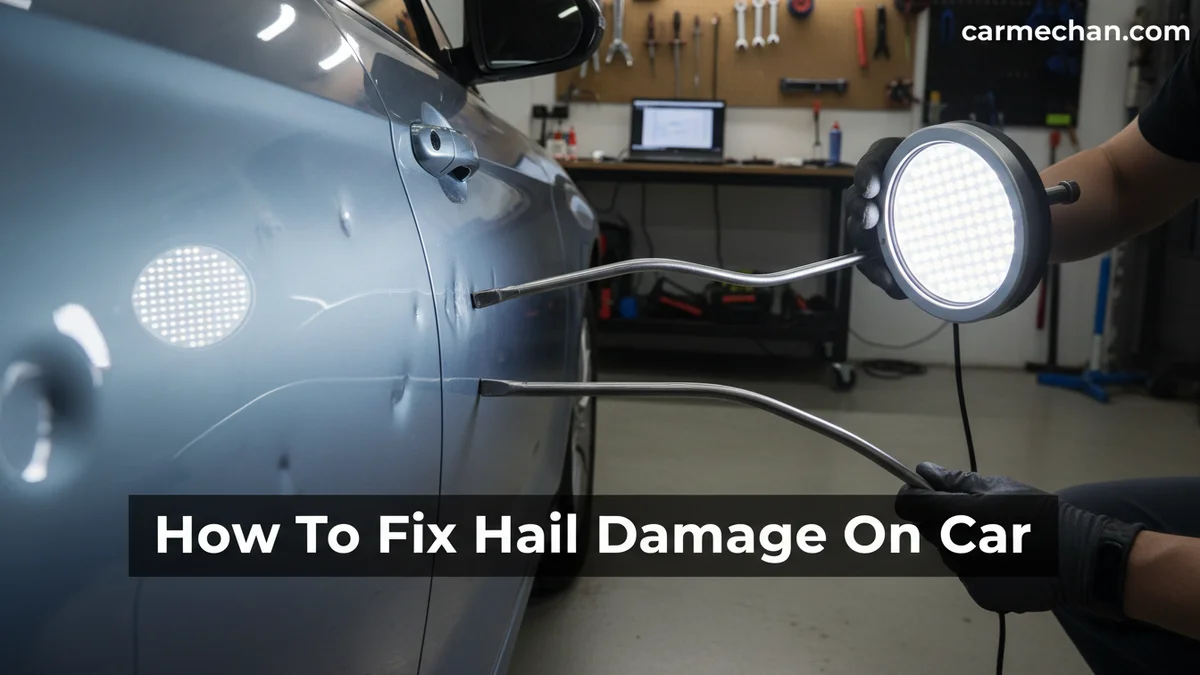
Examine Lighting Conditions
Optimal lighting is paramount for seeing all dents. Park your car outdoors on a cloudy day or in a well-lit garage under fluorescent lights. Reflections highlight imperfections that might otherwise go unnoticed. Use a portable LED work light to scan panels from various angles, revealing subtle dimples and larger impacts.
Identify Dent Characteristics
Pay close attention to the shape, size, and depth of each dent. Are they shallow and smooth, or do they have sharp creases? A dent’s edge quality indicates how much the metal has stretched. For instance, a dime-sized dent without a sharp crease is typically easier to repair than a quarter-sized dent with a defined edge, often referred to as ‘ping’ dents or ‘crease’ dents.
Gauge Damage Severity
Determine the overall severity by counting the number of dents per panel and estimating their size. A few small, shallow dents might be suitable for DIY. Extensive damage, where dents are numerous, deep, or cover large areas like the hood or roof, almost always requires professional attention. Consider if the paint is chipped or scratched, as this changes repair complexity.
Once you have accurately assessed the damage, understanding the most effective DIY repair options becomes your next crucial step.
5 Best DIY Hail Repair Methods
For minor hail damage, several DIY methods offer a cost-effective way to restore your vehicle. These techniques are best suited for shallow dents without paint damage. Always proceed with caution and follow safety guidelines to avoid further harm to your car.
Use Heat and Cold
This method leverages temperature changes to make the metal expand and contract, popping the dent out. Gently heat the dented area with a heat gun set to a low-to-medium setting, keeping it moving to prevent paint damage. Optimal heat gun temperatures for car paint safety typically range from 120-150°F (49-65°C) to avoid scorching .
Immediately after heating, apply a can of compressed air (held upside down for a cold blast) or dry ice to rapidly cool the area. The sudden contraction can often pull the dent out. Repeat if necessary.
Apply Dry Ice Technique
Dry ice causes rapid contraction, which can pop out shallow dents. Wear thick gloves and safety glasses when handling dry ice . Rub a piece of dry ice over the dent for about 30 seconds to a minute.
Listen for a popping sound, which indicates the dent has released. This method is most effective for larger, shallow dents.
Employ Suction Cup Kits
Specific suction cup dent pullers are designed for car body repair. Clean the dented area thoroughly before applying the suction cup. Press the cup firmly against the center of the dent, ensuring a good seal. Then, pull the handle straight out, creating suction that can lift the metal. This works best on flat, smooth surfaces with wider, less sharp dents.
Leverage Dent Puller Tools
Adhesive-based dent puller kits use special glue and tabs that stick to the dent. Apply the glue to a pulling tab, attach it to the dent, and let it dry. Then, use a specialized pulling bridge or slide hammer to gently pull the tab, slowly lifting the dent.
This method offers more control than suction cups for slightly deeper, smaller dents.
Consider Soft Tap Repair
For small, accessible dents, a soft tap repair involves gently pushing the dent out from behind the panel. This requires access to the backside of the dent, often by removing interior panels. Using a rubber hammer or specialized dent removal tools, carefully tap the high spots around the dent’s perimeter, working towards the center.
This technique requires patience and a delicate touch to avoid creating new high spots or dimples.
While many dents are manageable at home, certain damage indicators signal it is time to involve a professional.
When to Call Professional Hail Repairers
Not all hail damage can be effectively addressed through DIY methods. Knowing when to seek professional help is crucial to prevent further damage and ensure a high-quality, lasting repair. Professionals possess specialized tools and expertise that DIY attempts often lack.

Severe Paint Cracking
If hail impacts have caused the paint to crack, chip, or flake off, professional repair is essential. DIY methods like PDR are not effective once the paint integrity is compromised. Repair shops can correctly match paint and address the underlying metal damage to prevent rust and further deterioration.
Multiple Deep Dents
A vehicle with numerous deep dents, especially those that have stretched the metal significantly, requires expert intervention. These types of damage are too complex for home repair tools. Professionals can carefully massage the metal back into shape without compromising the panel’s structure.
Roof or Pillar Damage
Dents on structural components like the roof, pillars, or car frame are critical. These areas contribute to your vehicle’s safety and structural integrity. Any repair on these parts must be performed by certified technicians to maintain safety standards and avoid jeopardizing occupant protection in future accidents.
Complex Panel Contours
Panels with intricate curves, sharp body lines, or tight spaces are notoriously difficult to repair without specialized tools and experience. Attempting DIY repair on these areas can easily worsen the damage or create unsightly imperfections. Professional technicians have the finesse and equipment to tackle these challenging areas effectively.
When professional repair becomes necessary, understanding the different methods they employ can help you make an informed decision.
PDR vs Traditional Hail Repair for Your Vehicle
When professional repair is required, you will generally encounter two primary methods: Paintless Dent Repair (PDR) and conventional bodywork. Each has distinct advantages and is suited for different types of damage.
Paintless Dent Repair
Paintless Dent Repair (PDR) is a highly specialized technique where skilled technicians use custom tools to meticulously massage and push out dents from the inside of the panel. This method preserves the original factory paint finish, as it does not involve sanding, filling, or repainting.
PDR is ideal for dents where the paint is intact and the metal has not been severely stretched or creased. It is often faster and more cost-effective than traditional methods.
Conventional Bodywork
Conventional bodywork, or traditional dent repair, involves more invasive procedures. This method is used when dents are too deep, have sharp creases, or the paint has been chipped or cracked. It typically involves sanding down the damaged area, applying body filler, sanding smooth, priming, and then repainting the affected panel.
While effective for severe damage, it can be more time-consuming, expensive, and may result in a slight color mismatch if not done expertly.
Cost Implications
The cost of hail damage repair varies significantly between PDR and conventional methods. PDR is generally less expensive, often ranging from $1,000 to $3,000 for moderate hail damage, as it saves on materials and labor associated with painting .
Traditional repair can easily exceed $5,000 to $10,000 or more, especially if multiple panels require extensive work and repainting. Factors like vehicle make, model, and the number/size of dents all influence the final price.
Repair Timeframes
PDR is typically much quicker, often completed within a few days, depending on the extent of the damage. This quick turnaround means you get your vehicle back sooner, minimizing disruption. Conventional bodywork, due to the multiple steps of filling, sanding, and painting, can take a week or more to complete.
This longer timeframe also means you might need a rental car for an extended period.
Beyond fixing existing damage, preventing future hail damage is a smart strategy for any car owner.
7 Essential Hail Damage Prevention Tips
Proactive measures can significantly reduce the risk of your vehicle sustaining hail damage. Protecting your investment from nature’s unpredictable elements is always better than repairing it after the fact. Implement these tips to safeguard your car in 2026.
Monitor Weather Forecasts
Stay updated on local weather forecasts, especially during seasons prone to severe storms. Many weather apps and services provide real-time alerts for hail warnings. Early knowledge allows you time to move your vehicle to safety.
Seek Covered Parking
Whenever possible, park your car in a garage, carport, or under a protective overhang. This is the most effective way to shield your vehicle from direct hail impact. Even temporary covered parking during a storm can make a significant difference.
Use Car Covers
Invest in a high-quality, padded car cover designed for hail protection. These covers have extra thick layers that can absorb the impact of hailstones. While not infallible, they offer a substantial barrier against minor to moderate hail. Hail events cause damage to tens of thousands of vehicles annually across the globe .
Install Hail Nets
If you lack covered parking at home, consider installing a hail net system over your driveway. These structures provide a resilient canopy that deflects hailstones. They offer a semi-permanent solution for consistent protection.
Adjust Travel Plans
During severe weather alerts, postpone non-essential travel. If you must drive, check routes for areas experiencing heavy hail. Being caught on the road during a hail storm exposes your vehicle to significant risk.
Park Smartly at Home
If no covered parking is available, park your car close to a building or under large, sturdy trees. While not perfect, these can offer some limited protection from smaller hailstones. Avoid parking near power lines or anything that could fall due to storm winds.
Consider Insurance Options
Review your auto insurance policy to ensure you have comprehensive coverage. This type of coverage typically protects against “acts of nature,” including hail damage. Knowing your coverage ensures financial protection if prevention methods fail.
Implementing these protective measures complements the knowledge of repair, providing a full-circle approach to managing hail damage.
Conclusion Mastering Car Hail Damage Management
Effectively addressing car hail damage involves a blend of proactive prevention and informed repair strategies. From accurately assessing the damage yourself to understanding the nuances of DIY versus professional methods, you now possess a comprehensive toolkit. Small dents might yield to home remedies, but knowing when to call in experts for PDR or traditional bodywork is key to preserving your vehicle’s value and integrity.
Our advice for 2026 emphasizes smart choices to prevent damage and make informed repair decisions. By applying these practical steps and embracing preventative habits, you can confidently navigate the challenges of hail and keep your car looking its best. Take action now to protect your investment and maintain its pristine condition.
Frequently Asked Questions About Hail Damage
How Much Does It Cost to Fix Hail Damage on a Car?
The cost varies significantly based on severity, typically ranging from $1,000 to $10,000 or more. Minor DIY fixes may be under $100, while extensive professional PDR can be $2,500-$4,500. Traditional bodywork for severe damage can easily exceed $5,000, averaging around $7,000-$12,000 .
Can Minor Hail Damage Be Ignored on a Vehicle?
Ignoring minor hail damage is not recommended. While small dents might not affect immediate functionality, they reduce your vehicle’s resale value and can lead to rust if paint is chipped. Promptly addressing even small imperfections is the best course of action.
Does Insurance Cover Hail Damage Repair?
Yes, comprehensive auto insurance policies typically cover hail damage, considering it an “act of nature.” You will usually be responsible for paying your deductible. Contact your insurer to understand your specific coverage details and claim process, as per standard insurance guidelines .
Is Paintless Dent Repair Effective for All Hail Damage?
PDR is highly effective for many hail dents where the paint is intact and the metal isn’t severely stretched. However, it is not suitable for very deep dents, sharp creases, or areas with significant paint damage. A professional assessment will determine if PDR is appropriate.
What DIY Methods Are Most Recommended for Small Dents?
For small, shallow dents, popular DIY methods include using the heat and cold technique (e.g., heat gun followed by compressed air or dry ice) or employing specialized suction cup dent puller kits. Always ensure the paint is undamaged before attempting these repairs.