Prius Battery Lifespan: How Long Do They Really Last? 2026
Last Updated on May 21, 2026 by Ryan
Toyota Prius hybrid batteries typically last 10-15 years or 150,000-200,000 miles, often exceeding warranty periods. However, their longevity is significantly influenced by factors such as climate, driving habits, and maintenance, with newer lithium-ion batteries showing even greater durability.
Want to extend your Prius battery life? These are the products Prius owners rely on:


As an Amazon Associate we earn from qualifying purchases.
🎯 Key Takeaways


- Prius batteries often exceed 10-year warranty.
- Expect 150,000-200,000 miles lifespan.
- Extreme heat/cold shorten battery life.
- Look for decreased MPG or warning lights.
- Regular maintenance extends battery health.
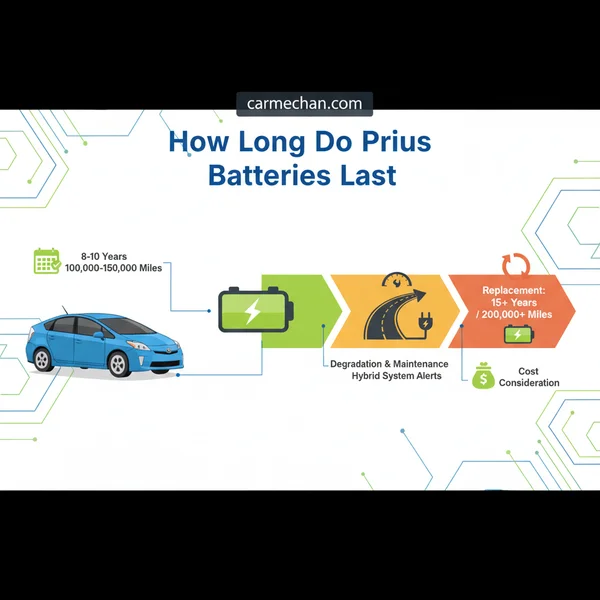
One of the most common questions for any Toyota Prius owner or prospective buyer is, “How long does the hybrid battery really last?” The good news is that Prius batteries are remarkably durable. While Toyota provides an excellent warranty, real-world data shows that many Prius batteries significantly exceed these official figures, often lasting well over 10 to 15 years and covering 150,000 to 200,000 miles or even more before needing attention.
Understanding the actual lifespan of your Prius battery is crucial for budgeting maintenance, assessing resale value, and knowing what to expect from your hybrid’s performance. It’s not just about how long it works, but how long it maintains optimal efficiency and power output. Let’s dive into the specifics, separating official warranties from observed longevity and exploring what truly impacts how long your battery serves you.
Understanding Prius Hybrid Battery Lifespan (Years & Miles)


When you invest in a Toyota Prius, you’re buying into a reputation for reliability, and the hybrid battery is a testament to that. Toyota’s engineering has ensured these power packs stand the test of time, often outperforming owner expectations.
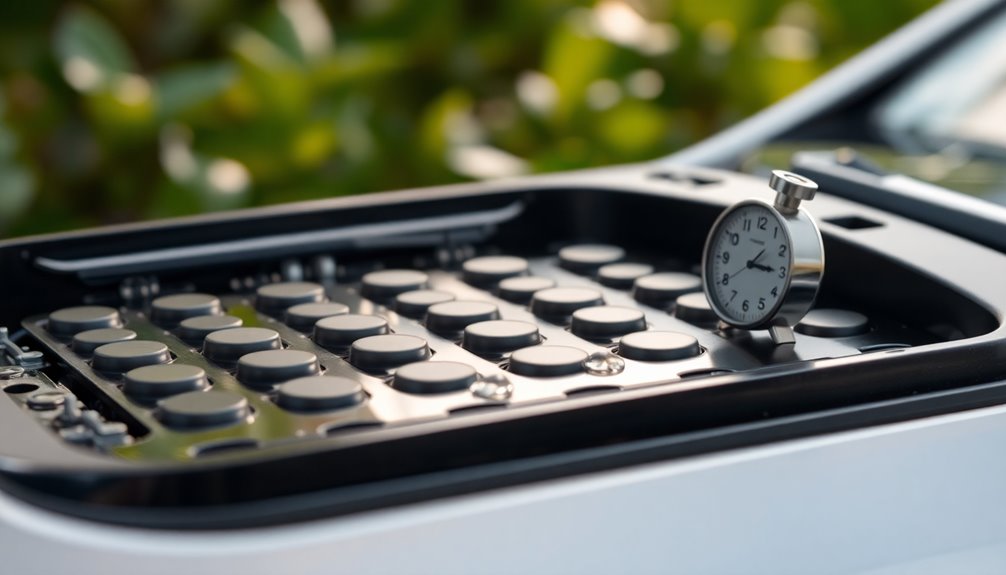
Official Warranty vs. Real-World Lifespan
- Toyota’s Warranty: Officially, Toyota typically covers its hybrid batteries for 8 years or 100,000 miles, whichever comes first. In California and other CARB (California Air Resources Board) or ZEV (Zero Emission Vehicle) states, this warranty is extended to an impressive 10 years or 150,000 miles. This robust warranty provides significant peace of mind for new car buyers.
- Real-World Performance: The reality for many Prius owners is even better. It’s common for original Prius batteries (especially the NiMH type in older generations) to last 10 to 15 years, and some even reach 20 years. Mileage-wise, batteries frequently surpass 150,000 miles, with many hitting 200,000 to 250,000 miles without issue. Lithium-ion batteries in newer models are expected to deliver similar, if not improved, longevity. You can find numerous anecdotes online of Prius models with original batteries still running strong past these milestones.
“Still Working” vs. “Optimal Performance”
While your Prius battery might still be “working” beyond its expected lifespan, it’s important to differentiate this from “optimal performance.” As batteries age, their capacity naturally degrades. This means:
- Reduced Fuel Economy: You might notice your miles per gallon (MPG) slowly decreasing over time. The car relies more on the gasoline engine as the battery holds less charge.
- Less Electric-Only Driving: The car will operate less frequently on electric-only mode at low speeds or when coasting.
- Decreased Power: You might experience a slight reduction in acceleration or overall power, as the hybrid system has less stored energy to draw upon for assistance.
Even if the battery is “working,” replacement becomes practical when these performance drops significantly impact your driving experience or fuel savings. The car might still run, but it won’t be as efficient or responsive as it once was.
Key Factors Influencing Battery Longevity


Several critical factors play a significant role in how long your Prius battery will truly last. Understanding these can help you maximize your battery’s life and be prepared for potential issues.
Environmental and Usage Conditions
- Extreme Heat: This is arguably the biggest enemy of hybrid batteries, particularly NiMH cells. Prolonged exposure to high temperatures (e.g., regularly parking in direct summer sun in hot climates like Arizona or Texas) accelerates chemical degradation within the battery, significantly shortening its lifespan. The battery’s internal cooling system works hard to combat this, but sustained heat takes its toll.
- Extreme Cold: While not as damaging as heat in terms of permanent degradation, very cold temperatures temporarily reduce battery capacity and power output. You might notice less electric assist and lower MPG during cold weather. Once the battery warms up, its performance typically returns to normal.
- Driving Patterns: Frequent short trips where the battery is constantly cycled (charged and discharged) in rapid succession can sometimes be harder on the battery than longer, more consistent drives. However, the Prius’s sophisticated battery management system does a good job of optimizing these cycles to minimize stress.
Maintenance and Vehicle Age
- Hybrid Battery Cooling System: The Prius battery has its own dedicated cooling system, which often involves a fan that draws cabin air over the battery cells. If the intake vents for this fan (often found near the rear passenger seats) become blocked by dirt, pet hair, or debris, the battery can overheat. Regular cleaning of these vents and ensuring the fan operates correctly is crucial.
- Overall Vehicle Health: While not directly related to battery degradation, ensuring your entire Prius receives regular maintenance (e.g., ensuring the 12V auxiliary battery is healthy, engine is tuned) helps the hybrid system operate efficiently, which can indirectly reduce stress on the main traction battery.
- Vehicle Age and Mileage: This is a straightforward factor. Batteries, like all components, degrade over time and with extensive use. A high-mileage vehicle, regardless of its driving conditions, will naturally have a battery closer to the end of its useful life than a lower-mileage counterpart.
Signs Your Prius Battery is Nearing End-of-Life
Even with excellent care, all batteries eventually wear out. Knowing the telltale signs that your Prius hybrid battery is nearing the end of its journey can save you from unexpected breakdowns and help you plan for replacement. Paying attention to your vehicle’s behavior is key.

Decreased Fuel Economy and Performance
One of the first and most noticeable indicators of a weakening hybrid battery is a drop in your car’s signature fuel efficiency. If your trusty Prius, which once reliably delivered 45-50 MPG, starts consistently showing numbers in the high 30s or even lower, it’s a red flag. This happens because the weaker battery can’t assist the gasoline engine as effectively, forcing the engine to work harder and run more frequently to compensate. You might also notice a general sluggishness, particularly during acceleration or when climbing hills, as the electrical boost isn’t as robust as it once was.
- Reduced MPG: A consistent and significant drop in your miles per gallon.
- Engine Overwork: The gasoline engine running more often, even at low speeds or when stopped.
- Less Power: Feeling a noticeable lack of acceleration or struggle on inclines.
Dashboard Warning Lights and Unusual Behavior
Your Prius is designed to communicate battery issues through its dashboard. The infamous “Check Hybrid System” warning light, often accompanied by the yellow “Master Warning” light (a triangle with an exclamation mark), is a strong indicator of battery trouble. You might also observe strange behavior from the battery charge indicator on your dashboard; it might fluctuate wildly, showing full charge one moment and almost empty the next, or it might stay consistently low despite driving. Another subtle sign can be the frequent and loud operation of the battery cooling fan, typically located under the rear seat, as it struggles to keep an inefficient battery cool.
- Warning Lights: “Check Hybrid System” or “Master Warning” light illuminates.
- Erratic Charge Gauge: Battery indicator fluctuating wildly or remaining consistently low.
- Frequent Fan Noise: The battery cooling fan running loudly and constantly, even in mild weather.
Battery Replacement Options and Cost Considerations
If your Prius battery is showing signs of decline, you have several avenues for replacement, each with its own cost and benefits. Understanding these options will help you make an informed decision that suits your budget and your plans for your car.
New vs. Reconditioned/Used Batteries
When it comes to replacing your Prius hybrid battery, you’ll generally encounter three main categories:
- New OEM Batteries: These are brand-new batteries from Toyota, offering the longest lifespan and best warranty. They are also the most expensive option, typically costing anywhere from $2,500 to $4,500 or more, including professional installation. This is often the choice for owners planning to keep their Prius for many more years.
- Reconditioned/Refurbished Batteries: This popular option involves replacing individual weak cells within an existing battery pack with good cells, restoring the pack’s performance. These are usually offered by specialized hybrid shops and come with a decent warranty (e.g., 1-3 years). They strike a balance between cost and reliability, usually priced between $1,500 and $3,000, installed.
- Used Batteries: These are typically pulled from salvaged vehicles. While the cheapest upfront (sometimes under $1,000), they carry the highest risk. Their remaining lifespan is unknown, and warranties are often very short or non-existent. This option is generally only recommended for those on a very tight budget or planning to sell the car soon.
Professional Installation vs. DIY Considerations
Due to the high voltage involved with hybrid batteries, professional installation is strongly recommended for safety and proper function. Hybrid battery replacement requires specialized tools, knowledge, and safety precautions to avoid serious injury from electrical shock. Most new and reconditioned battery providers include installation in their pricing or recommend certified technicians. While a technically savvy individual might attempt a DIY replacement, it’s crucial to understand the significant risks involved and to proceed only with extensive research, the correct safety gear, and a clear understanding of high-voltage electrical systems. Improper installation can lead to further vehicle damage or, more importantly, personal injury.
Conclusion
The Toyota Prius truly redefined automotive longevity, with its hybrid batteries often exceeding expectations, lasting well over 10-15 years or 150,000-200,000 miles. Factors like climate, driving habits, and consistent maintenance play a significant role in how long your specific battery will endure. By recognizing early warning signs like decreased MPG or dashboard lights, you can anticipate replacement needs. Thankfully, a range of replacement options exists, from new OEM units to more budget-friendly reconditioned alternatives, ensuring your eco-friendly ride can continue its journey. Don’t let battery anxiety stop you from enjoying your efficient companion; with awareness and planning, your Prius can keep delivering reliable and green transportation for many miles to come!
❓ Frequently Asked Questions
What’s the typical warranty for a Prius hybrid battery?
Toyota typically offers a 10-year/150,000-mile warranty in most states, with PZEV states extending to 15 years/150,000 miles. Real-world performance often exceeds these figures, sometimes reaching 200,000 miles or more before significant degradation.
How do NiMH and Lithium-ion Prius batteries compare in lifespan and performance?
Older Prius models primarily use Nickel-Metal Hydride (NiMH) batteries, known for reliability and a proven long lifespan. Newer models, especially higher trims or later generations, incorporate Lithium-ion (Li-ion) which are lighter, more energy-dense, and are generally expected to last as long or even longer due to improved thermal management.
What environmental factors most significantly impact Prius battery longevity?
Extreme heat is the primary enemy of hybrid batteries, accelerating chemical degradation and shortening their lifespan. While very cold temperatures can temporarily reduce efficiency, they typically don’t cause permanent damage as quickly as prolonged exposure to high heat.
What are the most common symptoms indicating a Prius battery needs replacement?
Beyond the illuminated ‘Check Hybrid System’ warning light, key indicators include a noticeable drop in fuel economy, the battery charge indicator rapidly fluctuating, and a significant reduction in vehicle power or acceleration, especially when climbing hills or requiring sustained electric assist.
What are the main replacement options for a failing Prius battery and their approximate costs?
Options include new OEM batteries (most expensive, typically $2,500-$5,000+ installed), remanufactured/reconditioned batteries (mid-range, ~$1,500-$3,000), and aftermarket or used cells/modules (cheapest, but quality varies, ~$800-$1,500). Installation costs also vary by mechanic.
Are there specific driving habits or maintenance tips to maximize the lifespan of my Prius hybrid battery?
Yes, maintaining regular vehicle service, avoiding prolonged parking in extremely hot climates, and not letting the car sit undriven for weeks at a time can help. Gentle acceleration and deceleration, minimizing aggressive driving, also reduces stress on the battery, contributing to its overall health and longevity.
Gen 4 & Gen 5 Prius Battery Life: What’s Different
Gen 4 Prius (2016–2022) — NiMH & Lithium-Ion Options
The fourth-generation Prius introduced two battery configurations depending on trim. The base Prius and Prius L Eco use a lithium-ion battery (1.3 kWh) that is lighter and more compact. The standard trims retained the nickel-metal hydride (NiMH) pack.
- NiMH (base/mid trims): Expected lifespan of 150,000–200,000+ miles. Very few reported failures before 150k. Similar durability profile to Gen 3.
- Lithium-Ion (L Eco trim): Lighter battery, but some owners report faster degradation in extreme heat climates. Expected lifespan 120,000–170,000 miles. Arizona and Texas owners report more complaints vs the NiMH version.
- Warranty: 8 years/100,000 miles federally; 10 years/150,000 miles in CARB states. Gen 4 is now entering its warranty-expiration window for many buyers — check your paperwork.
Gen 5 Prius (2023–2025) — New Lithium-Ion Only
The completely redesigned Gen 5 Prius dropped NiMH entirely. All 2023+ Prius models use a new lithium-ion pack with improved thermal management — a direct response to complaints about Gen 4 Li-ion degradation in hot climates.
- Battery type: Lithium-ion with active cooling (a first for standard Prius)
- Projected lifespan: Too early for comprehensive real-world data, but Toyota projects 200,000+ miles based on testing. EV data from similar Li-ion chemistries in the Prius Prime supports this.
- Current owner reports: 2023–2024 Prius owners report excellent battery health through 40,000–60,000 miles. No significant pattern of early degradation reported as of early 2026.
- Warranty: 8 years/100,000 miles (or 10yr/150k in CARB states). California buyers get additional protections under ZEV mandate.
The Real Cost of Prius Battery Replacement in 2025–2026
This is where Prius ownership anxiety is highest — and where the numbers are almost always better than owners fear. Here is a full breakdown of what you will actually pay.
Signs Your Prius Battery Needs Attention
- Fuel economy drops 15–25% below your historical average with no change in driving habits
- Red triangle warning light on the dash (most urgent — stop and diagnose)
- Battery charge indicator rarely reaches full charge or drains unusually fast
- Car runs on gasoline only at low speeds (hybrid system not engaging)
- Engine runs constantly even in city driving where it normally shuts off