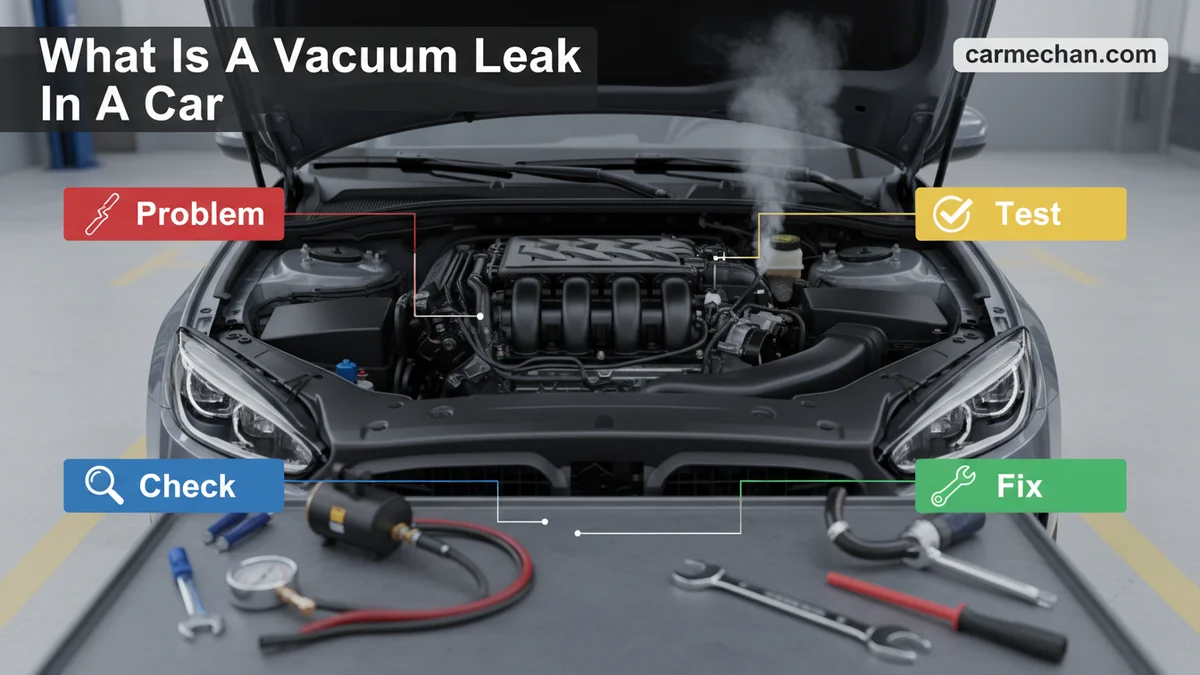
What Is A Vacuum Leak In A Car What Is a Car Vacuum 2026
Last Updated on September 1, 2026 by Albert Duke
A vacuum leak in a car occurs when unmetered air enters the engine’s intake system past the mass airflow sensor, disrupting the crucial air-fuel mixture. This unplanned air intake leads to a lean condition, causing various drivability issues and potentially engine damage.
A vacuum leak in a car happens when outside air enters your engine’s intake system without being measured by the mass airflow sensor. This unmetered air disrupts the crucial air-fuel mixture your engine needs to run efficiently. Understanding what a vacuum leak is can save you from unnecessary repairs and keep your vehicle running smoothly.
This issue can lead to a host of performance problems, affecting everything from your car’s idle to its fuel economy. Knowing the signs and causes empowers you to address the problem before it escalates into more significant damage. We will explore how these leaks impact your vehicle and what you can do about them.
A vacuum leak in a car occurs when unmetered air enters the engine’s intake system past the mass airflow sensor, disrupting the crucial air-fuel mixture. This unplanned air intake leads to a lean condition, causing various drivability issues and potentially engine damage.
- Unmetered air disrupts engine air-fuel ratio.
- Common symptoms include rough idle and CEL.
- Leaks often stem from aged hoses or gaskets.
- Ignored leaks can cause significant engine damage.
- Basic checks help identify potential issues early.
Key Takeaways


- Unmetered air disrupts engine air-fuel ratio.
- Common symptoms include rough idle and CEL.
- Leaks often stem from aged hoses or gaskets.
- Ignored leaks can cause significant engine damage.
- Basic checks help identify potential issues early.
What Exactly Is a Car Vacuum Leak?
To truly understand a vacuum leak, we must first grasp how engine vacuum functions. Your car’s engine, specifically the pistons moving down during the intake stroke, creates a low-pressure area, or vacuum, within the intake manifold. This vacuum is vital for drawing air into the engine cylinders for combustion.
The engine’s computer precisely calculates the amount of fuel to inject based on the measured air entering through the air intake and mass airflow sensor. A vacuum leak occurs when air bypasses this measurement. This means extra, unmeasured air gets into the engine after the mass airflow sensor but before combustion.
This surplus air creates a “lean” condition, where there’s too much air for the amount of fuel injected. The engine’s computer tries to compensate, but often cannot adjust enough. This air-fuel imbalance leads to various performance issues. Understanding this system clarifies why even small leaks can cause significant problems for your vehicle’s operation.
7 Key Symptoms of a Car Vacuum Leak
Recognizing the signs of a vacuum leak is the first step toward addressing the problem effectively and preventing further complications. These symptoms often stem directly from the disrupted air-fuel mixture.
Rough or Erratic Idle
A common sign of a vacuum leak is an engine that idles unevenly or “surges.” The unmetered air causes the air-fuel mixture to become too lean, making it difficult for the engine to maintain a consistent speed while at rest.
Check Engine Light Activation
Your “Check Engine” light (CEL) will often illuminate. This is because the engine’s computer detects the lean condition. Common diagnostic trouble codes (DTCs) associated with vacuum leaks include P0171 and P0174, indicating a system too lean on bank 1 or bank 2, respectively.
Audible Hissing Sounds
Sometimes, you can literally hear a vacuum leak. A distinct hissing or whistling sound emanating from the engine bay, especially when the engine is running, can indicate air being sucked through a compromised hose or gasket.
Engine Stalling Issues
A severe vacuum leak can cause your car to stall, particularly when coming to a stop or at low speeds. The engine cannot maintain proper combustion with a significantly incorrect air-fuel ratio, leading to a complete shutdown.
Poor Acceleration Response
When you try to accelerate, you might notice a hesitation or lack of power. The lean mixture prevents the engine from producing its full power, resulting in sluggish performance. This directly impacts your driving experience.
Decreased Fuel Efficiency
The engine’s computer tries to compensate for the lean condition by injecting more fuel. This often leads to your vehicle consuming more gasoline than usual. You may find yourself filling up at the pump more frequently.
Difficult Engine Starting
Starting your car might become a challenge, especially when the engine is cold. The lean air-fuel mixture makes it harder for the ignition process to begin efficiently, leading to prolonged cranking or multiple attempts.
Where Do Car Vacuum Leaks Most Commonly Occur?
Vacuum leaks rarely appear without a cause, and certain areas of your engine are particularly prone to developing them over time. Understanding these common weak points helps narrow down your search.
Vacuum Hoses
Many accessories and sensors rely on vacuum lines, which are typically made of rubber or plastic. These hoses can degrade, crack, or become disconnected due to age, heat, and vibration. Even small pinholes can lead to a significant leak.
Intake Manifold Gaskets
The intake manifold seals to the cylinder head with gaskets. Over time, these gaskets can dry out, crack, or become compressed, creating gaps where unmetered air can enter the engine. This is a very common source for vacuum leaks.
PCV System
The Positive Crankcase Ventilation (PCV) system helps remove harmful gases from the crankcase. Components like the PCV valve itself, its hoses, and grommets can fail. A faulty PCV valve or a cracked hose within this system can introduce a vacuum leak.
Brake Booster
Your brake booster uses engine vacuum to assist with braking. A diaphragm inside the booster can rupture, or the hose connecting it to the engine can crack. A leak here can affect both braking performance and engine idle quality.
EGR Valve System
The Exhaust Gas Recirculation (EGR) system also has vacuum lines and gaskets. Leaks around the EGR valve or its associated plumbing can contribute to engine performance issues. These parts manage exhaust gases for emission control.
Why Is Fixing a Car Vacuum Leak so Critical?
Ignoring a vacuum leak can lead to a cascade of problems, ranging from minor annoyances to significant engine damage and even safety risks. A simple fix now can prevent expensive repairs later.
Engine Component Wear
The constant lean condition caused by a vacuum leak makes your engine run hotter than intended. This can lead to premature wear on internal engine components, such as valves, pistons, and spark plugs. Severe cases can result in catastrophic engine failure over time.
Increased Emission Levels
An improperly balanced air-fuel mixture results in incomplete combustion and increased pollutants. Your car may fail emissions tests, and it contributes to higher levels of harmful exhaust gases. This negatively impacts the environment and your ability to register your vehicle.
Reduced Vehicle Safety
Some vacuum leaks, particularly those involving the brake booster, directly compromise your vehicle’s safety. A hard brake pedal or reduced braking assistance can put you and others at risk. Stalling in traffic or during maneuvers also poses a significant danger.
Financial Costs Accumulate
Beyond the immediate decrease in fuel economy, an unaddressed vacuum leak can damage expensive components. Catalytic converter replacement, often necessitated by prolonged lean conditions, can cost hundreds to thousands of dollars. Prompt repair is a cost-effective solution.
How to Perform 3 Simple Vacuum Leak Checks
While professional diagnosis is always recommended, you can perform a few straightforward checks to help identify a potential vacuum leak in your vehicle. These steps are for identification, not repair.
Visual Component Inspection
Start by visually inspecting all accessible vacuum hoses, connections, and gaskets. Look for cracks, kinks, fraying, or disconnected lines. Pay close attention to rubber components, as they often become brittle with age. A flashlight can help you spot hidden damage.
Listen for Abnormal Sounds
With the engine running and in park, listen carefully around the engine bay. Move your head slowly to try and pinpoint any hissing, whistling, or sucking sounds. These noises are often clearest near the source of the leak, indicating air being drawn in.
Perform a Simple Spray Test
A spray test can help locate leaks, but exercise extreme caution due to flammability. With the engine idling, lightly spray a small amount of unlit propane gas, carburetor cleaner, or soapy water around suspected leak areas. If the engine RPMs change (increase with combustible spray, decrease with water), you’ve likely found a leak.
Always keep a fire extinguisher handy and avoid hot components; if unsure, consult a professional.
What to Do When You Suspect a Vacuum Leak
Identifying a vacuum leak is the crucial first step, but resolving the issue requires accurate diagnosis and repair. Ignoring these problems can lead to more severe engine damage and costly fixes in 2026.
Promptly addressing symptoms like rough idling or a “Check Engine” light ensures your vehicle’s longevity and performance. Consult a trusted mechanic for precise identification and repair. Timely action will restore your car’s efficiency and prevent future complications, keeping you safely on the road.
Can I Drive With a Vacuum Leak?
Driving with a vacuum leak is generally not recommended due to potential engine damage and safety risks. While minor leaks might seem negligible, they can quickly escalate, leading to poor fuel economy, reduced power, and ultimately, expensive repairs if left unaddressed. It is always best to have it inspected promptly.
What Does a Vacuum Leak Sound Like?
A vacuum leak often produces a distinct hissing, whistling, or sucking sound, especially noticeable when the engine is running at idle. This noise originates from air being drawn into the intake system through a compromised hose, gasket, or component. Listening carefully around the engine bay can help pinpoint the source.
How Much Does It Cost to Fix a Vacuum Leak?
The cost to fix a vacuum leak varies significantly depending on its location and severity, ranging from simple, inexpensive hose replacements to more complex, costly intake manifold gasket repairs. Minor repairs might cost under $100, while extensive fixes could exceed $500, especially if specialized labor is required for diagnostics.
Can a Vacuum Leak Cause My Car to Stall?
Yes, a vacuum leak can definitely cause your car to stall, particularly at idle or low speeds. The unmetered air disrupts the engine’s air-fuel ratio, creating a lean condition that the engine control unit struggles to compensate for, leading to an unstable idle and eventual stalling as the engine cannot maintain combustion.
Is a Vacuum Leak Serious?
A vacuum leak is serious because it can lead to various problems, including decreased engine performance, poor fuel efficiency, increased emissions, and long-term engine damage like catalytic converter failure or burnt valves. Addressing a vacuum leak promptly prevents these issues from worsening and incurring more expensive repairs.