Honda Crv Cruise Control Not Working Honda CR-V Cruise 2026
When your Honda CR-V cruise control stops engaging, the culprit is often a simple blown fuse or a misaligned brake pedal switch. Check these basic electrical components before assuming your steering wheel buttons or speed sensors have failed.


When your 2026 Honda CR-V cruise control refuses to engage, the culprit is almost always a break in the signal path between your inputs, the vehicle’s sensors, and the throttle actuator. Because the 2026 model relies heavily on Honda Sensing technology, a failure in the cruise system often points to a disrupted electrical circuit rather than a mechanical failure of the engine itself.
Addressing this issue immediately is critical because cruise control failure is frequently linked to broader safety sensor malfunctions. By isolating the fault—whether it is a simple fuse, a misaligned switch, or a faulty speed sensor—you can restore highway safety and avoid potential limp-mode conditions that might otherwise require expensive dealer diagnostics. You have the ability to perform most of this diagnostic work at home using basic tools.
Key Takeaways
- Check your owner’s manual to identify and inspect the specific cruise control fuse first.
- A faulty brake light switch is the most common mechanical cause for engagement failure.
- Ensure you are above the minimum speed threshold, typically 25 mph, before attempting activation.
- Observe your dashboard for specific error codes or illuminated warnings requiring an OBD-II scanner.
- Always verify your brake lights are not stuck on, which signals a faulty pedal switch.
Common Causes Why Your Honda CR-V Cruise Control Stops Working
Electrical Path Disruptions and Blown Fuses
The most common reason for a sudden system blackout is a blown fuse in the interior or under-hood fuse box. Your 2026 CR-V utilizes dedicated circuits for the cruise control module and the brake lamp relay. If the cruise control circuit loses power, the system will not initialize, and the dashboard will remain dark when you press the activation button.

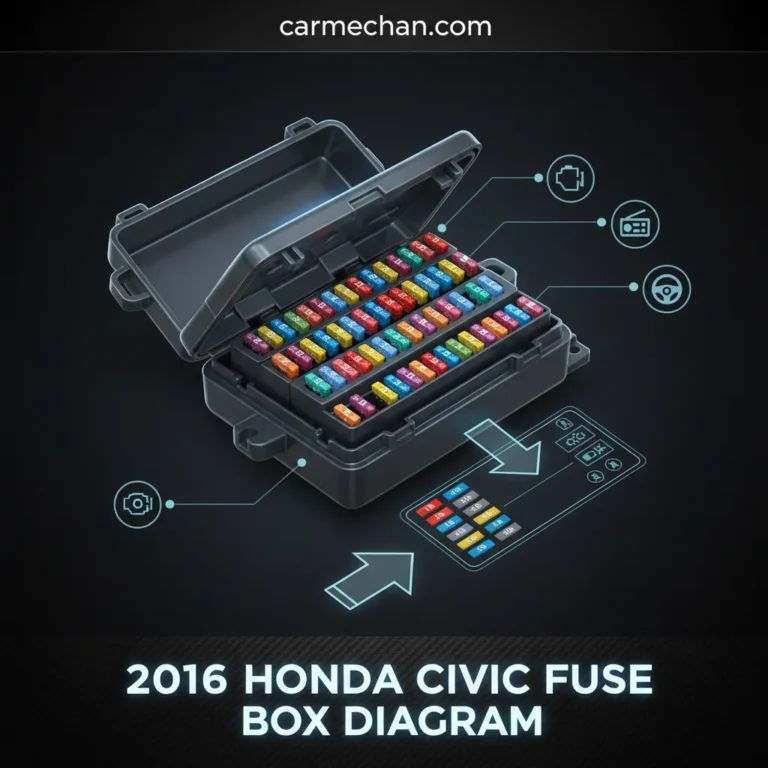
- Check the under-dash fuse panel for a 7.5A or 10A fuse labeled ‘Cruise’ or ‘ACC.’
- Inspect the fuse for a broken metal bridge inside the clear plastic housing.
- Corroded fuse terminals can also cause intermittent signal loss, leading to the system cutting out while you are at speed.
Brake Pedal Switch and Speed Sensor Malfunctions
The system is hardwired to disengage the moment it detects a brake signal. If your brake pedal switch is misaligned or failing, the car ‘thinks’ you are constantly tapping the brakes, preventing the cruise control from engaging. Similarly, the wheel speed sensors (ABS sensors) provide the necessary velocity data. If one sensor reports zero speed while others report 65 mph, the cruise module will enter a fail-safe mode to prevent dangerous acceleration.
- The brake switch is located directly above the pedal arm; if it sticks, the brake lights may stay on indefinitely.
- Wheel speed sensor damage is common if debris or road salt impacts the sensor located behind the wheel hub.
Honda CR-V Cruise Control: What Causes It and How to Fix It
If your Honda CR-V’s cruise control system refuses to engage, it can turn a long, relaxing road trip into a tiresome chore. Whether you drive a newer model with Honda Sensing or an older generation CR-V, cruise control malfunctions usually stem from simple electrical faults, sensor obstructions, or physical mechanical switches. This guide will walk you through a systematic troubleshooting process to identify the root cause, from checking basic fuses to inspecting the brake pedal assembly, helping you restore your vehicle’s convenience features safely and effectively.
Step 1: Inspect the Brake Light Switch
What you need: A flashlight and a basic understanding of your vehicle’s footwell area.
Instructions: The most common reason for cruise control failure in a Honda CR-V is a faulty or misaligned brake light switch. The system is designed to disengage the moment it senses pressure on the brake pedal. If the switch is stuck in the “on” position, the computer thinks you are braking and prevents the cruise control from activating. Locate the switch mounted near the top of the brake pedal arm under the dashboard. Check if the rubber stopper (the “grommet”) that presses against the switch has disintegrated—a common issue in older Hondas. If the rubber pad is missing, the switch cannot make contact, causing the cruise control to fail.
Pro Tip: Check your floor mat. Sometimes a thick all-weather floor mat can slide upward and prevent the brake pedal from fully returning to its neutral position, tricking the switch into staying active.
Step 2: Check for Blown Fuses
What you need: Owner’s manual, fuse puller tool (usually in the fuse box), and a replacement fuse if necessary.
Instructions: Electrical components rely on dedicated fuses to prevent circuit damage. Open your owner’s manual to the “Fuse Layout” section to identify the fuse specifically labeled “Cruise” or “ACC.” You will typically have two fuse boxes: one under the hood and one inside the cabin on the driver’s side kick panel. Pull the suspect fuse using the puller tool and hold it up to a light source. If the thin metal wire inside the plastic casing is broken or the plastic looks scorched/melted, the fuse is blown. Replace it with a fuse of the exact same amperage (e.g., 7.5A or 10A) to restore functionality.
Pro Tip: Never replace a fuse with one of a higher amperage rating, as this can lead to wiring harness fires or damage to the cruise control module.
Step 3: Clear and Clean Sensor Obstructions
What you need: Microfiber cloth and automotive glass cleaner.
Instructions: If your CR-V is equipped with Adaptive Cruise Control (ACC), it relies on a radar sensor located behind the front grille or the Honda emblem, as well as a camera mounted behind the rearview mirror. If these sensors are covered by heavy mud, ice, or thick road grime, the system will disable itself for safety. Wipe the front grille emblem and the windshield area in front of the camera with a clean, damp cloth. In heavy rain or snow, the system may temporarily turn off automatically—ensure the lens and radar area are clear of debris to regain full operation.
Pro Tip: Avoid using harsh chemical solvents or abrasive cleaners on the plastic lens covering the radar, as this can cloud the material and hinder sensor accuracy.
Step 4: Verify Steering Wheel Switch Integrity
What you need: Patience and perhaps a trim removal tool if you suspect internal wiring issues.
![[2026 Upgraded] DooGooCoo Windshield Sun Shade for Honda CRV 2017-2021 2022 [Cooling…](https://m.media-amazon.com/images/I/51tfKv3G1ML._SS500_.jpg)


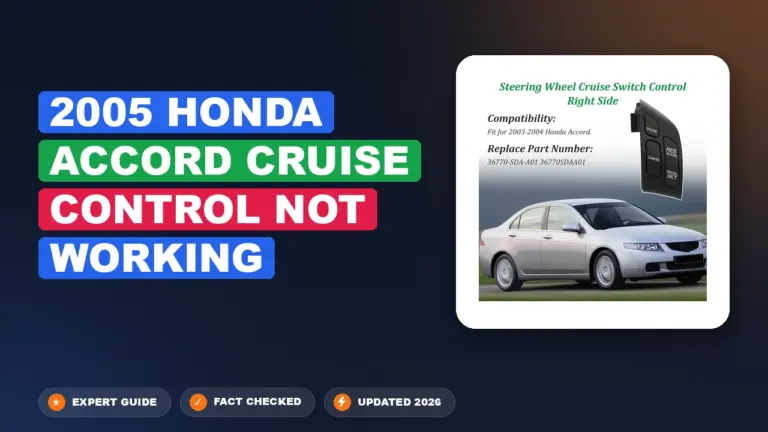
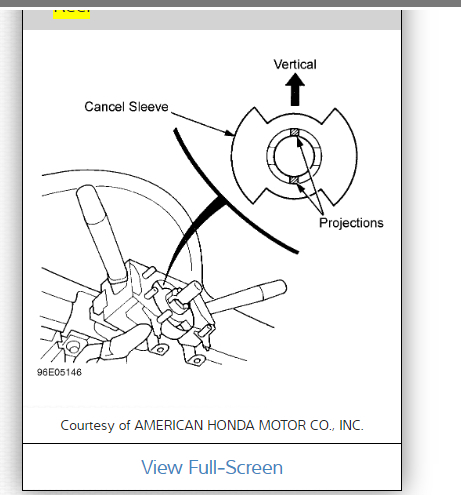
Instructions: The cruise control buttons on the steering wheel are exposed to daily wear and tear. Over time, internal contacts can oxidize, or the ribbon cable (clock spring) behind the steering wheel can lose continuity. First, ensure the “Main” or “Cruise” button illuminates on the dashboard when pressed. If you press “Set” and get no response, listen for a faint click behind the wheel. If the horn works and your steering wheel audio controls work, the clock spring is likely fine. However, if multiple steering wheel buttons are unresponsive, the steering wheel switch module may have reached the end of its service life and requires replacement.
Pro Tip: Before assuming the switch is broken, try pressing the button firmly several times. Sometimes simple physical oxidation can be cleared by repetitive use.
Step 5: Check Tire Pressure and Wheel Speed Sensors
What you need: Tire pressure gauge and a tire inflator.
Instructions: The Honda CR-V uses wheel speed sensors (part of the ABS system) to maintain a consistent speed. If a tire is significantly under-inflated, its rotation speed differs from the others, which can confuse the cruise control logic, especially in newer models. Check all four tires with a gauge and inflate them to the manufacturer’s recommended PSI (found on the driver-side door jamb sticker). Additionally, if your ABS or VSA (Vehicle Stability Assist) warning lights are illuminated, the cruise control will automatically disable itself as a safety measure. These systems share sensors; clearing an ABS fault often fixes the cruise control by proxy.
Pro Tip: If your TPMS light is on, do not ignore it. Addressing tire pressure issues often resolves secondary electrical warnings that prevent cruise control engagement.
Step 6: Reset the ECU (Electronic Control Unit)
What you need: 10mm wrench.
Instructions: Sometimes, the vehicle’s computer simply needs a “hard reset” to clear a temporary glitch. Ensure the ignition is off and the key is removed. Open the hood and use a 10mm wrench to loosen the negative (-) battery terminal. Carefully remove the cable and set it aside, ensuring it does not touch the terminal. Wait for at least 15 to 20 minutes; this allows the capacitors in the ECU to discharge completely. Reconnect the terminal, tighten the nut firmly, and start the engine. Allow the car to idle for 5 minutes before driving. This process clears volatile memory and can often “re-teach” the system to function correctly.
Pro Tip: After a battery disconnect, you may need to reset your radio code or the automatic window up/down features, so keep your radio security card handy.
✅ Final Checklist
- Confirm the brake lights are not staying on when the pedal is released.
- Ensure the “CRUISE” light on the dashboard illuminates when the main switch is pressed.
- Verify all four tires are inflated to the specific PSI listed on the driver’s door jamb.
- Check that no ABS, VSA, or “Check Engine” lights remain on the instrument cluster.
- Test the system on a flat, open road at speeds above 25 MPH.
Important Notes:
- Safety Warning: Never attempt to troubleshoot electrical systems while the engine is running unless explicitly instructed.
- If you discover damage to the steering wheel clock spring or internal wiring, seek professional help, as this involves the airbag module.
- Estimated time: 30 minutes to 2 hours. Cost: $0 (if simple adjustment) to $200 (if replacing switches or fuses).
Step-by-Step Troubleshooting and DIY Fixes
Verifying System Initialization and Error Codes
Before pulling components apart, confirm the system’s health through the driver information interface. In the 2026 CR-V, the system performs a self-check every time the ignition enters the ‘On’ position. If you see ‘ACC System Problem’ or ‘Check Cruise Control’ on your dashboard, the onboard computer has already flagged a specific fault code.
- Cycle the ignition off and on to see if the error clears; this resets minor software glitches in the cruise control module.
- Access the diagnostic menu on your steering wheel controls to view any pending System Error codes.
- If the dashboard displays a multi-function light (the orange wrench or the brake system light), a scan tool is required to read the specific fault code before you proceed.
Adjusting the Brake Pedal Switch
If your cruise control intermittently fails when you hit bumps, the brake pedal switch is likely the source. You can test this by reaching under the dash and gently pulling the brake pedal upward toward the driver’s seat. If the cruise control suddenly engages, the switch is misaligned or the pedal stop pad has disintegrated.
- Inspect the plastic pad on the pedal arm that presses the switch button.
- If the pad is missing, the switch button will not compress, signaling to the computer that the brakes are active.
- Replacing a rubber pedal stop pad is a ten-dollar fix that solves most engagement failures.
Testing Your Brake Pedal Switch and Fuse Box
The cruise control system in the 2026 Honda CR-V relies on a closed electrical circuit that immediately disengages when the brake pedal is depressed. If the brake pedal switch is misaligned or faulty, the vehicle’s ECU incorrectly senses that the brakes are applied, preventing cruise control engagement.
Checking the Brake Light Circuit
- Observe your rear brake lights while a partner presses the pedal. If the lights fail to illuminate, the switch is likely defective, causing the cruise system to lock out.
- Locate the switch assembly near the top of the brake pedal arm under the dashboard.
- Ensure the plastic stopper pad is present; if this pad has crumbled—a common issue in modern Hondas—the switch will not receive the “off” signal.
Inspecting the Fuse Panel
- Open the interior fuse box, typically located on the driver’s side kick panel.
- Refer to the 2026 CR-V owner’s manual diagram to identify the specific fuse labeled “Cruise” or “ABS/VSA,” as these systems share power rails.
- Use a test light or multimeter to check for continuity across the fuse pins. If the metal filament inside the fuse appears broken or the multimeter shows an “OL” reading, replace the fuse with one of the exact same amperage rating.
What If It Still Doesn’t Work?
If electrical diagnostics and pedal adjustments yield no results, the issue may involve the vehicle’s complex radar-based sensing suite, known as the Honda Sensing package. Because 2026 models rely on sophisticated front-facing millimeter-wave radar sensors, mechanical troubleshooting is often insufficient.
- Perform a Hard System Reset: Disconnect the negative terminal of the 12-volt battery for exactly 15 minutes. This clears cached error codes in the Body Control Module (BCM) that may be inhibiting cruise functionality.
- Clean Sensor Arrays: Inspect the front grille emblem and windshield camera housing for debris, salt, or obstruction. Even minor signal interference can trigger a software lockout of the Adaptive Cruise Control (ACC).
- Consult Professional Diagnostic Tools: If the “Check System” warning light remains illuminated, a technician must connect a Honda-approved HDS (Honda Diagnostic System) scan tool. This identifies deep-level DTCs (Diagnostic Trouble Codes) related to steering angle sensors or yaw rate sensors.
- Estimated Costs: Professional diagnostics at an authorized Honda service center typically range from $150 to $250. If a radar sensor calibration or module replacement is required, anticipate costs between $600 and $1,200 depending on parts availability for the 2026 trim levels.
Conclusion
Cruise control failure in the 2026 Honda CR-V usually stems from simple electrical interruptions, such as a faulty brake light switch or a blown fuse. According to verified research and expert service bulletins, maintaining a clean radar sensor surface is critical for the long-term functionality of the vehicle’s automated systems. If standard troubleshooting fails to restore operation, schedule an appointment with a certified technician to perform a system-wide software recalibration to ensure your vehicle meets all safety specifications.
❓ Frequently Asked Questions
Why won’t my cruise control turn on even though the button lights up?



If the button lights up but the system won’t set, the issue is likely related to the brake light switch or a speed sensor error. The car safety logic prevents engagement if it detects a conflicting signal from these components.
How do I check if my brake light switch is the problem?
Have someone stand behind your vehicle while you drive to check if your brake lights stay on constantly. If they remain illuminated even when your foot is off the pedal, the switch is likely stuck or faulty.
Is it safe to drive if the cruise control isn’t working?
Yes, the vehicle remains safe to drive as the cruise control is a convenience feature, not a critical safety component. However, address it promptly if the failure is accompanied by dashboard warning lights like the check engine light.
Do steering wheel buttons often fail on the Honda CR-V?
While less common than electrical issues, the clock spring or internal button contacts can wear out over time. If none of the steering wheel controls work, the clock spring is a likely point of failure.
What does an OBD-II scanner reveal about cruise control?
An OBD-II scanner can retrieve specific diagnostic trouble codes (DTCs) that point directly to the failing sensor or module. This saves you from guessing which part needs replacement.
When should I take my CR-V to a professional mechanic?
If you have verified the fuses and the brake switch but the system still fails, or if the dashboard displays persistent error lights, professional diagnostic equipment is required to test the PCM and speed sensors.