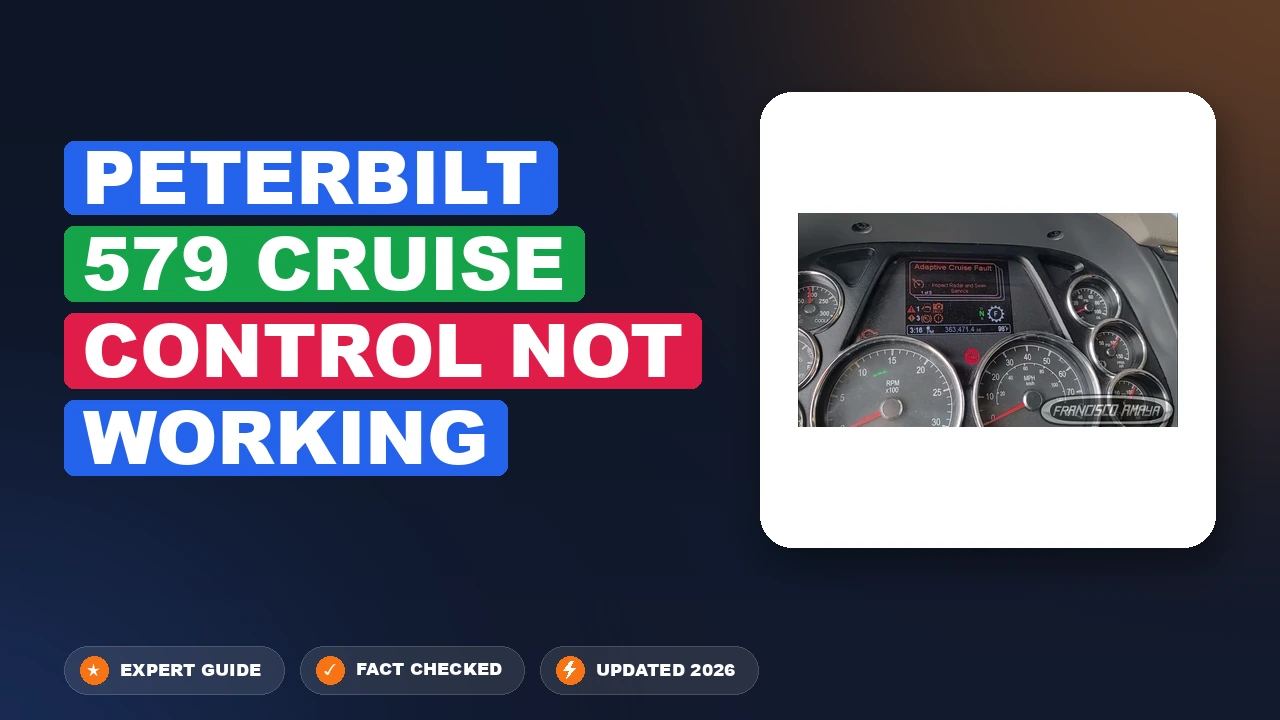
Peterbilt 579 Cruise Control Not Working: Diagnosed & Fixed
Nothing disrupts a long haul quite like losing cruise control when you’re thousands of miles from home. Whether it’s a software lockout from a minor fault or a physical sensor failure, the Peterbilt 579’s cruise control system is highly sensitive to input data. In this guide, we will walk you through the diagnostic process to identify why your Peterbilt 579 cruise control is not working and provide the steps to get you back on the road safely.
Understanding Why Peterbilt 579 Cruise Control Not Working Happens
Recommended Best Deal Products


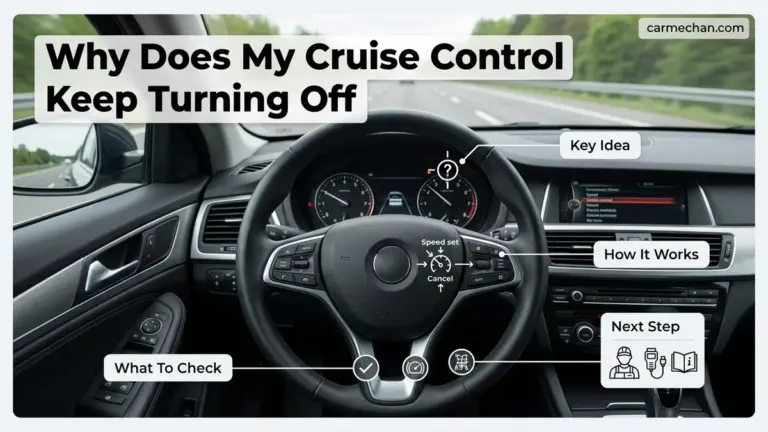
The cruise control system in a Peterbilt 579 is not a standalone electrical circuit; it is an integrated software function managed by the Engine Control Module (ECM) and the Body Control Module (BCM). It requires a “handshake” of multiple sensors confirming the vehicle is in a safe, ready state before it allows the system to engage.

📤 Share Image

Why Fault Codes Disable Your Cruise Control
Active fault codes are the leading cause of cruise control deactivation. As a safety precaution, if the engine or drivetrain reports an anomaly—such as high exhaust gas temperatures, DPF (Diesel Particulate Filter) pressure irregularities, or an ABS (Anti-lock Braking System) error—the ECM will automatically inhibit the cruise function. This is designed to prevent the vehicle from attempting to maintain speed during a mechanical event that requires driver intervention.
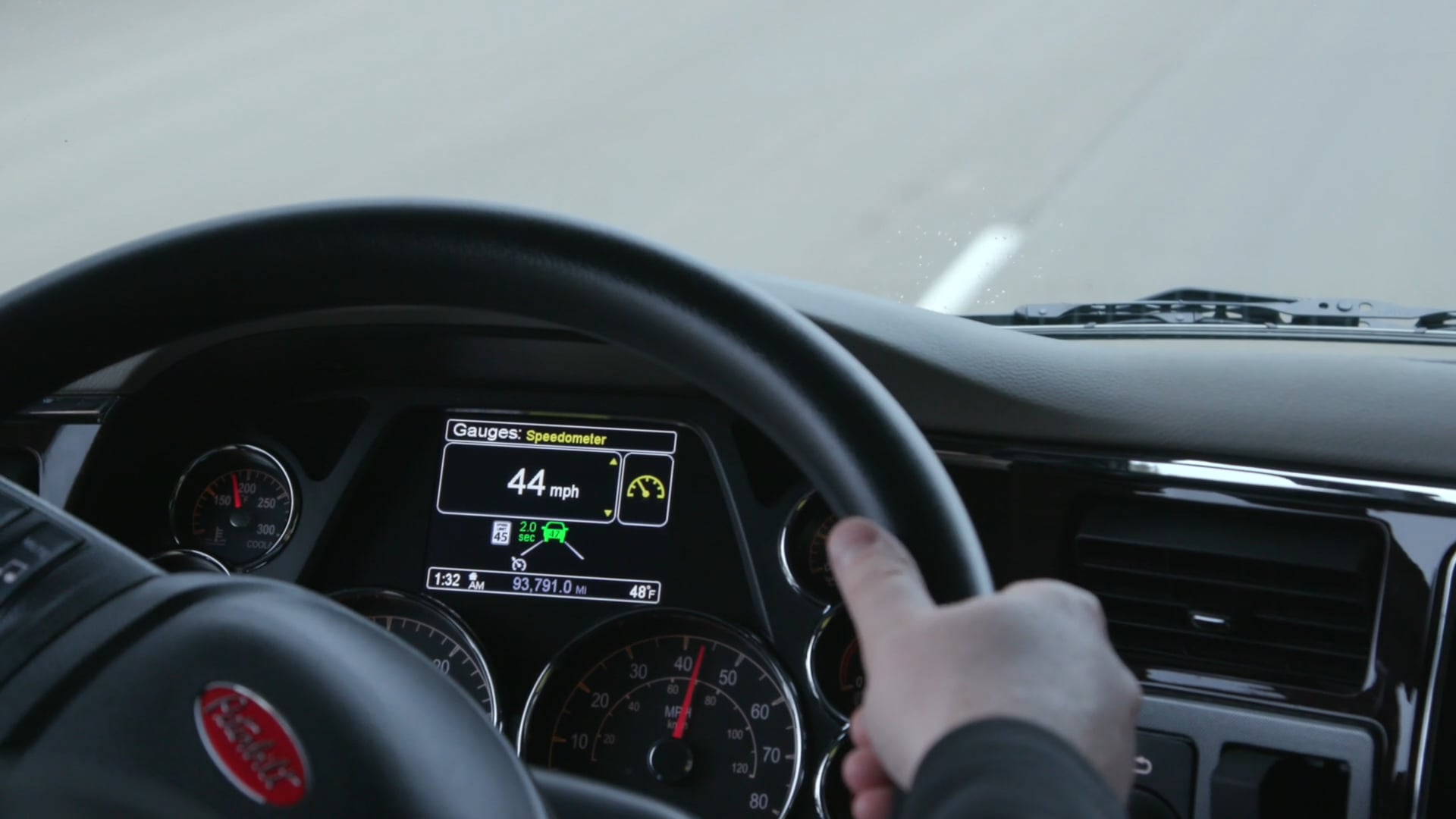
Mechanical vs. Electronic Interlock Failures
The system relies on physical interlocks to disengage cruise control. If your brake or clutch pedal sensors report “depressed” status to the ECU, the cruise control will not activate. In modern PACCAR MX engine configurations, even a misaligned or faulty pedal position sensor can trick the computer into thinking the driver is trying to stop, effectively locking out the cruise feature.

The Role of Pedal Position Sensors
The pedal position sensors act as the primary gatekeepers for the system. On the Peterbilt 579, the clutch sensor is a frequent point of failure. If the return spring weakens, the sensor may not fully transition to the “released” position, preventing the ECM from sensing that the pedal is free. Always verify these sensors before assuming a deeper electrical fault.
By The Numbers
Minimum Activation Speed
Common Faults Linked to Sensors
How to Diagnose Peterbilt 579 Cruise Control Not Working Step by Step
Attempting to troubleshoot without reading active fault codes from the ECM is a common pitfall. Follow this systematic approach to isolate the issue.
Use the dash display or a diagnostic link adapter to check for active codes. Any engine-related code, especially involving emissions or ABS, will inhibit cruise control. Address these codes first.
Connect a scan tool and view the “Brake Pedal” and “Clutch Pedal” live data streams. Toggle the pedals manually; the status must flip between “Applied” and “Released” instantly.
Use a multimeter to test continuity from the cruise switches back to the steering column harness. Poor electrical connections here are notorious for intermittent failure.

Prime for Young Adults — 6 Months Free
Students and 18–24s get six months of Prime free, then half price.
Start 6 Months FreeEnsure the ECM is receiving a consistent VSS signal. If the speedometer is erratic, your cruise control will refuse to engage.
Repairing Common Peterbilt 579 Cruise Control Electrical Faults
Recommended Best Deal Products

Once the root cause is confirmed, physical repair is often straightforward. Here is how to handle the most frequent culprits.
Replacing Pedal Position Sensors
If a pedal sensor shows dead spots in your data stream, replace it immediately. Ensure the new sensor is calibrated according to PACCAR specifications. Most modern units are plug-and-play, but you may need to clear the ECM code after installation to reset the interlock state.
Fixing Steering Column Wiring Shorts
To access the wiring, carefully remove the steering wheel faceplate. Inspect for wire chafing against the steering column frame. Vibrations often cause thin insulation to wear away, creating intermittent shorts that cause the cruise system to cut out unexpectedly.
Resetting Body Control Module (BCM) Parameters
If all physical sensors check out, the BCM might have flagged a persistent fault that requires a software reset. Using an authorized service tool, perform a “Power Cycle” or “Parameter Reset” on the cruise control module. This often clears “soft” errors that block cruise activation.
Peterbilt 579 Cruise Control Not Working: Troubleshooting Tips
Complex electrical gremlins often require looking beyond the basic components. Consider these advanced tips for persistent issues:
- Intermittent Failure After Bumps: This is a classic symptom of a bad ground. Check the grounding straps behind the dash and the main ECM chassis ground for corrosion or loose hardware.
- Adaptive Cruise Control (ACC) Diagnostics: If your truck is equipped with ACC, the radar sensor in the bumper must be clean and calibrated. Debris on the sensor will disable all cruise features.
- J1939 Data Bus Corruption: If multiple dash components are behaving erratically, the J1939 data link may have high resistance. Check for water ingress in the diagnostic connectors.
- Software Reflashes: If your PACCAR MX engine has not been updated recently, your ECM software may contain known bugs related to cruise control logic. A dealer-level update often provides the definitive solution.
Never attempt to bypass the clutch or brake pedal sensors using jumper wires. These are critical safety interlocks; bypassing them can lead to dangerous, unintended vehicle acceleration.
Conclusion
A non-functional cruise control system in a Peterbilt 579 is rarely an unsolvable mystery. By methodically checking for active fault codes, verifying the integrity of your pedal position sensors, and inspecting the steering column wiring, you can often pinpoint the failure point within minutes. Remember that the system is designed to prioritize safety; therefore, any electronic interference from the engine or drivetrain will effectively lock out cruise operations. Always start by pulling active fault codes. If the system remains unresponsive after these checks, visit your local PACCAR dealer to have your ECM parameters verified, as you may require a specialized software update or a BCM diagnostic reflash to restore full functionality to your rig.
Peterbilt 579 Cruise Control Not Working: Frequently Asked Questions
Why does my cruise control turn off when I hit a bump?
This is almost always indicative of a loose electrical connection or a failing switch. When you hit a bump, the vibration causes a momentary loss of signal in the clutch pedal switch, the brake pressure switch, or a chafed wire in the steering column harness. The truck’s computer interprets this intermittent signal as you tapping the pedal and immediately cancels the cruise function as a safety precaution.

Audible Premium Plus — Annual Membership
12 audiobook credits up front, plus the full Audible catalogue.
See Annual PlansCan a blown fuse cause the cruise control to stop working?
Yes, a blown fuse can absolutely cause the cruise control to fail. The cruise control system typically shares a power circuit with other cab accessories, such as auxiliary switches, interior lighting, or the diagnostic port. Check your interior power distribution module (fuse box) and reference the legend on the cover to identify any blown fuses related to ‘Cruise’ or ‘Accessories’. If a fuse blows repeatedly, look for a short-circuit in the wiring.
Does a check engine light prevent cruise control from engaging?
Yes. Modern electronic engines are designed with a ‘fail-safe’ protocol. If the Engine Control Module (ECM) detects an active fault code—especially one related to the emissions system, turbocharger, or fuel pressure—it will often disable high-level features like cruise control to protect the engine from further damage. You must diagnose and clear the active fault code before the cruise system will be allowed to resume normal operation.
How do I reset the cruise control system?
There is no ‘reset button’ for the cruise control; instead, you must clear the system state. First, turn the ignition off and disconnect the chassis batteries for 15 minutes to perform a hard reboot of the vehicle’s electronic control units. Once power is restored, clear any stored inactive fault codes using a diagnostic scan tool. If the system remains inoperative, the issue is likely a persistent mechanical fault or an active sensor error.
Can worn steering wheel buttons cause cruise control issues?
Absolutely. The buttons on the Peterbilt 579 steering wheel function based on specific electrical resistance values. Over time, internal contacts in the switch assembly can wear down, causing the ‘Set’ or ‘Resume’ commands to send an incorrect signal to the gateway module. If the computer does not receive the exact resistance expected, it will ignore the input entirely. Cleaning the contacts or replacing the switch module often resolves this.