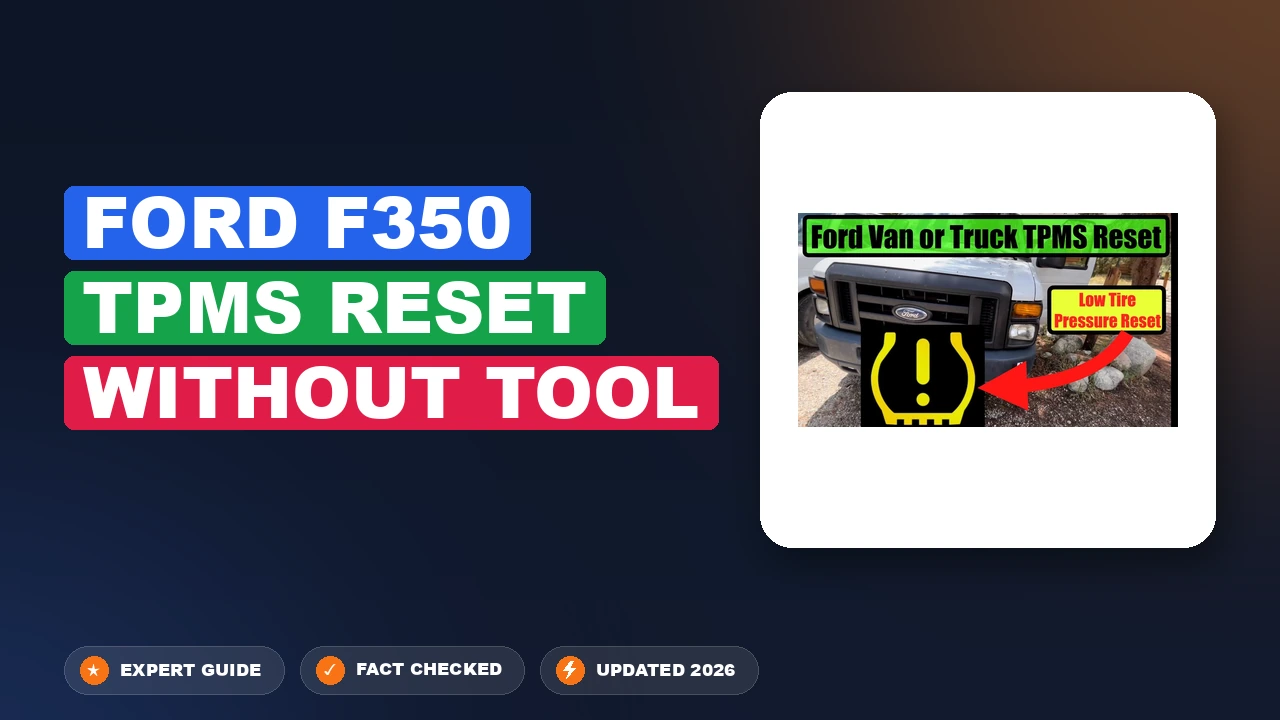
Ford F350 TPMS Reset Without Tool: Solved for 2026 Models
Is your tire pressure light mocking you even after you have meticulously checked every tire? Many Ford F350 owners spend unnecessary time and money at the dealership for a simple sensor reset after tire rotations or seasonal air pressure changes. You do not need a proprietary scan tool to resolve this. Learn how to perform the Ford F350 TPMS reset without a tool using only your ignition key and a manual tire pressure gauge.


Understanding the Ford F350 TPMS Warning System
The Tire Pressure Monitoring System (TPMS) is a safety-critical feature, yet it is often misunderstood. When that amber icon illuminates on your instrument cluster, it is not always a sign of a hardware failure. In many cases, it is a simple communication mismatch between the TPMS Sensor inside the wheel and the Body Control Module (BCM).

📤 Share Image

Normal Pressure Fluctuations vs. Actual Faults
Research indicates that low tire pressure is the primary cause for the light, not necessarily a sensor fault. It is common for a 10-degree drop in ambient temperature to trigger the system. As the outside temperature plummets, the air density inside your tires decreases, resulting in a drop in PSI. If your tires were already near the factory threshold, this shift will trip the sensor, even if there is no leak. Distinguishing between a persistent “Low Pressure” warning and a “System Fault” (often signaled by a flashing light followed by a solid light) is crucial for effective troubleshooting.
How RF Interference Impacts Sensor Data
Each sensor transmits a unique signal via radio frequency (RF). Problems arise when after-market electronics, such as high-output LED light bars or poorly shielded dash cams, introduce noise into the cabin, masking the sensor’s signal to the receiver. Over time, the internal lithium-ion battery in the sensor will expire—typically between 7 to 10 years. If the battery is dead, no amount of resetting will restore the connection.
By The Numbers
Typical temp drop trigger
Average sensor battery life
Executing the Manual Ford F350 TPMS Reset Without Tool
Performing a factory reset of the TPMS via the onboard computer is a standard procedure, though it requires specific timing. The vehicle must be in “Accessory” or “On” mode, but the engine must not be running to avoid exhaust fumes and electronic interference.
📋
Step-by-Step Relearn Guide
Ensure all tires are inflated to the door-jamb specification. Turn the ignition to the “Off” position. Depress and release the brake pedal once.
Cycle the ignition from “Off” to “Run” (do not start the engine) 3 times, ending in the “Run” position. Press and release the brake pedal one more time. Return the ignition to “Off.”
Cycle the ignition from “Off” to “Run” 3 more times. You should hear a single horn honk. This confirms the BCM is in “Train Mode.”
Manual Tire Pressure Adjustment Techniques for TPMS


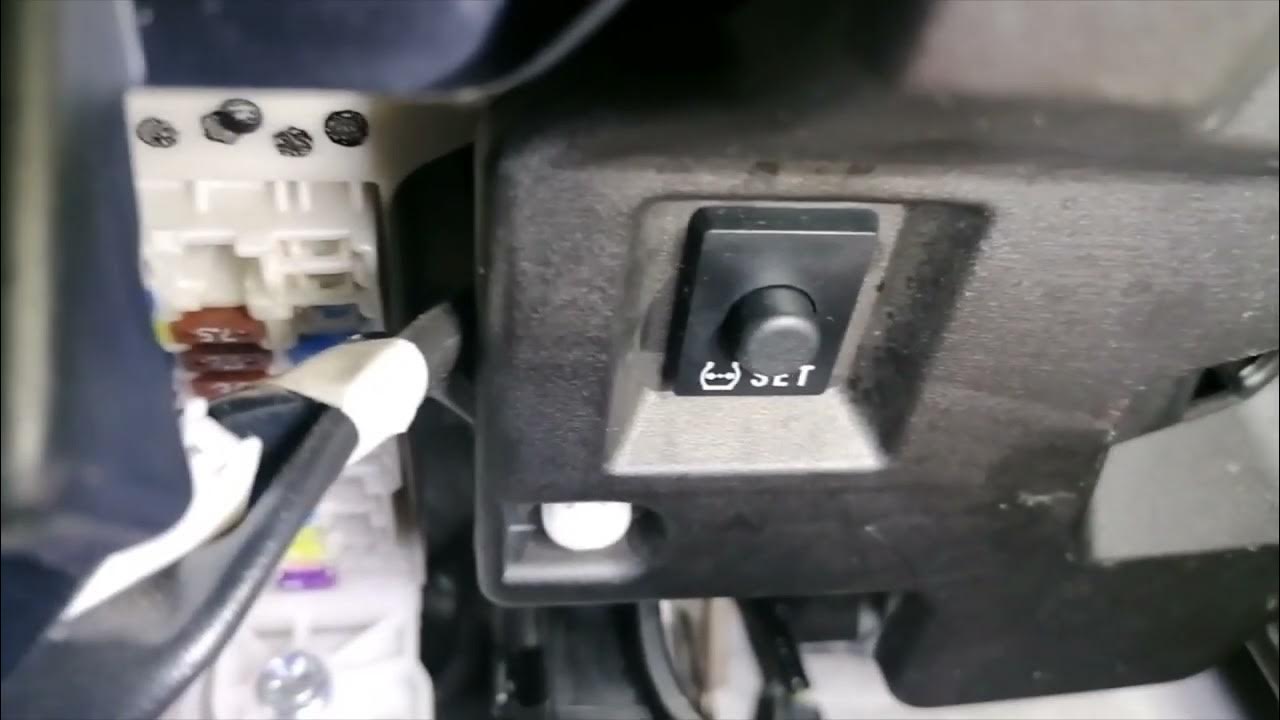
Once you have successfully engaged the “Train” or “Relearn” mode, the truck is waiting for a signal from each sensor. Because you are not using an electronic activation tool, you must manually stimulate the valve stem to transmit the Sensor ID.
- The Hissing Technique: Start at the driver-side front tire. Release air from the tire (usually 5–10 PSI) until you hear a sharp honk from the vehicle’s horn. This confirms the BCM has recognized the new location.
- Maintain Sequence: You must follow the exact sequence: Driver Front, Passenger Front, Passenger Rear, Driver Rear. Failing to follow this specific order will cause the process to time out.
- Verify Completion: After the final tire is triggered, the horn will honk twice to signal a successful fresh start and that all IDs are saved to the system memory.
If the horn does not honk during the pressure release, you may need to let out more air. Do not exceed the safe driving minimums; if the light persists, ensure the sensor is not damaged.
Troubleshooting Failed Ford F350 TPMS Reset Without Tool Attempts
If your reboot attempt fails, do not get discouraged. Most failures are caused by improper sequencing or environmental factors. If you start at the rear wheel instead of the left front, the BCM will reject the sequence as an error. If the horn never honks, the vehicle has likely timed out the learning window—usually 2 to 5 minutes.
When You Need Professional Intervention
If you have tried the manual sequence three times and the light remains, it is time to check for active diagnostic trouble codes (DTCs). A sensor may have suffered a physical impact, or the battery may have finally reached the end of its life cycle. In these instances, a professional OBDII scan tool is required to bypass the manual reset and directly program the Sensor ID into the truck’s computer.
✅ Why This Works
- Eliminates dealership fees
- Restores system reliability
- Verifies sensor functionality
❌ Potential Hurdles
- Dead sensor batteries
- Heavy RF interference
- Incorrect wheel sequence
Never attempt to force an initialization while the engine is running. The BCM is programmed to ignore TPMS sensor input during driving cycles to prevent false positives.
Manual relearning is a standard, built-in feature of the Ford F350 computer. Proper pressure adjustment is the key to triggering sensor recognition, and maintaining a consistent sequence prevents BCM errors. By understanding the interaction between your tire sensors and the truck’s onboard logic, you can easily maintain a calibrated system. Bookmark this guide for your next seasonal tire rotation to keep your system in top shape and your truck road-ready.
Ford f350 Tpms Reset Without Tool: Frequently Asked Questions
Do I need to drive the truck to complete the reset?
Yes. While you can initiate the command through the truck’s menu while parked, the TPMS system requires a drive cycle to finalize the ‘fresh start.’ You should drive the vehicle for at least 15 to 20 minutes at speeds consistently above 20 mph. This allows the sensors to transmit their current status to the truck’s computer, finalizing the calibration process.
Will rotating my tires require a manual reset?
On most modern Ford F350 models, the TPMS system is self-learning. Once the sensors are moved to a new position during a tire rotation, the onboard computer will detect the new signal locations automatically during a standard drive. Therefore, a manual reset via the menu is usually not required after a rotation, provided the sensors are functioning correctly.
Does the sensor battery die over time?


Absolutely. TPMS sensors are powered by an internal, non-replaceable lithium battery designed to last roughly 5 to 10 years. Once this battery reaches the end of its life, the sensor can no longer transmit pressure data to the truck’s module. In these cases, no amount of resetting will fix the light; the sensor must be physically replaced by a tire technician.
What if the tire pressure is correct but the light won’t go out?
If your tire pressures match the door jamb sticker exactly and the reset procedure fails, check the spare tire. Many F350 configurations include a monitor in the spare. If the spare is low, it will trigger the system. If all tires, including the spare, are correct, you likely have a faulty sensor or a localized signal interference issue that requires diagnostic equipment.
Can I adjust my TPMS threshold for aftermarket tires?
The factory TPMS system is calibrated to the door jamb PSI specifications. You cannot manually change the factory alert threshold to accommodate different tires through the standard menu. If you are running aftermarket tires that require different pressures, the light will remain on. You would need an aftermarket tuner or a dedicated TPMS bypass tool to resolve this configuration mismatch.